

Pheidole pepo
- Scientific Name
- Pheidole pepo
- Tribe
- Attini
- Subfamily
- Myrmicinae
- Author
- Wilson, 2003
- Distribution
- Found in 2 countries
Pheidole pepo Overview
Pheidole pepo is an ant species of the genus Pheidole. It is primarily documented in 2 countries , including Colombia, French Guiana. Detailed taxonomic data and occurrence records can be further explored via authoritative databases such as AntWeb or the Global Biodiversity Information Facility (GBIF).
Pheidole pepo
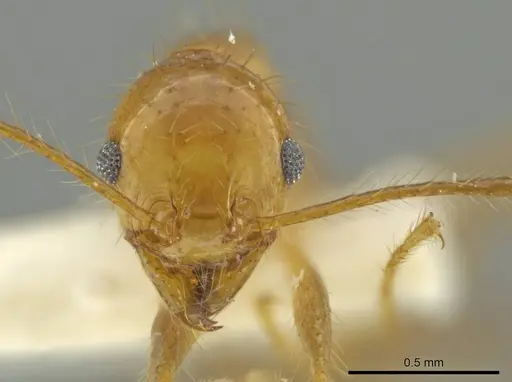
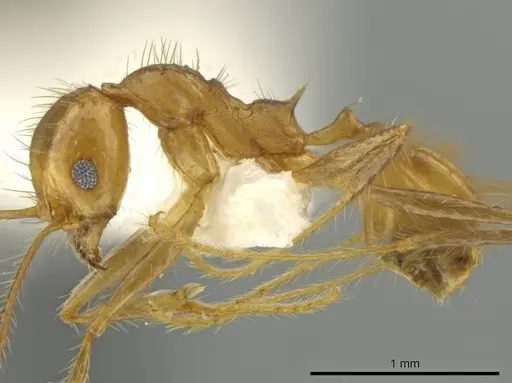
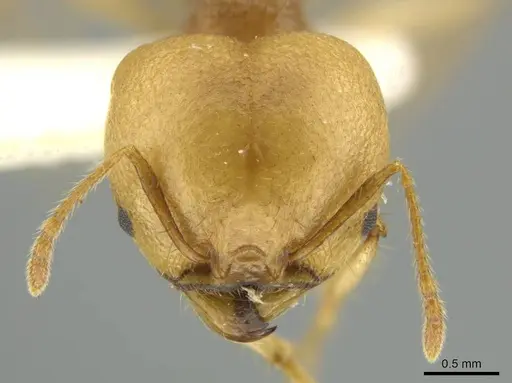
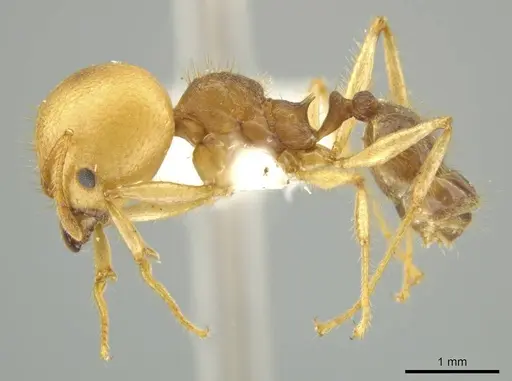
Pheidole pepo is a large yellow ant belonging to the tristis group, native to the tropical forests of Colombia and French Guiana. The species is easily recognized by its extremely swollen head in major workers, which gives them a distinctive appearance. Majors measure 1.78mm in head width with medium yellow coloration, while the smaller minor workers are more slender at 0.64mm and appear dark yellow. These ants nest in spiny bamboo forests at around 800m elevation in Colombia's Chocó region, and have also been documented in French Guiana's rainforest canopy [1][2][3].
What makes P. pepo interesting is its arboreal lifestyle, unlike many ground-nesting Pheidole, this species has been collected from tree surfaces at 2 meters above ground level. The major workers have uniquely reduced clypeus and mandibles relative to their massive heads, and show an unusual pilosity pattern where the front half of the head is densely hairy while the back half is bare [2].
Quick Summary
- Difficulty: Unknown, limited data available
- Origin & Habitat: Tropical rainforests of Colombia (Chocó region) and French Guiana, found in spiny bamboo (Guadua) forest at 800m elevation and in tree-dwelling environments [1][3][4]
- Colony Type: Likely monogyne (single queen) based on typical Pheidole patterns, though colony structure has not been directly documented
- Colony: Monogyne
- Founding: Claustral
- Size & Growth:
- Queen: Undescribed, estimated 7-9mm based on genus patterns
- Worker: Major: 1.78mm HW, Minor: 0.64-0.80mm [2]
- Colony: Unknown, typical Pheidole colonies reach several hundred to a few thousand workers
- Growth: Unknown, estimated moderate based on tropical Pheidole patterns
- Development: Estimated 6-8 weeks at tropical temperatures (25-28°C) (Development time is inferred from related tropical Pheidole species, direct observations are lacking)
- Antkeeping:
- Temperature: Keep at 24-28°C, these are tropical ants from lowland rainforest habitats. A gentle heat gradient allows them to regulate their own temperature [4]
- Humidity: Maintain 70-85% humidity. Their natural habitat in Chocó and French Guiana is consistently humid rainforest. Keep the nest substrate moist but not waterlogged [4]
- Diapause: No, as a tropical species, they do not require hibernation. Keep temperatures stable year-round [4]
- Nesting: Arboreal setup recommended given their tree-dwelling behavior in the wild. A Y-tong (AAC) nest or naturalistic setup with vertical spaces works well. Provide multiple chambers for brood clustering. Avoid completely dry environments [3][4]
- Behavior: Pheidole pepo shows typical Pheidole behavior with major workers defending the nest and processing food, while minor workers handle forager duties. The majors' swollen heads are used for seed processing and colony defense. They are not aggressive toward keepers but will defend if threatened. Escape risk is moderate, minor workers are small (under 1mm) so ensure barrier coatings like Fluon are applied [4]
- Common Issues: limited availability, this species is rarely available in the antkeeping hobby, lack of captive breeding data means care requirements are estimated from genus knowledge, small minor workers require fine mesh barriers to prevent escape, tropical humidity needs may cause mold issues if ventilation is poor, wild-caught colonies may not adapt well to captive conditions
Housing and Nest Setup
Pheidole pepo is arboreal by nature, so your setup should reflect their tree-dwelling lifestyle. A Y-tong (AAC) formicarium works well because it provides the dark, enclosed spaces these ants prefer while allowing you to observe colony activity. Alternatively, a naturalistic setup with cork bark or fake plants arranged vertically can mimic their natural tree-surface habitat. The key is providing multiple connected chambers so the colony can organize itself, brood should be clustered in the humidest area while food storage can be in drier sections. Because minor workers are tiny (under 1mm), apply Fluon or another barrier coating to all escape points. A water test tube connected to the formicarium provides drinking water and helps maintain humidity. [3][4]
Feeding and Diet
Like most Pheidole species, P. pepo is omnivorous and will accept a variety of foods. Their diet in the wild includes seeds, small insects, and honeydew from aphids or scale insects. In captivity, offer protein sources like small mealworms, fruit flies, or cricket pieces twice weekly. They also need consistent access to sugar, a drop of honey water or sugar water works well, though some colonies prefer one over the other. Seeds are not necessary unless you're trying to encourage major workers to use their specialized head morphology for seed processing. Remove uneaten food after 48 hours to prevent mold. Fresh water should always be available. [4]
Temperature and Humidity
As a tropical species from Colombia and French Guiana, Pheidole pepo needs warm, humid conditions. Keep the nest area at 24-28°C (75-82°F). A small heating cable on one side of the nest creates a temperature gradient so workers can choose their preferred zone. Room temperature in most homes may be slightly cool, so monitor colony activity, if workers cluster constantly near the heat source, increase temperature slightly. Humidity should stay around 75-85%. The Chocó region where they originate is one of the wettest places on Earth, so these ants need consistent moisture. Mist the nest area regularly and ensure the water tube is always full. Avoid placing the setup near air conditioning vents or drafty areas. [1][3][4]
Colony Development and Growth
Pheidole colonies grow through the classic pattern of claustral founding: a newly mated queen seals herself in a small chamber, lays eggs, and raises the first brood using energy from her stored fat reserves. The first workers (nanitics) are smaller than normal workers and emerge after several weeks. Once nanitics arrive, the colony enters a growth phase as the queen continues laying eggs and workers take over all foraging and nest maintenance duties. Based on related tropical Pheidole species, expect 6-8 weeks from egg to first worker at optimal temperatures. After that, growth rate depends on feeding, well-fed colonies can reach several hundred workers within a year. Major workers appear as the colony grows larger, typically when the colony reaches 50-100 workers. Pheidole colonies can live for several years with a healthy queen. [4]
Behavior and Defense
Pheidole pepo exhibits the classic big-headed ant social structure. Minor workers handle most tasks outside the nest: foraging, caring for brood, and maintaining the nest. Major workers stay closer to the nest and serve as defenders and food processors, their enlarged heads contain powerful muscles for crushing seeds and fighting intruders. When threatened, majors will rush to defend the colony, though this species is not particularly aggressive toward keepers. The minor workers are small and can squeeze through tiny gaps, so escape prevention is essential. Apply barrier coatings like Fluon to all connections and openings. These ants are primarily nocturnal or crepuscular in activity, so you may see more activity during evening hours. [2][4]
Frequently Asked Questions
How long does it take for Pheidole pepo to get their first workers?
Based on related tropical Pheidole species, expect 6-8 weeks from egg to first worker at optimal temperatures (25-28°C). The queen seals herself in during founding and raises the first brood alone using stored fat reserves.
What do Pheidole pepo ants eat?
They are omnivorous. Offer protein (small insects like mealworms, fruit flies, or cricket pieces) twice weekly, and provide constant access to sugar sources (honey water or sugar water). They also need fresh water at all times.
Do Pheidole pepo ants need hibernation?
No. As a tropical species from Colombia and French Guiana, they do not require hibernation. Keep temperatures stable year-round at 24-28°C.
What size colony does Pheidole pepo reach?
Colony size is not documented for this specific species, but typical Pheidole colonies reach several hundred to a few thousand workers. Well-fed colonies can reach several hundred workers within their first year.
Are Pheidole pepo ants aggressive?
They are not particularly aggressive toward keepers. Major workers will defend the colony if threatened, but they typically retreat rather than attack. Their primary defense is their numbers and the presence of major workers at the nest entrance.
Can I keep multiple Pheidole pepo queens together?
This is not recommended. Pheidole species are typically monogyne (single queen), and combining unrelated queens usually results in fighting. If you start with a claustrally founding queen, keep her alone until the first workers arrive.
What temperature is best for Pheidole pepo?
Keep them at 24-28°C (75-82°F). As tropical rainforest ants from Colombia's Chocó region, they need warm, stable temperatures. A small heating cable on one side of the nest creates a gradient they can regulate themselves.
Why are my Pheidole pepo dying?
Common causes include: temperatures that are too cold (below 24°C), humidity that is too low, mold from over-misting, or escape of small minor workers. Ensure stable warmth, consistent humidity around 75-85%, and apply escape barriers. Wild-caught colonies may also struggle to adapt to captive conditions.
Is Pheidole pepo available in the antkeeping hobby?
This species is very rarely available. It is known from limited localities in Colombia and French Guiana, and there are no documented cultures in the hobby. Most keepers interested in this species would need to locate specialized suppliers or source from wild-caught colonies.
How do I set up a naturalistic terrarium for tree-dwelling ants like Pheidole pepo?
Use a vertical setup with cork bark, fake leaves, or bamboo sections as elevated nesting sites. Keep the substrate moist and mist regularly to maintain humidity. Place the water test tube where condensation can form, providing drinking water. Add small live plants if possible to help maintain humidity. Ensure all openings are sealed with Fluon since minor workers are tiny.
References

This caresheet is licensed under CC BY-SA 4.0 .
CASENT0645846
View on AntWeb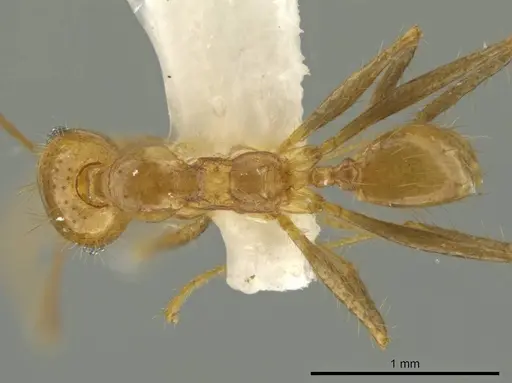
JTLC000016486
View on AntWeb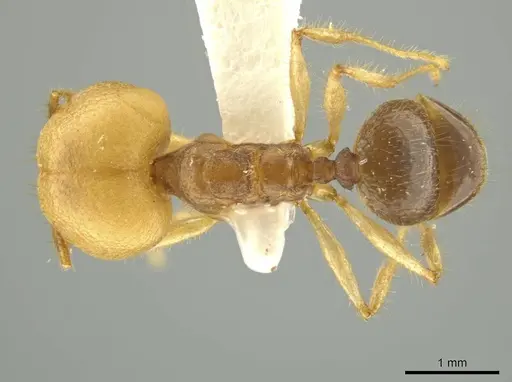
Literature
Loading...Loading products...