

Pheidole pegasus
- Scientific Name
- Pheidole pegasus
- Tribe
- Attini
- Subfamily
- Myrmicinae
- Author
- Sarnat, 2008
- Distribution
- Found in 1 countries
Pheidole pegasus Overview
Pheidole pegasus is an ant species of the genus Pheidole. It is primarily documented in 1 countries , including Fiji. Detailed taxonomic data and occurrence records can be further explored via authoritative databases such as AntWeb or the Global Biodiversity Information Facility (GBIF).
Pheidole pegasus
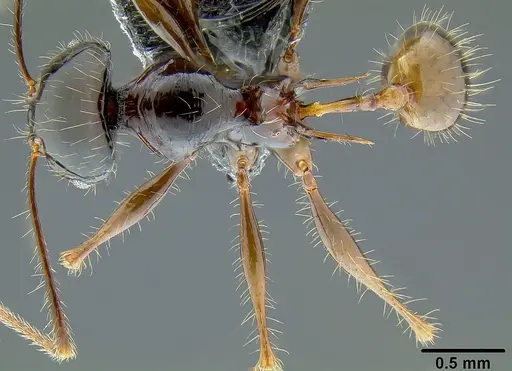
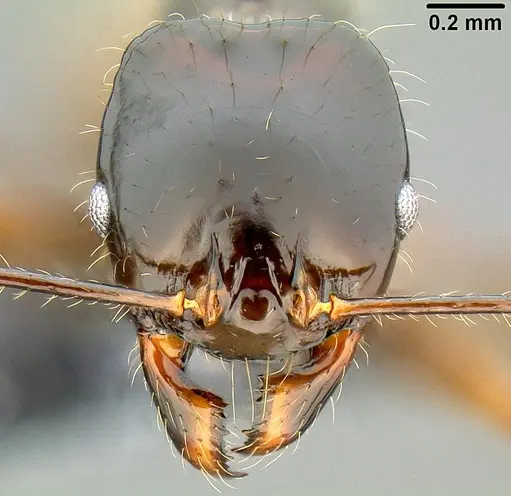
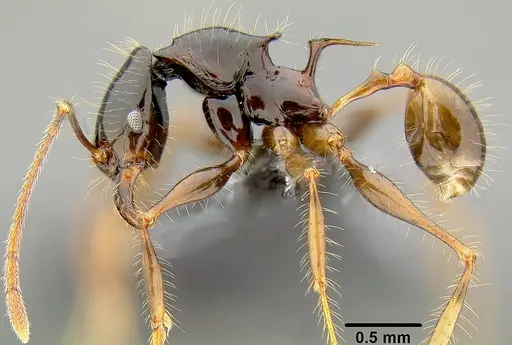
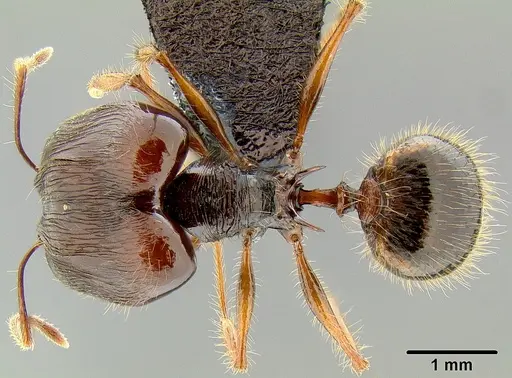
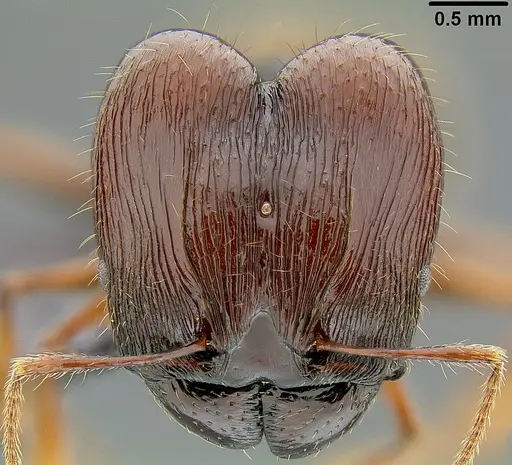
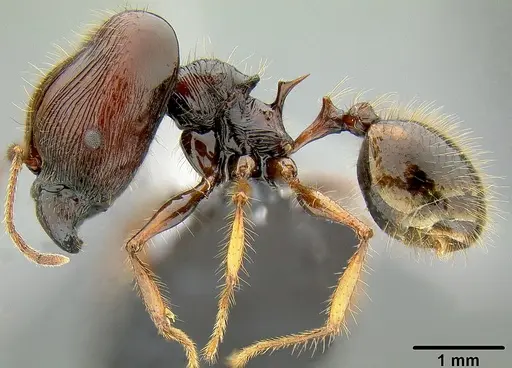
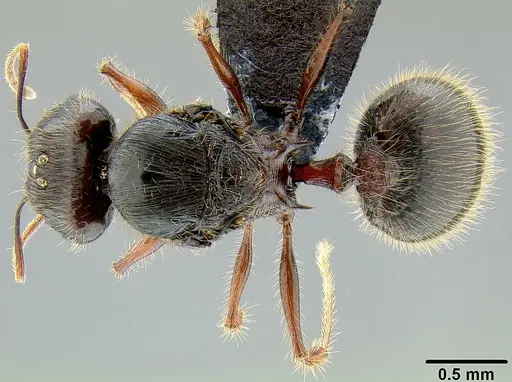
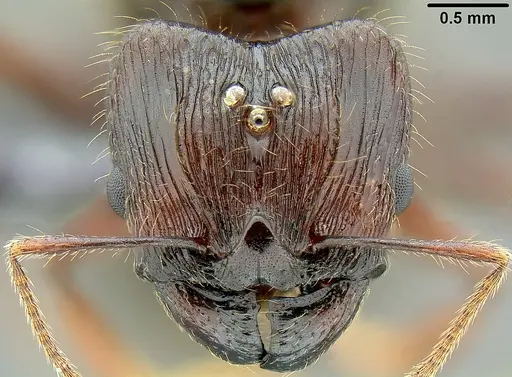
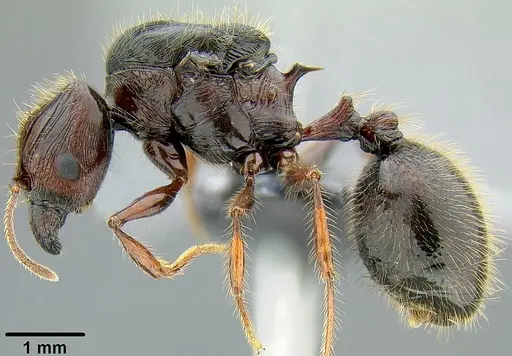
Pheidole pegasus is one of the most distinctive ants in the world, instantly recognizable by its extraordinarily long propodeal spines that give it a dramatic, winged appearance reminiscent of the mythical Pegasus horse. Major workers reach 6.45-6.98mm with a large, flattened head, while minor workers are 3.91-4.39mm with notably long legs and scapes. The entire body has a glassy, shining appearance. This species is endemic to Fiji, known only from the summit of Mt. Delaikoro on Vanua Levu at 910m elevation, where it nests in turret-like structures with 5mm entrance holes surrounded by vegetation debris placed by workers [1][2].
What makes this species particularly interesting is its spinescent morphology, the long propodeal spines and acute mesosomal projections are thought to serve a defensive function against predators. The queens are large (8.77mm) with strongly developed mesosomas, suggesting they have substantial energy reserves for founding. This is a rare species in the antkeeping hobby and in the wild, making it a prized addition for collectors interested in unusual Pacific island species [1][3].
Quick Summary
- Difficulty: Expert
- Origin & Habitat: Endemic to Fiji, specifically Vanua Levu, known only from Mt. Delaikoro summit at 910m elevation in high-elevation moss forest [1][2]. This is a tropical island but at high elevation, so conditions are cooler and wetter than lowland Fiji.
- Colony Type: Colony structure is unconfirmed. Based on typical Pheidole patterns, likely single-queen (monogyne) colonies. No data on ergatoid replacement reproductives exists for this species.
- Size & Growth:
- Queen: 8.77mm [1]
- Worker: Majors 6.45-6.98mm, minors 3.91-4.39mm [1]
- Colony: Unknown, only known from a few collections in the wild [1]
- Growth: Unknown, no development data exists for this species
- Development: Unconfirmed, no direct observations exist. Based on typical Pheidole patterns and tropical location, estimate 5-8 weeks at optimal temperature. (Development timeline is unconfirmed. Related Pheidole species typically develop in 4-8 weeks in tropical conditions.)
- Antkeeping:
- Temperature: Start around 22-26°C. This species comes from high-elevation Fiji, which is cooler than lowland tropical areas. Avoid overheating, monitor colony behavior and adjust accordingly.
- Humidity: High humidity preferred, think damp mountain forest. Keep nest substrate consistently moist but not waterlogged. The natural habitat is moss forest, indicating constant moisture.
- Diapause: Unconfirmed, no data on overwintering requirements exists. The high-elevation origin suggests some seasonal response may be needed, but this is speculative.
- Nesting: Naturalistic setups with flat stones or Y-tong nests with narrow chambers work well. The species builds turret nests with 5mm entrances in bare soil, suggesting they prefer enclosed spaces. Use moist substrate that holds humidity.
- Behavior: This is a spinescent Pheidole species, the long spines suggest defensive behavior. Workers are likely to be more aggressive than typical Pheidole when defending the nest. Foraging style is typical of Pheidole, they likely recruit to food sources and store seeds. Escape risk is moderate due to their larger size compared to many Pheidole, but standard barriers should suffice. Major workers have large heads and may be capable of biting.
- Common Issues: very limited availability, this species is rarely collected and not commonly available in the antkeeping trade, no captive breeding data exists, wild-caught colonies may struggle to adapt to captive conditions, high humidity requirements can lead to mold issues if ventilation is inadequate, the spinescent morphology may indicate more aggressive defensive behavior when disturbed, high elevation origin means they may be sensitive to overheating, keep away from direct heat sources
Housing and Nest Setup
Pheidole pegasus builds distinctive turret nests in nature with a 5mm diameter entrance hole surrounded by a ring of vegetation debris placed by workers [1]. For captive care, a naturalistic setup with moist substrate works well, think damp forest floor conditions. Y-tong (acrylic) nests or plaster nests with narrow chambers are suitable options. The species has long legs and is relatively active, so provide adequate space for foraging. Given their high-elevation origin, avoid placing the nest in direct sunlight or near heat sources that could cause overheating. A test tube setup can work for founding colonies, but be prepared to move them to a larger formicarium as the colony grows.
Feeding and Diet
Like other Pheidole species, this is likely an omnivorous species that accepts both protein and carbohydrate sources. In the wild, Pheidole typically eat seeds, insect parts, and honeydew. Offer protein sources like small insects (fruit flies, mealworms, small crickets) and carbohydrate sources like sugar water or honey. The large majors can handle larger prey items than minor workers. Since this is a spinescent species, they may be more active foragers. Feed every 2-3 days and remove uneaten prey to prevent mold. Always provide a constant water source.
Temperature and Seasonal Care
This species comes from high-elevation Fiji (910m on Mt. Delaikoro), which means it prefers cooler conditions than typical tropical ants. Start around 22-26°C and observe colony behavior. If workers cluster together and show reduced activity, the temperature may be too low. If they avoid the nest area and seem agitated, it may be too warm. Never place the nest in direct sunlight or use heating elements directly on the nest, instead, create a gentle temperature gradient if needed. The high-elevation origin suggests some sensitivity to heat. No data exists on diapause requirements, but if the colony shows seasonal slowdowns in winter, reduce feeding and keep them in a cooler area (15-18°C) for a few months. [3][1]
Behavior and Defense
The most distinctive feature of Pheidole pegasus is its extraordinarily long propodeal spines, among the longest in the entire roosevelti group [1]. This spinescent morphology likely evolved as a defense mechanism against predators. When disturbed, workers may adopt defensive postures, raising their abdomens to present the spines. The majors have large, powerful heads and can deliver a painful bite. This species is not aggressive toward humans but will defend the nest vigorously. Standard escape prevention measures work well, these are moderately large ants that cannot squeeze through typical barrier gaps. However, always use fluon or other barriers as a precaution.
Colony Establishment and Growth
No captive breeding data exists for this species, so colony establishment may be challenging. Queens are large (8.77mm) with strongly developed mesosomas, suggesting they have substantial fat reserves for claustral founding [1]. If you obtain a founding queen, provide a quiet, dark location with stable humidity. Expect 4-8 weeks for the first workers (nanitics) to emerge, though this is an estimate based on related species. The colony will likely grow slowly at first, then accelerate once the first majors appear. Pheidole colonies can reach thousands of workers, but we have no data on maximum colony size for this species. Be patient, spinescent species often grow more slowly than typical Pheidole.
Acquisition and Legal Considerations
Pheidole pegasus is endemic to Fiji and known only from a single mountain summit. It is not commonly available in the antkeeping hobby. If available, it will likely be expensive and difficult to obtain. Always ensure any colony you purchase was captive-bred, not wild-caught from the limited natural population. Check your local regulations before importing, Fiji may have export restrictions on native species. Never release this species or any ant colony outdoors in non-native areas, as they could become invasive. Pheidole species have established invasive populations in many parts of the world. [1][2]
Frequently Asked Questions
How long does it take for Pheidole pegasus to go from egg to worker?
The egg-to-worker timeline is unconfirmed for this species. Based on typical Pheidole patterns in tropical conditions, estimate 5-8 weeks at optimal temperature (22-26°C). The first workers (nanitics) will be smaller than normal workers.
What do Pheidole pegasus ants eat?
Like other Pheidole species, they are omnivorous. Offer small insects (fruit flies, pinhead crickets, small mealworms) for protein and sugar water or honey for carbohydrates. Remove uneaten prey after 24-48 hours.
Are Pheidole pegasus good for beginners?
No. This is an expert-level species due to several factors: very limited availability, no captive breeding data exists, high humidity requirements, and the species is poorly understood. This ant is best suited for experienced keepers who can provide specialized care.
What temperature should I keep Pheidole pegasus at?
Start around 22-26°C. This species comes from high-elevation Fiji, which is cooler than typical tropical lowlands. Avoid overheating, keep away from direct heat sources and monitor colony behavior.
How big do Pheidole pegasus colonies get?
Colony size is unknown, no data exists on maximum colony size for this species. Based on typical Pheidole, colonies could potentially reach several thousand workers, but this is speculative.
Can I keep multiple Pheidole pegasus queens together?
Colony structure is unconfirmed for this species. Based on typical Pheidole patterns, they likely form single-queen colonies. Combining unrelated queens is not recommended without evidence they can coexist.
What makes Pheidole pegasus so special?
This species has the most extraordinary propodeal spines in the entire roosevelti group, they're so long they resemble wings, giving the species its name after the mythical winged horse Pegasus. Combined with its glassy integument, long limbs, and restricted distribution to a single mountain in Fiji, it's one of the most distinctive ants in the world.
Do Pheidole pegasus need hibernation?
Diapause requirements are unconfirmed. The high-elevation origin suggests some seasonal response may be beneficial. If the colony shows reduced activity in winter, you could provide a cooler period around 15-18°C for 2-3 months.
What type of nest is best for Pheidole pegasus?
Naturalistic setups with moist substrate or Y-tong nests with narrow chambers work well. In the wild, they build turret nests in soil with 5mm entrances. Keep the nest humid and provide a gradient if using heating.
Why is my Pheidole pegasus colony dying?
Without captive data, colony failures are difficult to diagnose. Common issues include: overheating (keep below 28°C), low humidity (moss forest species need damp conditions), mold from overwatering, or stress from disturbance. Ensure stable conditions and minimal handling.
Is Pheidole pegasus invasive anywhere?
No. This species is endemic to Fiji and has never been documented as invasive. It is known only from a single mountain summit. However, never release any ant colony outdoors in non-native areas.
References

This caresheet is licensed under CC BY-SA 4.0 .
Literature
Loading...Loading products...