

Pheidole pararugiceps
- Scientific Name
- Pheidole pararugiceps
- Tribe
- Attini
- Subfamily
- Myrmicinae
- Author
- Longino, 2009
- Distribution
- Found in 1 countries
Pheidole pararugiceps Overview
Pheidole pararugiceps is an ant species of the genus Pheidole. It is primarily documented in 1 countries , including Costa Rica. Detailed taxonomic data and occurrence records can be further explored via authoritative databases such as AntWeb or the Global Biodiversity Information Facility (GBIF).
Pheidole pararugiceps
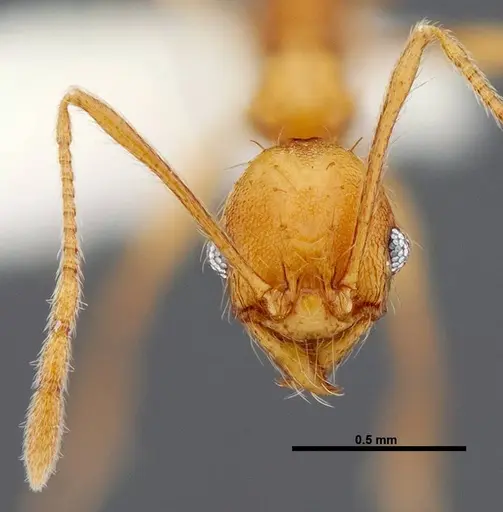
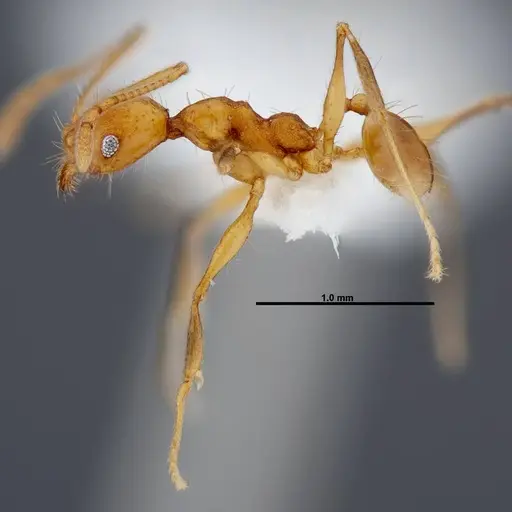
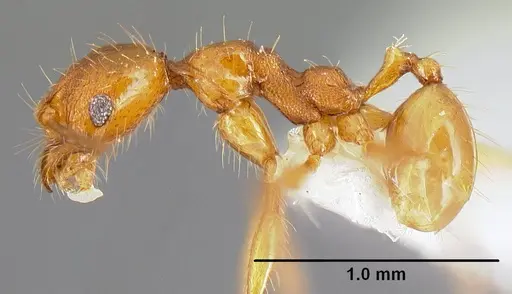
Pheidole pararugiceps is a small tropical ant species native to the cloud forests of Costa Rica. Minor workers measure 0.50-0.56mm in head width and are entirely orange in color, while major workers (soldiers) are larger at 1.02-1.12mm head width and also orange. This species is notable for being one of the few Pheidole species where the minor worker completely lacks propodeal spines, the small pointed projections on the rear of the body. It was described in 2009 by ant taxonomist John Longino and is known only from a single wet forest location at around 1100m elevation in Braulio Carrillo National Park [1][2]. The species name 'pararugiceps' refers to its similarity to the related species Pheidole rugiceps, which it co-occurs with in the same forest [3].
Quick Summary
- Difficulty: Unknown, species has never been kept in captivity
- Origin & Habitat: Cloud forest at 1070-1100m elevation in Braulio Carrillo National Park, Costa Rica. This is a very wet forested site where the species has been collected from leaf litter, rotting wood, and ground-level traps [1][2].
- Colony Type: Colony structure is unconfirmed. Pheidole species are typically single-queen (monogyne) colonies, but this has not been documented for P. pararugiceps specifically.
- Size & Growth:
- Queen: Undescribed, queen caste has not been documented in scientific collections [2].
- Worker: Minor workers: 0.50-0.56mm head width. Major workers: 1.02-1.12mm head width [2].
- Colony: Unknown, the species is known from only four collected specimens total [1].
- Growth: Unknown, no captive colonies have been established to observe development.
- Development: Unconfirmed, no development data exists for this species. Based on typical Pheidole patterns in tropical species, expect 4-8 weeks at warm temperatures. (This is entirely an estimate based on genus-level patterns, not species-specific data.)
- Antkeeping:
- Temperature: Unknown, no captive data exists. Based on the cloud forest origin at 1100m elevation in Costa Rica, the species likely prefers moderate temperatures (roughly 20-26°C) with high humidity. Start in the low-mid 20s°C range and observe colony activity.
- Humidity: High, collected from very wet forest habitats including leaf litter and rotting wood [1]. Keep substrate consistently moist but not waterlogged. Provide a gradient from damp to slightly drier areas.
- Diapause: Unknown, tropical cloud forest species may not require a true diapause, but may show reduced activity during cooler/drier seasons in the wild.
- Nesting: In the wild, colonies have been found in sifted leaf litter, rotting wood, and fungi [1]. In captivity, a naturalistic setup with moist substrate or a Y-tong/plaster nest would likely suit them. The absence of propodeal spines in minor workers is unusual, this may indicate specialized nesting behavior, but we don't know what that would be.
- Behavior: Behavior is unstudied in captivity. Pheidole species are generally non-aggressive, with major workers (soldiers) defending the colony and minor workers handling most foraging and brood care. The species is very small (under 1mm for minors), so escape prevention should be excellent, they can slip through tiny gaps. Foraging style is unknown, but most Pheidole are generalists that collect seeds, tend aphids, and hunt small insects [4].
- Common Issues: This species has never been kept in captivity, there is no established care protocol or known success in antkeeping., The four known wild specimens were collected in 2001,meaning the species is extremely rare in scientific collections and likely difficult to locate in the wild., Cloud forest humidity requirements are challenging to replicate reliably in most home setups., Very small worker size (under 1mm) means escape prevention must be excellent, standard test tube setups may need additional barriers., No information exists on what foods this species accepts or how to encourage founding queens.
Species Discovery and Rarity
Pheidole pararugiceps was only described in 2009 and remains one of the rarest ant species in scientific collections. All four known specimens came from the same locality, a single site at 1070m elevation on the Barva transect in Braulio Carrillo National Park, Costa Rica. The collections were made as part of the ALAS (Leaf Litter Ant Survey) project, which extensively sampled Costa Rican cloud forests. Two specimens came from Winkler samples of sifted leaf litter, one from a pan trap on the ground, and one from a Berlese sample of rotting wood and fungi. This sampling method tells us the species lives in very wet forest floor microhabitats, typically in or near decomposing wood and leaf litter [1][2]. The fact that only four specimens exist despite intensive sampling efforts suggests either a genuinely rare species or one with very specialized habitat requirements that make it difficult to locate.
Identification and Unique Features
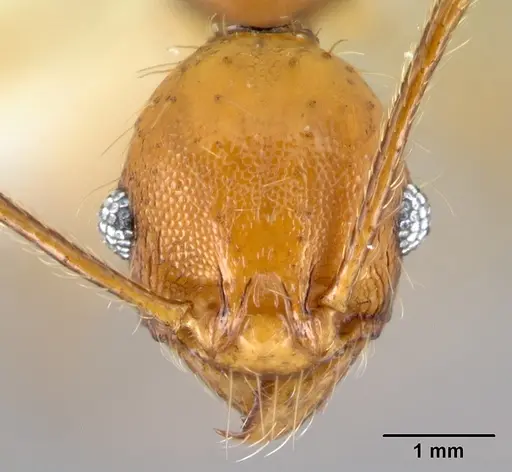
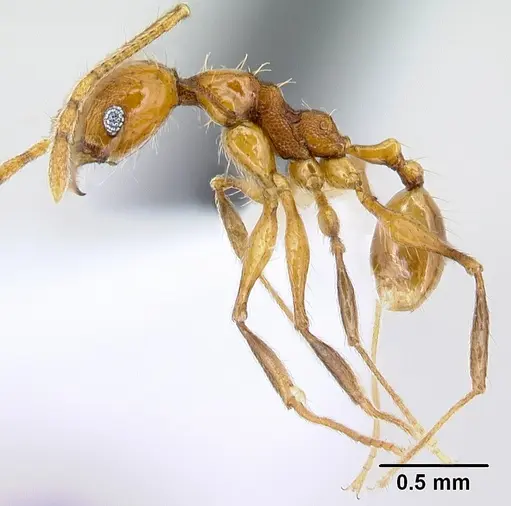
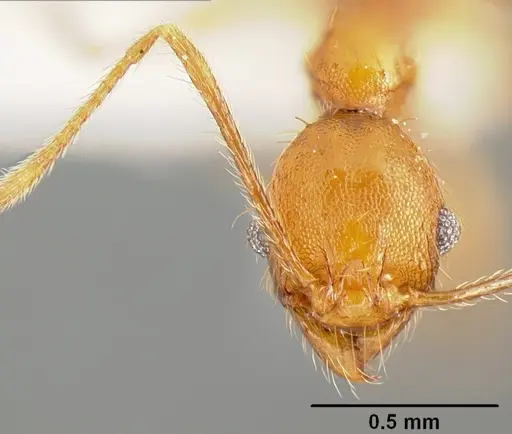
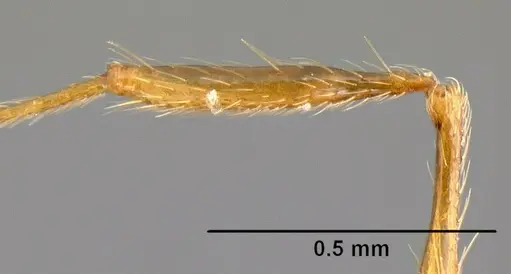
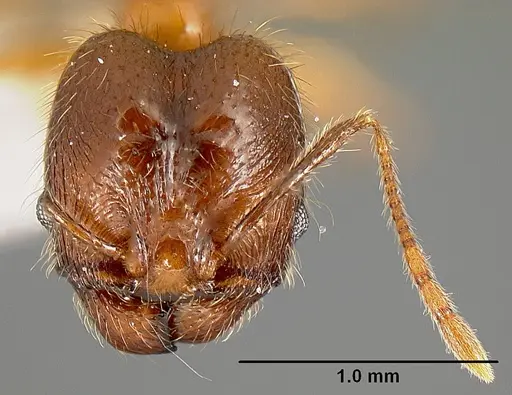
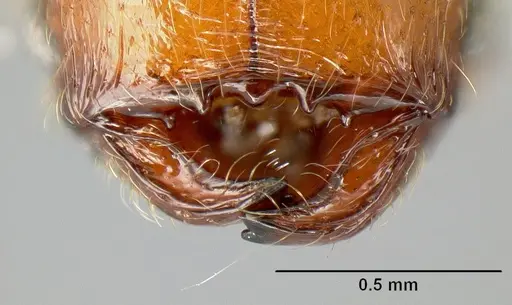
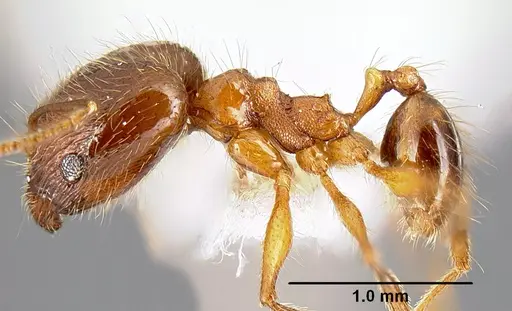
This species has a distinctive feature that sets it apart from most other Pheidole: the minor worker completely lacks propodeal spines, the small pointed projections on the rear of the mesosoma that most Pheidole species possess. This makes identification relatively straightforward under magnification. The species is also entirely orange in color, which is unusual as many Pheidole species are brown to black. It is very similar to Pheidole rugiceps, which it shares its habitat with, but P. pararugiceps is slightly larger and has relatively longer antennae (scape length). The major workers (soldiers) have the characteristic deep median groove on the face and longitudinal rugae (wrinkles) that are typical of Pheidole majors, but are also orange rather than the usual dark brown [2][3].
Habitat and Natural Conditions
P. pararugiceps comes from a very specific habitat, cloud forest at approximately 1100m elevation in Costa Rica. The Barva transect site is described as a very wet forested location, consistent with the cloud forest ecosystem. The specimens were collected from forest floor microhabitats: leaf litter, rotting wood, and the immediate ground layer. This suggests the species is a litter-dwelling ant that prefers dark, damp, sheltered microhabitats rather than exposed locations. The elevation (1100m) places it in a zone that is consistently humid and experiences moderate temperatures year-round. Replicating these conditions in captivity would require maintaining high ambient humidity, providing dark nesting options, and ensuring the nest area stays moist but does not become stagnant [1].
Challenges of Keeping This Species
This caresheet must be honest: Pheidole pararugiceps has never been kept in captivity, and there is no established care protocol for it. The species is known from so few specimens that even basic biology like colony size, queen appearance, and reproductive behavior remains completely undocumented. If you were to obtain founding queens, you would essentially be pioneering captive husbandry for this species. The best approach would be to start with conditions typical of cloud forest Pheidole: warm (low-mid 20s°C), very humid, dark nesting areas, and generalist Pheidole foods (small insects, seeds, sugar sources). Document your results carefully, any successful captive breeding would be a significant contribution to knowledge of this poorly understood species. The extreme rarity of this ant also raises ethical considerations about collection and trade [1][4].
Related Species Care as a Guide
While P. pararugiceps specifically has never been kept, other Costa Rican Pheidole species have been maintained in captivity and can provide general guidance. Pheidole are genus-level generalists that typically accept a wide variety of foods including small insects, seeds, and sugar water or honey. They are not aggressive and can be kept in standard setups. The cloud forest origin suggests this species needs more humidity than desert-dwelling Pheidole. A naturalistic setup with moist substrate and some decaying wood or leaf litter would best approximate its natural leaf litter/rotting wood microhabitat. Test tubes work for founding, but consider adding a humid outworld once the colony establishes. Temperature should be warm but not hot, think tropical cloud forest, not tropical lowland [4].
Frequently Asked Questions
Has Pheidole pararugiceps ever been kept in captivity?
No, this species has never been documented in captive ant colonies. It is known from only four specimens collected in 2001,making it one of the rarest Pheidole species in the world. There is no established care protocol.
What does Pheidole pararugiceps look like?
Both minor and major workers are entirely orange in color. Minor workers are very small (0.50-0.56mm head width) and uniquely lack propodeal spines. Major workers are larger (1.02-1.12mm head width) with a characteristic deep groove on their face.
Where does Pheidole pararugiceps live?
Only in cloud forest at about 1100m elevation in Braulio Carrillo National Park, Costa Rica. All four known specimens came from the same locality on the Barva transect.
What do I feed Pheidole pararugiceps?
Not confirmed for this specific species, but other Pheidole are generalist feeders that accept small insects, seeds, and sugar sources. Start with small live prey (fruit flies, pinhead crickets), seeds, and sugar water. Observe what the colony accepts.
Is this species good for beginners?
No, this species is not recommended for any keeper because it has never been kept in captivity and no care information exists. The extreme rarity also makes it unlikely to be available in the ant trade.
How do I set up a nest for Pheidole pararugiceps?
Based on its leaf litter/rotting wood habitat, a naturalistic setup with moist substrate and some decaying wood would likely work best. A Y-tong or plaster nest with high humidity could also work. The key is maintaining consistently high humidity without stagnation.
What temperature and humidity does Pheidole pararugiceps need?
Exact requirements are unknown. Based on its cloud forest origin, aim for moderate temperatures (roughly 20-26°C) and high humidity (70%+). Keep substrate consistently moist but not waterlogged.
How big do Pheidole pararugiceps colonies get?
Unknown, colony size has never been documented. Most Pheidole colonies reach hundreds to thousands of workers, but we have no data for this specific species.
Does Pheidole pararugiceps have a queen?
The queen caste has never been described or collected. All known specimens are workers (both minor and major castes).
Can I keep multiple queens of Pheidole pararugiceps together?
Not recommended, colony structure is completely unconfirmed for this species, and combining unrelated foundresses of any Pheidole species carries significant risk of aggression.
Does Pheidole pararugiceps need hibernation?
Unknown, as a tropical cloud forest species, it likely does not require a true diapause. However, cooler/drier seasonal changes in its habitat may cause reduced activity periods.
Is Pheidole pararugiceps available in the ant trade?
Extremely unlikely. The species is known from only four specimens collected in 2001 and has never been documented in the antkeeping hobby. It would be extraordinarily difficult to obtain.
References

This caresheet is licensed under CC BY-SA 4.0 .
CASENT0609019
View on AntWeb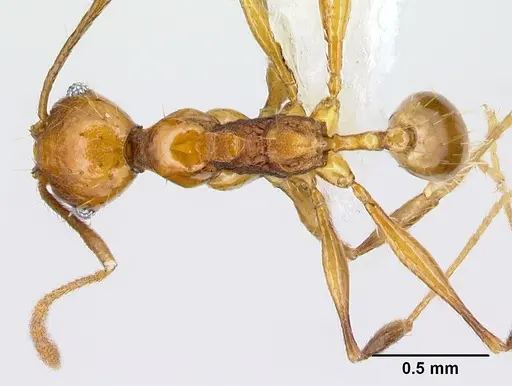
CASENT0609022
View on AntWeb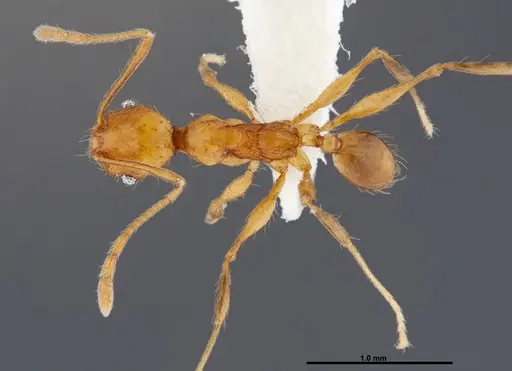
INB0003210732
View on AntWeb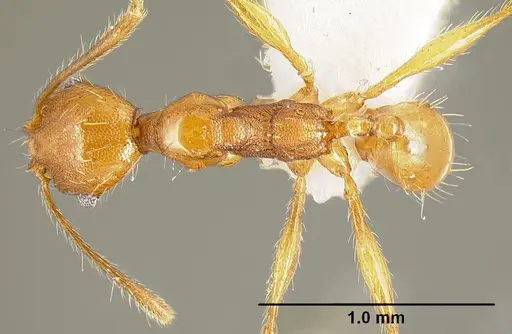
INB0003213441
View on AntWeb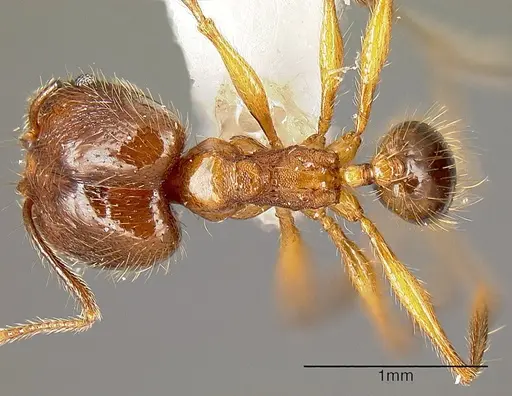
Literature
Loading...Loading products...