

Pheidole oxyops
- Scientific Name
- Pheidole oxyops
- Tribe
- Attini
- Subfamily
- Myrmicinae
- Author
- Forel, 1908
- Distribution
- Found in 3 countries
Pheidole oxyops Overview
Pheidole oxyops is an ant species of the genus Pheidole. It is primarily documented in 3 countries , including Argentina, Brazil, Paraguay. Detailed taxonomic data and occurrence records can be further explored via authoritative databases such as AntWeb or the Global Biodiversity Information Facility (GBIF).
Pheidole oxyops
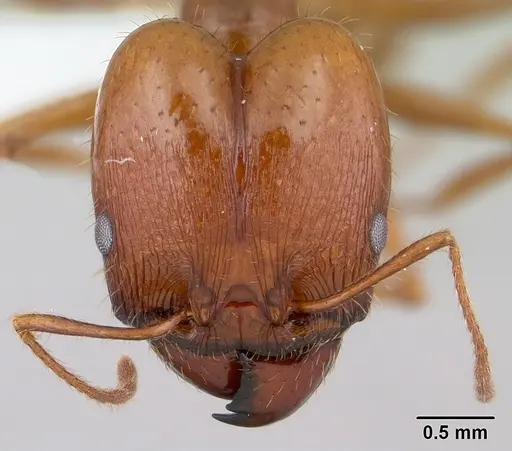
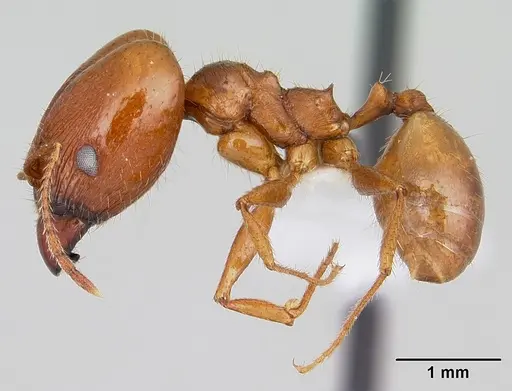
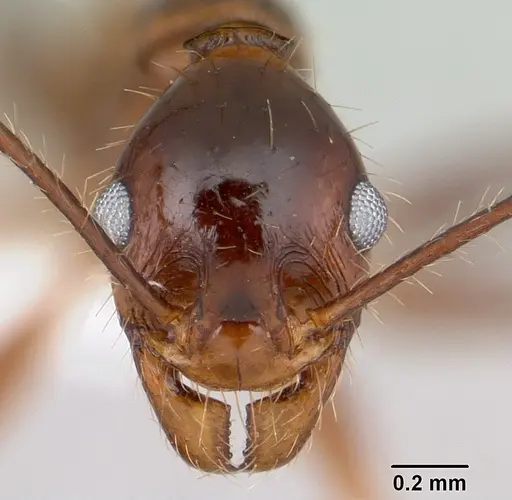
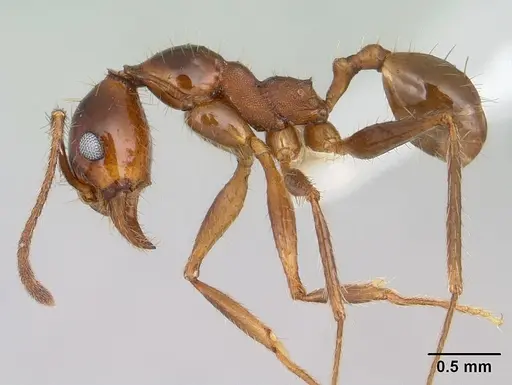
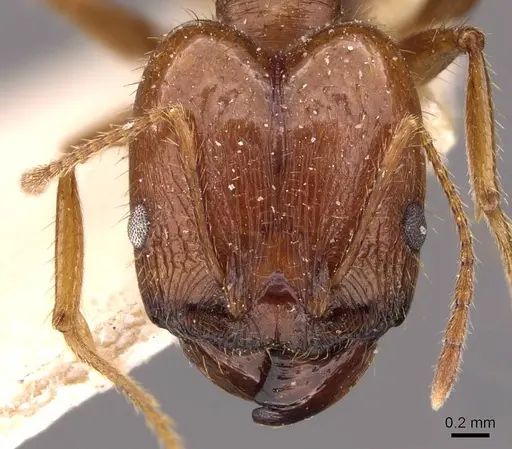
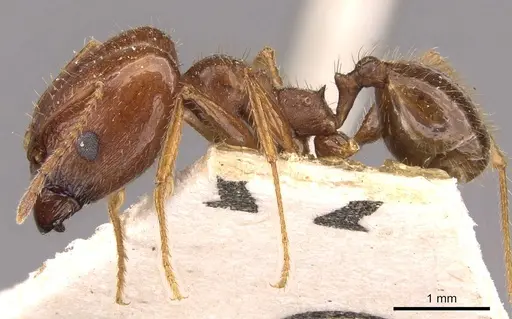
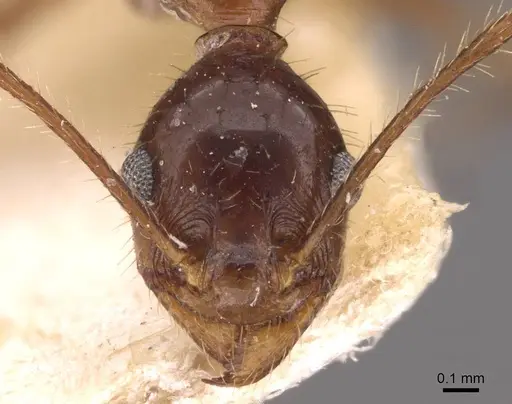
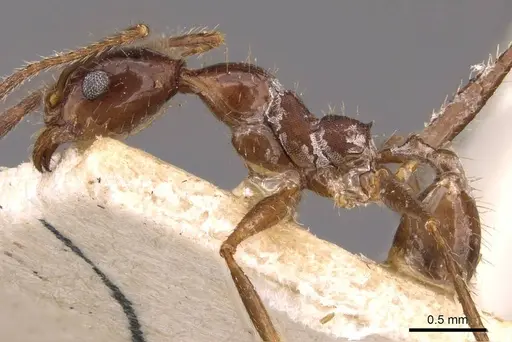
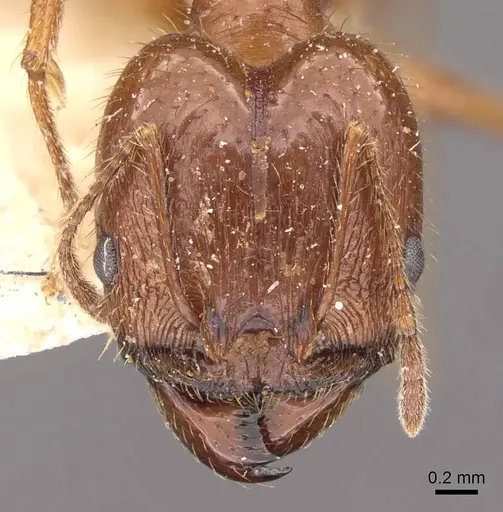
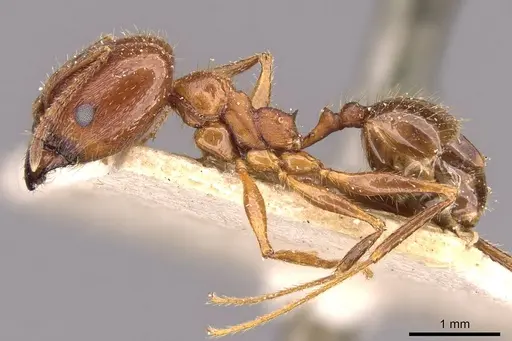
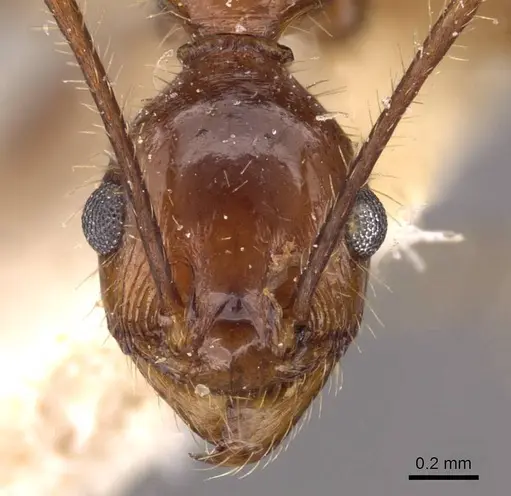
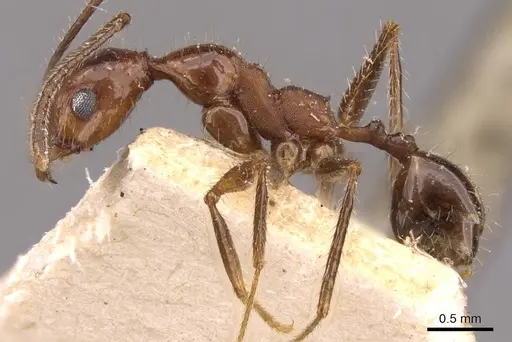
Pheidole oxyops is a large, aggressive Pheidole species native to South America, found across Brazil, Paraguay, and northern Argentina. They inhabit cerrado savanna and the edges of semideciduous forests. The species is easily recognized by its distinctive nesting behavior, they build deep subterranean nests with enormous entrance holes up to 12.2 cm in diameter that function as pitfall traps to capture walking arthropods. Workers are light brown in color, with major workers having a HW of about 1.9 mm and minor workers around 0.74 mm[1].
What makes this species particularly fascinating is their unique hunting strategy. Research shows they deliberately place feathers around their nest entrances, which enhances the pitfall trap's effectiveness by causing arthropods to slip and fall into the nest opening. This low-cost foraging strategy is especially valuable during periods of low food availability. They are mass-recruiting ants with extremely short-lived trail pheromones (about 5 minutes), making them incredibly efficient at locating and retrieving large prey items like dead insects.
Quick Summary
- Difficulty: Medium
- Origin & Habitat: Native to Brazil, Paraguay, and northern Argentina. Found in cerrado (savanna) and edges of semideciduous forest, from sea level up to 1500m altitude [2][1].
- Colony Type: Monogyne, single queen colonies. This is a large, aggressive species with documented dominance in its habitat [3].
- Colony: Monogyne
- Founding: Claustral
- Size & Growth:
- Queen: Not specifically documented for this species, but Pheidole queens are typically 7-12mm. Estimated 8-10mm based on genus patterns.
- Worker: Major workers: 1.90-1.92mm head width. Minor workers: 0.74mm head width,1.02mm body length.
- Colony: Large colonies, one of the most abundant ant species in South America with superdominant status. Studies show thousands of individuals in some areas [4][5].
- Growth: Moderate to fast, typical for Pheidole genus
- Development: Estimated 5-8 weeks at optimal temperature based on typical Pheidole development patterns. (Development time is inferred from genus patterns since specific data for P. oxyops is not available. Pheidole species typically develop faster in warm conditions.)
- Antkeeping:
- Temperature: Keep at 24-28°C. As a Neotropical species from Brazil, they prefer warm conditions. A heating cable on one side of the nest creates a suitable gradient.
- Humidity: Moderate humidity around 50-70%. Their natural habitat includes both mesic and xeric areas, so they are adaptable. Keep substrate consistently moist but not waterlogged.
- Diapause: Unconfirmed, as a tropical/subtropical species from Brazil, they likely do not require true hibernation. They may show reduced activity during cooler periods.
- Nesting: This species requires deep nesting space. In the wild, nests reach 5+ meters deep with multiple chambers. In captivity, provide deep soil setups or custom deep formicaria. They prefer to build in soil rather than acrylic nests.
- Behavior: Extremely aggressive foragers and dominant competitors. They use mass recruitment with extremely short-lived pheromone trails (about 5 minutes) to quickly marshal many workers to food sources. They specialize in rapid retrieval of large dead insects and use cooperative transport. Found in 94.6% of observations in competitive tropical habitats, making them highly successful foragers [6]. Escape prevention is important, they are active and will explore for weaknesses in the setup.
- Common Issues: Protein dependency, they are primarily carnivorous and require regular live or dead insect prey, sugar alone is insufficient, Deep nesting requirement, they may struggle in shallow formicaria and may not establish well if confined to inadequate space, Aggressive foraging means they can overwhelm and outcompete other ant species if housed in community setups, Queens can be difficult to locate as they are not commonly sold in the antkeeping hobby, Wild-caught colonies may have parasites that can affect captive success
Nest Preferences and Housing
Pheidole oxyops presents unique housing challenges due to their natural nesting behavior. In the wild, they build deep subterranean nests reaching 5 meters or more with 4-14 chambers connected by narrowing channels. The most distinctive feature is their enormous entrance hole, up to 12.2 cm in diameter, which functions as a pitfall trap to capture walking arthropods. For captive care, you will need to provide deep soil space or a custom deep formicarium. Standard acrylic nests with shallow chambers are not ideal. A naturalistic setup with deep soil (at least 15-20 cm deep) works best, or consider a custom-built deep acrylic nest. They prefer to excavate their own chambers in soil rather than occupy pre-made tunnels. The outworld should include a water source and protein food dishes. [1]
Feeding and Diet
This species is primarily carnivorous, making protein the cornerstone of their diet. In the wild, they are important predators, one study showed they accounted for 90% of ant predation on boll weevils in cotton fields, destroying 20% of the weevils [1]. They specialize in retrieving large dead insects and use cooperative transport to move heavy prey back to the nest. Their trail pheromone is extremely short-lived (about 5 minutes), which helps them quickly mobilize workers to ephemeral food sources like carrion. Feed them a variety of protein sources: mealworms, crickets, roaches, and other insects. Dead insects are readily accepted, they do not require live prey. Sugar water or honey can be offered occasionally but should not be the primary food source. They are not typical sugar-seekers like some ants, protein is what drives their colony growth.
Temperature and Seasonal Care
As a Neotropical species from Brazil and Paraguay, Pheidole oxyops prefers warm temperatures in the range of 24-28°C. They are found across various altitudes in their range (800-1500m) and in both wet and dry habitats, showing adaptability to temperature variations [2]. However, warmer conditions will promote faster brood development and more active foraging. Use a heating cable on one side of the nest to create a temperature gradient, allowing workers to self-regulate. Regarding diapause, true hibernation is unlikely as they come from a tropical/subtropical region. They may show reduced activity during cooler periods but do not require a cold rest period. Maintain stable temperatures year-round for best colony development.
Behavior and Foraging
Pheidole oxyops is an exceptionally aggressive and efficient forager. Studies show they are present in 94.6% of observations in competitive tropical habitats and dominate food resources [6]. They use mass recruitment with an extremely short-lived trail pheromone (approximately 5 minutes), this is one of the shortest-lived ant pheromones documented. Even a trail laid by a single forager is followed with over 85% accuracy at bifurcations. This allows them to rapidly exploit food sources before competitors arrive. They are diurnal with a strong preference for daytime foraging [7]. Workers will readily venture far from the nest in search of protein. Their famous feather-collecting behavior around nest entrances is a unique hunting adaptation, feathers cause arthropods to slip into the pitfall-trap entrance, providing a steady supply of live prey.
Unique Nesting Adaptation
The most remarkable aspect of Pheidole oxyops biology is their feather-collecting behavior. Researchers tested two hypotheses: that feathers enhance arthropod capture (the pitfall trap effect) and that feathers provide water retention for moisture. Only the first hypothesis was supported, feathers significantly enhance prey capture by causing insects to fall into the large nest entrance. This is considered a low-cost foraging strategy particularly important during periods of low food availability. In captivity, you might observe similar behavior if you provide small, lightweight items near the nest entrance. This species truly exemplifies how ants have evolved sophisticated hunting strategies beyond simple foraging. [1]
Frequently Asked Questions
Is Pheidole oxyops a good beginner ant?
This species is rated as medium difficulty. While they are aggressive and hardy, they have specific needs that make them better suited for intermediate antkeepers. They require deep nesting space, regular protein feeding, and warm temperatures. They are not commonly available in the antkeeping hobby, which adds to the challenge.
How long does it take for Pheidole oxyops to raise first workers?
Based on typical Pheidole development patterns, expect 5-8 weeks from egg to first worker at optimal temperature (24-28°C). Specific development data for P. oxyops is not available, so this is an estimate. Warmer temperatures within their range will speed development.
What do Pheidole oxyops eat?
They are primarily carnivorous. Feed them protein-rich foods like mealworms, crickets, roaches, and other insects. Dead insects are readily accepted, they specialize in retrieving large carrion. Sugar water or honey can be offered occasionally but should not be the primary food source.
Can I keep multiple Pheidole oxyops queens together?
No. This species is monogyne, meaning colonies have a single queen. Combining unrelated queens will result in fighting. Only keep one queen per colony.
What kind of nest do Pheidole oxyops need?
They need deep nesting space, in the wild, nests reach 5+ meters deep. Standard shallow formicaria are inadequate. Use a deep soil setup (at least 15-20 cm) or a custom deep acrylic nest. They prefer to excavate their own chambers in soil.
How big do Pheidole oxyops colonies get?
They form large colonies, this is one of the most abundant and dominant ant species in South America. Studies show superdominant status with thousands of individuals in some populations [4][5].
Do Pheidole oxyops need hibernation?
Unlikely. As a Neotropical species from Brazil and Paraguay, they do not require true hibernation. They may show reduced activity during cooler periods but do not need a cold rest period. Maintain warm temperatures year-round.
Why do they collect feathers?
This is one of their most fascinating behaviors. They place feathers around their enormous nest entrance (up to 12.2 cm diameter) to enhance prey capture. The feathers cause walking arthropods to slip and fall into the pitfall-trap opening, providing a steady supply of live prey. This is a low-cost foraging strategy especially important during food-scarce periods.
Are Pheidole oxyops aggressive?
Yes, extremely so. They are mass-recruiting, aggressive foragers that dominate food resources. Studies show they are present in nearly all observations in competitive habitats and quickly overwhelm competitors [6][3]. Handle with care and ensure excellent escape prevention.
References

This caresheet is licensed under CC BY-SA 4.0 .
CASENT0178043
View on AntWeb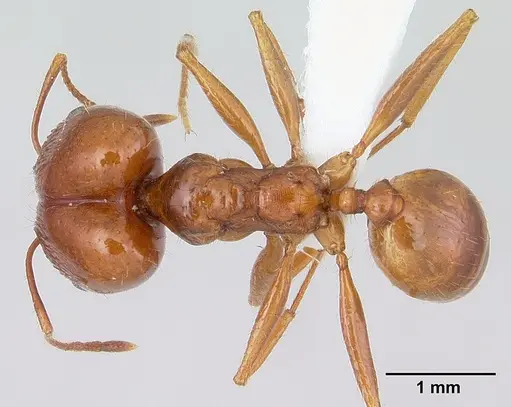
CASENT0178044
View on AntWeb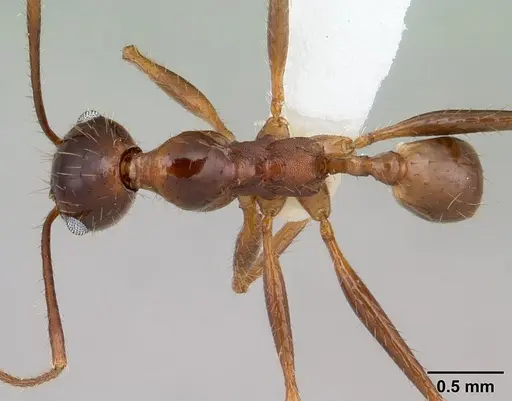
CASENT0908193
View on AntWeb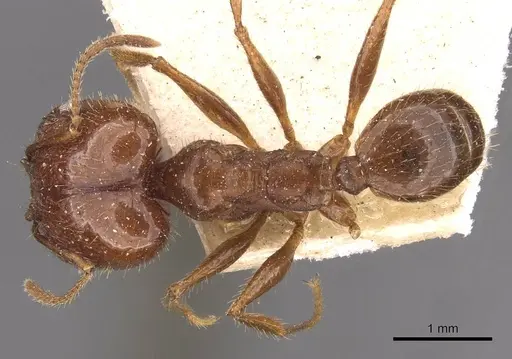
CASENT0908194
View on AntWeb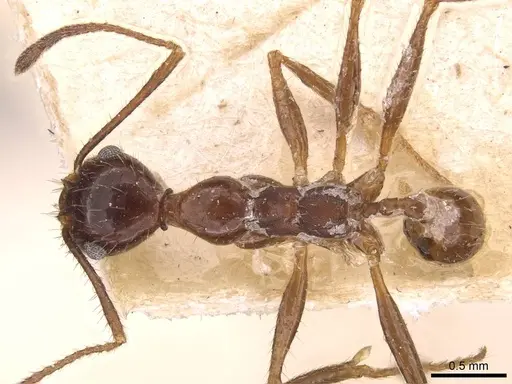
CASENT0908196
View on AntWeb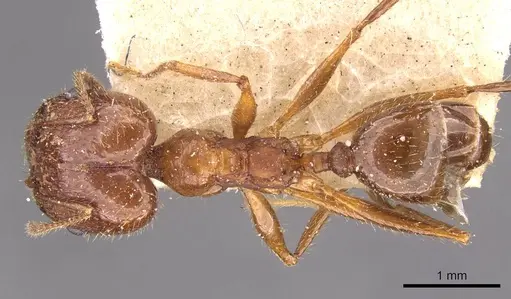
CASENT0908197
View on AntWeb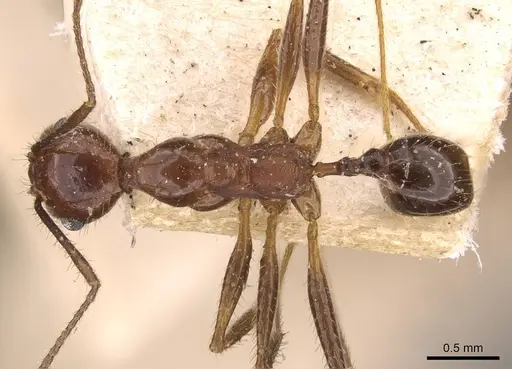
Literature
Loading...Loading products...