

Pheidole nitidobruna
- Scientific Name
- Pheidole nitidobruna
- Tribe
- Attini
- Subfamily
- Myrmicinae
- Author
- Salata & Fisher, 2020
- Distribution
- Found in 1 countries
Pheidole nitidobruna Overview
Pheidole nitidobruna is an ant species of the genus Pheidole. It is primarily documented in 1 countries , including Madagascar. Detailed taxonomic data and occurrence records can be further explored via authoritative databases such as AntWeb or the Global Biodiversity Information Facility (GBIF).
Pheidole nitidobruna
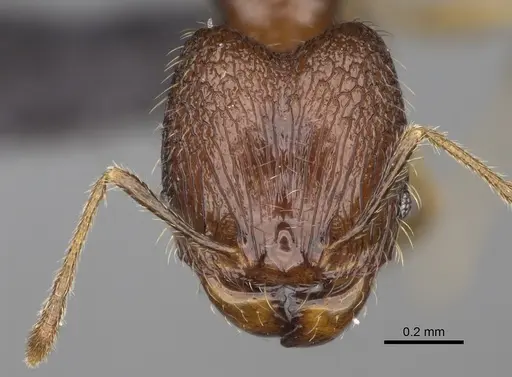
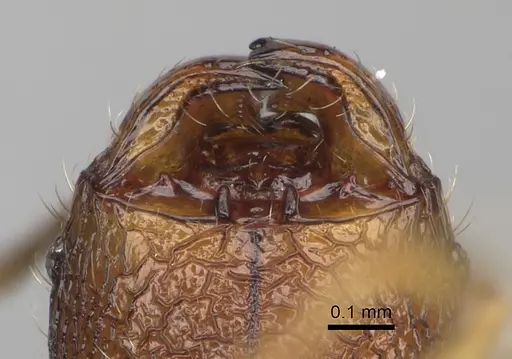
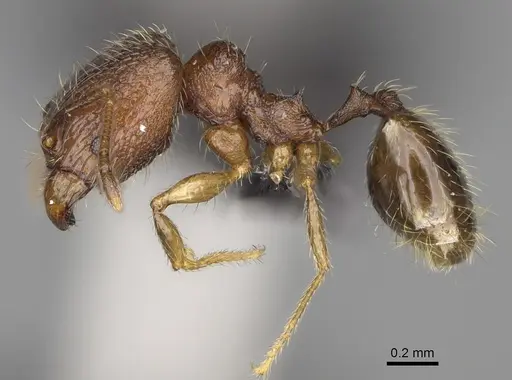
Pheidole nitidobruna is a tiny ant species from the sikorae species group, recently described in 2020 from Madagascar. These ants are among the smallest Pheidole species, with major workers reaching just 0.9mm and minor workers at only 0.44mm [1]. The species gets its name from the Latin for 'smooth and brown', majors are brown with yellow legs, while minors are yellowish brown throughout [1]. They belong to the Attini tribe and feature the characteristic major/minor worker caste system common to all Pheidole, where larger 'soldier' majors defend the colony while smaller minors handle most tasks.
This species was discovered in the Makirovana forest in northern Madagascar at 550m elevation, living in rainforest conditions [1]. The nest was located in a rotten log, indicating they prefer damp, decaying wood habitats typical of many tropical Pheidole species. As a recently described species, captive husbandry information is limited, but their placement in the sikorae group and natural history provides guidance for successful keeping.
Quick Summary
- Difficulty: Medium
- Origin & Habitat: Northern Madagascar (Antsiranana region), Makirovana forest at 550m elevation, rainforest habitat. Nests in rotten logs [1].
- Colony Type: Monogyne (single queen) colony structure is typical for the genus Pheidole. Colonies develop major and minor worker castes.
- Colony: Monogyne
- Founding: Claustral
- Size & Growth:
- Queen: Estimated 6-8mm based on genus Pheidole patterns [2]
- Worker: Major workers: 0.79-0.9mm, Minor workers: 0.38-0.44mm [1]
- Colony: Likely reaches several thousand workers at maturity based on typical Pheidole colony development [2]
- Growth: Moderate, typical for tropical Pheidole species
- Development: Estimated 5-8 weeks at optimal tropical temperatures based on related species [2] (Development is temperature-dependent, warmer conditions within safe range accelerate development)
- Antkeeping:
- Temperature: Keep at 24-28°C. As a tropical rainforest species from Madagascar, they need consistent warmth. A heating cable on one side of the nest creates a gentle gradient [2].
- Humidity: High humidity is essential, aim for 70-80%. Their natural habitat in rainforest and rotten logs indicates damp conditions. Keep the nest substrate consistently moist but not waterlogged. Provide a water tube for drinking access.
- Diapause: No, this is a tropical species that does not require hibernation. Maintain warm conditions year-round.
- Nesting: Y-tong (acrylic) nests or plaster nests work well. The key is providing humid conditions with some damp substrate or a water reservoir. Avoid dry setups. A small test tube setup with consistent moisture works for founding colonies.
- Behavior: Pheidole nitidobruna is generally calm and non-aggressive. The major workers (soldiers) are tiny but will defend the colony if threatened. They are not known to sting and pose no danger to keepers. These ants are active foragers that will search for food throughout their territory. Their very small size means escape prevention must be excellent, they can squeeze through surprisingly tiny gaps. Use fine mesh on any ventilation and ensure all connections are sealed.
- Common Issues: escape prevention is critical due to their very small size, even minor gaps allow escape, high humidity requirements can lead to mold if ventilation is poor, tropical species will decline if temperatures drop below 20°C, colonies may be slow to establish initially, patience is needed during founding, wild-caught colonies may carry parasites that can affect captive health
Housing and Nest Setup
For founding colonies, a simple test tube setup works well. Fill a test tube one-third with water, plug with cotton, and place the queen in a dark area. The queen will seal herself into a chamber and remain there while laying eggs. Once workers emerge (after 5-8 weeks), you can continue in the test tube or transition to a small formicarium.
For established colonies, Y-tong (acrylic) nests or plaster nests with a water reservoir maintain the humidity this species needs. The nest should have chambers scaled to their tiny size, small passages and tight spaces suit them better than large open areas. Include a section of damp substrate or rotting wood material to simulate their natural rotten log habitat. An outworld for foraging allows you to observe their hunting and foraging behavior. [1][2]
Feeding and Diet
Pheidole nitidobruna is an omnivorous ant that will accept both protein and carbohydrate sources. For protein, offer small insects like fruit flies, pinhead crickets, small mealworms, or other tiny arthropods appropriate to their size. They are Attini tribe members, meaning they may also cultivate fungi, but protein prey should form the primary diet.
For carbohydrates, provide sugar water, honey, or diluted honey water. Change these every few days to prevent mold. Fresh water should always be available. Feed protein prey 2-3 times per week, and keep a constant sugar source available. Remove uneaten prey after 24-48 hours to prevent mold issues. [2]
Temperature and Seasonal Care
As a tropical species from Madagascar, Pheidole nitidobruna requires warm conditions year-round. Maintain temperatures between 24-28°C in the nest area. A heating cable placed on one side of the nest creates a temperature gradient that allows ants to self-regulate. Room temperature alone may be insufficient if your home is below 24°C.
This species does not require diapause (winter rest). Unlike temperate species that need hibernation, these ants remain active throughout the year when kept warm. Do not expose them to temperatures below 20°C for extended periods, as this can weaken or kill the colony. Consistent warmth is one of the most important factors for success with this species. [1][2]
Colony Development and Growth
The colony starts with a claustral founding where the queen seals herself in a chamber and raises the first brood using stored fat reserves. She will lay eggs, which develop into larvae, then pupae, and finally emerge as nanitic (first) workers. This process typically takes 5-8 weeks at optimal temperatures.
The first workers are smaller than mature workers but immediately begin foraging to feed the queen and subsequent brood. As the colony grows, larger major workers will appear. These majors have enlarged heads for defense and seed processing. A mature colony can contain thousands of workers across both castes. Growth rate is moderate, expect several months before you have a substantial worker force, and a year or more to reach several hundred workers. [2]
Behavior and Temperament
Pheidole nitidobruna is a peaceful species that focuses on foraging and brood care rather than aggression. Major workers serve as defenders but are not particularly aggressive toward keepers. They do not possess a painful sting, making them safe to handle.
These ants are active foragers that will send workers out to discover and retrieve food. They use chemical trails to guide nestmates to food sources. The major workers may assist with breaking apart larger prey items. Their small size and active foraging make them interesting to observe, especially when major and minor workers interact. The caste system, with distinct major and minor workers, provides visual interest as you can observe the different body forms performing different roles. [2]
Frequently Asked Questions
How long does it take for Pheidole nitidobruna to produce first workers?
Expect first workers (nanitics) to emerge in 5-8 weeks after the queen lays eggs, assuming optimal temperatures of 24-28°C. This is typical for tropical Pheidole species. Cooler temperatures will slow development significantly.
What do Pheidole nitidobruna ants eat?
They are omnivores that accept both protein and sugar. Feed small insects like fruit flies, pinhead crickets, or small mealworms for protein. Provide sugar water, honey, or diluted honey water for carbohydrates. Remove uneaten prey after a day or two.
What temperature do Pheidole nitidobruna ants need?
Keep them warm at 24-28°C. This tropical species does not tolerate cool temperatures well, avoid anything below 20°C. A small heating cable on part of the nest helps maintain proper temperatures.
How big do Pheidole nitidobruna colonies get?
Based on typical Pheidole patterns, colonies can reach several thousand workers at maturity. Major workers are about 0.9mm and minors are around 0.44mm, they are among the smallest Pheidole species.
Can I keep multiple queens together?
No, Pheidole is typically monogyne (single queen). Combining unrelated queens is not recommended and typically results in fighting. Each colony should have one founding queen.
Do Pheidole nitidobruna ants need hibernation?
No, this is a tropical species from Madagascar and does not require diapause or hibernation. Keep them warm year-round at 24-28°C.
Why are my Pheidole nitidobruna escaping?
Their very small size means they can escape through tiny gaps. Use fine mesh on all ventilation, seal all connections, and ensure lid seals are tight. Even gaps that seem insignificant to you are large enough for these tiny ants.
What humidity level do Pheidole nitidobruna ants need?
High humidity of 70-80% is essential. Their natural habitat in rainforest and rotten logs indicates they need damp conditions. Keep nest substrate consistently moist but not waterlogged, and provide a water tube for drinking.
Are Pheidole nitidobruna ants good for beginners?
They are rated as medium difficulty. While not the easiest species, their basic care requirements are straightforward. The main challenges are escape prevention due to their tiny size and maintaining proper humidity and temperature.
References

This caresheet is licensed under CC BY-SA 4.0 .
CASENT0245024
View on AntWeb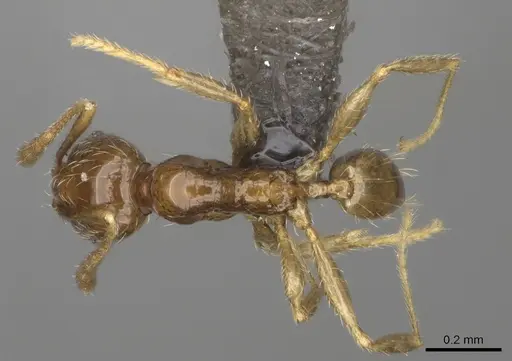
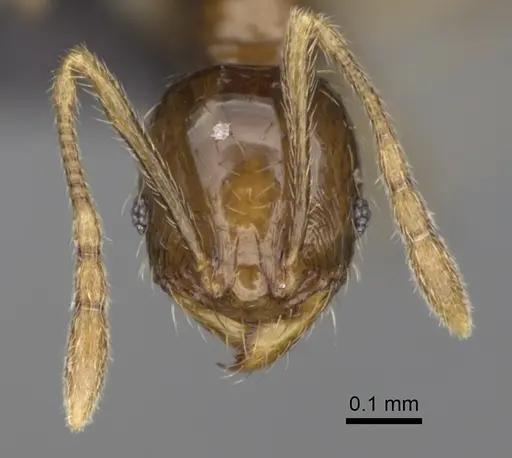
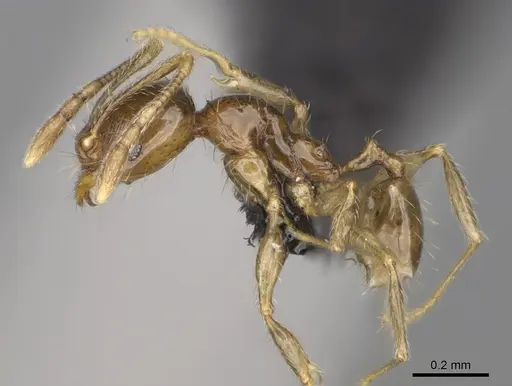
CASENT0923273
View on AntWeb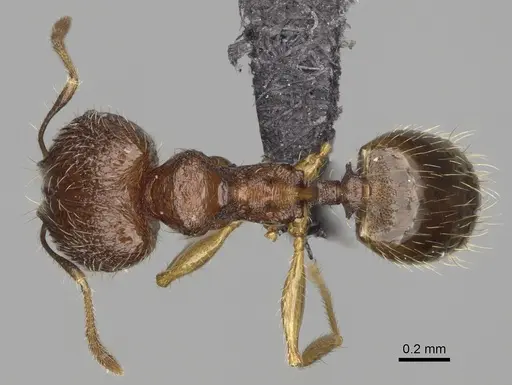
Literature
Loading...Loading products...