

Pheidole nesiota
- Scientific Name
- Pheidole nesiota
- Tribe
- Attini
- Subfamily
- Myrmicinae
- Author
- Wilson, 2003
- Distribution
- Found in 1 countries
Pheidole nesiota Overview
Pheidole nesiota is an ant species of the genus Pheidole. It is primarily documented in 1 countries , including Brazil. Detailed taxonomic data and occurrence records can be further explored via authoritative databases such as AntWeb or the Global Biodiversity Information Facility (GBIF).
Pheidole nesiota
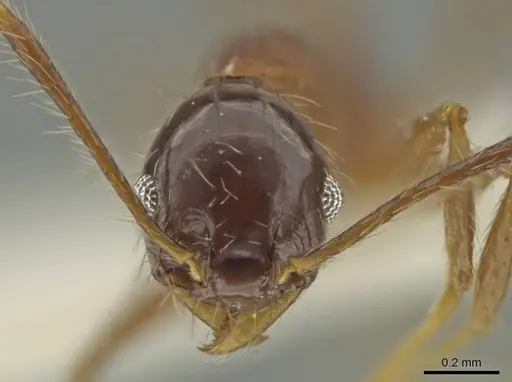
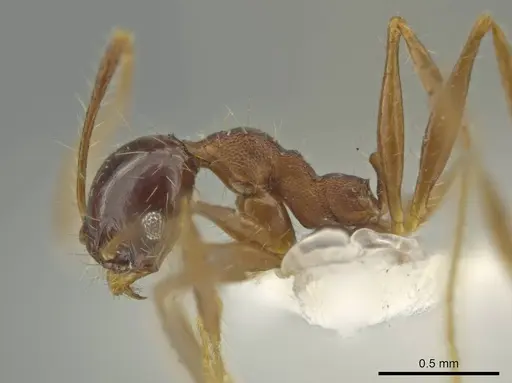
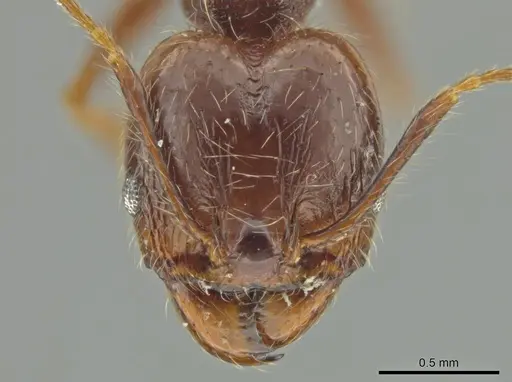
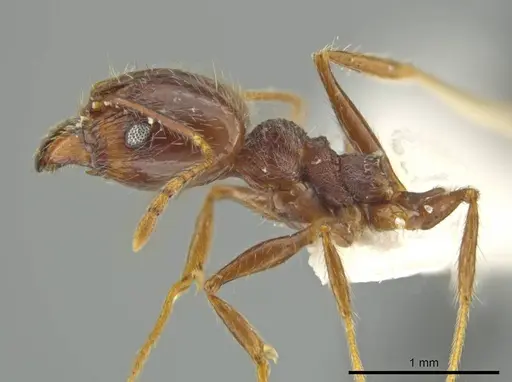
Pheidole nesiota is a small Neotropical ant species native to the Atlantic coast of Brazil, specifically known only from the type locality on Ilha do Cardoso in Cananéia. The species belongs to the fallax group and was described by Wilson in 2003. Major workers measure 1.16mm with a medium brown body and yellowish brown appendages, while minor workers are smaller at 0.50mm and appear yellowish brown with clear yellow tarsi. This species is a generalist forager with a slight preference for daytime activity, and it broadly uses attractive food resources in its native habitat [1][2].
Quick Summary
- Difficulty: Easy
- Origin & Habitat: Atlantic forest of southeastern Brazil (Cananéia, São Paulo state). The type locality is Ilha do Cardoso, an island off the coast where the species was collected from forest habitat [2].
- Colony Type: Colony structure is unconfirmed for this species. Based on typical Pheidole patterns, colonies likely have a single queen (monogyne), though some Pheidole species can form multi-queen colonies.
- Size & Growth:
- Queen: Unknown, not described in original description
- Worker: Major: 1.16mm, Minor: 0.50mm [2]
- Colony: Unknown, typical Pheidole colonies reach several hundred to a few thousand workers
- Growth: Moderate, based on genus patterns
- Development: Estimated 6-8 weeks at optimal tropical temperatures based on related Pheidole species (Development time is inferred from genus patterns, specific data for this species is unavailable)
- Antkeeping:
- Temperature: Keep at 24-28°C. As a Brazilian tropical species, they prefer warm conditions. A heating cable on one side of the nest creates a suitable gradient.
- Humidity: Maintain moderate to high humidity (60-80%). Their Atlantic forest origin indicates they prefer damp conditions. Keep the nest substrate consistently moist but not waterlogged.
- Diapause: No, being a tropical species from Brazil, they do not require hibernation. Keep temperatures stable year-round.
- Nesting: Y-tong (AAC) nests or plaster nests work well. In nature they likely nest in soil or rotting wood in forest floor habitats. Provide a nest with chambers scaled to their small size.
- Behavior: This species is a generalist forager with slight daytime preference. Workers are active and will readily exploit various food resources. Major workers (soldiers) are present for defense and seed processing. Escape risk is moderate, their small size means fine mesh barriers are recommended. They are not known to be particularly aggressive toward keepers.
- Common Issues: colonies may be slow to establish initially due to small colony size at acquisition, humidity control is important, too dry and brood will fail to develop, tropical species are sensitive to temperature drops below 20°C, small minor workers can escape through standard mesh, use fine mesh barriers, limited availability since the species is rarely collected or traded
Housing and Nest Setup
Pheidole nesiota is a small ant species well-suited to standard formicarium setups. Y-tong (AAC) nests or plaster nests work particularly well for this species, as they provide good humidity control and allow you to observe the colony easily. The nest chambers should be appropriately scaled to their tiny size, minor workers are only 0.5mm, so passages should be snug but not restrictive. A test tube setup works well for founding colonies, with a water reservoir connected to a foraging area. Since they come from the humid Atlantic forest, ensure the nest maintains consistent moisture without becoming waterlogged. An outworld (foraging area) should be attached for food introduction and waste removal. [2]
Feeding and Diet
As a generalist species (δ15N = 6.13‰ indicates omnivorous diet), Pheidole nesiota accepts a wide variety of foods. In captivity, offer protein sources such as small insects (fruit flies, pinhead crickets, mealworms), and provide sugar sources like honey water or sugar water regularly. Their slight preference for daytime foraging means they are most active when food is introduced during daylight hours. Feed protein every 2-3 days and keep sugar water available at all times. The presence of major workers (soldiers) suggests they can process larger prey and potentially seeds, so offering varied food sizes is beneficial. [1]
Temperature and Humidity
Being native to the Atlantic coast of São Paulo, Brazil, this species thrives in warm, humid conditions. Maintain temperatures between 24-28°C for optimal brood development. A heating cable placed on one side of the nest creates a temperature gradient that allows workers to self-regulate. Humidity should be kept at 60-80%, mimicking their forest floor origin. Monitor substrate moisture regularly, it should feel damp but not have standing water. Unlike temperate species, they do not require any cooling period or hibernation. Keep them away from air conditioning vents and drafts that could cause temperature fluctuations. [2]
Colony Development
Pheidole colonies develop through distinct phases. The founding queen seals herself in a chamber (claustral founding) and raises the first brood using stored energy reserves. These first workers (nanitics) are typically smaller than normal workers. Once the first nanitics emerge, the colony enters a growth phase where the queen focuses on egg production while workers take over all foraging and brood care. Based on typical Pheidole development, expect 6-8 weeks from egg to first worker at optimal temperatures. Colonies then grow gradually, with major workers appearing as the colony reaches several dozen workers. Patience is key, Pheidole species often take several months to establish firmly.
Behavior and Observation
Workers of Pheidole nesiota show slight daytime preference in foraging activity, though they remain active at other times. The species uses a generalist foraging strategy, readily exploiting various food resources. Major workers (soldiers) develop alongside minors and serve roles in defense and food processing. Workers communicate through chemical trails and can recruit nestmates to food discoveries. Watching the interaction between majors and minors is one of the enjoyable aspects of keeping this species. They are not particularly aggressive but will defend the nest if threatened. Their small size makes them quick-moving and active, providing entertaining observation. [1][2]
Frequently Asked Questions
How long does it take for Pheidole nesiota to produce first workers?
Based on typical Pheidole development patterns, expect 6-8 weeks from egg to first worker at optimal temperatures (24-28°C). This is an estimate since specific development data for this species is not available.
What do Pheidole nesiota ants eat?
They are generalist omnivores. Offer small insects (fruit flies, pinhead crickets, mealworms) as protein sources 2-3 times per week, and keep sugar water or honey water available constantly.
Do Pheidole nesiota ants need hibernation?
No. As a tropical species from Brazil, they do not require hibernation. Keep temperatures stable year-round between 24-28°C.
What temperature is best for Pheidole nesiota?
Keep them at 24-28°C. This tropical species prefers warm conditions. A heating cable on one side of the nest creates a suitable gradient.
Are Pheidole nesiota good for beginners?
Yes, they are considered easy to keep. They are generalist feeders, tolerate a range of humidity levels, and do not require special winter care. Their small size and moderate escape risk require attention to proper housing.
How big do Pheidole nesiota colonies get?
Colony size is not documented for this specific species, but typical Pheidole colonies reach several hundred to a few thousand workers.
Can I keep multiple Pheidole nesiota queens together?
Colony structure is unconfirmed for this species. Based on typical Pheidole patterns, single-queen colonies are most common. Combining unrelated queens is not recommended since it has not been studied for this species.
When should I move Pheidole nesiota to a formicarium?
Move from a test tube setup to a formicarium once the colony reaches 20-30 workers and the test tube shows signs of degradation. Ensure the new setup maintains appropriate humidity.
Why is my Pheidole nesiota colony declining?
Common causes include: temperatures below 20°C, too dry nesting conditions, poor nutrition, or mold from excessive moisture. Check temperature and humidity levels first. Ensure fresh protein and sugar water are being offered.
References

This caresheet is licensed under CC BY-SA 4.0 .
CASENT0645837
View on AntWeb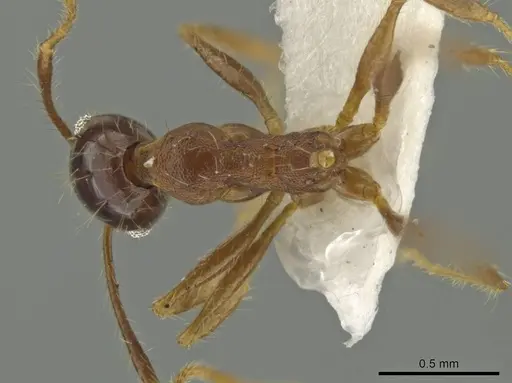
JTLC000016470
View on AntWeb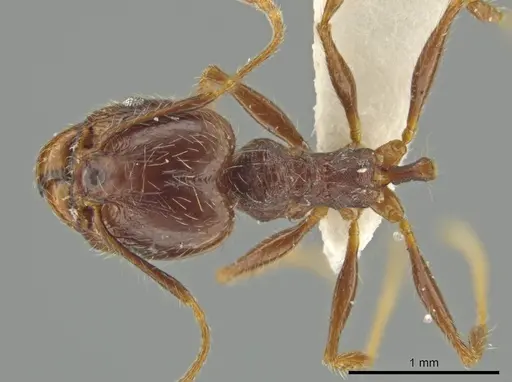
Literature
Loading...Loading products...