
Pheidole navigans shows a April to August flight window. Peak activity occurs in May, with nuptial flights distributed across 4 months.
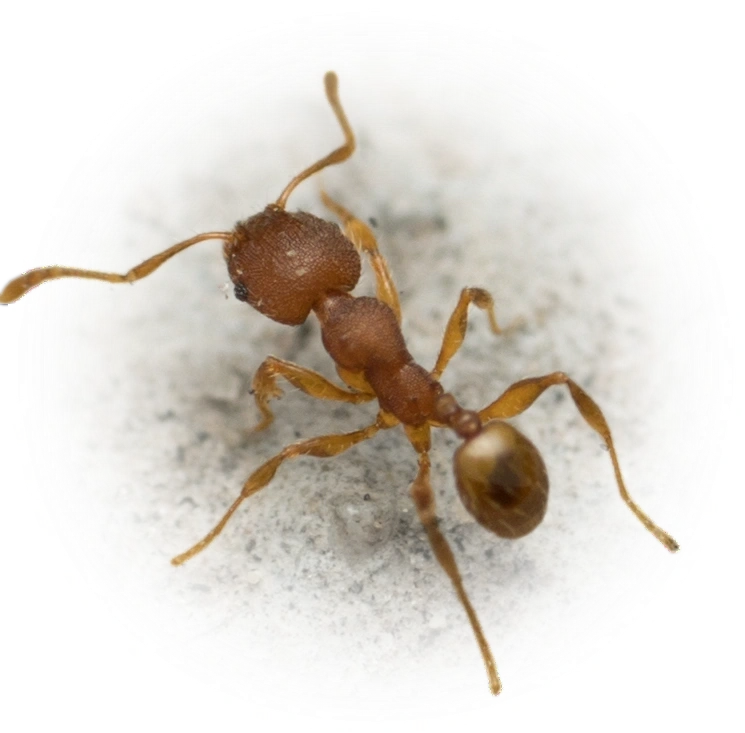
Pheidole navigans
- Scientific Name
- Pheidole navigans
- Tribe
- Attini
- Subfamily
- Myrmicinae
- Author
- Forel, 1901
- Common Name
- Navigating Big-headed Ant
- Distribution
- Found in 2 countries
- Nuptial Flight
- from April to August, peaking in May
AI Identifiable
try →
Pheidole navigans Overview
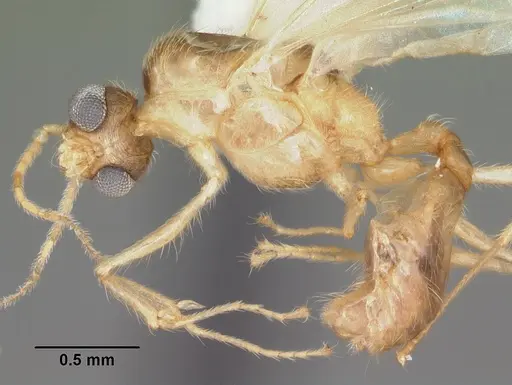
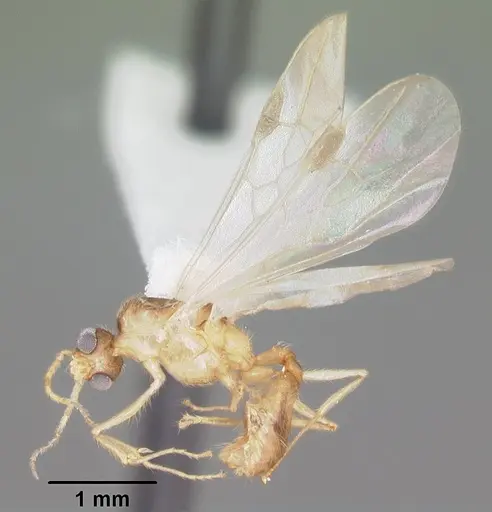
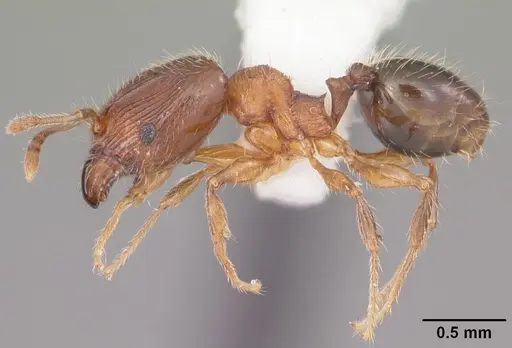
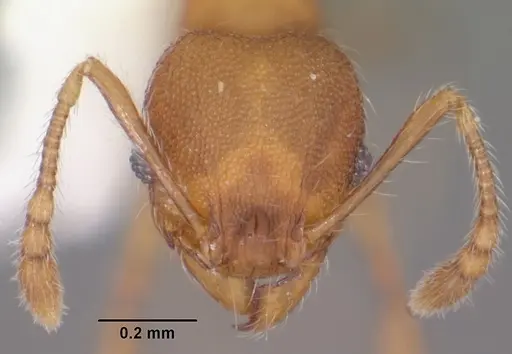
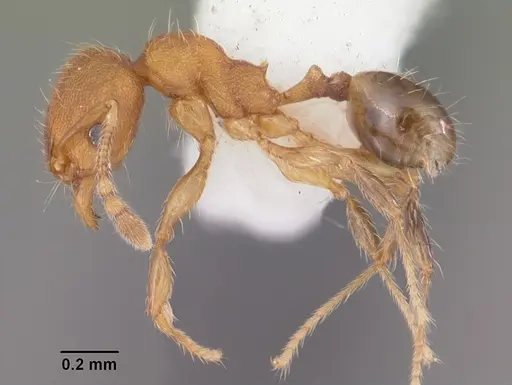
Pheidole navigans (commonly known as the Navigating Big-headed Ant) is an ant species of the genus Pheidole. It is primarily documented in 2 countries , including Argentina, United States of America. Detailed taxonomic data and occurrence records can be further explored via authoritative databases such as AntWeb or the Global Biodiversity Information Facility (GBIF).
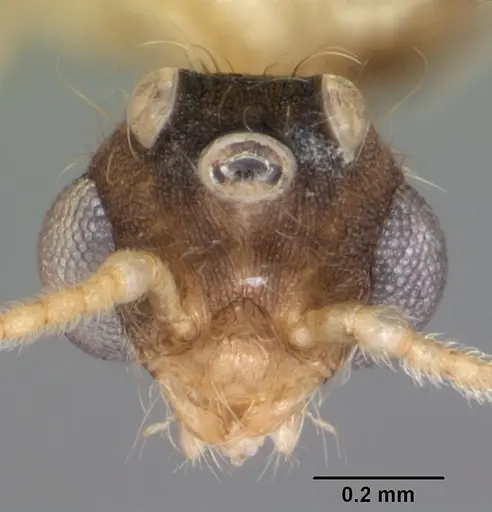
The nuptial flight of Pheidole navigans is a significant biological event, typically occurring from April to August, peaking in May. During this time, winged queens and males leave the nest to mate and establish new colonies.
Pheidole navigans - "Navigating Big-headed Ant"
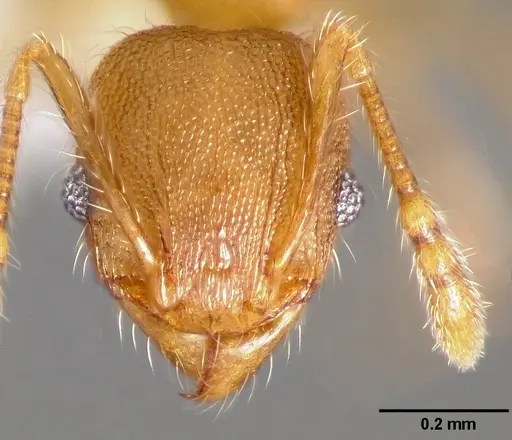
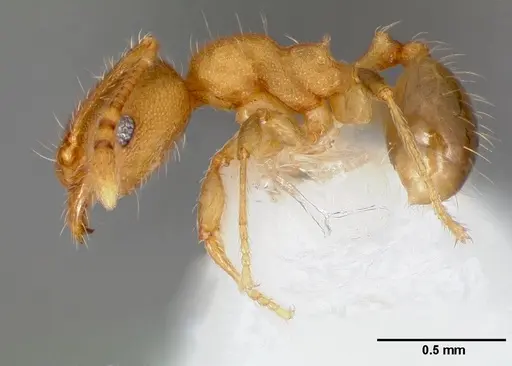
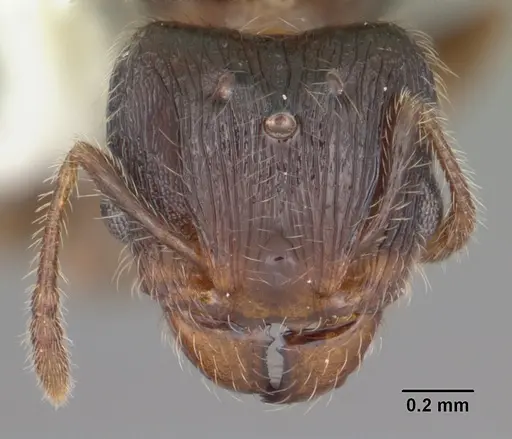
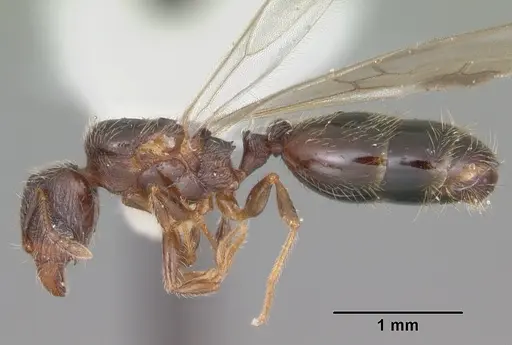
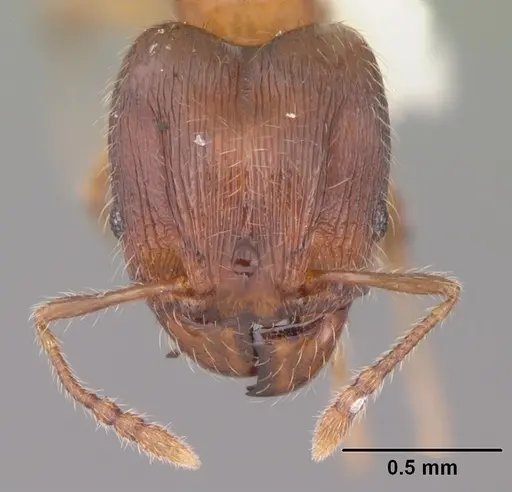
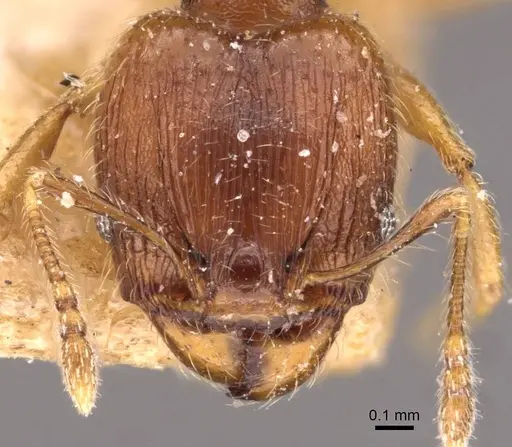
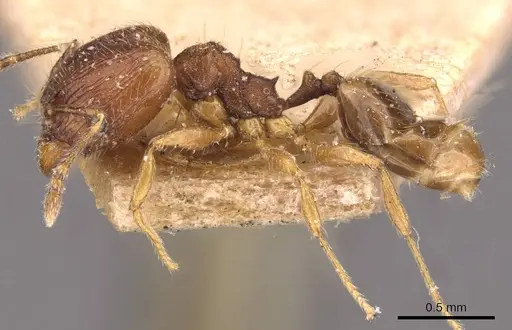
Pheidole navigans is a small, reddish-brown ant belonging to the P. flavens complex. It gets its common name from the major workers, which have disproportionately large heads filled with powerful mandibles capable of grinding seeds [1]. This species is native to the Neotropical region of central and northern South America but has spread widely through the southeastern United States and other warm regions around the world [2]. The ants are distinguished by their two worker castes: minor workers are tiny at 0.44-0.51mm, while majors are chunkier at 0.80-0.91mm with large crushing mandibles [1]. Colonies contain roughly five times more minor workers than majors, and queens measure 0.81-0.90mm in head width [1]. This species has become one of the most abundant introduced ants in the southeastern US, having increased dramatically in relative abundance since the 1960s [3][4].
Quick Summary
- Difficulty: Easy
- Origin & Habitat: Native to the Neotropical region (central and northern South America). Introduced to the southeastern United States, Canary Islands, and other warm regions. Found in moist woodlands and disturbed areas, nesting in rotting wood, soil under logs, and under boards or bark [2][1].
- Colony Type: Monogyne (single queen colonies). Multiple queens may start a nest together during founding, but colonies typically settle into single-queen structures as they mature [1].
- Colony: Monogyne
- Founding: Claustral, Pleometrosis
- Size & Growth:
- Queen: 0.74-0.83mm head length,0.81-0.90mm head width [1]
- Worker: Minor: 0.44-0.51mm, Major: 0.80-0.91mm [1]
- Colony: From a few hundred to several thousand workers [1]
- Growth: Moderate
- Development: 6-8 weeks (estimated based on typical Pheidole development) (Development time is typical for subtropical Pheidole species, faster than temperate ants but slower than tropical specialists)
- Antkeeping:
- Temperature: Keep at 24-28°C. This species thrives in warm conditions matching its Gulf Coast range. A heating cable on one side of the nest creates a suitable gradient [1].
- Humidity: Moderate to high humidity (60-80%). These ants naturally nest in rotting wood and moist soil, so keep the nest substrate damp but not waterlogged. Provide a water tube for drinking.
- Diapause: No, this species does not hibernate. It remains active year-round in warm conditions. In temperate climates, keep at room temperature through winter [1].
- Nesting: Y-tong (AAC) nests work well, or a naturalistic setup with rotting wood pieces and moist soil. They naturally nest in decaying logs and soil beneath wood. Provide a foraging area with substrate they can manipulate.
- Behavior: This species is not aggressive and poses no stinging threat, their sting is atrophied [1]. Workers are highly active foragers, readily attracted to both sugary and protein baits. Major workers use their large mandibles to crush seeds and process hard foods. Colonies can produce large numbers of winged reproductives (alates) from early May through late October in the wild [1]. They are accomplished escape artists due to their small size, use fine mesh barriers and tight-fitting lids. Workers readily explore and can find tiny gaps in equipment.
- Common Issues: escape prevention is critical, their small size means they squeeze through the tiniest gaps, large alate swarms can be a nuisance, queens and males often emerge in large numbers and may enter homes, colonies grow quickly and need expanding space, expect rapid growth from founding to hundreds of workers within months, do not release in non-native regions, this species is invasive and can disrupt native ecosystems, overfeeding can cause mold problems, remove uneaten food promptly
Nuptial Flight Activity Analysis 115 observations
Flight Activity by Hour 115 observations
Pheidole navigans nuptial flight activity peaks around 07:00 during the morning. Activity is spread across a 20-hour window (02:00–21:00). A secondary activity peak occurs around 05:00. Times may be influenced by human observation patterns.
Housing and Nest Setup
Pheidole navigans adapts well to various captive setups. Y-tong (acrylic) nests work excellently, the chambers should be appropriately scaled to their small size, with narrow passages that minor workers can navigate easily. Alternatively, a naturalistic setup with moist soil and rotting wood pieces mimics their natural nesting preferences. They naturally nest in decaying logs, under boards, at tree bases, and in soil beneath wood [1]. A test tube setup works for founding colonies, but be prepared to upgrade to a larger formicarium as the colony grows since they can reach thousands of workers. Connect the nest to a spacious outworld where foragers can search for food. Use cotton or a water tube as a hydration source.
Feeding and Diet
This species has a varied diet that makes feeding straightforward. They readily accept both protein and sugar sources. For protein, offer small insects like fruit flies, small crickets, mealworms, or frozen bloodworms. They also consume seeds, major workers have specialized mandibles capable of grinding seeds [5]. Offer small seeds like dandelion or grass seeds as enrichment. Sugar sources like honey water, sugar water, or ripe fruit are enthusiastically accepted. In the wild, they're attracted to a wide range of baits including hotdog, cookie crumbs, peanut butter, and brown sugar/yeast mixtures [1]. Feed protein 2-3 times per week and keep sugar water available constantly. Remove uneaten food within 24 hours to prevent mold.
Temperature and Seasonal Care
Keep your colony at 24-28°C for optimal growth and activity. This species originates from warm regions and thrives in heat similar to Gulf Coast conditions. A heating cable placed on part of the nest creates a temperature gradient that lets ants choose their preferred spot. They do not require hibernation or diapause, in fact, cold temperatures can slow their development significantly and may harm the colony [1]. In temperate climates, simply maintain room temperature through winter. However, avoid excessive heat above 32°C as this can stress the colony. Room temperature (20-24°C) is acceptable if your home runs warm, but expect slower growth and activity at cooler temperatures.
Colony Growth and Development
Pheidole navigans colonies grow from a single claustral queen who seals herself in a chamber and raises her first brood alone on stored body fat. The first workers (nanitics) are smaller than normal workers but will begin foraging once they emerge. Colonies can grow from founding to several hundred workers within the first year, with mature colonies potentially reaching several thousand workers [1]. The ratio of roughly 5 minor workers to every 1 major worker remains consistent as the colony grows [1]. Major workers develop from specialized larvae fed extra protein, you'll see them appear once the colony reaches a few hundred workers. Reproductives (alates) are produced in large numbers from spring through fall, with winged queens and males taking nuptial flights between early May and late October in the wild [1].
Behavior and Temperament
This species is peaceful and poses no threat to keepers, their sting is atrophied, meaning it's non-functional [1]. Workers are active foragers that readily explore their environment and discover food sources quickly. The major workers are fascinating to watch as they use their large mandibles to process hard foods like seeds. Colonies are not aggressive toward each other in the sense of territorial behavior, but they will defend against direct threats to the nest. Workers communicate through chemical trails and can recruit nestmates to food discoveries efficiently. One notable behavior is their production of large alate swarms, in the wild, these flights can involve thousands of winged reproductives and sometimes cause nuisance complaints when they emerge in homes [1]. Expect your colony to produce alates once it reaches maturity (typically 500+ workers).
Escape Prevention
Excellent escape prevention is essential with this species. Despite their small size, they are active and persistent explorers that will find and exploit tiny gaps. Use tight-fitting lids on all containers and formicariums. Apply fluon (ant escape prevention liquid) to the edges of any connections between nest and outworld. If using test tubes, wrap parafilm around the connection points. Fine mesh (0.5mm or smaller) is necessary for any ventilation openings. Check all seals regularly, these ants can squeeze through gaps barely visible to the human eye. The effort is worth it because escaped colonies can be extremely difficult to recapture and establish in homes. [1]
Frequently Asked Questions
How long does it take for the first workers to emerge?
Expect first workers (nanitics) to emerge around 6-8 weeks after the queen lays eggs, assuming optimal temperature (24-28°C). This is typical for Pheidole species in warm conditions.
Can I keep multiple queens together?
Multiple queens may start a colony together (pleometrosis), but colonies typically become single-queen as they mature [1]. It's not recommended to combine unrelated foundress queens, if you have multiple founding queens, it's safer to house them separately.
What do Pheidole navigans eat?
They accept a varied diet: protein sources like small insects (fruit flies, mealworms, small crickets), seeds that majors can grind, and sugar sources including honey water, sugar water, and ripe fruit [1][5].
Do they need hibernation?
No, this species does not hibernate. It remains active year-round in warm conditions. In temperate climates, simply maintain normal room temperature through winter [1].
Are Pheidole navigans good for beginners?
Yes, this is an excellent beginner species. They are easy to care for, not aggressive, have no sting, accept a wide variety of foods, and adapt well to captive conditions. The main challenge is escape prevention due to their small size.
How big do colonies get?
Colonies can grow from a few hundred workers to several thousand workers at maturity [1]. The ratio is roughly 5 minor workers for every major worker.
When will my colony produce alates?
Mature colonies typically produce winged reproductives (alates) once they reach several hundred workers. In the wild, flights occur from early May through late October [1]. Expect alates in your second year if the colony grows well.
What's the difference between minor and major workers?
Minor workers are the tiny foragers at 0.44-0.51mm, doing most of the foraging and brood care. Major workers have the distinctive large heads at 0.80-0.91mm with powerful crushing mandibles, used for processing seeds and hard foods [1]. Both castes work together in the colony.
References

This caresheet is licensed under CC BY-SA 4.0 .
CASENT0005742
View on AntWeb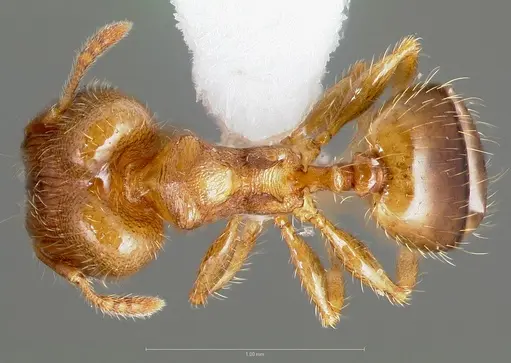
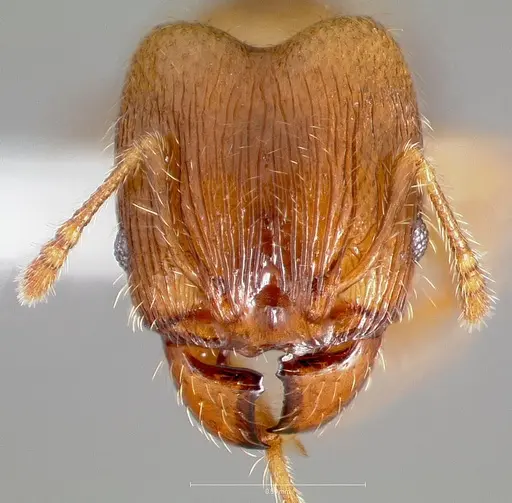
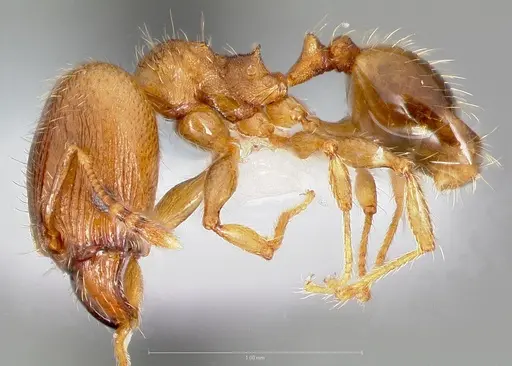
CASENT0005743
View on AntWeb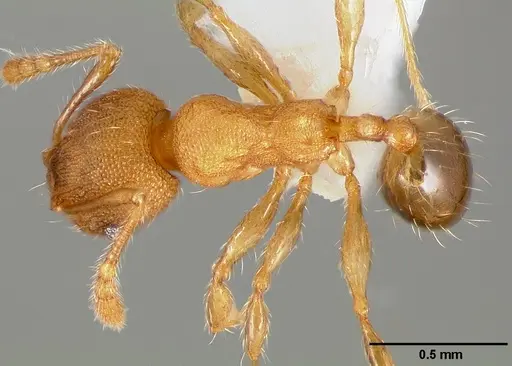
CASENT0104413
View on AntWeb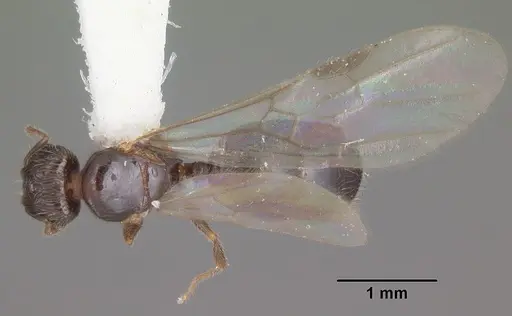
CASENT0104414
View on AntWeb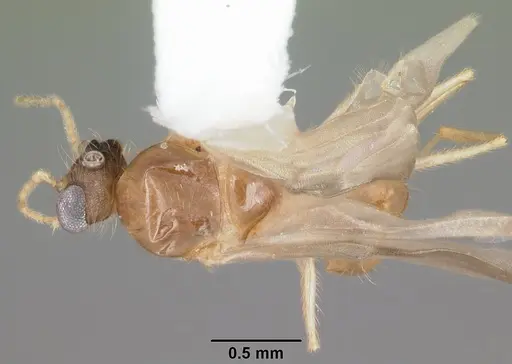
CASENT0104525
View on AntWeb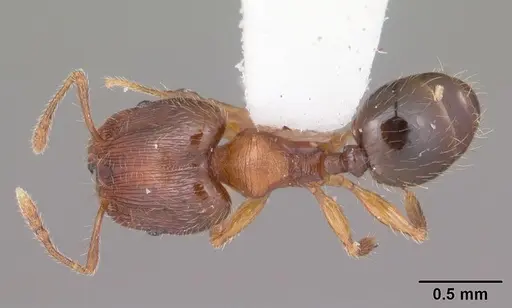
CASENT0104526
View on AntWeb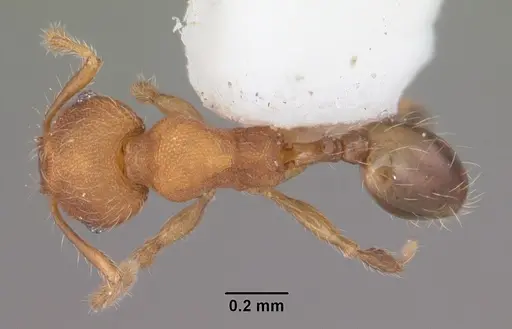
CASENT0639192
View on AntWeb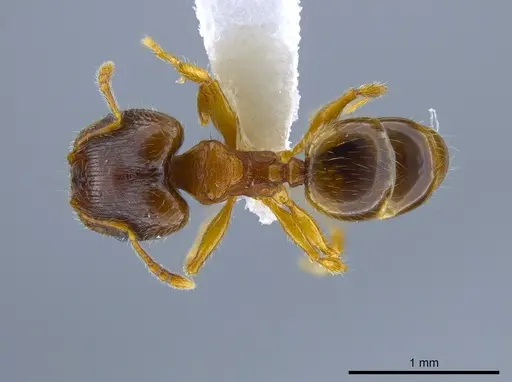
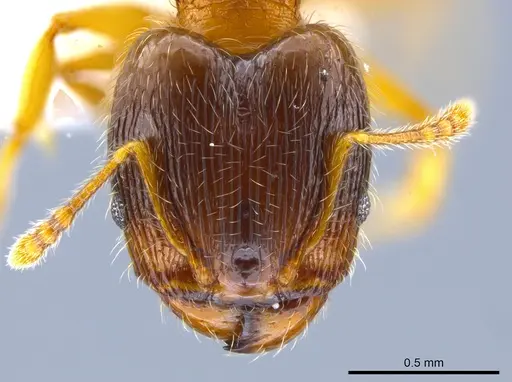
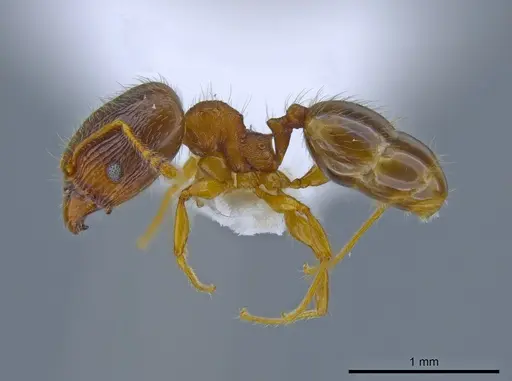
CASENT0908269
View on AntWeb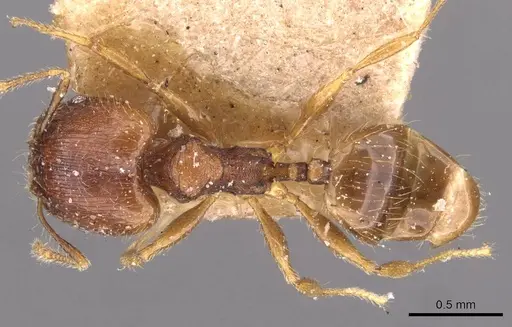
Literature
Loading...Loading products...