

Pheidole morelosana
- Scientific Name
- Pheidole morelosana
- Tribe
- Attini
- Subfamily
- Myrmicinae
- Author
- Wilson, 2003
- Distribution
- Found in 1 countries
Pheidole morelosana Overview
Pheidole morelosana is an ant species of the genus Pheidole. It is primarily documented in 1 countries , including Mexico. Detailed taxonomic data and occurrence records can be further explored via authoritative databases such as AntWeb or the Global Biodiversity Information Facility (GBIF).
Pheidole morelosana
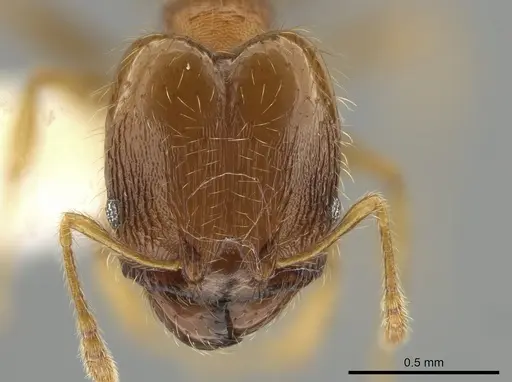
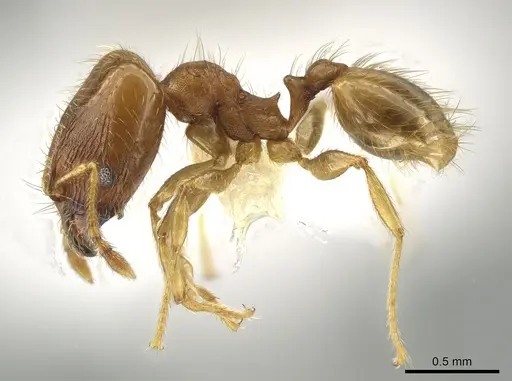
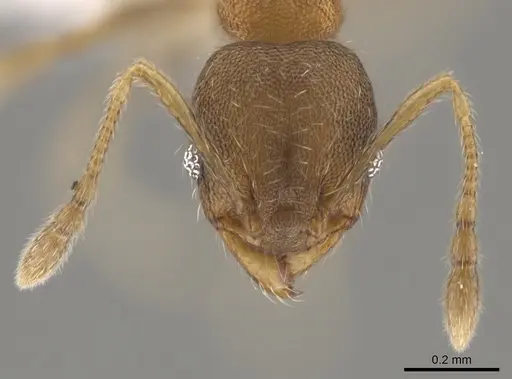
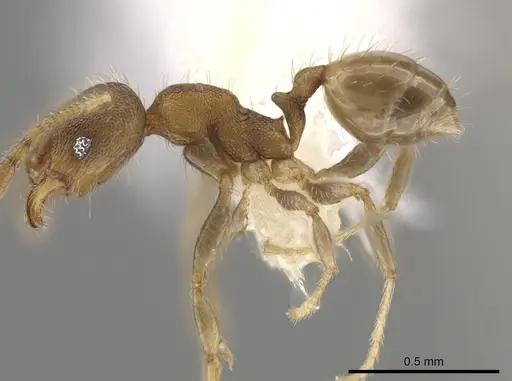
Pheidole morelosana is a tiny ant species only known from a single collection in Morelos, Mexico. Major workers have the characteristic big heads that give Pheidole their common name 'big-headed ants', they're dark yellow with notably dense, long hairs. Minor workers are smaller and medium yellow. This species was described in 2003 by E.O. Wilson and remains poorly known, no biological observations have been published. The genus Pheidole contains thousands of species worldwide and is known for having two worker castes: small workers (minors) that handle most tasks and large soldiers (majors) that defend the colony and crack seeds.
Quick Summary
- Difficulty: Unknown, too little is known to assess
- Origin & Habitat: Only known from Miacatlan, Morelos, Mexico. Likely occupies tropical or subtropical dry forest habitats typical of the region [1]
- Colony Type: Unconfirmed, colony structure has not been documented
- Size & Growth:
- Queen: Unknown, no queen specimens have been described
- Worker: Major: 0.78mm head width, Minor: 0.44mm head width [1]
- Colony: Unknown, no colony observations published
- Growth: Unknown
- Development: Unknown, no development data exists (Based on typical Pheidole patterns from related species, development likely takes 4-8 weeks at warm temperatures, but this is entirely estimated)
- Antkeeping:
- Temperature: Likely 22-28°C based on Mexican tropical distribution, start in the mid-20s and observe colony activity
- Humidity: Likely prefers moderate to dry conditions typical of central Mexican habitats, aim for 40-60% humidity with some dry areas available
- Diapause: Unknown, no seasonal data exists. Central Mexico has mild winters, so they may have reduced activity periods rather than true hibernation
- Nesting: Unknown, no natural nesting observations. Likely nests in soil or under stones like most Pheidole species. Test tubes work well for founding, small acrylic or Y-tong nests for established colonies
- Behavior: Not documented. Most Pheidole species are non-aggressive, with majors primarily serving as defenders and seed processors. They likely forage for seeds and tend honeydew-producing insects. Their tiny size (under 1mm) means excellent escape prevention is critical, use fine mesh barriers.
- Common Issues: no biological data exists, this species may have unique requirements unknown to science, escape prevention is critical due to tiny worker size, slow growth is normal for Pheidole, beginners may lose patience, wild-caught colonies may have parasites since nothing is known about their health, difficulty finding this species for sale since it's rarely collected
Why This Species Is Challenging
Pheidole morelosana presents a unique challenge for antkeepers: virtually nothing is known about its biology. This species was described only from worker castes collected in Morelos, Mexico, and no queen, colony, or behavioral observations have ever been published. This means you're entering genuinely unexplored territory. There's no care guide, no established protocols, and no experienced keepers to turn to for advice. You'll essentially be a pioneer, learning through observation and experimentation. This makes it an exciting species for advanced antkeepers who enjoy discovering new behaviors, but a poor choice for beginners who need clear guidance.
Housing Recommendations
Since we don't know their exact nesting preferences, follow what works for other Pheidole species. Test tubes work well for colony founding, fill one end with water, plug with cotton, and let the queen establish her chamber. For established colonies, small acrylic nests or Y-tong nests with tight chambers work better than large, open spaces. The tiny worker size (under 1mm for minors) means escape prevention must be excellent, use fluon on rim edges and fine mesh on any ventilation. Avoid setups with large open areas where these tiny ants could wander and become lost.
Feeding and Diet
Pheidole species are typically omnivorous, focusing on seeds and honeydew in the wild. Offer a mix of seeds (millet, chia, flax) that majors can crack with their large heads, sugar water or honey for energy, and protein sources like small insects. Since this species is from central Mexico, they likely have a varied diet like related species. Start with basic Pheidole fare (seeds, sugar water, occasional protein) and observe what they accept. Remove uneaten food within 2-3 days to prevent mold.
Temperature and Seasonal Care
Morelos, Mexico has a warm subtropical climate with temperatures ranging from roughly 15°C in winter to 35°C in summer. Your colony will likely thrive at room temperature (22-26°C) with some warmer areas available. A heating cable on one side of the nest creates a gradient that lets ants choose their preferred temperature. Monitor activity levels, if workers cluster near heat, increase slightly, if they avoid it, reduce. Winter care is uncertain since we don't know if they have a dormant period, but central Mexico's mild winters suggest they may remain active year-round with reduced foraging.
Frequently Asked Questions
How difficult is Pheidole morelosana to keep?
Difficulty cannot be assessed, this species has never been kept in captivity and nothing is known about its biology. Only experienced antkeepers willing to experiment should attempt this species.
What do Pheidole morelosana ants eat?
Based on typical Pheidole diet, they likely eat seeds, honeydew, and small insects. Offer seeds, sugar water, and protein (fruit flies, small mealworms) and observe what they accept.
How long does it take for Pheidole morelosana to produce workers?
Unknown, no development data exists. Based on related species, expect 4-8 weeks from egg to first worker at warm temperatures, but this is entirely an estimate.
What temperature should I keep Pheidole morelosana at?
Start around 24-26°C and observe colony behavior. Based on their Mexican origin, they likely prefer warm conditions. A temperature gradient allows ants to choose their preferred spot.
Can I keep multiple queens together?
Unknown, colony structure has not been documented. Most Pheidole are single-queen (monogyne) species, but we don't know if this applies to P. morelosana. Not recommended until more is known.
How big do Pheidole morelosana colonies get?
Unknown, no colony size data exists. Most Pheidole colonies reach several hundred to a few thousand workers.
Where can I get Pheidole morelosana?
This species is extremely rare in the antkeeping hobby. It's only known from a single collection in Mexico and has never been deliberately cultivated. You'll likely need to locate it in the wild near Miacatlan, Morelos, Mexico, but check local laws before collecting. [1]
Do Pheidole morelosana need hibernation?
Unknown, no seasonal data exists. Central Mexico has mild winters, so they may not require a true diapause. Observe your colony's activity levels and reduce feeding/temperature slightly during winter months if they show reduced activity.
What makes Pheidole morelosana different from other Pheidole?
This species is distinguished by its dark yellow color, very dense long hairs, and specific head shape in major workers. But critically, we know almost nothing about its actual behavior, colony structure, or captive requirements, making it a true mystery species. [1]
References

This caresheet is licensed under CC BY-SA 4.0 .
CASENT0644584
View on AntWeb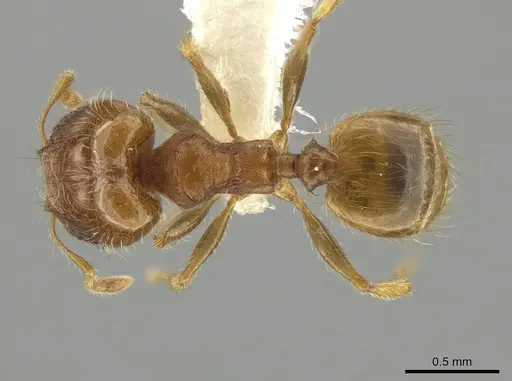
CASENT0644587
View on AntWeb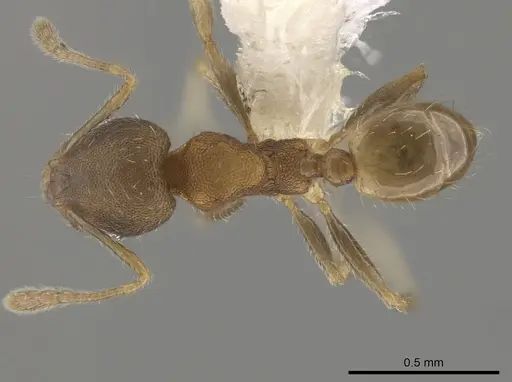
Literature
Loading...Loading products...