

Pheidole midas
- Scientific Name
- Pheidole midas
- Tribe
- Attini
- Subfamily
- Myrmicinae
- Author
- Wilson, 2003
- Distribution
- Found in 6 countries
Pheidole midas Overview
Pheidole midas is an ant species of the genus Pheidole. It is primarily documented in 6 countries , including Brazil, Ecuador, French Guiana. Detailed taxonomic data and occurrence records can be further explored via authoritative databases such as AntWeb or the Global Biodiversity Information Facility (GBIF).
Pheidole midas
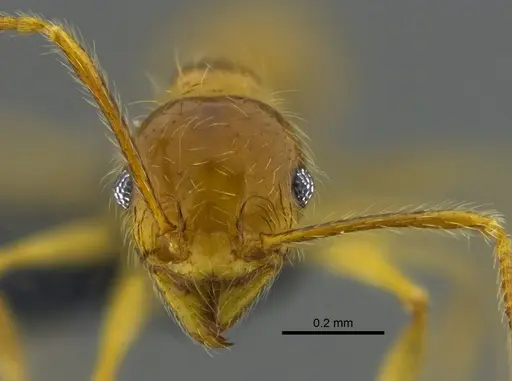
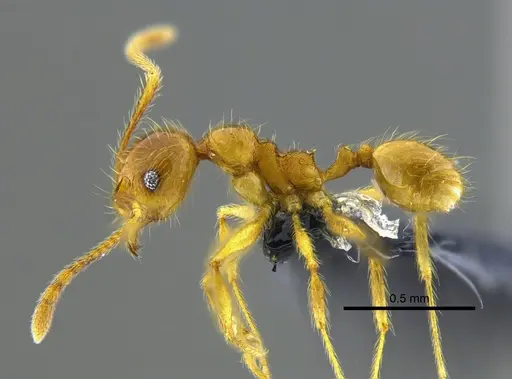
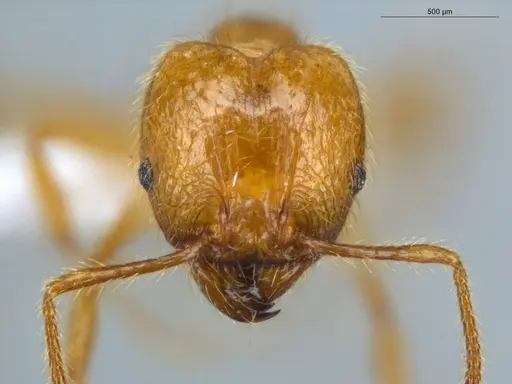
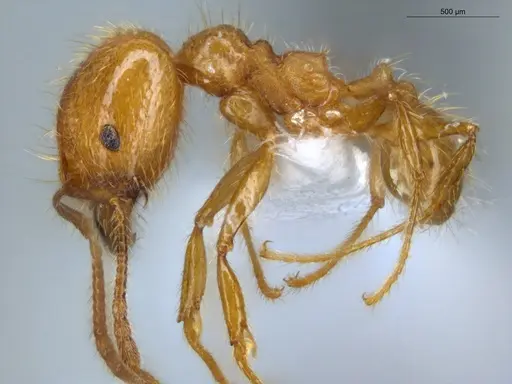
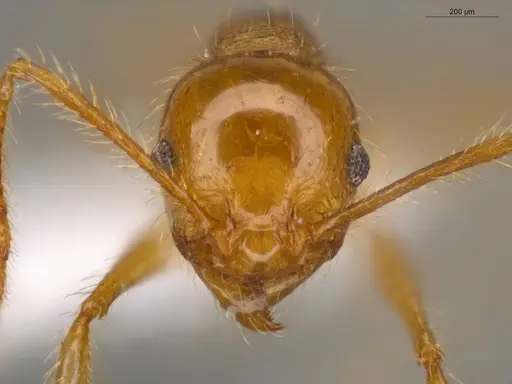
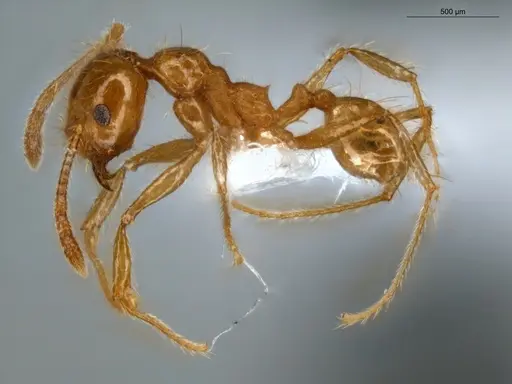
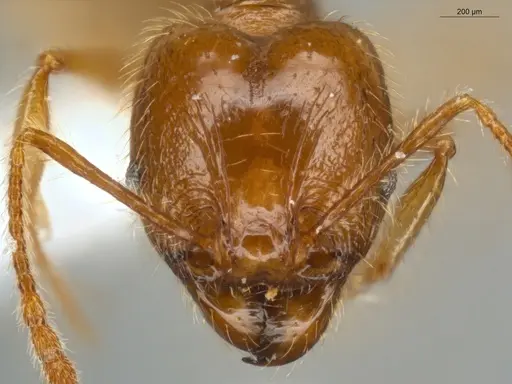
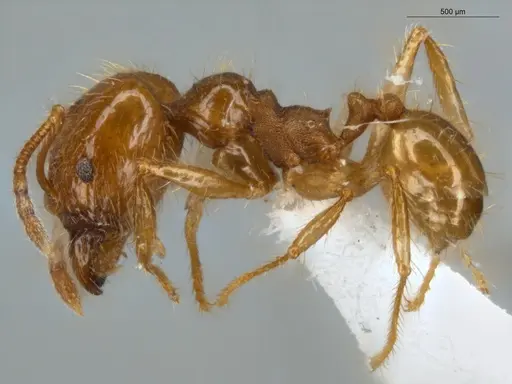
Pheidole midas is a small yellow ant belonging to the fallax group, named after the mythical King Midas for its golden color. Majors measure about 0.92mm with a distinctive heart-shaped head covered in very long, dense, erect hairs. Minors are smaller at around 0.50mm. Both castes are a uniform medium yellow color. This species is native to the Neotropical region, found across Trinidad, Panama, Colombia, Brazil, Peru, and Ecuador, typically in montane rainforest leaf litter[1].
What makes P. midas interesting is its status as a litter-dwelling ant, it lives in the decaying organic matter on the forest floor rather than in soil or trees. Studies show it prefers primary rainforest habitats and is flood-intolerant, making it sensitive to overly moist conditions [2]. It's considered an infrequent species in Amazonian surveys, which means finding established colonies can be challenging.
Quick Summary
- Difficulty: Medium
- Origin & Habitat: Native to the Neotropical region, Trinidad, Panama, Colombia, Brazil (Pará, Maranhão), Peru, and Ecuador. Inhabits montane rainforest leaf litter, typically found in rotting sticks on the forest floor at 550-650m elevation[1]. Also recorded in various forest types including Liana forest, Plateau forest, and Transition forest in French Guiana [3].
- Colony Type: Likely single-queen colonies based on typical Pheidole genus patterns. No specific colony structure studies exist for this species.
- Colony: Monogyne
- Founding: Claustral
- Size & Growth:
- Queen: Approximately 6-7mm (estimated from related Pheidole species)
- Worker: Majors 0.92mm HW, Minors 0.50mm HW
- Colony: Unknown for this specific species, related litter-dwelling Pheidole typically reach several hundred workers
- Growth: Moderate, typical for small tropical Pheidole
- Development: 6-10 weeks (estimated based on related tropical Pheidole species) (Development time is estimated from genus-level data since specific studies are lacking for this species)
- Antkeeping:
- Temperature: Keep at 24-28°C, this is a tropical species requiring warm conditions. A heating cable on one side of the nest creates a suitable gradient.
- Humidity: Moderate, these ants live in leaf litter so they prefer slightly moist substrate but must not be waterlogged. They are flood-intolerant. Keep the nesting area slightly moist with dry escape areas available.
- Diapause: No, as a tropical species, they do not require hibernation. Maintain warm conditions year-round.
- Nesting: Litter-dwelling ants need small, tight chambers. Test tubes work well for founding colonies. For established colonies, Y-tong or acrylic nests with narrow passages scaled to their tiny size are appropriate. Provide leaf litter or small pieces of rotting wood in the outworld to mimic their natural habitat.
- Behavior: These are small, non-aggressive ants that forage in the leaf litter layer. Majors (soldiers) have large heads for seed-processing but are not particularly aggressive. They are not known to sting. Their tiny size (under 1mm for majors) means escape prevention is critical, they can squeeze through very small gaps. Workers are active foragers searching for small prey and honeydew.
- Common Issues: escape prevention is critical due to their tiny size, use fine mesh barriers, flood intolerance means overwatering can kill colonies quickly, slow growth compared to larger ant species may frustrate beginners, wild-caught colonies may be difficult to locate since they are infrequent, maintaining consistent warmth is essential for this tropical species
Nest Preferences and Housing
Pheidole midas is a litter-dwelling species that naturally nests in small cavities within rotting sticks, under leaves, and in the decaying organic matter on the forest floor. In captivity, test tubes work well for founding colonies, use a small water reservoir with a cotton plug, keeping the tube slightly moist but not flooded. For established colonies, Y-tong nests or acrylic formicaria with narrow chambers suit their tiny size. The passages should be tight enough that workers feel secure but wide enough for movement. In the outworld, add small pieces of leaf litter, rotting wood chips, or cork bark to give foragers cover and hunting grounds. Avoid tall, open spaces, these ants feel safest in tight, confined areas. [2]
Feeding and Diet
Like most Pheidole species, P. midas is omnivorous, accepting both protein sources and sugar. In the wild, they forage for small insects, seeds, and honeydew from aphids or scale insects. In captivity, offer small protein sources like fruit flies, pinhead crickets, or tiny mealworms, appropriately sized to their minute workers. Sugar water, honey, or commercial ant jelly can be offered as an energy source. Feed small amounts 2-3 times per week, removing uneaten prey after 24 hours to prevent mold. Since they are small ants, portion sizes should be tiny, a few drops of sugar water and prey items smaller than their own body size.
Temperature and Seasonal Care
As a tropical species from the Neotropical region, Pheidole midas requires warm temperatures year-round. Keep the nest area at 24-28°C. A heating cable placed on one side of the nest creates a temperature gradient allowing ants to self-regulate. Room temperature may be sufficient if your home stays in this range, but monitor with a thermometer. Unlike temperate species, they do not require a winter diapause, maintaining consistent warmth is key. Avoid temperature drops below 20°C, as this can slow or stop brood development and weaken the colony. High humidity is not required, but the nest substrate should remain slightly moist.
Behavior and Colony Dynamics
Pheidole midas forms colonies with distinct major and minor worker castes. Majors have enlarged heads used for seed cracking and defense, though they are not aggressive toward keepers. Colonies grow through typical Pheidole patterns: the claustral queen seals herself in a chamber, lays eggs, and raises the first workers (nanitics) on her own. Once the first workers emerge, they take over foraging and brood care while the queen focuses on egg-laying. Growth is moderate, expect several months before the colony reaches 50 workers. These ants are not known to sting and pose no danger to keepers. However, their tiny size makes them excellent escape artists, so use fine mesh and tight-fitting lids on all enclosures.
Handling and Observation
Due to their small size and litter-dwelling nature, Pheidole midas is best observed through the clear walls of a test tube or acrylic nest rather than handled directly. They are not aggressive and will not bite or sting. When observing, watch for major workers with their distinctive heart-shaped heads patrolling the nest and foragers carrying prey. The contrast between the golden-yellow majors and smaller minors is visually appealing. Use a red film or darkroom to observe without disturbing the colony, as ants cannot see red light.
Frequently Asked Questions
How long does it take for Pheidole midas to produce first workers?
Expect 6-10 weeks from egg to first worker at optimal temperature (24-28°C). This is estimated from related tropical Pheidole species since specific development data for P. midas is not available.
Can I keep Pheidole midas in a test tube?
Yes, test tubes work well for founding colonies. Use a small water reservoir and keep the tube slightly moist but not flooded. These tiny ants need tight, secure chambers.
What do Pheidole midas eat?
They are omnivorous. Offer small protein sources like fruit flies or tiny mealworms, plus sugar water or honey for energy. Remove uneaten prey after 24 hours.
Are Pheidole midas good for beginners?
They are rated Medium difficulty. They require warm temperatures and careful escape prevention due to their tiny size, which makes them slightly more challenging than larger, more forgiving species.
How big do Pheidole midas colonies get?
Colony size is not specifically documented, but related litter-dwelling Pheidole typically reach several hundred workers. Growth is moderate.
Do Pheidole midas need hibernation?
No, as a tropical species they do not require hibernation. Keep them warm year-round at 24-28°C.
Why are my Pheidole midas escaping?
Their tiny size means they can squeeze through the smallest gaps. Use fine mesh (at least 0.5mm or smaller), tight-fitting lids, and apply fluon or other barriers to all openings.
When should I move my colony to a formicarium?
Move them when the test tube becomes crowded, typically around 50-100 workers. Ensure the new nest has appropriately sized chambers and passages for their small size.
Can I keep multiple Pheidole midas queens together?
Not recommended. Like most Pheidole, they are likely single-queen colonies. Combining unrelated queens has not been studied for this species and risks fighting.
References

This caresheet is licensed under CC BY-SA 4.0 .
CBUMAGENT42023
View on AntWeb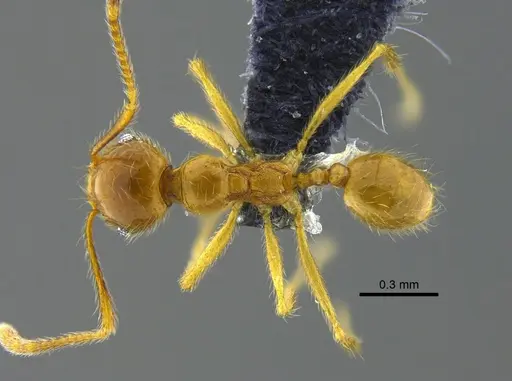
ECOFOG-IT14-0802-73-S
View on AntWeb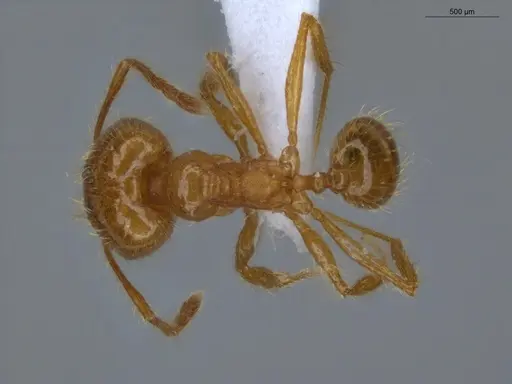
ECOFOG-IT14-0802-73
View on AntWeb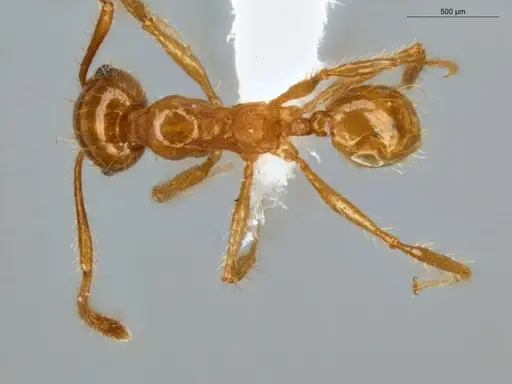
ECOFOG-SL13-1367-03-S
View on AntWeb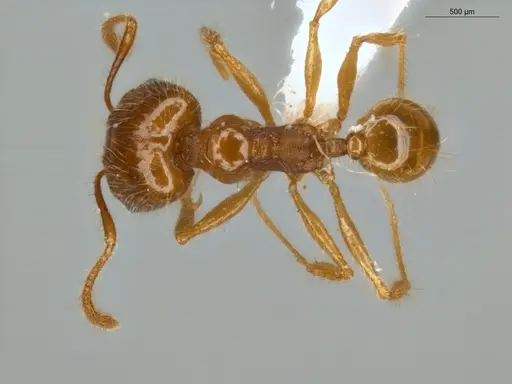
Literature
Loading...Loading products...