

Pheidole microps
- Scientific Name
- Pheidole microps
- Tribe
- Attini
- Subfamily
- Myrmicinae
- Author
- Wilson, 2003
- Distribution
- Found in 3 countries
Pheidole microps Overview
Pheidole microps is an ant species of the genus Pheidole. It is primarily documented in 3 countries , including Brazil, Colombia, Peru. Detailed taxonomic data and occurrence records can be further explored via authoritative databases such as AntWeb or the Global Biodiversity Information Facility (GBIF).
Pheidole microps
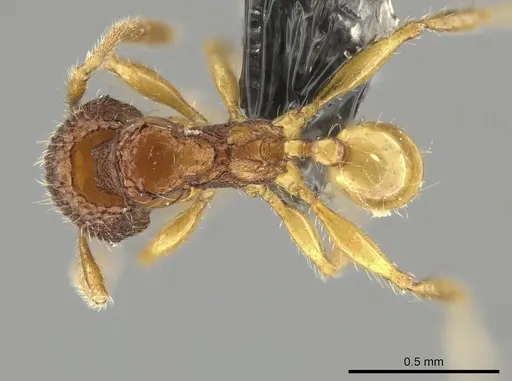
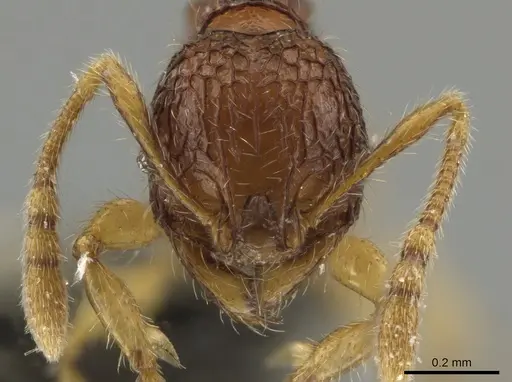
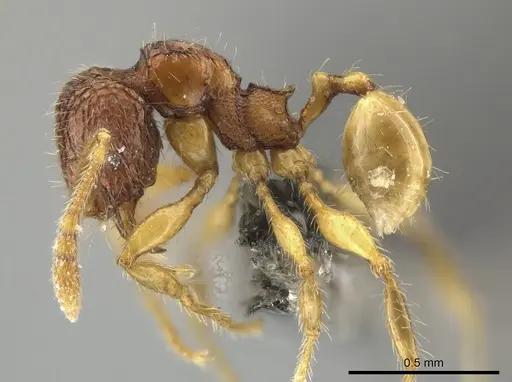
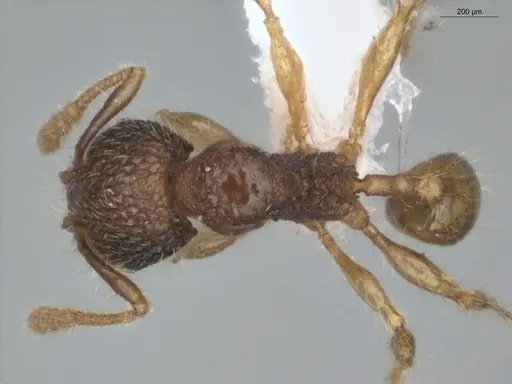
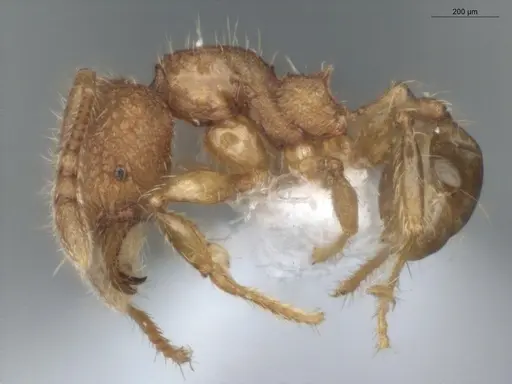
Pheidole microps is a tiny yellow ant known only from the Amazon basin region of South America. The species gets its name from its remarkably small eyes (microps means 'small eyes' in Greek), and workers measure just 0.48mm in head width, making them among the smallest Pheidole workers you'll find [1]. They were first described from Peru near Puerto Maldonado in the lowland rainforest, and have since been recorded across northern Brazil including Pará, Maranhão, and Mato Grosso [2][3][4]. This species lives in leaf litter on sandy soil in tropical rainforest environments [1].
What makes P. microps particularly interesting is how little we know about it, it's been documented only from scattered field samples, and to date only the minor worker caste has ever been collected. No queen, major workers, or colony observations have been published. This makes it a true mystery species for antkeepers, and anyone successful in keeping it would be contributing genuinely new knowledge to science.
Quick Summary
- Difficulty: Unknown, data insufficient
- Origin & Habitat: Amazon basin lowland rainforest in Peru, Brazil, Ecuador, and French Guiana. Collected from leaf litter on sandy soil at elevations around 260m [1][2].
- Colony Type: Unknown, only minor workers have ever been documented. No queens or colony structure has been observed. Based on typical Pheidole biology, likely single-queen colonies, but this is unconfirmed.
- Size & Growth:
- Queen: Unknown, queen has never been documented
- Worker: Minor workers: 0.48mm head width,0.52mm head length [1]
- Colony: Unknown, no colony size data exists
- Growth: Unknown
- Development: Unknown, no development data exists (No brood has ever been documented in scientific literature for this species)
- Antkeeping:
- Temperature: Inferred: Keep warm in the low-to-mid 20s°C range (around 24-26°C). This species comes from lowland Amazon rainforest where temperatures are consistently warm year-round. Use a heating cable on one side of the nest to create a gentle gradient.
- Humidity: Inferred: High humidity required. Amazon leaf litter environments are constantly moist. Keep the nest substrate consistently damp but not waterlogged. Provide a water tube and ensure the nesting area stays humid.
- Diapause: Unknown, no seasonal data exists. Amazon rainforest ants may not undergo true diapause, but may reduce activity during drier/cooler periods.
- Nesting: Inferred: Likely nests in soil or small cavities in rotting wood on the forest floor. In captivity, a small test tube setup or Y-tong nest with fine chambers would work. The tiny worker size means chambers should be appropriately scaled.
- Behavior: Unknown in captivity. Pheidole species are typically non-aggressive, seed-eating ants that form distinct minor and major worker castes. However, P. microps is only known from minor workers, so its behavior is speculative. Escape prevention is critical due to its tiny size, these ants can squeeze through the smallest gaps. Use fine mesh and tight-fitting barriers.
- Common Issues: no documented care information exists, this is an entirely unstudied species in captivity, tiny size makes escape likely without fine mesh barriers, no confirmed food acceptance data, Pheidole typically eat seeds and small insects but this species is unstudied, without a documented queen, colony establishment from wild-caught specimens is uncertain, high humidity requirements may promote mold if ventilation is inadequate
Species Overview and Discovery
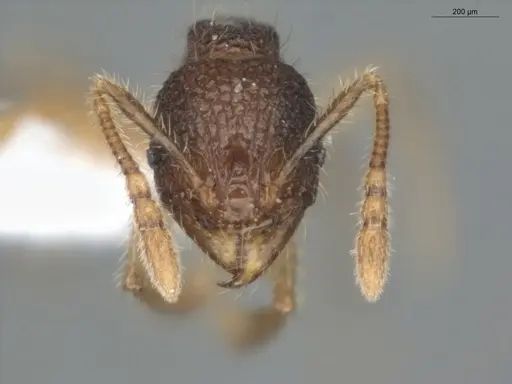
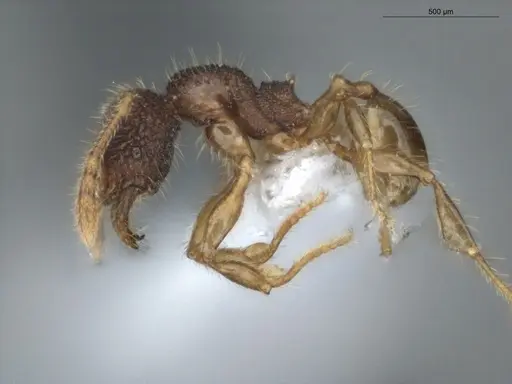
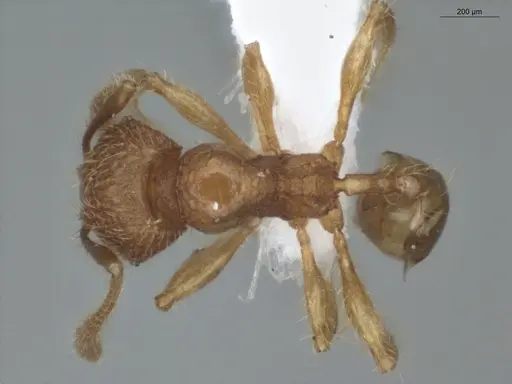
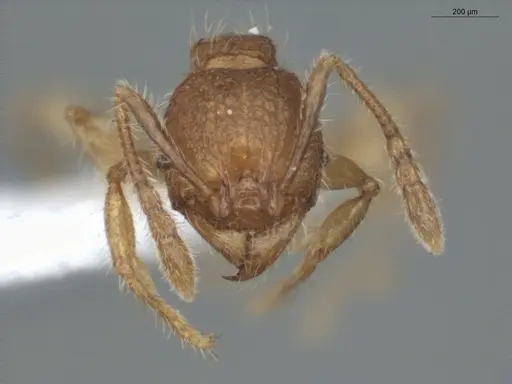
Pheidole microps was first described in 2003 by E.O. Wilson from specimens collected near Lake Sandoval in Puerto Maldonado, Peru. The type locality is in the Madre de Dios region at approximately 260 meters elevation, classic lowland Amazon rainforest territory. What makes this species immediately distinctive is its yellow coloration combined with its tiny eyes, which are remarkably reduced even for a small Pheidole. The holotype minor worker measures just 0.48mm in head width, making it one of the smallest Pheidole species known [1].
Since its initial discovery, the species has been recorded from several locations across northern Brazil, including Pará state (Melgaço), Maranhão, and Mato Grosso do Grosso. These records suggest the species is more widespread than originally thought, though it remains rarely encountered. The fact that only minor workers have ever been collected is puzzling, either majors are extremely rare, the species has lost the major caste, or researchers simply haven't found the right microhabitats where colonies establish [3][4][5].
Natural Habitat and Distribution
Pheidole microps is an Amazon basin specialist found across a broad swath of northern South America. Records exist from Peru (the type locality), Ecuador, French Guiana, and multiple Brazilian states including Pará, Maranhão, and Mato Grosso [2][3][4][6]. This distribution pattern suggests the species is widespread in Amazonian rainforest environments but easily overlooked due to its tiny size.
The species has been collected from leaf litter in sandy soil, typical of lowland rainforest floors where decomposition creates rich, moist organic layers. The collections have come from pitfall traps and systematic leaf litter sampling, indicating these ants forage on the forest floor surface or in the immediate subsurface layer. The elevation range appears to be lowland (around 260m in Peru), consistent with true Amazonian species rather than highland specialists [1][5].
Housing and Nesting
Since no one has successfully kept this species in captivity (as far as published records show), we must infer appropriate housing from its natural history and what works for similar tiny Pheidole species. The species was collected from leaf litter on sandy soil, suggesting it nests in small cavities on or just below the forest floor, likely in rotting wood, under bark, or in soil pockets.
For captivity, start with a small test tube setup with a water reservoir. Given the tiny worker size (under 0.5mm), the water channel should be small to prevent flooding, and escape prevention must be excellent, these ants could potentially squeeze through standard cotton plugs. A Y-tong (acrylic) nest with very small chambers would also be appropriate once a colony is established. The nest should be kept humid but with some ventilation to prevent mold. Because we don't know their exact nesting preferences, providing options (both test tube and a small cavity nest) would be ideal.
Feeding and Diet
Pheidole is a diverse genus with varied diets, but most species are opportunistic omnivores with a preference for seeds and small insects. The genus name actually comes from Greek meaning 'to nourish', referring to their seed-storing behavior in some species. However, P. microps is too small to effectively handle large seeds, so its diet likely consists of tiny arthropods, honeydew, and small seed fragments.
For captive feeding, start with small live prey appropriate to their size: fruit flies, pinhead crickets, or tiny mealworms chopped small. Sugar water or honey diluted with water should be offered, though acceptance is uncertain. Given their Amazon rainforest origin, they likely have high protein requirements. Feed small amounts of protein every 2-3 days and keep a sugar source available at all times. Remove uneaten food promptly to prevent mold in the humid environment they require.
Temperature and Humidity Requirements
As an Amazon lowland rainforest species, P. microps requires warm and humid conditions. The Amazon basin maintains temperatures in the 24-30°C range year-round, with humidity constantly high due to the dense canopy and frequent rainfall. Your setup should aim for temperatures in the low-to-mid 24-28°C range.
Use a heating cable on one side of the nest to create a temperature gradient, allowing the ants to self-regulate. Place the heating on top of the nest (never underneath, as this can cause moisture evaporation issues). Humidity should be high, keep the nest substrate consistently moist but not waterlogged. A water tube attached to the nest provides both drinking water and humidity. Monitor for condensation, some condensation is good, but excessive moisture leads to mold problems.
Challenges and Unknowns
This species presents unique challenges that most other ant species don't. First and foremost is the complete lack of documented captive care information, there are no published accounts of anyone successfully maintaining P. microps in captivity. This means you're essentially pioneering husbandry for a scientifically undescribed colony structure.
The biggest practical challenge is that no one has documented a queen of this species. If you collect from the wild, you'll likely only find workers in leaf litter samples. Without a queen, you cannot establish a colony, you'd need to find a founding queen or hope to catch a nuptial flight (timing unknown). Additionally, their extremely small size makes them difficult to house properly and easy to lose. Expect a steep learning curve and be prepared for experimental approaches. Any successful captive husbandry would be a genuine contribution to antkeeping knowledge.
Frequently Asked Questions
Has anyone successfully kept Pheidole microps in captivity?
There are no published records of this species being kept in captivity. It remains one of the most poorly documented Pheidole species, known only from scattered field collections. Keeping this species would be pioneering work with no established husbandry guidelines.
What does Pheidole microps look like?
Workers are tiny, around 0.48mm head width, and distinctly yellow in color. They have remarkably small eyes (the species name 'microps' means small eyes), and the head surface has a loosely rugoreticulate (wrinkled net-like) texture. Only minor workers have ever been documented, the major caste remains unknown [1].
Where does Pheidole microps live?
It's an Amazon basin species found in Peru, Ecuador, French Guiana, and northern Brazil. The type locality is near Lake Sandoval in Puerto Maldonado, Peru. They live in leaf litter on sandy soil in lowland rainforest at around 260m elevation [1][2].
Can I find a queen of Pheidole microps in the wild?
No queen has ever been documented in scientific literature for this species. All records consist of minor workers collected from leaf litter samples. The queen may be extremely rare to find, or the species may have unusual colony structure that makes locating queens difficult. This is one of the great mysteries of this species.
What do Pheidole microps eat?
This is unconfirmed. Based on typical Pheidole biology, they likely eat small insects, honeydew, and tiny seed fragments. For captivity, offer small live prey (fruit flies, tiny mealworms) and sugar water. Their small size means prey must be appropriately scaled.
What temperature do Pheidole microps ants need?
Inferred: Keep them warm in the 24-28°C range. As an Amazon lowland species, they require consistently warm temperatures similar to other tropical rainforest ants. Use a heating cable to maintain warmth.
Do Pheidole microps ants need hibernation?
Unknown, no seasonal data exists. Amazon rainforest ants typically don't undergo true hibernation, though they may reduce activity during cooler or drier periods. Without documented behavior, we cannot recommend a diapause protocol.
Are Pheidole microps good for beginners?
No. This species is not recommended for beginners, or even experienced keepers, due to the complete lack of any documented captive care information. There are no established guidelines for keeping this species, and establishing a colony would require significant experimental effort. Additionally, queens have never been documented, making colony establishment from wild-caught specimens nearly impossible.
How big do Pheidole microps colonies get?
Unknown, no colony size data exists. No one has documented a full colony of this species. Pheidole colonies can range from dozens to thousands of workers depending on the species, but P. microps remains an enigma.
Does Pheidole microps have major workers?
Unknown, only minor workers have ever been collected and described. The major caste may exist but be extremely rare in the wild, the species may have lost the major caste, or researchers simply haven't encountered it yet. This is one of the many unknowns about this species [1].
What makes Pheidole microps different from other Pheidole?
Several things make this species unusual: it's one of the smallest Pheidole known with remarkably reduced eyes, it's only known from minor workers (no queens or majors ever documented), and it has a very restricted known distribution in Amazon leaf litter. It's essentially a blank slate scientifically, any captive husbandry would be genuinely novel knowledge.
Where can I learn more about Pheidole microps?
Scientific literature is extremely limited. The original description by Wilson (2003) provides the morphological details, and several papers document its distribution across Brazil and Peru. AntWiki has basic information. Beyond this, there is virtually no biological data, making this a species of interest for ant biologists and adventurous keepers alike.
References

This caresheet is licensed under CC BY-SA 4.0 .
Literature
Loading...Loading products...