

Pheidole manuana
- Scientific Name
- Pheidole manuana
- Tribe
- Attini
- Subfamily
- Myrmicinae
- Author
- Wilson, 2003
- Distribution
- Found in 2 countries
Pheidole manuana Overview
Pheidole manuana is an ant species of the genus Pheidole. It is primarily documented in 2 countries , including Brazil, Peru. Detailed taxonomic data and occurrence records can be further explored via authoritative databases such as AntWeb or the Global Biodiversity Information Facility (GBIF).
Pheidole manuana
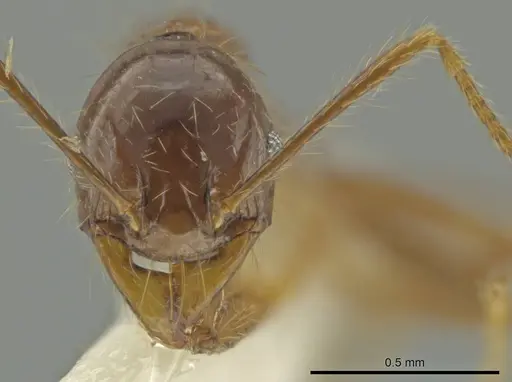
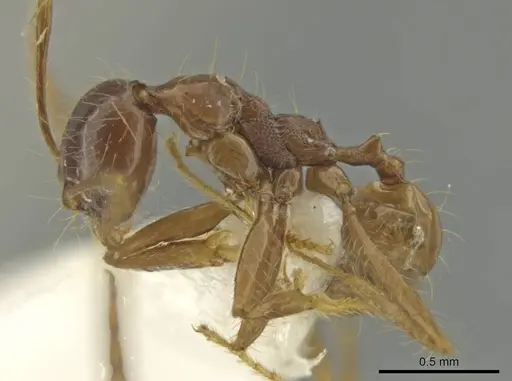
Pheidole manuana is a small Neotropical ant species native to Peru, specifically the Manu National Park region in Madre de Dios at around 400m elevation. The species was described by Wilson in 2003 and is named after its type locality. These ants are typical Pheidole big-headed ants with two distinct worker castes: majors have enlarged heads measuring 1.40mm in head width with a brownish-yellow body, while minors are much smaller at 0.54mm head width with a plain light brown body. The majors feature distinctive rugoreticulum (honeycomb-like structures) behind the antennal fossae and unusually long, dense pilosity. This species is known only from its type locality in the Peruvian Amazon, making it a rare and poorly studied member of the genus.
Quick Summary
- Difficulty: Unknown
- Origin & Habitat: Peruvian Amazon (Madre de Dios region) at 400m elevation in Manu National Park [1]. Found in tropical forest environments.
- Colony Type: Unknown, colony structure has not been documented for this species. Most Pheidole species are monogyne (single queen colonies), but this has not been confirmed for P. manuana.
- Size & Growth:
- Queen: Undescribed in original description, estimated 6-8mm based on typical Pheidole queen size
- Worker: Majors: 1.40mm HW, Minors: 0.54mm HW
- Colony: Unknown, no colony size data exists for this species
- Growth: Unknown
- Development: Unknown, no direct data exists. Based on typical Pheidole development in tropical conditions, estimate 6-8 weeks (Development timeline is unconfirmed for this species. Tropical Pheidole species typically develop faster than temperate species due to year-round warm conditions.)
- Antkeeping:
- Temperature: Keep at 24-28°C, aim for warm, stable tropical conditions. Use a heating cable on one side of the nest if room temperature is below this range. This is based on typical Amazonian ant requirements, as no species-specific thermal data exists.
- Humidity: Keep substrate moderately moist, think damp rainforest floor. Provide a water tube for drinking water. Allow some variation with slightly drier areas for the ants to self-regulate. This is inferred from the humid Amazonian habitat.
- Diapause: No, this is a tropical species from lowland Peru where temperatures remain warm year-round. No winter dormancy is expected.
- Nesting: In nature, Pheidole species typically nest in soil, under stones, or in rotting wood. In captivity, a Y-tong (AAC) nest or plaster nest works well. Keep the nest chambers appropriately scaled to their small size, minors are only 0.54mm so tight-fitting connections are important.
- Behavior: Pheidole ants are known for their polymorphic workforce, with major workers (soldiers) that defend the colony and process seeds, while minor workers handle most foraging and brood care. Majors have enlarged heads with specialized muscles for seed-cracking. This species likely follows typical Pheidole patterns of seed-eating combined with opportunistic protein sources. Escape prevention should be moderate, while not the smallest ants, they can still squeeze through small gaps. They are not aggressive toward keepers but majors will defend if threatened.
- Common Issues: this species has never been kept in captivity, there are no established care protocols, the complete lack of biological data means any care is experimental, wild-caught colonies may harbor unknown parasites or pathogens, very limited distribution makes this species potentially difficult to acquire legally, no information on whether they accept sugar sources or require live prey
Species Background and Discovery
Pheidole manuana was described in 2003 by Edward O. Wilson based on specimens collected from the Estacion Biologica de Cocha Cashu in Manu National Park, Madre de Dios, Peru. The species is named after the Manu National Park, one of the most biodiverse regions on Earth. The type specimens were collected by Diane W. Davidson at an elevation of 400 meters in the Amazon rainforest. This species remains known only from its type locality, making it one of the more obscure Pheidole species in the genus. The major worker measures 1.40mm in head width while the minor worker is just 0.54mm, showing the dramatic size dimorphism characteristic of Pheidole big-headed ants. [1]
Identification and Morphology
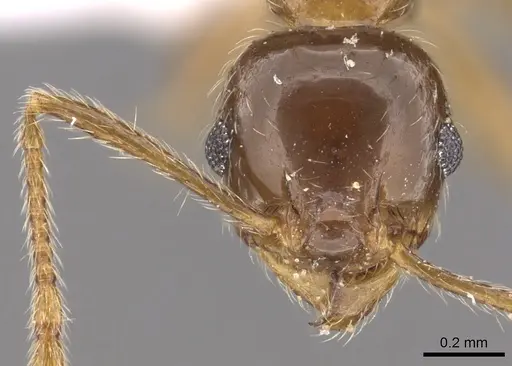
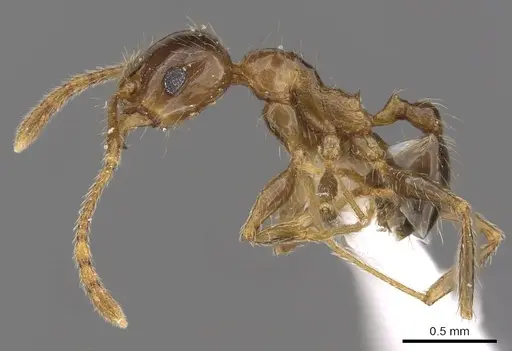
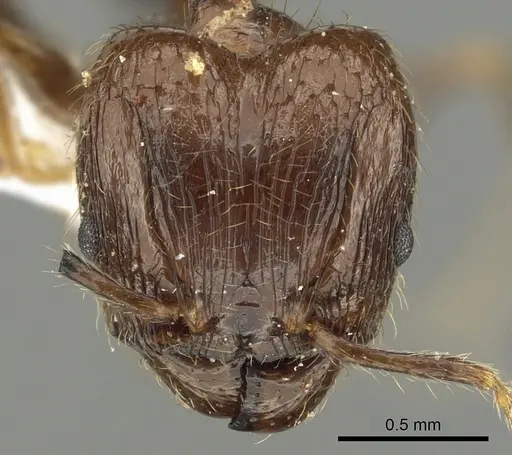
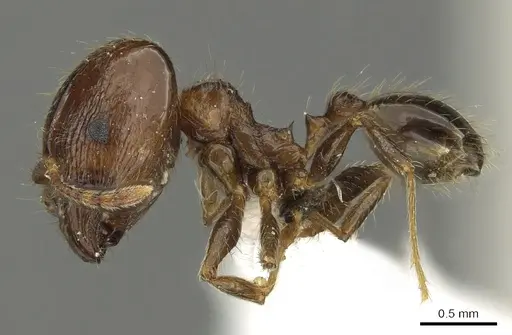
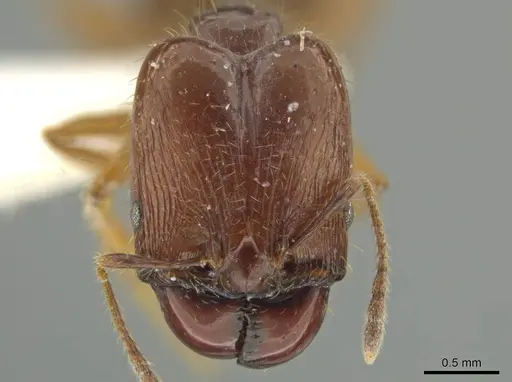
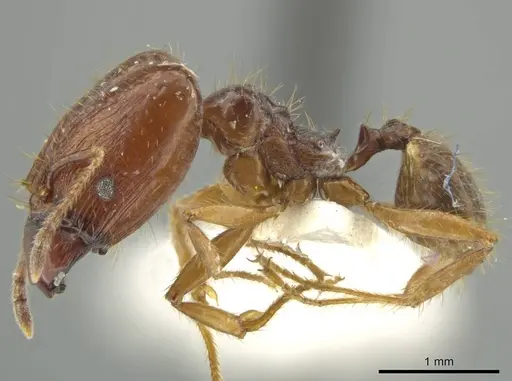
Pheidole manuana displays the classic Pheidole morphology with two distinct worker castes. Major workers have a distinctive subrectangular head with a raised carina (ridge) on the clypeus, prominent mesonotal convexity, and a unique rugoreticulum (honeycomb-like structure) posterior to each antennal fossa. Their body is brownish yellow with darker yellow legs and antennae. Minor workers are much smaller at about one-third the size of majors, with a narrowed occiput and nuchal collar. Both castes feature unusually long pilosity, in minors, some hairs are twice the length of the eye. The minor's propodeal spines are reduced to small denticles. This combination of features distinguishes P. manuana from other Neotropical Pheidole species.
Housing and Nest Setup
Since nothing is known about the captive care of this species, recommendations must be based on typical Pheidole husbandry. Use a small test tube setup for founding colonies, queens will need a dark, quiet space to establish their initial brood. Once the colony reaches 20-30 workers, consider moving to a Y-tong (AAC) or plaster nest. The nest chambers should be appropriately scaled to the tiny minor workers (0.54mm). Provide a separate outworld for foraging. Because this is a tropical species from the Peruvian Amazon, maintain warm and humid conditions consistently. A water tube should be provided for drinking water access.
Feeding Recommendations
Pheidole species are typically granivorous (seed-eating) but also opportunistic omnivores. Offer small seeds appropriate to their size, along with protein sources like small insects or mealworms. Sugar water or honey can be offered occasionally, though acceptance varies by species. Since P. manuana has never been kept in captivity, start with a varied diet and observe what the colony accepts. Live prey is likely important for colony growth, offer small live insects appropriate to their size. Remove uneaten food after 24-48 hours to prevent mold.
Temperature and Humidity
As a tropical lowland Amazonian species from 400m elevation in Madre de Dios, Peru, this ant requires warm and humid conditions. Target temperatures of 24-28°C with minimal fluctuations. Room temperature may be sufficient in warm climates, but a heating cable on one side of the nest can create an appropriate gradient if needed. Place the heating on top of the nest, not underneath, to avoid evaporating moisture too quickly. Humidity should be moderate to high, keep the nest substrate moist but not waterlogged. A water tube provides drinking water and helps maintain humidity through evaporation.
Important Keeper Notes
This is an extremely poorly known species with no documented biology in captivity. Everything in this caresheet is either inferred from typical Pheidole genus behavior or based on the limited habitat data available. There are no established breeding lines in the antkeeping hobby, and this species has likely never been kept by hobbyists. If you obtain this species, document your observations carefully, you would be contributing genuinely new knowledge to antkeeping. Be patient with founding colonies, as tropical species may have different development timelines than temperate species. Do not release this species or any ant outside its native range, it could become invasive or disrupt native ecosystems.
Frequently Asked Questions
How long does it take for Pheidole manuana to raise first workers?
The egg-to-worker timeline is unconfirmed for this species. Based on typical Pheidole development in tropical conditions, expect approximately 6-8 weeks from egg to first nanitic worker. However, this is an estimate, actual development time may vary and has never been documented for P. manuana specifically.
What do Pheidole manuana ants eat?
Pheidole species are typically granivorous (seed-eating) combined with opportunistic protein feeding. Offer small seeds appropriate to their tiny size, along with small insects like fruit flies or pinhead crickets. Sugar sources like honey water may be accepted. Since this species has never been kept in captivity, start with a varied diet and observe what your colony accepts.
Do Pheidole manuana ants need hibernation?
No, this is a tropical Amazonian species from lowland Peru where temperatures remain warm year-round. No diapause or winter dormancy is expected or recommended. Keep them at consistent tropical temperatures (24-28°C) throughout the year.
Can beginners keep Pheidole manuana?
This species is not recommended for beginners. It has never been documented in the antkeeping hobby, and there is no established care protocol. All recommendations are based on genus-level inference rather than species-specific data. This would be an experimental species suitable only for experienced keepers interested in documenting new biological observations.
What size nest do Pheidole manuana need?
Use appropriately scaled nests, minor workers are only 0.54mm in head width, so chambers and connections should be tight-fitting. A test tube is suitable for founding colonies. Once established, a Y-tong (AAC) nest or small plaster nest with narrow chambers works well. The nest should maintain high humidity.
Are Pheidole manuana ants aggressive?
Pheidole species are not typically aggressive toward keepers. Major workers will defend the colony if threatened, but they are not pursuit-stinging ants. The majors have enlarged heads designed for seed-crushing rather than combat. Handle gently and avoid disturbing the nest unnecessarily.
How big do Pheidole manuana colonies get?
Colony size is unknown for this species, no colony size data exists in the scientific literature. Most Pheidole colonies reach several hundred to a few thousand workers. The maximum size for P. manuana is unconfirmed and would be a new observation for science.
What temperature is ideal for Pheidole manuana?
Keep nest temperatures at 24-28°C. This is based on the species' origin in the warm Peruvian Amazon. Use a heating cable on one side of the nest if room temperature is below this range. Avoid temperature fluctuations and keep conditions stable year-round.
Do Pheidole manuana queens need to seal themselves in to found a colony?
Likely yes, most Pheidole species are claustral, meaning the queen seals herself in a chamber and raises her first workers on stored fat reserves without foraging. However, this has not been directly confirmed for P. manuana. Provide a founding chamber with minimal disturbance and wait for the first workers to emerge.
References

This caresheet is licensed under CC BY-SA 4.0 .
CASENT0645823
View on AntWeb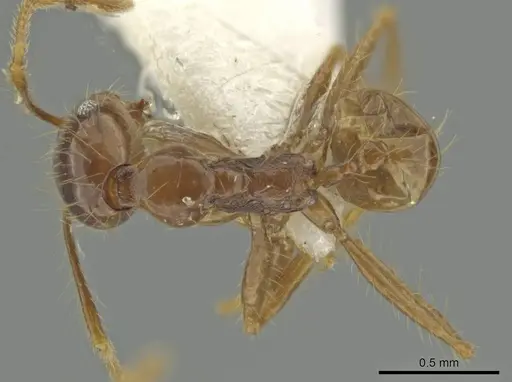
CASENT0901632
View on AntWeb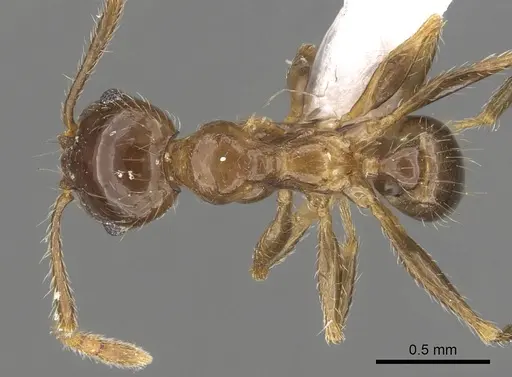
CASENT0901633
View on AntWeb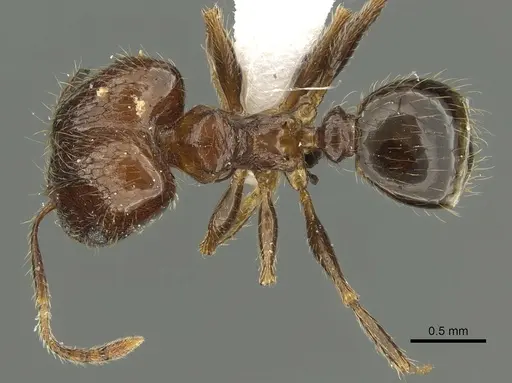
JTLC000016447
View on AntWeb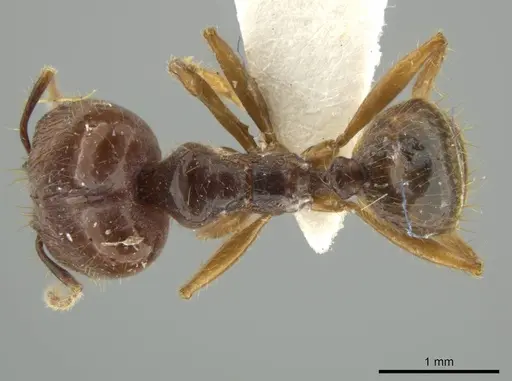
Literature
Loading...Loading products...