

Pheidole mackayi
- Scientific Name
- Pheidole mackayi
- Tribe
- Attini
- Subfamily
- Myrmicinae
- Author
- Wilson, 2003
- Distribution
- Found in 1 countries
Pheidole mackayi Overview
Pheidole mackayi is an ant species of the genus Pheidole. It is primarily documented in 1 countries , including Mexico. Detailed taxonomic data and occurrence records can be further explored via authoritative databases such as AntWeb or the Global Biodiversity Information Facility (GBIF).
Pheidole mackayi
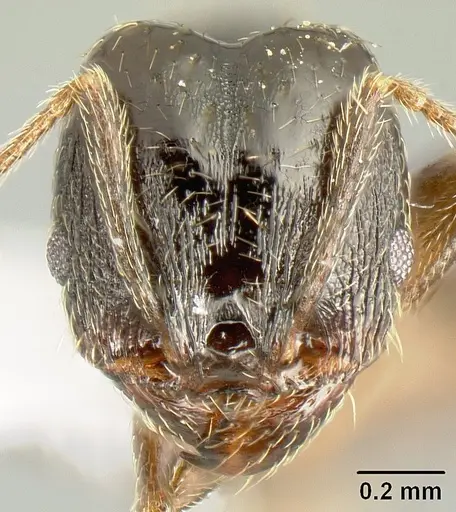
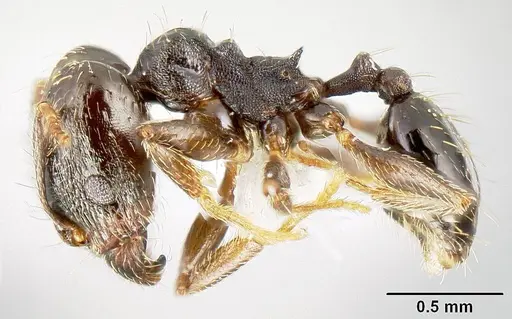
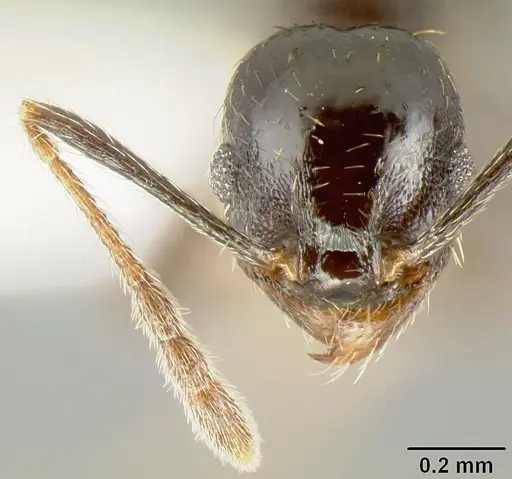
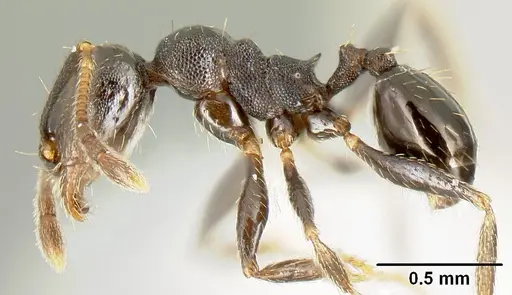
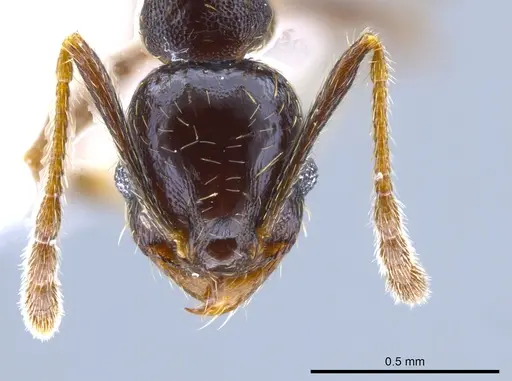
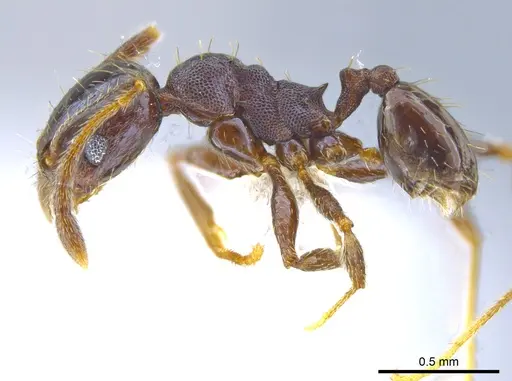
Pheidole mackayi is a dimorphic ant species native to the seasonally dry highlands of Chiapas, Mexico. As with all Pheidole species, they have two distinct worker castes: large major workers with notably enlarged heads for seed-crushing and defense, and smaller minor workers that handle most foraging and brood care. Majors are dark brown to almost blackish, while minors are lighter brown with yellow legs. This species inhabits disturbed areas at elevations between 700-1400 meters, typically in cut or burned-over forest areas. The species was described by E.O. Wilson in 2003 and named after the collector and myrmecologist William P. MacKay [1][2].
Quick Summary
- Difficulty: Medium
- Origin & Habitat: Chiapas, Mexico, seasonally dry disturbed habitats at 700-1400m elevation, typically found in cut and burned-over forest areas [2][1].
- Colony Type: Likely monogyne (single queen) based on typical Pheidole patterns. Colony structure has not been directly studied for this species.
- Colony: Monogyne
- Founding: Claustral
- Size & Growth:
- Queen: Estimated 7-9mm based on genus patterns for similar Pheidole species
- Worker: Minor: 2.5-3mm, Major: 4-5mm [1]
- Colony: Likely several hundred workers based on typical Pheidole colony sizes
- Growth: Moderate, typical for Pheidole species
- Development: Estimated 6-8 weeks based on typical Pheidole development at warm temperatures (Development time is inferred from genus-level data since specific studies are lacking for this species)
- Antkeeping:
- Temperature: Keep at 22-26°C. This species comes from warm subtropical highlands, so moderate warmth is beneficial. A gentle gradient allowing workers to self-regulate is ideal [2].
- Humidity: Moderate humidity around 50-60%. These ants come from seasonally dry climates, so avoid overly damp conditions. Provide a water source but allow portions of the nest to dry between waterings.
- Diapause: Likely a mild winter slowdown given their subtropical highland origin, though specific diapause behavior is unconfirmed for this species.
- Nesting: Y-tong (AAC), plaster, or naturalistic setups work well. Provide moderate substrate depth with some dry areas. These ants do well in formicariums with chambers scaled to their size.
- Behavior: Typical Pheidole temperament, generally peaceful but majors will defend the colony aggressively if threatened. Workers are active foragers, with minors primarily gathering food and majors handling seed processing and nest defense. Escape risk is moderate, use standard barriers but no special escape prevention needed beyond standard measures. They are diurnal foragers that readily take baits [2].
- Common Issues: limited data means care requirements are partially inferred from genus patterns, monitor colony response and adjust, as a dimorphic species, majors may appear alarming to new keepers but are not dangerous to humans, wild-caught colonies may be difficult to establish due to limited collection data and potential stress, seed-eating species require appropriate nest materials that won't clog their food storage areas
Nest Preferences
In the wild, Pheidole mackayi has been collected from disturbed habitats in seasonally dry highland areas of Chiapas, Mexico. They appear to nest in soil or decaying wood in areas with some ground cover. For captive care, Y-tong (acrylic) nests work well, as do plaster nests that maintain moderate humidity. Provide a network of chambers and tunnels scaled to their size, minor workers are quite small at around 2.5-3mm, while majors reach 4-5mm. A naturalistic setup with a soil substrate can also work well, allowing you to observe their natural tunneling behavior. Ensure the outworld provides easy access to the nest while maintaining proper humidity gradients. [2][1]
Feeding and Diet
Pheidole species are typically granivorous (seed-eating) but also opportunistic omnivores that readily accept protein sources. In the wild, this species has been collected from baits, indicating they readily exploit food opportunities [2]. Offer a mix of seeds (grass seeds, millet, cracked sunflower hearts) for the majors to process with their enlarged mandibles, along with protein sources like small insects, mealworms, or cricket pieces. Sugar water or honey can be offered as an energy source, though some Pheidole species show variable sugar acceptance. Feed every 2-3 days, removing uneaten fresh food promptly to prevent mold. The minor workers will typically handle food transport while majors process harder items.
Temperature and Care
This species originates from the warm highlands of Chiapas at 700-1400m elevation, where temperatures are moderate year-round. Keep the nest area at 22-26°C, with a slight gradient allowing workers to choose their preferred temperature. Room temperature in most homes (20-24°C) should be suitable, though a heating cable on one side of the nest can help maintain optimal conditions if your space runs cool. Avoid temperatures below 18°C or above 30°C. Since they come from seasonally dry climates, they tolerate drier conditions better than many ants, aim for 50-60% humidity in the nest area. Provide a constant water source in the outworld. [2][1]
Behavior and Colony Structure
Pheidole mackayi is a dimorphic species with distinct major and minor worker castes. The majors have notably enlarged heads with powerful mandibles for seed processing and colony defense, while the smaller minors handle most daily tasks including foraging and brood care. Workers are diurnal foragers that actively search for food. The colony will likely grow over several months to a year before reaching several hundred workers. Majors serve as soldiers and food processors, responding to threats or helping crack hard seeds. They are not aggressive toward keepers and cannot sting effectively. Standard formicarium security measures are sufficient, they are not particularly prone to escaping like some tiny species. [1]
Growth and Development
Specific development timelines for this species have not been documented. Based on typical Pheidole patterns, expect eggs to hatch in about 2 weeks, larvae to develop over 2-3 weeks, and pupae to emerge as workers in another 2-3 weeks, totaling approximately 6-8 weeks from egg to worker at optimal temperatures. The first workers (nanitics) will be smaller than mature workers. Growth rate is moderate, a well-established colony can reach several hundred workers within a year under good conditions. Major workers typically appear later in colony development once the worker population is established. Monitor brood development and adjust temperature if growth seems stalled.
Acclimation and Establishment
This species has limited availability in the antkeeping hobby due to its restricted range in Chiapas, Mexico. Wild-caught colonies may experience stress from collection and transport. When establishing a new colony, provide a quiet location with minimal disturbance for the first few weeks. Ensure consistent temperature and humidity, and offer food promptly but don't overfeed. A claustral founding queen will seal herself in to lay eggs and raise the first brood alone, do not disturb during this phase. Once workers emerge, they will gradually expand their foraging radius. Patience is key during the founding stage, which can take several months. [2]
Frequently Asked Questions
How long does it take for Pheidole mackayi to produce first workers?
Based on typical Pheidole development, expect 6-8 weeks from egg to first worker at optimal temperatures (22-26°C). The exact timeline is unconfirmed for this specific species but aligns with genus patterns.
What do Pheidole mackayi ants eat?
They are opportunistic omnivores. Offer seeds (millet, grass seeds, cracked sunflower), protein (small insects, mealworms), and sugar sources (honey, sugar water). They readily accept baits in the wild.
How big do Pheidole mackayi colonies get?
Based on typical Pheidole species, colonies likely reach several hundred workers. The exact maximum is unconfirmed for this species.
What temperature do Pheidole mackayi need?
Keep them at 22-26°C. They come from warm subtropical highlands in Chiapas and benefit from moderate warmth.
Are Pheidole mackayi good for beginners?
They are moderate difficulty. Their care is relatively straightforward once established, but limited availability and wild-caught stress can make initial establishment challenging.
Do Pheidole mackayi need hibernation?
Likely a mild winter slowdown only. Their subtropical highland origin does not require a full hibernation period like temperate species.
What size are Pheidole mackayi workers?
Minor workers are 2.5-3mm, majors are 4-5mm. The size difference is dramatic, with majors having notably enlarged heads.
Where is Pheidole mackayi found in the wild?
Chiapas, Mexico, at elevations of 700-1400m. They inhabit disturbed areas in seasonally dry climates, often in cut or burned-over forest areas.
Can I keep multiple Pheidole mackayi queens together?
Not recommended. While colony structure is unconfirmed, Pheidole species are typically single-queen colonies. Combining unrelated queens has not been documented for this species.
References

This caresheet is licensed under CC BY-SA 4.0 .
JTLC000007339
View on AntWeb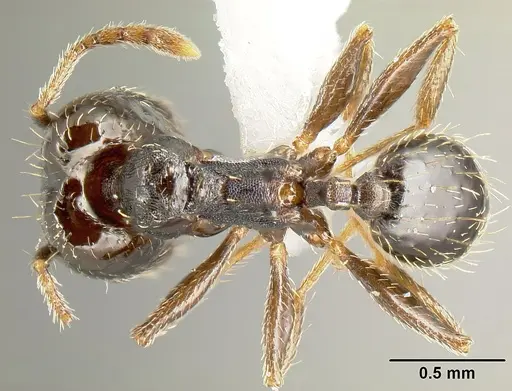
JTLC000007340
View on AntWeb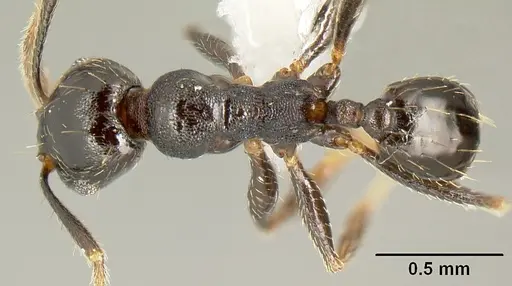
JTLC000007341
View on AntWeb
JTLC000007342
View on AntWeb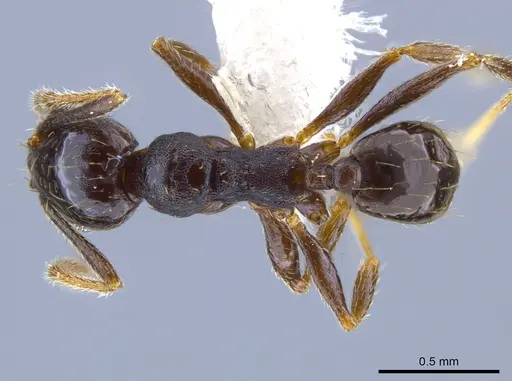
Literature
Loading...Loading products...