

Pheidole machetula
- Scientific Name
- Pheidole machetula
- Tribe
- Attini
- Subfamily
- Myrmicinae
- Author
- Wilson, 2003
- Distribution
- Found in 1 countries
Pheidole machetula Overview
Pheidole machetula is an ant species of the genus Pheidole. It is primarily documented in 1 countries , including Peru. Detailed taxonomic data and occurrence records can be further explored via authoritative databases such as AntWeb or the Global Biodiversity Information Facility (GBIF).
Pheidole machetula
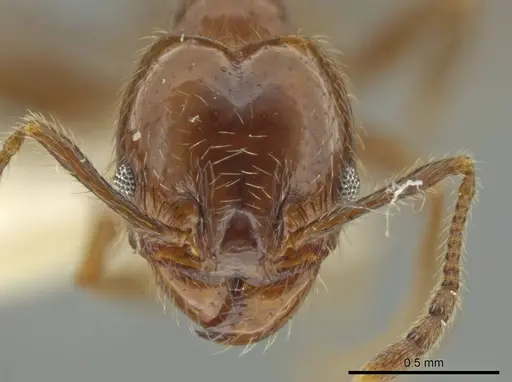
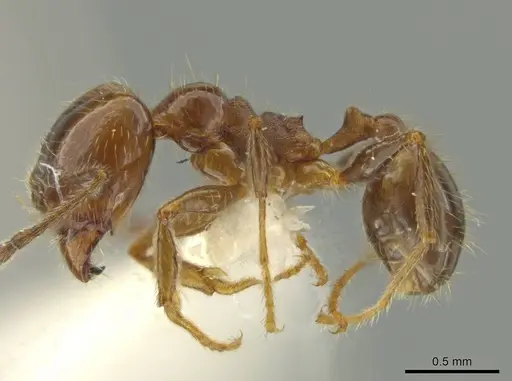
Pheidole machetula is a tiny ant species belonging to the diligens group. Major workers measure just 0.80mm in head width, making them one of the smaller Pheidole species. The majors are medium brown with lighter brown legs, while minor workers are nearly black with sometimes yellow mandibles, trochanters, and tarsi. The species name 'machetula' means 'little warrior' in Latin, referring to the soldier-like appearance of the major workers with their distinctive triangular propodeal spines.
This species is known only from a single collection in the Peruvian Amazon, making it one of the rarest ants in captivity. The type colony was found in a gap within mature rainforest, nesting directly in bare clay soil. This suggests they prefer humid, shaded forest environments with access to open ground for nesting.
Quick Summary
- Difficulty: Unknown, Insufficient data for difficulty rating
- Origin & Habitat: Peru (Cuzco Amazónico,15km northeast of Puerto Maldonado, Madre de Dios). Found in gaps in mature rainforest, nesting in bare clay soil[1]
- Colony Type: Colony structure is unconfirmed, only the type colony has ever been documented
- Size & Growth:
- Queen: Undescribed, no queen measurements have been published
- Worker: Major workers: 0.80mm HW,0.86mm HL. Minor workers: 0.46mm HW,0.56mm HL
- Colony: Unknown, only the type colony has been collected
- Growth: Unknown, no colony development data exists
- Development: Unknown, no direct observations of development exist (Based on typical Pheidole patterns, expect 4-8 weeks at tropical temperatures, but this is an estimate only)
- Antkeeping:
- Temperature: Keep at 24-28°C, this species comes from lowland Peruvian rainforest where temperatures are consistently warm year-round. A heating cable on one side of the nest creates a gradient allowing workers to self-regulate.
- Humidity: High humidity is essential. These ants nest in clay soil in rainforest gaps, so keep the nest substrate consistently moist but not waterlogged. Provide a water tube for drinking water.
- Diapause: Likely no true diapause, as a tropical species from constant humidity environments, they probably remain active year-round. However, slight temperature reduction during winter months may be beneficial.
- Nesting: Natural nesting is in bare clay soil in forest gaps. In captivity, a naturalistic setup with moist soil or a Y-tong/plaster nest with small chambers works well. The tiny size of workers means chambers should be appropriately scaled.
- Behavior: Behavior is unstudied in captivity. Based on genus-level patterns, Pheidole machetula likely has typical Pheidole habits: major workers (soldiers) defend the colony and help process large food items, while minor workers forage and care for brood. They are likely to be non-aggressive toward humans and unlikely to sting given their tiny size. Escape prevention is critical due to their very small worker size, fine mesh barriers are essential.
- Common Issues: escape prevention is critical due to tiny worker size, they can squeeze through standard mesh, no captive husbandry data exists, keepers are essentially pioneering husbandry for this species, humidity control is challenging, too wet causes drowning, too dry causes brood death, wild-caught colonies may carry unknown parasites that affect captive survival, slow growth may lead to keeper impatience and overfeeding problems
Discovery and Rarity
Pheidole machetula was only described in 2003 by E.O. Wilson from a single collection made in the Peruvian Amazon. The type colony was collected by Stefan Cover and John E. Tobin in Cuzco Amazónico,15km northeast of Puerto Maldonado in Madre de Dios, Peru. This makes it one of the rarest Pheidole species in the world, it has never been found again since the original collection. The species is endemic to this specific location in Peru, meaning it is not found anywhere else on Earth. For antkeepers, this means established colonies in captivity are extremely rare or possibly non-existent. If you obtain this species, you are likely working with either wild-caught foundress queens or a truly unique colony that represents virtually all known captive specimens of this species.
Natural Nesting Habitat
The type colony was found in a gap within mature rainforest, nesting directly in bare clay soil. This is unusual because many rainforest ant species nest in rotting wood, under stones, or in arboreal cavities. The fact that machetula nests in bare soil suggests they prefer areas with some light penetration (the gap) and likely clay-rich substrates. In captivity, you should replicate these conditions with a naturalistic setup using moist soil substrate, or a Y-tong/plaster nest with appropriately small chambers scaled to their tiny size. The gap habitat also suggests they can tolerate some variation in humidity and may prefer nesting areas that aren't completely enclosed in dark spaces. [1]
Identification and Morphology
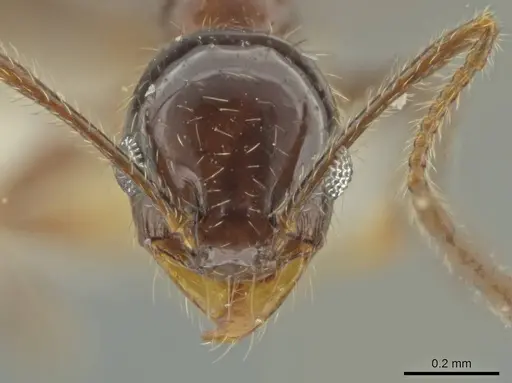
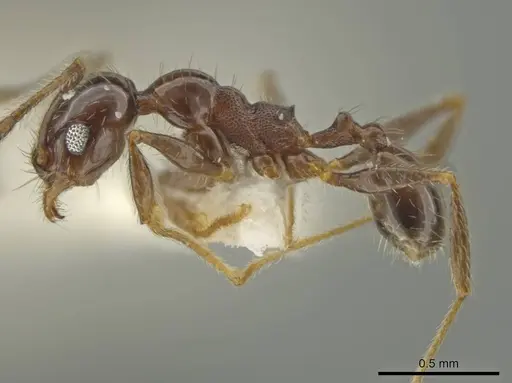
Pheidole machetula is a small member of the diligens group, distinguished by several key features. Major workers have a head width of just 0.80mm, these are tiny ants. The head is subrectangular with nearly straight, parallel sides when viewed from the front. The propodeal spines are short and equilaterally triangular. The antennal scape extends slightly beyond the occipital corner. Minor workers are even smaller at 0.46mm head width and are very dark, almost blackish brown, some specimens have yellow mandibles, trochanters, and tarsi which can help with identification. The major workers serve as the 'soldiers' of the colony, using their slightly larger heads to defend resources and process food.
Care Recommendations
Since no captive husbandry data exists for this species, care recommendations must be inferred from the natural habitat and related species. Keep temperatures in the range of 24-28°C, replicating the warm, stable conditions of the Peruvian lowland rainforest. Humidity should be high, the nest substrate should remain consistently moist but never waterlogged. Provide a constant water source via test tube setup. For feeding, offer typical Pheidole foods: sugar water or honey as an energy source, and protein sources like small insects (fruit flies, pinhead crickets, mealworms). The major workers will help process larger food items. Escape prevention is absolutely critical, these are tiny ants that can slip through standard mesh. Use fine mesh (at least 0.5mm) or fluon barriers. Start with a test tube setup and only move to a larger formicarium once the colony reaches several dozen workers.
Frequently Asked Questions
How do I identify Pheidole machetula ants?
Major workers measure just 0.80mm in head width and are medium brown with lighter brown legs. Minor workers are nearly black (sometimes with yellow mandibles and legs) and measure only 0.46mm head width. The propodeal spines are short and triangular. These are among the smallest Pheidole species, making them distinctive.
Where does Pheidole machetula live in the wild?
This species is known only from a tiny area in Peru, the type locality is 15km northeast of Puerto Maldonado in Madre de Dios. They nest in bare clay soil in gaps within mature rainforest.
Can I keep Pheidole machetula in a test tube?
Yes, a test tube setup is ideal for founding colonies. Use a small diameter tube since these are tiny ants. Keep the water section moderate-sized to prevent flooding, and ensure the cotton is packed tightly to prevent escape.
How long does it take for Pheidole machetula to produce first workers?
This is unknown, no captive development data exists for this species. Based on typical Pheidole patterns at tropical temperatures, expect approximately 4-8 weeks from egg to worker, but this is an estimate only.
What do Pheidole machetula ants eat?
No specific feeding data exists for this species. Based on typical Pheidole diet, offer sugar water or honey for energy and small protein sources like fruit flies, small mealworms, or other tiny insects. Major workers will help process larger food items.
Are Pheidole machetula good for beginners?
This species cannot be recommended for beginners due to the complete lack of captive husbandry data. Keeping this ant essentially requires pioneering care techniques. Only experienced antkeepers should attempt this species.
Do Pheidole machetula need hibernation?
Likely no, as a tropical species from the Peruvian Amazon, they probably do not require a true diapause period. Some slight temperature reduction during winter months may be beneficial but is probably not required.
How big do Pheidole machetula colonies get?
Unknown, only the type colony has ever been documented. Based on typical Pheidole colony sizes and their small worker size, colonies likely reach several hundred workers at maximum.
Why is Pheidole machetula so rare in the antkeeping hobby?
This species is one of the rarest ants in the world, it has only ever been collected once, from a single location in Peru. The species was described in 2003 and has never been found again. Established captive colonies are essentially non-existent.
What temperature should I keep Pheidole machetula at?
Keep them at 24-28°C, replicating the warm conditions of the Peruvian lowland rainforest. A heating cable on one side of the nest creates a gradient allowing the colony to self-regulate. Avoid temperatures below 22°C.
How do I prevent Pheidole machetula from escaping?
Excellent escape prevention is absolutely critical. These are tiny ants that can squeeze through standard mesh. Use fine mesh (0.5mm or smaller), fluon barriers on test tube rims, and ensure all connections are sealed. Check for gaps daily.
References

This caresheet is licensed under CC BY-SA 4.0 .
CASENT0645822
View on AntWeb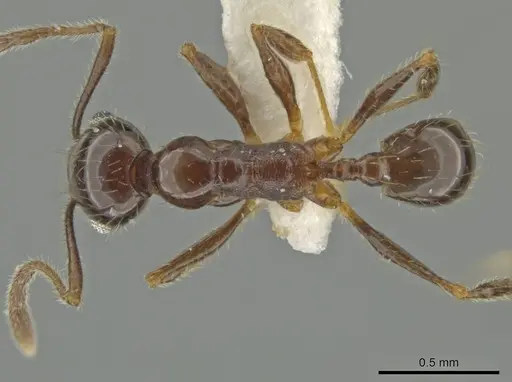
JTLC000016442
View on AntWeb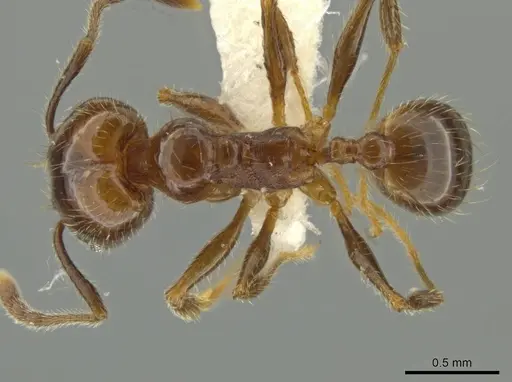
Literature
Loading...Loading products...