

Pheidole lucretii
- Scientific Name
- Pheidole lucretii
- Tribe
- Attini
- Subfamily
- Myrmicinae
- Author
- Santschi, 1923
- Distribution
- Found in 1 countries
Pheidole lucretii Overview
Pheidole lucretii is an ant species of the genus Pheidole. It is primarily documented in 1 countries , including Brazil. Detailed taxonomic data and occurrence records can be further explored via authoritative databases such as AntWeb or the Global Biodiversity Information Facility (GBIF).
Pheidole lucretii
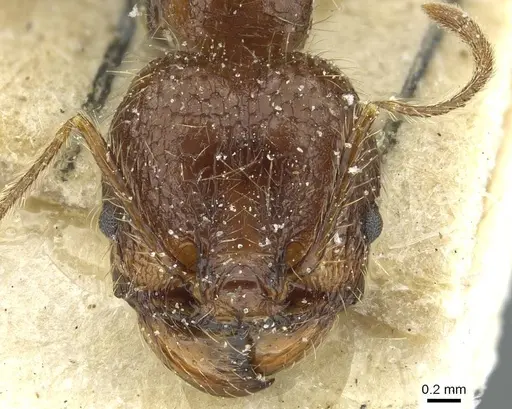
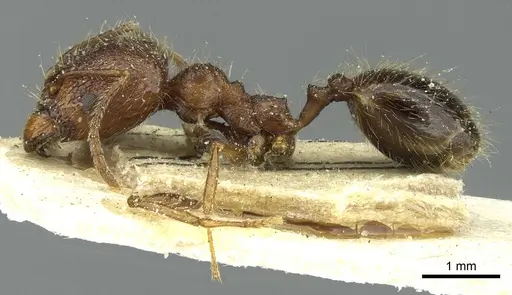
Pheidole lucretii is a Neotropical ant species native to the Atlantic forests of southern Brazil. Major workers are distinctive with their quadrate (square-shaped) heads, measuring around 1.54mm in head width, and medium reddish-brown coloration. The species belongs to the 'jujuyensis complex' within the larger fallax group, characterized by reduced propodeal spines that appear as small denticles. This species is known primarily from major workers, as minor workers have not yet been described. In the wild, they inhabit Atlantic forest fragments in Santa Catarina and Paraná states, where they function as generalist foragers in the ant community [1][2].
Quick Summary
- Difficulty: Medium
- Origin & Habitat: 100 years), typically in submontane semidecidual seasonal forest fragments [3][2].
- Colony Type: Colony structure is unconfirmed. Only major workers have been described, minor workers are unknown. Based on typical Pheidole patterns, likely single-queen colonies.
- Size & Growth:
- Queen: Unknown, not described in available literature
- Worker: Major workers: 1.54mm head width,1.54mm head length,1.12mm scape length
- Colony: Unknown, no colony size data available
- Growth: Unknown, growth rate has not been studied
- Development: Unknown, development timeline has not been documented. Based on typical Pheidole patterns, estimate 6-10 weeks at optimal temperature. (Development time is unconfirmed. Related Pheidole species typically complete development in 6-10 weeks at warm temperatures.)
- Antkeeping:
- Temperature: Keep at 22-26°C. As a Brazilian Atlantic forest species, they prefer warm but not extreme conditions. A gentle gradient with a heating cable on one side of the nest allows workers to regulate their temperature
- Humidity: Maintain moderate to high humidity (60-80%). Atlantic forest environments are damp, so keep the nest substrate consistently moist but not waterlogged. Provide a water tube for drinking water.
- Diapause: Unknown, diapause requirements have not been studied. As a tropical species from southern Brazil, they may not require true hibernation but could benefit from a slight cool period (15-18°C) during winter months.
- Nesting: Natural nesting habits are not well documented. In captivity, standard test tubes or acrylic nests work well. Provide moist substrate (like sand-soil mix) and ensure adequate humidity. Y-tong nests or plaster nests with moisture reservoirs are suitable options.
- Behavior: Pheidole lucretii is a generalist forager that exploits a wide range of food resources [1]. They are likely similar to other Pheidole species in being moderately active foragers with major workers that may help process larger food items. Escape prevention should be moderate, while not among the smallest ants, they can still escape through small gaps. They are not known to be particularly aggressive but will defend their colony if threatened.
- Common Issues: colony size is unknown so keepers may struggle to gauge if their colony is developing normally, minor workers have never been described, this is unusual and could indicate collection difficulty or that majors dominate, no documented development timeline makes it hard to track colony health and growth, humidity requirements are inferred rather than confirmed, monitor colony behavior to adjust, diapause requirements are unknown, tropical origin suggests they may not need true hibernation
Natural History and Distribution
Pheidole lucretii is endemic to the Atlantic forest biome of southern Brazil, currently known from Santa Catarina and Paraná states. The species was originally described from Blumenau, Santa Catarina by Santschi in 1923. More recent surveys have expanded the known range to include Paraná state, where they were recorded in a submontane semidecidual seasonal forest fragment in an advanced stage of recovery [2]. They have been identified in phylogenetic studies of ant communities in secondary tropical forests, where they represent a distinct morphospecies. The species appears to prefer forested habitats and is not typically found in highly disturbed areas.
Identification and Morphology
Major workers of Pheidole lucretii are distinctive within the 'jujuyensis complex' of the fallax group. The head is quadrate (square-shaped) with the antennal scape just reaching the occipital border. The posterior dorsal half of the head, including the space from eyes to antennal fossae, shows rugoreticulate (net-like wrinkle) sculpture. Propodeal spines are reduced to small denticles. The anterior fourth of the first gastral tergite has a shagreened (roughened) texture. Coloration is medium reddish-brown on the head, mesosoma, and appendages, with the waist and gaster being plain medium brown. Minor workers remain unknown, which is unusual but not unprecedented in poorly studied Neotropical species.
Feeding and Diet
Stable isotope analysis (δ15N = 7.89‰) indicates Pheidole lucretii is a generalist forager with a broad trophic niche [1]. They are known to interact with diaspores (seeds) in forest ecosystems, playing a potential role in seed dispersal [3]. In captivity, they should accept typical ant foods including sugar sources (honey, sugar water), protein sources (insects like fruit flies, small crickets, mealworms), and possibly seeds. Feed them a varied diet and remove uneaten food to prevent mold. Offer protein 2-3 times per week and keep sugar water available at all times.
Housing and Nesting
In captivity, standard test tube setups work well for founding colonies. Provide a moist substrate (sand-soil mix or cotton moistened with dechlorinated water) and ensure the tube has a water reservoir. For established colonies, acrylic nests or Y-tong nests with moisture chambers maintain appropriate humidity. Since they come from humid Atlantic forests, keep humidity in the 60-80% range. The nest should have chambers scaled to their size, major workers are about 1.5mm, so standard ant nest dimensions are appropriate. Include an outworld area for foraging.
Temperature and Seasonal Care
As a species from southern Brazil's Atlantic forest, Pheidole lucretii prefers warm conditions in the 22-26°C range. They are adapted to a subtropical climate with moderate seasonal variation. A heating cable on one side of the nest can create a temperature gradient, allowing workers to self-regulate. Place the heating on top of the nest to avoid excessive drying. Regarding winter care, this is a tropical species so they likely do not require true hibernation. However, a slight temperature reduction to 18-22°C during winter months may be beneficial and mimic natural seasonal patterns. Monitor colony activity, if they remain active, maintain normal temperatures.
Frequently Asked Questions
How long does it take for Pheidole lucretii to raise first workers?
The development timeline is unconfirmed for this species. Based on typical Pheidole patterns, expect 6-10 weeks from egg to first worker at optimal temperature (around 24°C). The lack of documented development data makes it difficult to give precise estimates, so monitor your colony's progress and adjust conditions as needed.
What do Pheidole lucretii ants eat?
They are generalist foragers. Offer a varied diet including sugar sources (honey, sugar water) and protein (small insects like fruit flies, pinhead crickets, mealworms). They may also accept seeds like other Attini tribe members. Keep sugar water available at all times and offer protein 2-3 times per week.
Are Pheidole lucretii good for beginners?
This species is rated as Medium difficulty. While not the most challenging ant to keep, there is limited captive care information available since they are not commonly kept. The lack of documented development times and specific humidity requirements means you may need to experiment. If you're experienced with Pheidole or other Myrmicines, this species can be a rewarding challenge.
What temperature should I keep Pheidole lucretii at?
Keep them at 22-26°C. As a Brazilian Atlantic forest species, they prefer warm but stable conditions. A slight gradient allowing workers to choose their preferred temperature is ideal. Room temperature in many homes (20-24°C) may be acceptable, but a heating cable can ensure optimal conditions.
How big do Pheidole lucretii colonies get?
Colony size is unknown, no data on maximum colony size exists in available literature. Based on typical Pheidole genus patterns, colonies likely reach several hundred to a few thousand workers over time. The unusual fact that only majors have been described suggests majors may dominate the worker population.
Do Pheidole lucretii need hibernation?
Diapause requirements are unconfirmed. As a tropical/subtropical species from southern Brazil, they likely do not require true hibernation. A slight cool period (18-22°C) during winter months may be beneficial but is probably not necessary. Monitor colony activity and adjust based on their behavior.
Can I keep multiple Pheidole lucretii queens together?
Colony structure (monogyne/polygyne) is unconfirmed for this species. Pheidole species can be either single-queen or multi-queen depending on the species. Without documented information, it is not recommended to combine unrelated queens. Start with a single queen colony for best success.
What humidity do Pheidole lucretii need?
Maintain moderate to high humidity (60-80%). They come from humid Atlantic forests in Brazil. Keep the nest substrate consistently moist but not waterlogged. A water tube in the setup provides drinking water and helps maintain humidity. Monitor for condensation, some condensation is good, but excessive moisture can cause mold.
Why are only major workers known for Pheidole lucretii?
This is an interesting biological mystery. Minor workers have simply never been collected or described in the scientific literature. This could indicate that majors dominate the worker population, minors are cryptic and rarely sampled, or the species has unusual colony composition. When keeping this species, you may observe unusual worker ratios compared to other Pheidole.
References

This caresheet is licensed under CC BY-SA 4.0 .
CASENT0913347
View on AntWeb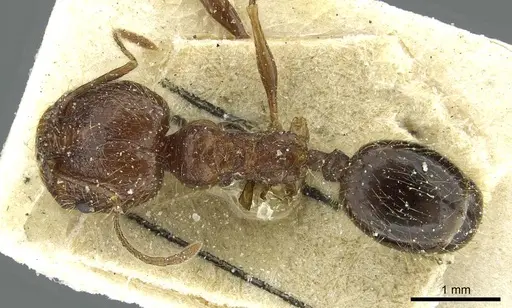
Literature
Loading...Loading products...