

Pheidole lamancha
- Scientific Name
- Pheidole lamancha
- Tribe
- Attini
- Subfamily
- Myrmicinae
- Author
- Longino, 2019
- Distribution
- Found in 1 countries
Pheidole lamancha Overview
Pheidole lamancha is an ant species of the genus Pheidole. It is primarily documented in 1 countries , including Mexico. Detailed taxonomic data and occurrence records can be further explored via authoritative databases such as AntWeb or the Global Biodiversity Information Facility (GBIF).
Pheidole lamancha
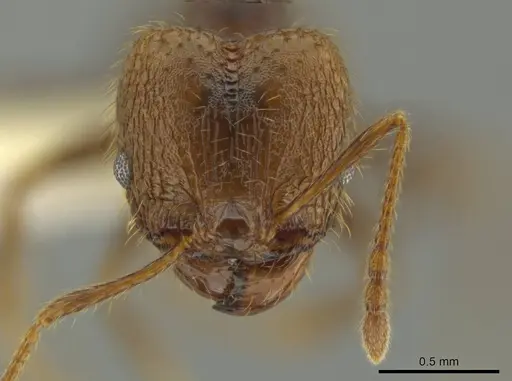
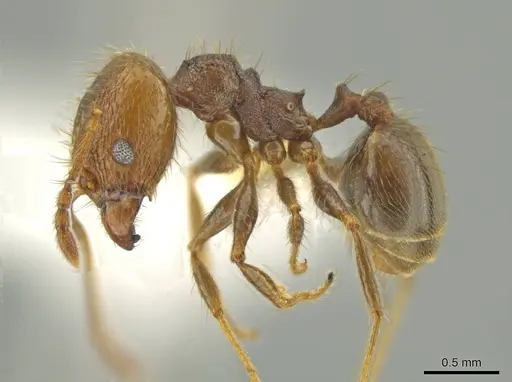
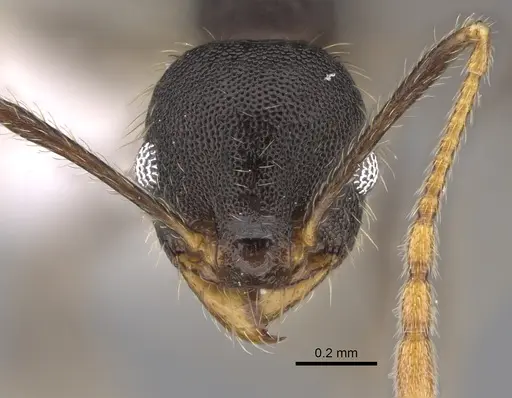
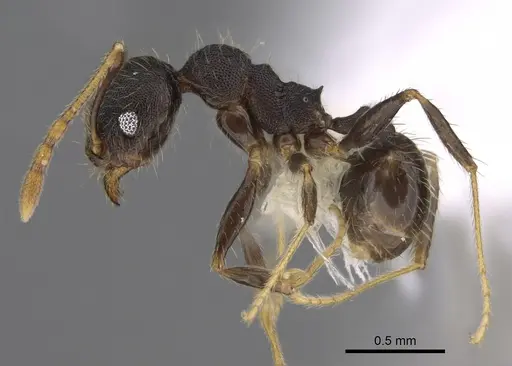
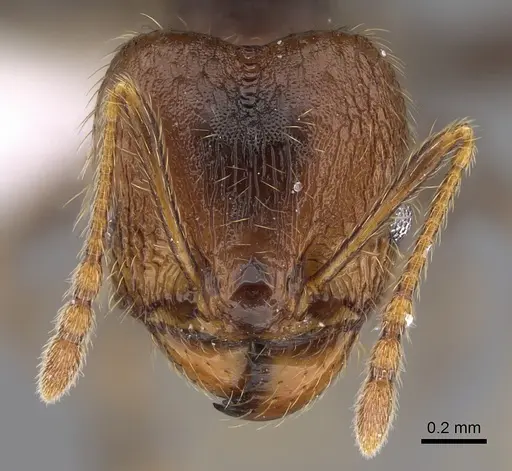
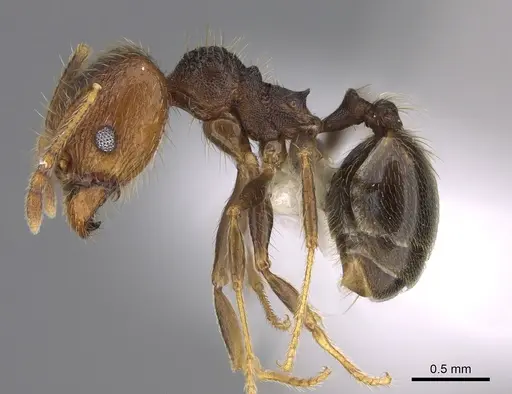
Pheidole lamancha is a small Neotropical ant species recently described in 2019,found only in central Mexico. Both workers and queens have the distinctive Pheidole feature of major workers (soldiers) with enlarged heads, while minor workers are much smaller and more slender. The minor workers are dark brown with foveolate (pitted) sculpture on the face and body. Major workers have a striking two-tone coloration with a light red-brown head featuring a dark brown spot on the forehead, contrasting against a darker brown mesosoma and gaster. A unique identifying feature is the plush-like layer of short, dense pubescence covering the major worker's gaster, while the rest of the body has longer erect hairs. This species lives in tropical dry forest and has been collected from ground baits and sifted leaf litter [1].
Quick Summary
- Difficulty: Medium
- Origin & Habitat: This species is known only from central Mexico, specifically Veracruz and the Xochicalco Archaeological Zone in Morelos. It lives in tropical dry forest habitat at low elevations around 20 meters [2][1].
- Colony Type: Colony structure is unconfirmed for this species. Most Pheidole species are monogyne (single queen colonies), but this has not been documented for P. lamancha specifically.
- Size & Growth:
- Queen: Undocumented for this species, other Mexican Pheidole queens are typically 5-8mm
- Worker: Minor workers: 0.53mm head width. Major workers: 1.00mm head width [1]
- Colony: Undocumented, typical Pheidole colonies reach several hundred to a few thousand workers
- Growth: Unknown, likely moderate based on genus patterns
- Development: 6-10 weeks estimated (Development time is unconfirmed for this species. Estimates based on typical Pheidole development at tropical temperatures (around 24-28°C))
- Antkeeping:
- Temperature: Keep at 24-28°C. This species comes from tropical dry forest in central Mexico, so it prefers warm conditions. A heating cable on one side of the nest creates a temperature gradient they can choose from [1].
- Humidity: Moderate humidity around 50-70%. Tropical dry forest has seasonal rainfall but can be quite dry. Allow the nest substrate to dry partially between waterings, aim for consistently damp but not waterlogged conditions [1].
- Diapause: Unlikely, as a tropical species from lowland Mexico, they probably do not require a true hibernation. However, they may slow down during the dry season in their natural habitat.
- Nesting: In the wild they nest in soil and rotting wood in tropical dry forest. For captivity, a Y-tong (AAC) nest or plaster nest works well. They are small ants, so ensure chambers are appropriately sized. A test tube setup can work for founding colonies [1].
- Behavior: Pheidole ants are known for their seed-harvesting behavior and can be aggressive defenders of their nest. Major workers (soldiers) use their enlarged heads to crush seeds and defend the colony. They are not typically aggressive toward keepers but will bite if threatened. Minor workers forage for food and tend aphids for honeydew. Escape risk is moderate, they are small but not as tiny as some ant species. Standard escape prevention with fluon barriers works well [1].
- Common Issues: tropical species may struggle in cool rooms without heating, small colony size makes them vulnerable to stress, avoid disturbing founding colonies too much, lack of documented care information means you are essentially pioneering captive breeding of this species
Housing and Nest Setup
Pheidole lamancha is a small ant that needs appropriately sized housing. For a newly caught queen or small colony, a test tube setup works well for founding. The tube should have a water reservoir at one end with cotton separating the water from the colony chamber. As the colony grows to 50+ workers, you can move them to a small formicarium like a Y-tong (AAC) nest or a plaster nest. These ants naturally nest in soil and rotting wood in tropical dry forest, so a naturalistic setup with moist soil and some rotting wood pieces can work well. The key is maintaining appropriate humidity while ensuring good ventilation to prevent mold. [1]
Feeding and Diet
Pheidole species are typically omnivorous, with a diet based on seeds, small insects, and honeydew from aphids. For this species, offer a mix of protein and carbohydrate sources. Protein can include small insects like fruit flies, small crickets, or mealworms. Carbohydrates can be provided as sugar water, honey, or diluted honey. Pheidole majors have powerful jaws adapted for crushing seeds, so you might offer tiny seed pieces though acceptance is uncertain. Feed protein sources 2-3 times per week and keep a constant sugar water supply. Remove uneaten food after 24-48 hours to prevent mold.
Temperature and Heating
As a tropical species from lowland central Mexico, Pheidole lamancha requires warm temperatures to thrive. Keep the nest area at 24-28°C for optimal colony development and brood production. This is warmer than what many temperate ant species need. Use a heating cable or heating mat placed on one side of the nest to create a temperature gradient, allowing ants to move between warmer and cooler areas. Avoid placing heat directly on the water reservoir as it can cause condensation problems. Room temperature alone is likely too cool unless your room is already in the mid-twenties Celsius. [1]
Colony Founding
The founding behavior of Pheidole lamancha has not been directly documented. Based on typical Pheidole patterns, the queen likely seals herself in a small chamber (claustral founding) and raises her first brood alone using stored fat reserves. The first workers, called nanitics, will be smaller than normal workers. During this founding period, the queen will not leave the nest to forage. It typically takes 6-10 weeks for the first workers to emerge, depending on temperature. Do not disturb the queen during this critical period, excessive vibration or light can cause her to abandon or eat her brood.
Growth and Development
Pheidole colonies grow through the production of both minor and major workers. The proportion of majors in a colony typically increases as the colony matures, as majors are needed for seed processing and colony defense. This species was only described in 2019,so there is no published data on development times or colony growth rates. Expect moderate growth rates typical of Pheidole species, not as fast as some tropical ants but faster than many temperate species. The distinctive major worker morphology (enlarged head, plush gaster pubescence) will become apparent once the colony reaches several dozen workers. [1]
Frequently Asked Questions
How long does it take for Pheidole lamina to have first workers?
The exact development time is unconfirmed for this species. Based on typical Pheidole development at warm temperatures (24-28°C), expect first workers (nanitics) in approximately 6-10 weeks after the queen lays her first eggs.
What do Pheidole lamina ants eat?
Pheidole species are omnivorous. Offer small insects like fruit flies or tiny crickets for protein, and sugar water or honey for carbohydrates. They may also accept seeds, which their major workers can crush with their powerful jaws.
What temperature do Pheidole lamina ants need?
Keep them at 24-28°C. This tropical species from central Mexico requires warmer conditions than many common ant pets. A heating cable on one side of the nest creates a suitable gradient.
Are Pheidole lamina ants good for beginners?
This species is rated as medium difficulty. While not the hardest ant to keep, there is very limited documented care information since it was only described in 2019. You will essentially be pioneering captive breeding of this species, which requires some experience with ant keeping.
How big do Pheidole lamina colonies get?
The maximum colony size is unconfirmed for this species. Most Pheidole colonies reach several hundred to a few thousand workers. The presence of major workers (soldiers) becomes more common as the colony matures.
Can I keep multiple Pheidole lamina queens together?
The colony structure is unconfirmed for this species. Most Pheidole are monogyne (single queen), but some can be polygynous. It is generally not recommended to combine unrelated queens as they typically fight.
Does Pheidole lamina need hibernation?
Unlikely. As a tropical species from lowland Mexico, they probably do not require a true hibernation period. They may slow down during the dry season in their natural habitat, but captive colonies typically remain active year-round with proper heating.
Why is my Pheidole lamina colony dying?
Common causes include: temperatures that are too cool (below 24°C), improper humidity (too dry or too wet), mold from poor ventilation, or stress from excessive disturbance. This species is newly described with limited captive data, so establishing stable conditions is key.
References

This caresheet is licensed under CC BY-SA 4.0 .
CASENT0641070
View on AntWeb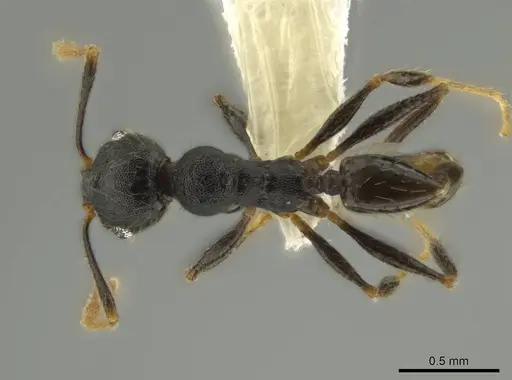
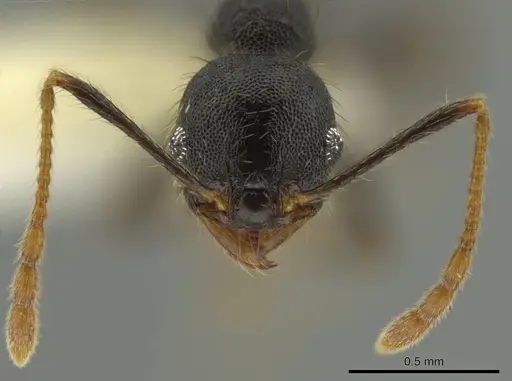
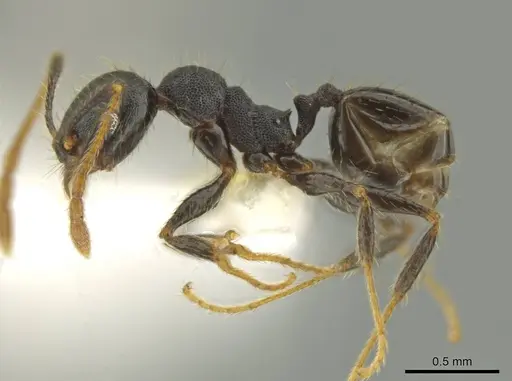
CASENT0641071
View on AntWeb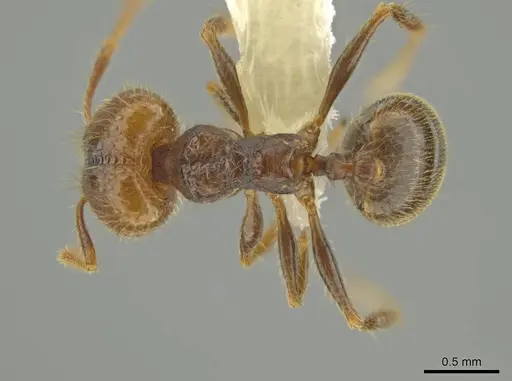
CASENT0646543
View on AntWeb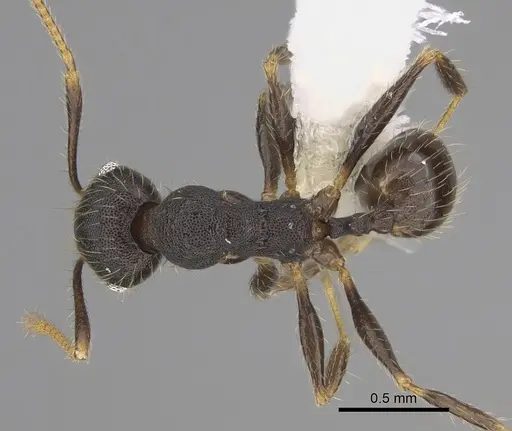
CASENT0646546
View on AntWeb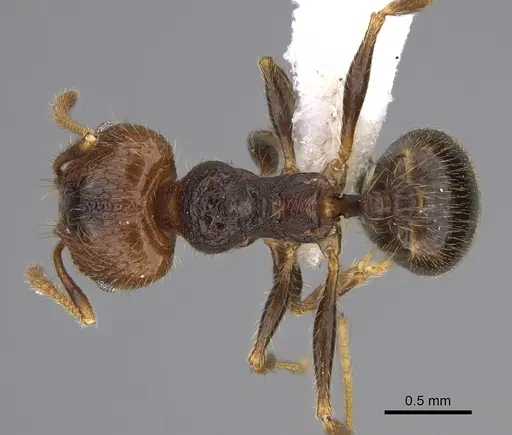
Literature
Loading...Loading products...