

Pheidole laeviventris
- Scientific Name
- Pheidole laeviventris
- Tribe
- Attini
- Subfamily
- Myrmicinae
- Author
- Mayr, 1870
- Distribution
- Found in 1 countries
Pheidole laeviventris Overview
Pheidole laeviventris is an ant species of the genus Pheidole. It is primarily documented in 1 countries , including Colombia. Detailed taxonomic data and occurrence records can be further explored via authoritative databases such as AntWeb or the Global Biodiversity Information Facility (GBIF).
Pheidole laeviventris
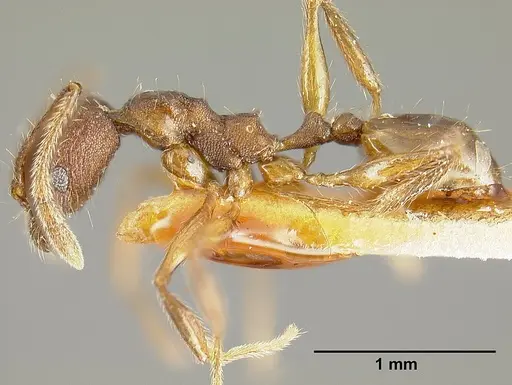
Pheidole laeviventris is a small Neotropical ant species native to Colombia, specifically found in the Cundinamarca region. Workers measure approximately 2.6-2.8mm in length, with a medium reddish-brown body and brownish-yellow appendages [1]. The species is known only from the minor worker caste, major workers have never been described [2]. The name 'laeviventris' refers to the smooth belly (gaster) of these ants [3]. This is one of the least studied Pheidole species, with absolutely no documented information about their biology, colony structure, or captive care requirements.
Quick Summary
- Difficulty: Unknown, Insufficient Data
- Origin & Habitat: Cundinamarca, Colombia (Neotropical region) [4][2]. The specific habitat type is unrecorded.
- Colony Type: Unconfirmed. No colony structure data exists for this species. Other Pheidole species are typically single-queen colonies, but this has not been verified for P. laeviventris.
- Size & Growth:
- Queen: Unknown, queen has never been described [3]
- Worker: 2.6-2.8mm (minor workers only) [1]
- Colony: Unknown, no colony size data exists
- Growth: Unknown
- Development: Unconfirmed, no development data exists for this species. Based on typical Pheidole patterns, estimate 6-10 weeks at warm temperatures. (This is a pure estimate based on genus-level patterns. No species-specific data exists.)
- Antkeeping:
- Temperature: Unknown. No thermal studies exist. Start with typical Neotropical Pheidole conditions: 22-26°C, with a gradient to allow selection. Adjust based on colony behavior.
- Humidity: Unknown. No humidity data exists. Use standard moist substrate conditions typical of forest-dwelling Pheidole (moderate humidity around 60-80%).
- Diapause: Unknown, no seasonal data exists. Colombia is tropical, so a true diapause is unlikely, but some seasonal slowdowns may occur.
- Nesting: Unknown. No natural nesting observations exist. Most Pheidole nest in soil or rotting wood. Use standard test tube setups until more is learned.
- Behavior: Behavior is completely unstudied. Other Pheidole species are generalist foragers with typical minor/major worker castes, but P. laeviventris major workers are unknown. Escape risk cannot be assessed but workers at 2.6-2.8mm require standard barrier precautions.
- Common Issues: Insufficient data exists to establish reliable care parameters, this species should be considered for advanced researchers only, No established captive husbandry protocols exist, keepers would be pioneering all aspects of care, Only minor workers are known, suggesting possible taxonomic issues or that major caste is extremely rare in this species, Extremely limited natural distribution (only Cundinamarca, Colombia) raises conservation concerns
Species Overview and Identification
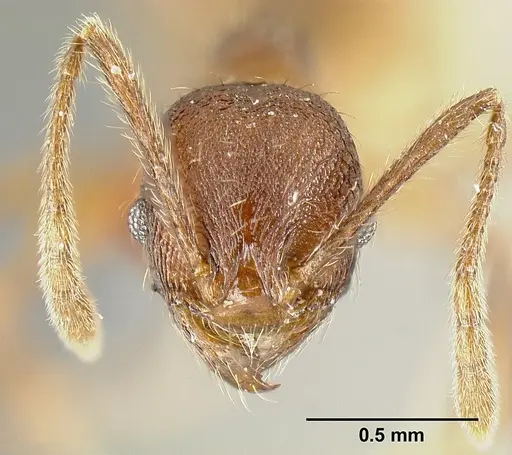
Pheidole laeviventris is one of the most poorly documented species in the genus Pheidole. Described by Mayr in 1870,it is known only from the Cundinamarca region of Colombia. The minor workers measure 2.6-2.8mm with a distinctive smooth and shiny gaster (abdomen), which is the origin of the species name 'laeviventris' (Latin for 'smooth belly'). The body is medium reddish-brown with brownish-yellow legs and antennae. Notably, major workers have never been described or observed, this is extremely unusual for Pheidole and suggests either major workers are rarely produced in this species, or there may be taxonomic confusion. The head has characteristic rugoreticulate (wrinkle-like) sculpturing on the occiput and sides, while the frontal triangle and clypeus are smooth [1][2].
Distribution and Biogeography
This species has an extremely restricted known distribution, documented only from Cundinamarca in central Colombia [4][2]. The precise locality within Cundinamarca is unknown, as the original type specimen data is limited. Colombia's Cundinamarca region includes varied elevations from Andean foothills to high plains, but the specific microhabitat preferences of P. laeviventris remain completely unknown. This extremely limited distribution raises questions about whether the species is rare, undercollected, or potentially endangered. The Neotropical region of Colombia supports extremely high ant diversity, and many species remain poorly known due to limited field research.
Current State of Knowledge
It must be emphasized that absolutely nothing is known about the biology of Pheidole laeviventris. No observations exist regarding colony size, queen behavior, nuptial flight timing, foraging behavior, diet preferences, or any aspect of their natural history. This is not merely a gap in captive care literature, the species has simply never been studied in the field or laboratory. The only available information consists of morphological descriptions of minor workers from museum specimens. For comparison, hundreds of Pheidole species have well-documented biology, but P. laeviventris remains a complete mystery. Any captive husbandry would be entirely pioneering work with no established protocols to follow. [3]
Inferring Care from Genus Patterns
While no species-specific data exists, we can make educated inferences based on typical Pheidole biology. Most Pheidole species are claustral founders, the queen seals herself in a chamber and raises the first brood alone on stored fat reserves. Colonies are typically single-queen (monogyne), though some species can have multiple queens. Workers are generalist foragers, collecting seeds, insects, and honeydew. They prefer warm, humid conditions similar to their tropical forest floor habitats. However, these are broad genus patterns and may not apply to P. laeviventris, the species could have unique or atypical behaviors that we simply cannot predict without basic observation.
Suitability for Antkeepers
Pheidole laeviventris cannot be recommended for antkeepers at this time. The complete absence of biological data means no informed care decisions can be made. Even experienced antkeepers would be working entirely in the dark, guessing at basic requirements like temperature, humidity, diet, and nesting preferences. Additionally, the extremely limited known distribution in Colombia raises ethical concerns about collection. Unless you are a researcher with access to field collection in Cundinamarca and a specific interest in documenting new species biology, this species should be considered outside the scope of captive antkeeping. For those interested in Pheidole, numerous well-documented species exist that can be kept successfully with established protocols.
Frequently Asked Questions
Can I keep Pheidole laeviventris as a pet ant?
No. This species is not recommended for captive keeping. There is absolutely no biological or husbandry data available, no one knows how to care for them, what they eat, or what conditions they need. Keeping them would be irresponsible guesswork that would almost certainly result in colony failure.
What do Pheidole laeviventris eat?
Unknown. No feeding observations exist for this species. Other Pheidole are generalist omnivores that eat seeds, insects, and honeydew, but P. laeviventris may have unique dietary requirements that are completely unknown.
How big do Pheidole laeviventris colonies get?
Unknown. No colony size data exists. Most Pheidole colonies reach hundreds to thousands of workers, but this is unverified for P. laeviventris.
Do Pheidole laeviventris have major workers?
No major workers have ever been described. This is unusual, most Pheidole species have distinct minor and major worker castes. Either major workers are extremely rare in this species, or they have not yet been discovered or described in the scientific literature.
Where is Pheidole laeviventris found?
Only known from Cundinamarca, Colombia. The precise location within this region is uncertain, as the original collection data is limited.
How do I care for Pheidole laeviventris?
Do not attempt to keep this species. No care protocols exist because no one has ever documented their biology. Attempting to keep them would be irresponsible without basic research establishing their requirements.
Are Pheidole laeviventris good for beginners?
No. This species is completely unsuitable for beginners or any antkeepers. There is no information available to guide their care. Even expert antkeepers would be unable to provide appropriate husbandry without baseline biological data.
Do Pheidole laeviventris need hibernation?
Unknown. Colombia is tropical, so a true winter diapause is unlikely, but the species may have seasonal activity patterns that are completely unstudied.
What temperature do Pheidole laeviventris need?
Unknown. No thermal data exists. While other Neotropical Pheidole typically prefer 22-26°C, this is unverified for P. laeviventris.
Can I find Pheidole laeviventris for sale?
Extremely unlikely. This species is virtually unknown in the antkeeping hobby and has never been collected for commercial purposes. The extremely limited distribution in Colombia also makes collection highly improbable.
References

This caresheet is licensed under CC BY-SA 4.0 .
CASENT0601248
View on AntWeb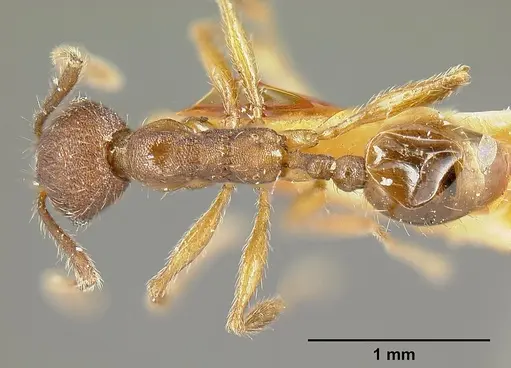
Literature
Loading...Loading products...