

Pheidole laelaps
- Scientific Name
- Pheidole laelaps
- Tribe
- Attini
- Subfamily
- Myrmicinae
- Author
- Wilson, 2003
- Distribution
- Found in 1 countries
Pheidole laelaps Overview
Pheidole laelaps is an ant species of the genus Pheidole. It is primarily documented in 1 countries , including Colombia. Detailed taxonomic data and occurrence records can be further explored via authoritative databases such as AntWeb or the Global Biodiversity Information Facility (GBIF).
Pheidole laelaps
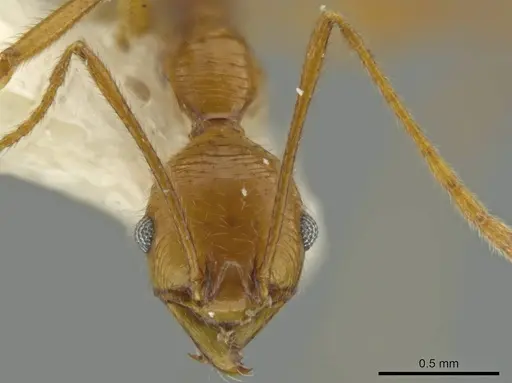
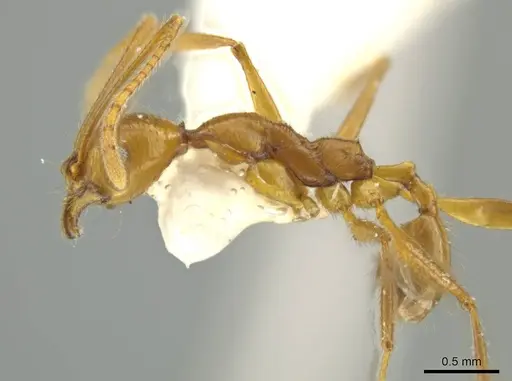
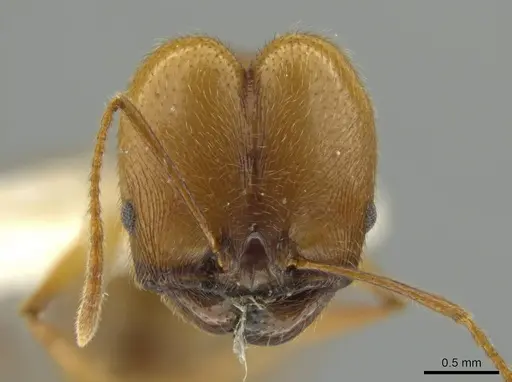
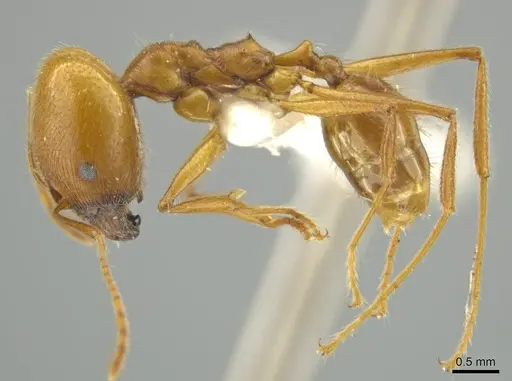
Pheidole laelaps is a small Neotropical ant species native to the montane rainforests of Colombia and Ecuador. Majors measure around 1.66mm in head width with a distinctive deep occipital cleft and carinulate (ridged) head surface, while minors are much smaller at around 0.70mm. Both castes are uniformly yellow in color, which helps distinguish them from similar species. This species was described by Wilson in 2003 and is found at elevations around 1700m in the Valle del Cauca region of Colombia and in Cañar, Ecuador [1][2]. As a montane species, they likely prefer cooler, more humid conditions than lowland tropical ants.
Quick Summary
- Difficulty: Medium
- Origin & Habitat: Montane rainforest in Valle del Cauca, Colombia (1700m elevation) and Cañar, Ecuador. The type series was collected in montane rainforest habitat.
- Colony Type: Likely single-queen colonies based on typical Pheidole genus patterns. Colony structure has not been directly documented for this species.
- Colony: Monogyne
- Founding: Claustral
- Size & Growth:
- Queen: Not documented, estimated 5-7mm based on genus patterns for Pheidole majors
- Worker: Major: 1.66mm HW, Minor: 0.70mm HW [1]
- Colony: Unknown for this species, typical Pheidole colonies reach hundreds to low thousands of workers
- Growth: Moderate, based on typical Pheidole development patterns
- Development: Estimated 6-10 weeks at optimal temperature based on related Pheidole species (Development time is not directly studied for this species, estimates based on genus patterns)
- Antkeeping:
- Temperature: Montane origin suggests cooler conditions, aim for 20-24°C with a gentle gradient. Avoid overheating.
- Humidity: High humidity preferred (70-85%) reflecting their montane rainforest origin. Keep substrate consistently moist but not waterlogged.
- Diapause: Unknown, montane species may have reduced activity during cooler months but true diapause has not been documented
- Nesting: No specific nesting data exists. In captivity, typical Pheidole setups work well, test tubes for founding, Y-tong or plaster nests for established colonies. Provide tight chambers as minors are very small.
- Behavior: Pheidole are generally non-aggressive toward keepers but majors will defend the colony if threatened. Both castes are active foragers, minors search for food while majors may help process larger items. Escape risk is significant due to the very small minor workers (0.70mm), fine mesh barriers are essential. They are likely primarily granivorous (seed-eating) with some insect predation, typical of the genus.
- Common Issues: escape prevention is critical due to tiny minor workers, they can squeeze through standard mesh, high humidity requirements can lead to mold if ventilation is poor, slow growth may cause keepers to overfeed, leading to mold and colony stress, montane origin means they may struggle in warm rooms above 26°C, wild-caught colonies may carry parasites that affect captive survival
Nest Preferences
No specific natural nesting data exists for Pheidole laelaps, but the genus typically nests in soil, under stones, or in rotting wood in forest habitats. In captivity, provide a setup that maintains high humidity while allowing some干燥 areas for the ants to regulate their moisture exposure. Test tube setups work well for founding colonies, the queen will seal herself in the water reservoir end and raise her first brood there. For established colonies, Y-tong (acrylic) nests or plaster nests with small chambers suit the tiny minor workers. The chambers should be appropriately scaled, these are very small ants, so tight passages help them feel secure. [1]
Feeding and Diet
Pheidole species are typically granivorous (seed-eating) and also supplement their diet with small insects and honeydew. For this species, offer a mix of seeds (millet, chia, grass seeds) as a staple food source, along with small insects like fruit flies, pinhead crickets, or mealworms as protein. Sugar water or honey can be offered occasionally, though granivorous Pheidole may not strongly prefer sugary liquids. Feed seeds continuously and offer protein 2-3 times per week. Remove uneaten seeds periodically to prevent mold. The major workers help process larger food items while minor workers do most of the foraging.
Temperature and Care
As a montane species from around 1700m elevation, Pheidole laelaps prefers cooler temperatures than typical tropical ants. Keep the nest area at 20-24°C, this is cooler than many common pet ant species. Avoid temperatures above 26°C, as this species is not adapted to extreme heat. A heating cable on one side of the nest can create a gentle temperature gradient, allowing the ants to choose their preferred zone. Room temperature in most homes (20-23°C) should work well without additional heating. Monitor colony activity, if workers consistently avoid the heated area, reduce temperature.
Behavior and Temperament
Pheidole laelaps has a typical Pheidole temperament, they are not particularly aggressive and focus on foraging and colony maintenance. The major workers serve as defenders and food processors, while minor workers handle most foraging tasks. Both castes are active during the day. When threatened, majors may lunge or bite, though their small size makes them harmless to humans. The most significant behavioral consideration is escape prevention, these are tiny ants, and the minor workers (0.70mm) can squeeze through gaps that larger ants cannot. Always use fine mesh (0.5mm or smaller) on any ventilation holes, and check that lid seals are tight. [1]
Colony Founding
Colony founding behavior has not been directly documented for this species. Based on typical Pheidole patterns, the queen likely performs claustral founding, she seals herself in a small chamber and lives off her stored fat reserves while raising the first brood alone. The first workers (nanitics) will be smaller than normal workers and will emerge after several weeks to begin foraging. During this founding period, the queen needs complete darkness and minimal disturbance. Do not feed the founding queen, she does not leave the nest to forage. Once the first workers emerge, you can begin offering tiny food items.
Growth and Development
Specific development timeline data does not exist for Pheidole laelaps. Based on related Pheidole species, expect 6-10 weeks from egg to first worker at optimal temperature (around 22°C). The first workers will be nanitics, smaller than normal workers and often more active. Growth rate is moderate, the colony will expand gradually over the first year. Major workers appear as the colony grows, typically when the colony reaches several dozen workers. Unlike some ant species, Pheidole colonies can continue growing for several years. Patience is key during the founding phase, many keepers lose colonies by overfeeding or disturbing them too often.
Frequently Asked Questions
How long does it take for Pheidole laelaps to produce first workers?
The egg-to-worker timeline is not directly documented for this species. Based on typical Pheidole development, expect 6-10 weeks at optimal temperature (around 22°C). The first workers will be smaller nanitics.
What temperature do Pheidole laelaps ants need?
Keep them at 20-24°C. As a montane species from 1700m elevation in Colombia, they prefer cooler conditions than typical tropical ants. Avoid temperatures above 26°C.
Can I keep multiple Pheidole laelaps queens together?
This has not been documented for this species. Based on typical Pheidole behavior, single-queen colonies are most common. Combining unrelated queens is not recommended.
What do Pheidole laelaps eat?
They are likely granivorous like other Pheidole species. Offer seeds (millet, chia, grass seeds) as a staple, plus small insects (fruit flies, pinhead crickets) for protein. Occasional sugar water or honey may be accepted.
Are Pheidole laelaps good for beginners?
This species is rated Medium difficulty. The main challenges are escape prevention (tiny minors), high humidity needs, and the need for cooler temperatures. If you can provide these conditions, they are manageable for intermediate keepers.
How big do Pheidole laelaps colonies get?
Colony size is not documented for this species. Based on typical Pheidole, expect hundreds to possibly low thousands of workers at maturity.
Do Pheidole laelaps need hibernation?
Diapause requirements are unknown. As a montane species, they may have reduced activity during cooler periods but true hibernation has not been documented. Keep them at stable temperatures year-round.
Why are my Pheidole laelaps escaping?
The minor workers are very small (0.70mm) and can squeeze through standard mesh and gaps. Use fine mesh (0.5mm or smaller) and check all seals carefully.
When should I move Pheidole laelaps to a formicarium?
Keep them in a test tube setup through the founding stage and until the colony reaches 30-50 workers. Move them when the test tube becomes crowded or the water reservoir runs low.
What humidity level do Pheidole laelaps need?
Aim for 70-85% humidity. Montane rainforest origin means they need consistently damp substrate. Use a water reservoir connected to the nest to maintain moisture.
References

This caresheet is licensed under CC BY-SA 4.0 .
CASENT0645810
View on AntWeb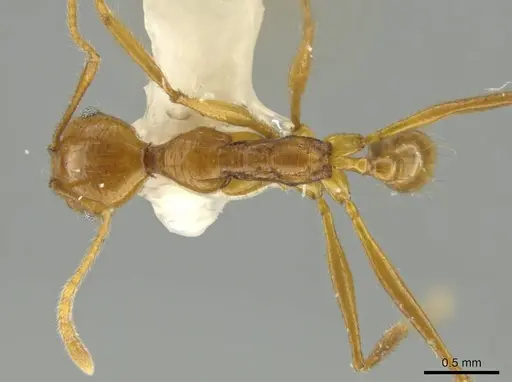
JTLC000016423
View on AntWeb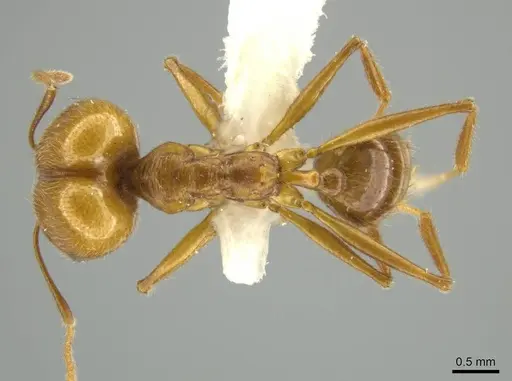
Literature
Loading...Loading products...