

Pheidole inca
- Scientific Name
- Pheidole inca
- Tribe
- Attini
- Subfamily
- Myrmicinae
- Author
- Wilson, 2003
- Distribution
- Found in 1 countries
Pheidole inca Overview
Pheidole inca is an ant species of the genus Pheidole. It is primarily documented in 1 countries , including Peru. Detailed taxonomic data and occurrence records can be further explored via authoritative databases such as AntWeb or the Global Biodiversity Information Facility (GBIF).
Pheidole inca
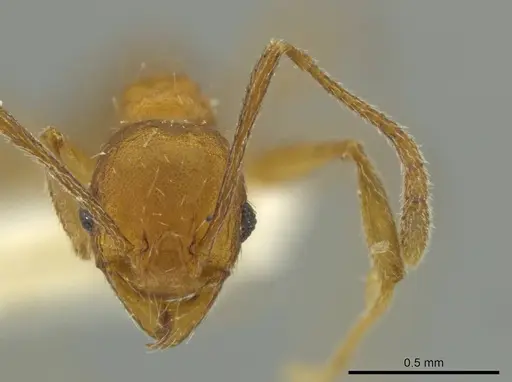
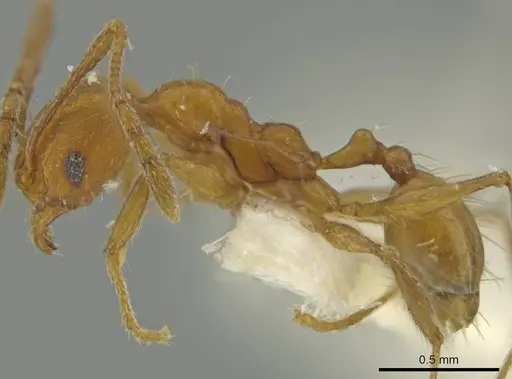
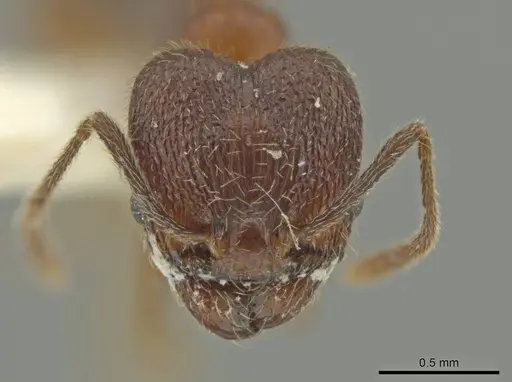
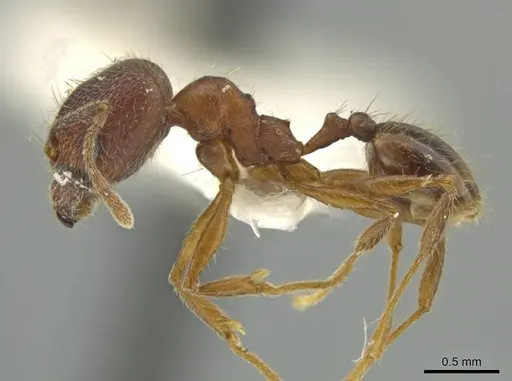
Pheidole inca is a striking 'big-headed ant' from the highland forests of Peru. The major workers have a uniquely large head with distinctive longitudinal sculpturing and a small median ocellus (simple eye) on the forehead, a feature rarely seen in Pheidole [1]. The body is brown, with the head and gaster being medium brown, mesosoma and waist lighter brown, and legs dark yellow [1]. This species was discovered in Machu Picchu and named after the Inca civilization [1]. Only the major workers have been described, the minor workers remain unknown. As a high-elevation species from the Andes (2000-2200m), it likely occupies a cooler, more humid niche than lowland tropical Pheidole.
Quick Summary
- Difficulty: Unknown
- Origin & Habitat: Known only from Machu Picchu, Peru at 2000-2200m elevation in cloud forest habitat [1][2]. The type was collected from this highland site by William L. Brown [1].
- Colony Type: Unconfirmed, colony structure has not been documented. Most Pheidole species are single-queen (monogyne) colonies, but this has not been studied for P. inca.
- Size & Growth:
- Queen: Unknown, no queens have been collected or described [1]
- Worker: Major workers: HW 0.94mm, HL 0.96mm, SL 0.74mm [1]. Minor workers unknown.
- Colony: Unknown, no colony size data exists [1]
- Growth: Unknown
- Development: Unknown, no development data exists for this species [1] (Based on typical Pheidole patterns, expect 4-8 weeks at tropical temperatures. Highland origin suggests cooler optimal temperatures.)
- Antkeeping:
- Temperature: Likely prefers cooler conditions than typical tropical ants, aim for 18-22°C initially, based on highland origin. Monitor colony activity and adjust.
- Humidity: Highland cloud forest origin suggests moderate to high humidity needs, aim for 60-80% relative humidity with moist but not waterlogged substrate.
- Diapause: Unknown, highland species may have reduced activity during cooler months but true diapause requirements are unconfirmed.
- Nesting: No specific nesting data exists. In captivity, standard test tubes or small acrylic nests work well. Provide moist substrate as this is a highland species.
- Behavior: Not documented. Pheidole majors are typically defensive, using their large heads to block nest entrances and defend against intruders. Minor workers handle most foraging. Escape prevention is important, Pheidole are agile and will exploit any gap. Based on genus patterns, they likely forage for seeds and small insects.
- Common Issues: no biological data exists, all care is based on genus-level inference, highland origin means temperature needs are uncertain, start cool and observe, colony size and growth rate are completely unknown, minor workers undescribed means you may not recognize them if they appear, escape prevention is essential as Pheidole are excellent climbers
Appearance and Identification
Pheidole inca is a distinctive big-headed ant. The major workers have a uniquely sculpted head with longitudinal carinulae (raised lines) running along the midline, flanked by rugoreticulate (wrinkled network) sculpturing that reaches the occipital border. Most notably, they possess a median ocellus, a simple eye in the center of the forehead, which is rare among Pheidole species [1]. The body is brown, with head and gaster medium brown, mesosoma and waist light brown, and legs dark yellow [1]. Major workers measure approximately 0.94mm head width. The minor workers have never been described, so you may not recognize them if your colony produces them [1].
Natural History and Distribution
This species is known only from Machu Picchu, Peru, collected at 2000-2200 meters elevation [1]. This makes it a highland cloud forest species, distinctly different from most Pheidole which are lowland tropical ants. The type specimen was collected by William L. Brown [1]. Beyond this, absolutely nothing is known about its biology, no observations of foraging, colony size, nuptial flights, or any behavioral ecology exist [1]. This is one of the most poorly documented Pheidole species in existence.
Housing and Nesting
Since nothing is known about this species' nesting preferences, you must rely on genus-level guidance. Use a standard test tube setup for founding colonies, fill a test tube one-third with water, plug with cotton, and place the queen in the dark. For established colonies, small acrylic nests or Y-tong nests work well for Pheidole. Given the highland origin, provide moderate humidity and avoid overheating. Keep the nest substrate consistently moist but not waterlogged. Escape prevention is essential, Pheidole are excellent climbers and will find any gap in your setup.
Feeding and Diet
Feeding requirements are unconfirmed for this species. Most Pheidole are omnivorous, accepting seeds, small insects, and sugar sources. Start with standard ant foods: small live prey (fruit flies, pinhead crickets), protein jelly, and occasional sugar water. Given the highland origin, they may be less enthusiastic about sugar than lowland species. Offer a varied diet and observe what your colony accepts. Remove uneaten prey after 24-48 hours to prevent mold.
Temperature and Seasonal Care
Temperature requirements are uncertain due to the highland origin. Unlike typical tropical ants that prefer 24-30°C, this species likely does best cooler, start around 18-22°C and observe colony behavior. If workers are clustered near the warmest part of the nest, increase slightly. If they avoid heat sources, reduce temperature. True diapause requirements are unknown, but highland species often have reduced winter activity. Consider providing a cool period (15-18°C) during winter months, but do not force hibernation as this has not been documented.
Growth and Development
No development data exists for this species. The egg-to-worker timeline is completely unknown [1]. Based on typical Pheidole development at optimal temperatures (around 25°C for lowland species), expect 4-8 weeks to first workers. However, being a highland species, the optimal temperature may be lower, which could slow development. Major workers (the only described caste) emerge first, minor workers, if they exist, may appear later. Nanitics (first workers) are typically smaller than normal workers.
Frequently Asked Questions
How long does it take for Pheidole inca to produce first workers?
The egg-to-worker timeline is completely unknown for this species, no biological data exists [1]. Based on typical Pheidole patterns, expect 4-8 weeks at warm temperatures, but this is an estimate only.
What temperature is best for Pheidole inca?
Temperature requirements are unconfirmed. Given the highland origin (2000-2200m elevation at Machu Picchu), start around 18-22°C and adjust based on colony activity. Avoid the high temperatures (24-30°C) that typical tropical ants prefer.
Can I keep multiple Pheidole inca queens together?
Colony structure is unconfirmed for this species. Most Pheidole are single-queen (monogyne) colonies, but this has not been documented for P. inca. Until more information is available, keep only one queen per colony.
What do Pheidole inca ants eat?
Diet is unconfirmed. Offer small live prey (fruit flies, pinhead crickets), protein sources, and occasional sugar water. Observe what your colony accepts and adjust accordingly.
How big do Pheidole inca colonies get?
Colony size is completely unknown, no wild colonies have been studied [1]. Most Pheidole colonies reach hundreds to thousands of workers, but P. inca may differ given its restricted highland range.
Do Pheidole inca need hibernation or diapause?
Diapause requirements are unknown. As a highland species from 2000m elevation, they likely experience cooler temperatures and seasonal changes. Consider providing a cool period (15-18°C) in winter, but true hibernation has not been documented.
What nest type is best for Pheidole inca?
No specific nesting data exists. Use standard test tubes for founding and small acrylic or Y-tong nests for established colonies. Provide moist substrate and ensure excellent escape prevention.
Why is my Pheidole inca colony not growing?
Without any biological data, diagnosing problems is difficult. Check temperature (likely prefers cooler conditions than typical ants), humidity (keep substrate moist), and food variety. This may simply be a slow-growing species or one with specific requirements we don't yet understand.
Is Pheidole inca a good species for beginners?
No. This is one of the most poorly documented ant species in existence, absolutely nothing is known about its biology [1]. Keeping it successfully would require significant experimentation and patience. Choose a better-documented species for your first colony.
References

This caresheet is licensed under CC BY-SA 4.0 .
CASENT0645804
View on AntWeb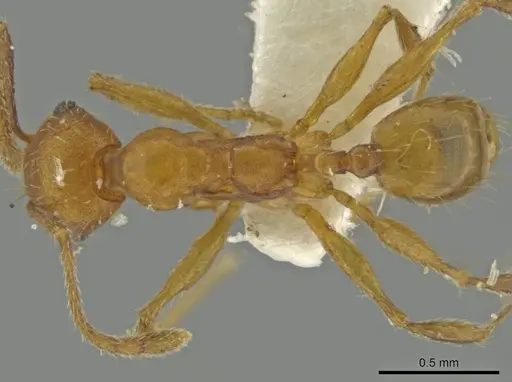
JTLC000016410
View on AntWeb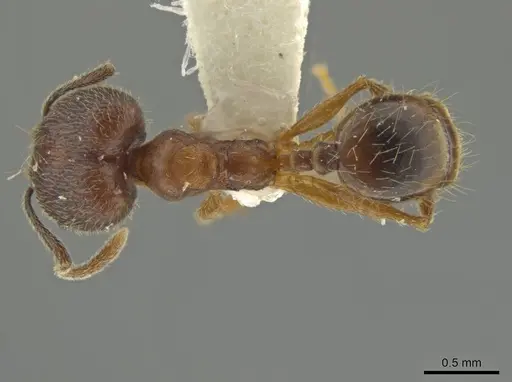
Literature
Loading...Loading products...