

Pheidole hispaniolae
- Scientific Name
- Pheidole hispaniolae
- Tribe
- Attini
- Subfamily
- Myrmicinae
- Author
- Wilson, 2003
- Distribution
- Found in 1 countries
Pheidole hispaniolae Overview
Pheidole hispaniolae is an ant species of the genus Pheidole. It is primarily documented in 1 countries , including Dominican Republic. Detailed taxonomic data and occurrence records can be further explored via authoritative databases such as AntWeb or the Global Biodiversity Information Facility (GBIF).
Pheidole hispaniolae
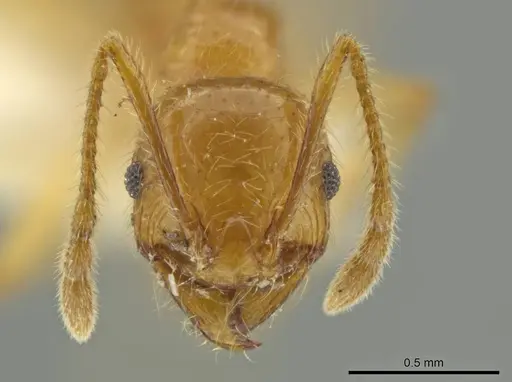
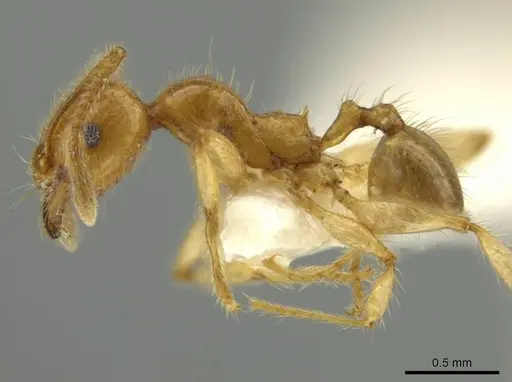
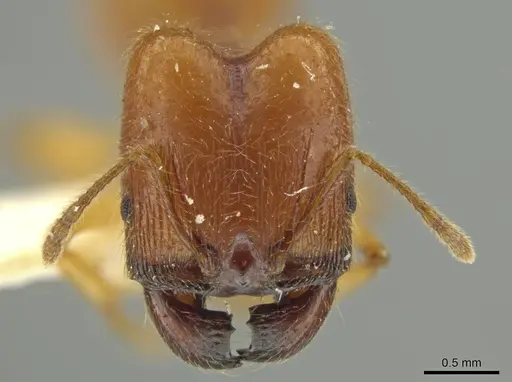
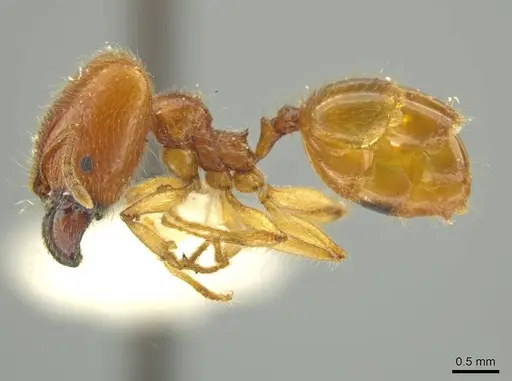
Pheidole hispaniolae is a small ant species endemic to the Dominican Republic, where it lives in the mountainous interior of the island at elevations between 1,100 and 1,735 meters. The species was formally described by E.O. Wilson in 2003 and is known only from a small cluster of locations in the central highlands. Major workers have the characteristic big heads that give Pheidole their common name 'big-headed ants, ' with a light reddish-brown body and medium yellow legs. Minor workers are smaller at about 0.66mm head width and range from light to medium brownish yellow. This is a high-elevation tropical species that nests in rotting wood and under stones in cool, humid mountain forests.
Quick Summary
- Difficulty: Medium
- Origin & Habitat: Endemic to the Dominican Republic in the Greater Antilles. Found in second-growth mountain rainforest and pine or mixed pine-hardwood forests at 1,100-1,735m elevation [1][2]. Nests are located in rotting logs and under rocks.
- Colony Type: Likely monogyne (single queen colonies) based on typical Pheidole genus patterns. Colony size is estimated to reach several thousand workers given typical genus growth patterns.
- Colony: Monogyne
- Founding: Claustral
- Size & Growth:
- Queen: Not directly measured, estimated 9-12mm based on genus patterns for similar-sized Pheidole species
- Worker: Major workers: 1.64mm head width,1.86mm total length. Minor workers: 0.66mm head width,0.74mm total length [3]
- Colony: Estimated 2,000-5,000 workers based on typical Pheidole colony development
- Growth: Moderate, typical Myrmicinae development timeline
- Development: 6-10 weeks at optimal temperature based on typical Pheidole development patterns (Development time is inferred from genus patterns, specific data for this species is unavailable. Higher elevation origin suggests slightly cooler optimal temperatures than lowland tropical Pheidole.)
- Antkeeping:
- Temperature: Keep at 20-24°C. The high-elevation origin (1,100-1,735m) suggests they prefer cooler conditions than typical tropical ants. A gentle gradient allowing workers to self-select their preferred temperature is ideal.
- Humidity: Moderate to high humidity (60-80%). Their natural habitat in mountain rainforest and pine forests provides consistent moisture. Keep nest substrate damp but not waterlogged, with some drier areas available.
- Diapause: Likely required. As a high-elevation species from a temperate-latitude Caribbean location, they likely need a winter rest period. Provide 2-3 months at 12-15°C during winter.
- Nesting: Provide a nest that stays cool and humid. Y-tong (AAC) nests or plaster nests work well. They naturally nest in rotting wood and under stones, so include some wood or stone elements if possible. Keep the nest out of direct sunlight.
- Behavior: Pheidole hispaniolae is a standard Pheidole species with typical big-headed ant behavior. Major workers serve as soldiers and food processors, while minors handle most foraging and brood care. They are not particularly aggressive but will defend their nest vigorously if threatened. Minor workers are small enough to pose some escape risk, use standard barrier methods. They are seed-harvesters and generalists, typical of the Attini tribe.
- Common Issues: high elevation origin means they may be sensitive to overheating, keep well below tropical temperatures, limited distribution in the wild makes wild-caught colonies rare and potentially expensive, humidity control is important, too dry and colonies stagnate, too wet and mold becomes an issue, Pheidole colonies can grow large quickly, ensure you have space for eventual expansion, diapause is likely required and skipping it may cause colony health problems over time
Housing and Nest Setup
Pheidole hispaniolae does well in Y-tong (AAC) nests or plaster formicariums that maintain stable humidity. Their natural nesting in rotting wood and under stones means they appreciate a nest that stays cool and retains moisture. A test tube setup works well for founding colonies, use a water reservoir that keeps the cotton consistently moist but not flooded. Once the colony reaches 50+ workers, consider moving to a proper formicarium. The key is maintaining moderate humidity (60-80%) without letting the nest dry out or become stagnant. Provide an outworld for foraging that is easy to clean. Because minor workers are small (under 1mm), ensure your escape barriers are adequate, standard fluon barriers on smooth surfaces usually work well for Pheidole. [1][2][3]
Feeding and Diet
Like all Pheidole species, P. hispaniolae is an Attini tribe member, this means they are natural seed harvesters and generalist foragers. In captivity, offer a varied diet including small seeds (millet, sesame, cracked grain), protein sources (small crickets, mealworms, bloodworms), and occasional sugar water or honey. Major workers have large heads specifically adapted for processing seeds and hard foods, so don't be surprised to see them taking on this role while minors handle most of the foraging. Feed protein 2-3 times per week and keep sugar water available at all times. Remove uneaten food after 24-48 hours to prevent mold. [3]
Temperature and Seasonal Care
This is where P. hispaniolae differs from many common pet ants. Being from high elevations (1,100-1,735m) in the Dominican Republic, they prefer cooler temperatures than typical tropical species. Aim for 20-24°C in the nest area, this is cooler than most antkeepers keep their colonies. A heating cable on only one side of the nest creates a temperature gradient that lets workers choose their comfort zone. During winter (roughly November through February in the Northern Hemisphere), reduce temperature to 12-15°C to provide their likely required diapause. This winter rest period is important for colony health and may trigger spring reproduction. Males have been found in April, suggesting nuptial flights occur in spring. [1][2]
Colony Development
Pheidole colonies are famous for their major workers, the big-headed soldiers that develop from larger larvae. Your founding queen will lay eggs and, after 6-10 weeks (estimated from genus patterns), produce her first nanitic workers. These first workers are smaller than normal but will begin foraging and caring for subsequent brood. As the colony grows, you may notice some larvae developing into major workers, this typically happens when the colony reaches several hundred workers. Major workers are not produced constantly but in waves as the colony needs them. A mature colony of P. hispaniolae can reach several thousand workers with a significant proportion being majors. The colony growth rate is moderate, expect 1-2 years to reach several hundred workers, and 3+ years to reach maturity. [3]
Behavior and Defense
Pheidole hispaniolae has the typical Pheidole behavioral suite: minors handle most activities outside the nest while majors serve as defenders and food processors. When the nest is disturbed, minors will rapidly evacuate brood while majors position themselves at entrances. They are not particularly aggressive toward humans, Pheidole stings are minor and often too weak to penetrate human skin. The main defense concern is their small minor workers (under 1mm) which can squeeze through surprisingly small gaps. Standard escape prevention with smooth barriers and tight-fitting lids works well. In the outworld, they will establish foraging trails and can become quite bold once established. [3]
Frequently Asked Questions
How long does it take for Pheidole hispaniolae to produce first workers?
Expect 6-10 weeks from egg to first worker at optimal temperature (20-24°C). This is an estimate based on typical Pheidole development patterns since specific data for this species is not available.
What temperature do Pheidole hispaniolae need?
Keep them at 20-24°C, which is cooler than many tropical ants due to their high-elevation origin. They can tolerate temperatures from 18°C up to about 26°C but avoid prolonged exposure to temperatures above 28°C.
Do Pheidole hispaniolae need hibernation?
Yes, a winter diapause is likely required. Reduce temperatures to 12-15°C for 2-3 months during winter. This matches their natural conditions at 1,100-1,735m elevation in the Dominican Republic.
How big do Pheidole hispaniolae colonies get?
Mature colonies can reach 2,000-5,000 workers based on typical Pheidole growth patterns. This may take 3-5 years from founding.
Can I keep multiple Pheidole hispaniolae queens together?
Pheidole species are typically monogyne (single queen). Combining unrelated queens is not recommended as they will likely fight. If you obtain a colony, assume it is single-queen unless you observe otherwise.
What do Pheidole hispaniolae eat?
They are generalist foragers and seed harvesters. Offer small seeds, protein (insects), and sugar sources. Major workers process seeds with their large heads while minors do most foraging.
Is Pheidole hispaniolae a good beginner ant?
This species is rated Medium difficulty. While not overly demanding, their high-elevation temperature requirements and likely diapause needs make them slightly more challenging than common tropical species. They are rewarding for keepers willing to provide cooler conditions.
When do Pheidole hispaniolae have nuptial flights?
Males have been found in colonies in April, suggesting spring nuptial flights. This aligns with the start of the wet season in the Dominican Republic.
Why is my Pheidole hispaniolae colony not growing?
Check three things: temperature (should be 20-24°C, not warmer), humidity (should be consistently damp but not wet), and diapause (they likely need winter rest). Also ensure they have adequate protein and are not being overfed.
References

This caresheet is licensed under CC BY-SA 4.0 .
CASENT0645798
View on AntWeb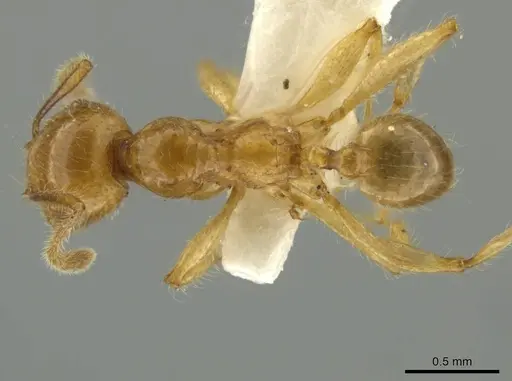
JTLC000016404
View on AntWeb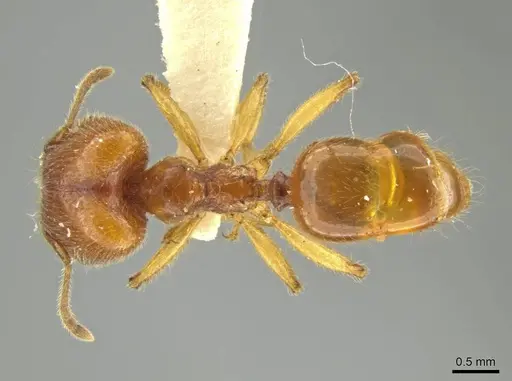
Literature
Loading...Loading products...