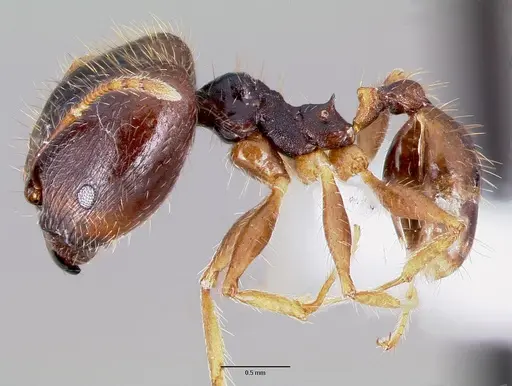
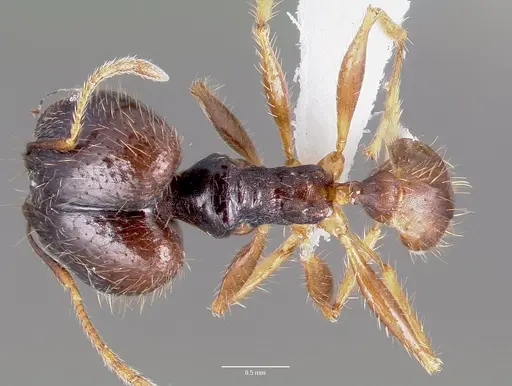
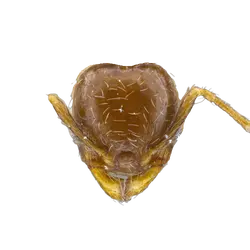
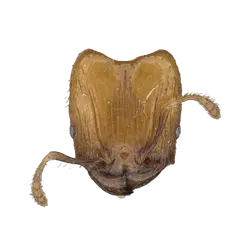
Pheidole speculifera - "African Big-Headed Ant"
Pheidole speculifera is a striking African ant species, noted for its beautiful coloration and impressive dimorphism. Queens are typically burgundy with a black gaster, while the minor workers are yellow-orange, and the major workers (often called 'soldiers') are also a rich burgundy. This species is known for being highly active and voracious, with colonies developing rapidly. Even young colonies display a dynamic comparable to larger colonies of other common species.
- Difficulty: Easy
- Origin & Habitat: Africa (Kenya, Cameroon, Ethiopia, Eritrea, Democratic Republic of Congo, Guinea, Mali, Nigeria, Ghana, Ivory Coast, Angola) in Generally prefers warmer climates, found in tropical and subtropical regions. They commonly inhabit soil and leaf litter..
- Colony Type: Monogyne (single queen) but pleometrosis can occur., claustral founding.
- Size & Growth:
- Queen: 5-8mm
- Worker: 2-5.1mm
- Colony: Large (tens of thousands). Fast growth.
- Antkeeping:
- Temperature: Optimal temperature ranges from 24-28°C. Consistent warmth aids rapid brood development. Heating the nest partially can speed up growth..
- Humidity: Prefers high humidity levels, ideally between 60-70%. They do not tolerate dry conditions well, so maintaining consistent moisture is crucial for brood development..
- Diapause: Not required. Not specified at Not specified.
- Nesting: Pheidole speculifera are adaptable and can thrive in various setups including soil nests, acrylic, 3D printed, grout, or Ytong nests. They especially like to warm their brood near heat sources..
- Behavior: Medium (towards food or other ants) aggressiveness.
- Common Issues: Mold in nest, Humidity fluctuations, Escape artists, Colony stalling (due to insufficient food/heat).
Pheidole speculifera are known for their highly active nature and rapid colony growth. Even small, young colonies will display a remarkable level of activity, making them fascinating to observe right from the start. This energetic behavior, combined with their striking coloration, makes them a captivating species for both novice and experienced antkeepers alike. Be prepared for a bustling outworld as they actively forage.
A standout feature of Pheidole speculifera, like other Pheidole species, is their dimorphic worker caste, meaning they have two distinct types of workers: minors and majors. The major workers, often called 'soldiers' or 'big-headed ants,' have disproportionately large heads and mandibles. These powerful majors are primarily responsible for breaking down larger food items and defending the colony, showcasing impressive teamwork within the nest. It's truly a spectacle to watch them work in sync.
Despite their impressive appearance and active foraging, Pheidole species, including P. speculifera, are generally not picky eaters. They readily consume a wide variety of protein-based foods and carbohydrates. Providing a consistent and varied diet is crucial for their fast growth and the development of majors. Ensure they always have access to a sugar source for the workers and plenty of protein for the queen and developing brood.
While Pheidole speculifera are adaptable, providing consistent temperature and humidity within their preferred ranges will significantly boost their growth rate and overall colony health. They thrive in warm, humid conditions, which are vital for efficient brood development. Monitoring these environmental factors and making adjustments as needed will ensure your colony flourishes.
Be aware that Pheidole species are generally known for being excellent escape artists. A secure setup with appropriate escape prevention measures is highly recommended to keep your colony contained. Talcum powder, olive oil, or Fluon barriers are common methods antkeepers use to prevent breakouts. Double-checking your formicarium's security will save you a lot of hassle in the long run.
Frequently Asked Questions
What makes Pheidole speculifera a good species for antkeepers?
Pheidole speculifera are an excellent choice for antkeepers of all experience levels due to their striking appearance, high activity levels, and rapid colony growth. They're quite adaptable and not overly fussy about food, making them a relatively straightforward species to keep thriving.
Do Pheidole speculifera queens need a diapause period?
No, Pheidole speculifera do not require a diapause (hibernation) period. They are a tropical species and can be kept at consistent temperatures year-round.
What is the ideal temperature and humidity for Pheidole speculifera?
For optimal growth and health, aim for temperatures between 24-28°C. Humidity should be kept relatively high, around 60-70%, as they don't do well in dry conditions.
What should I feed my Pheidole speculifera colony?
These ants are omnivorous scavengers and have a broad diet. They eagerly accept protein sources like feeder insects (crickets, mealworms, roaches, fruit flies) for the queen and brood, and carbohydrates such as honey water or sugar water for the workers. They can also process small seeds, which are particularly helpful for developing more majors.
How fast do Pheidole speculifera colonies grow?
Pheidole speculifera colonies are known for their fast development and rapid population growth, especially with proper heating and consistent feeding. You'll see your numbers climb quickly!
What kind of nest is best for Pheidole speculifera?
They are quite versatile and can thrive in various nest types, including natural soil setups, acrylic nests, 3D printed formicaria, grout, or Ytong. They do appreciate having access to a warmer spot for their brood.
Are Pheidole speculifera prone to escaping?
Yes, like many Pheidole species, they are known escape artists. It's essential to use effective escape prevention methods, such as a talcum powder barrier, olive oil, or Fluon, on the walls of your outworld and nest.
What are 'major' workers in Pheidole speculifera?
Major workers, or 'soldiers,' are a specialized caste within the Pheidole colony. They have noticeably larger heads and powerful mandibles compared to the minor workers. Their primary roles include processing larger food items, cracking seeds, and defending the colony.
Can I keep multiple queens together in a Pheidole speculifera colony?
Pheidole speculifera is typically monogyne (single queen), but pleometrosis, where multiple queens start a colony together, can occur. However, these co-founding queens may eventually fight until only one remains as the colony matures.
How long does it take for an egg to become a worker?
Under ideal conditions with sufficient heat and food, the development from egg to adult worker for Pheidole species typically takes about 4-6 weeks.