

Pheidole guajirana
- Scientific Name
- Pheidole guajirana
- Tribe
- Attini
- Subfamily
- Myrmicinae
- Author
- Wilson, 2003
- Distribution
- Found in 1 countries
Pheidole guajirana Overview
Pheidole guajirana is an ant species of the genus Pheidole. It is primarily documented in 1 countries , including Colombia. Detailed taxonomic data and occurrence records can be further explored via authoritative databases such as AntWeb or the Global Biodiversity Information Facility (GBIF).
Pheidole guajirana
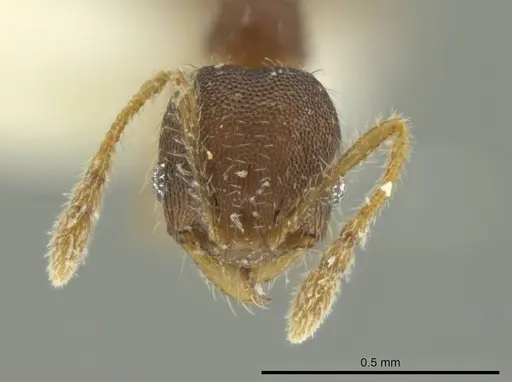
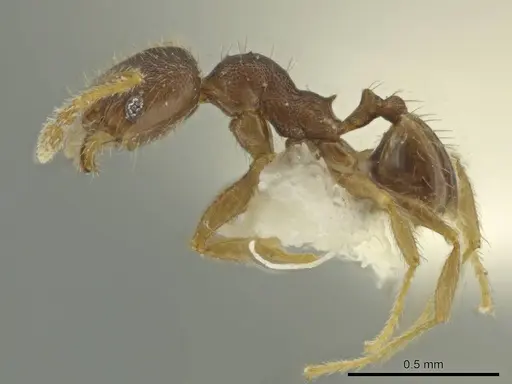
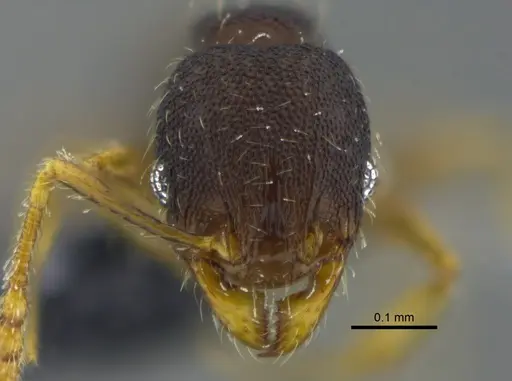
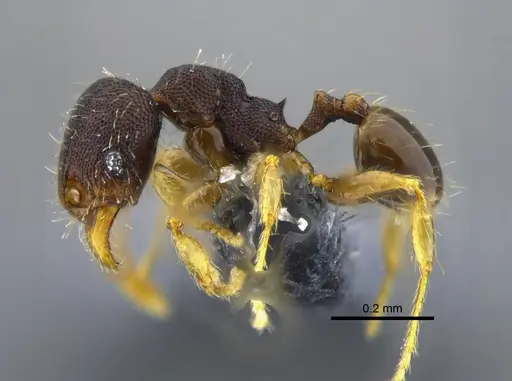
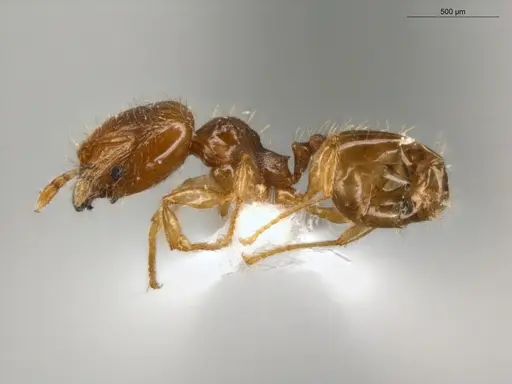
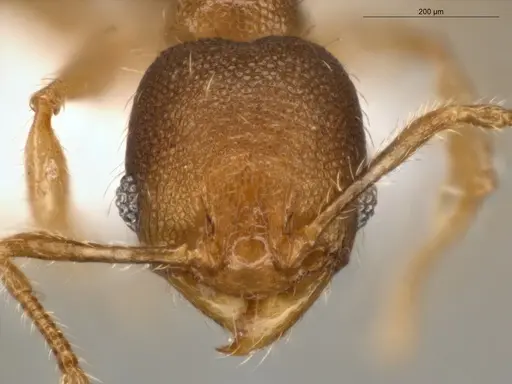
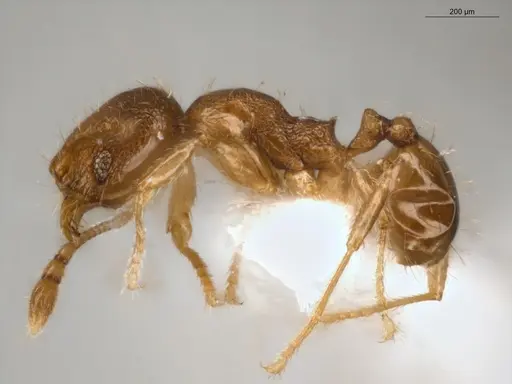
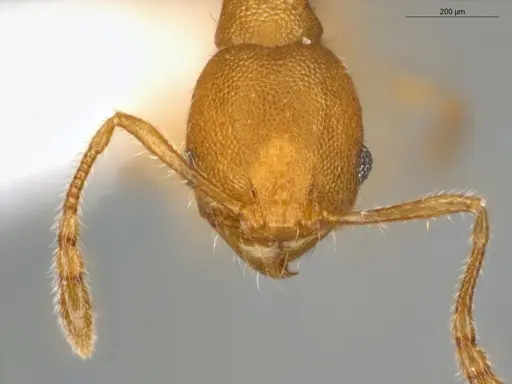
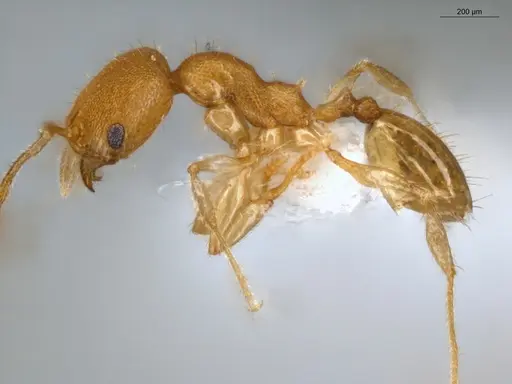
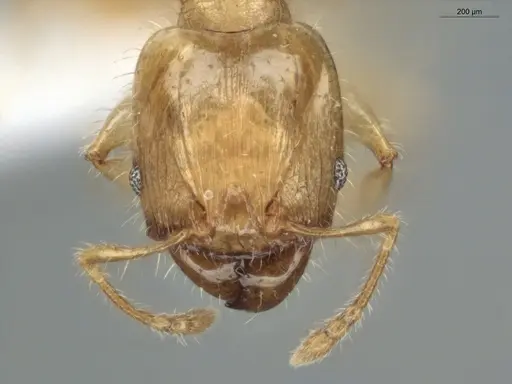
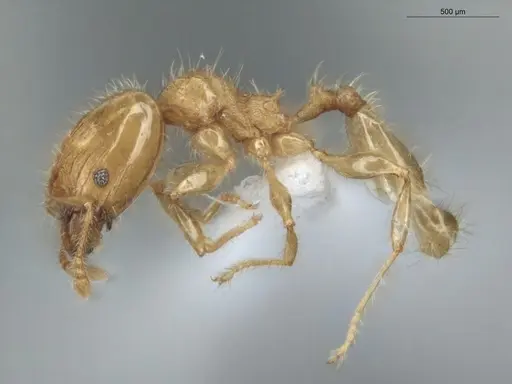
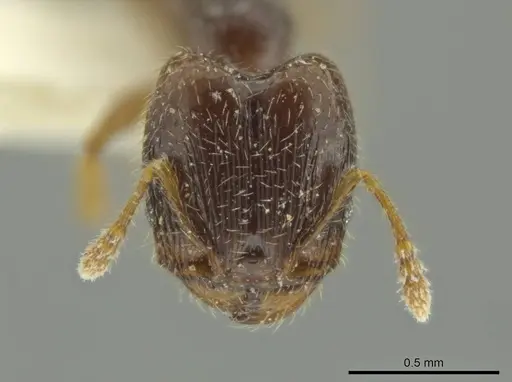
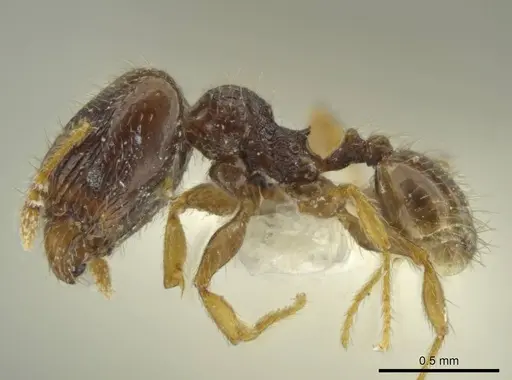
Pheidole guajirana is a small tropical ant belonging to the Attini tribe, first described by Wilson in 2003. The major workers measure just 0.70mm in head width, while the minors are a tiny 0.40mm, making them one of the smaller Pheidole species you'll encounter. They have a distinctive bicolored appearance: the major's head is two-toned with the front portion brownish-yellow and the back medium brown, while the body tends toward dark brown. Minors are medium brown with yellowish appendages. The postpetiole (the segment behind the waist) has a unique diamond shape when viewed from above, and their eyes are set well forward on the head, giving them an alert appearance [1].
This species hails from the northern coast of South America, specifically Colombia's La Guajira region (after which it's named), extending into Magdalena, Venezuela, and even near Manaus, Brazil. They inhabit wet trunks and rotten wood in vegetation near rivers, with nest entrances so small they're barely visible, similar to their cousins P. subarmata and P. transversostriata. Workers can be found foraging on riverbank soil, actively searching for food along the ground [2].
Quick Summary
- Difficulty: Easy
- Origin & Habitat: Northern South America, Colombia (La Guajira, Magdalena), Venezuela, and Brazil (near Manaus). Found in rainforest and tropical dry forest at elevations up to 200m, typically nesting in wet trunks, rotten wood, or sand near rivers [3][1][2].
- Colony Type: Single-queen colonies (monogyne), typical for the genus Pheidole. Colonies contain both major and minor workers, with majors developing from larger pupae and serving as soldiers/defenders.
- Colony: Monogyne
- Founding: Claustral
- Size & Growth:
- Queen: Approximately 5-6mm (estimated from genus patterns for a small Pheidole)
- Worker: Major: 0.70mm HW, Minor: 0.40mm HW [1]
- Colony: Likely several hundred to a few thousand workers at maturity (typical for small Pheidole)
- Growth: Moderate, small species with moderate development time
- Development: Estimated 6-8 weeks at optimal tropical temperatures (inferred from related small Myrmicinae) (Development time is typical for small tropical ants, faster than temperate species due to year-round warm conditions)
- Antkeeping:
- Temperature: Keep at 24-28°C, they're a tropical species from warm, humid regions. Room temperature in most homes should work, but a heating cable on one side of the nest can help maintain optimal warmth if needed.
- Humidity: High humidity is essential. These ants naturally live in wet wood and near rivers, so keep the nest substrate consistently moist but not waterlogged. Mist occasionally and provide a water tube.
- Diapause: No, as a tropical species, they do not require hibernation. Keep them warm year-round.
- Nesting: They naturally nest in wet rotting wood and small cavities in vegetation near water. In captivity, a Y-tong (AAC) nest or plaster nest works well. The chambers should be appropriately sized for their tiny majors, around 1-2mm passages. They prefer dark, humid nest conditions.
- Behavior: These are active foragers with majors acting as soldiers. Workers are aggressive defenders of the colony and will readily attack threats. They forage on the ground and are attracted to protein baits. Their small size means they can escape through tiny gaps, use fine mesh and excellent escape prevention. Majors have larger heads for defense and seed processing.
- Common Issues: escape prevention is critical, they are tiny and can squeeze through the smallest gaps, overheating can kill them quickly, keep away from direct heat sources and maintain stable temperatures, dry conditions cause colony decline, their natural habitat is wet wood near rivers, mold can be a problem in overly humid setups, balance humidity with ventilation, wild-caught colonies may have parasites that affect survival in captivity
Nest Preferences and Setup
In the wild, Pheidole guajirana nests in wet rotting wood and small cavities in vegetation near rivers. The nest entrances are excessively small, barely visible to the naked eye, which is a characteristic shared with related species like P. subarmata and P. transversostriata [2]. For captive care, provide a nest that maintains high humidity while allowing some ventilation. Y-tong (AAC) nests work well because they hold humidity consistently. Plaster nests are another good option. The chambers should be appropriately sized for their tiny majors, avoid large, open spaces. Keep the nest in a dark area, as these ants prefer dim conditions. A water tube attached to the nest helps maintain humidity. Place the setup away from direct sunlight and drafts.
Feeding and Diet
Pheidole guajirana is a generalist feeder, like most ants in this genus. Workers forage actively on riverbank soil in the wild and are attracted to protein baits [2]. In captivity, offer a varied diet: protein sources like small insects (fruit flies, pinhead crickets, mealworms), and sugar sources like honey water or sugar water. Pheidole species also often accept seeds, so you might try offering small seeds as enrichment. Feed protein 2-3 times per week, and keep sugar water available at all times. Remove uneaten prey after 24 hours to prevent mold. Given their tiny size, food items should be appropriately small, cut larger prey into pieces or offer small live prey they can overwhelm.
Temperature and Seasonal Care
As a tropical species from northern South America, Pheidole guajirana needs warm conditions year-round. Keep the nest area at 24-28°C (75-82°F). This is typical room temperature in many homes, but you may need to add a heating cable during cooler months. Use a low-wattage heating cable placed on top of the nest (never under it, as direct heat can dry out and kill the colony). Create a temperature gradient so ants can move between warmer and cooler areas. Since they come from a region with consistent year-round warmth, they do not require hibernation or diapause. Keep them warm and stable throughout the year. Avoid temperature fluctuations and cold drafts.
Behavior and Colony Structure
This species exhibits the typical Pheidole caste system with distinct major and minor workers. Majors have enlarged heads and are used for defense, seed processing, and general heavy work. Minors handle most foraging, nursing, and daily tasks. Colonies grow through a well-developed worker caste system. Workers are aggressive defenders and will readily bite and release formic acid when threatened. The species is not known for stinging, their main defense is biting. Their small size means they're quick and active foragers. Watch for major workers patrolling the foraging area alongside minors. The colony will establish granary behavior with seeds if offered, storing food in the nest. [1][2]
Growth and Development
Colony growth is moderate for a small tropical ant. The queen lays eggs that develop through larval stages before emerging as workers. First workers (nanitics) are typically smaller but will quickly grow as the colony feeds them. As the colony expands, larger majors will begin appearing. A mature colony will have a good proportion of majors for defense and food processing. Expect the colony to reach several hundred workers within the first year under good conditions. The development from egg to worker likely takes 6-8 weeks at optimal temperatures, similar to other small Myrmicinae in the genus. Growth rate depends heavily on temperature, feeding frequency, and queen health.
Frequently Asked Questions
How long does it take for Pheidole guajirana to have first workers?
Expect first workers (nanitics) to emerge within 6-8 weeks after the queen lays eggs, assuming optimal temperatures around 24-28°C. This is typical for small tropical Myrmicinae. The queen will remain sealed in her founding chamber until the first workers emerge.
What do I feed Pheidole guajirana ants?
Offer a varied diet: small insects (fruit flies, pinhead crickets, small mealworms) as protein 2-3 times per week, and keep sugar water or honey water available at all times. They may also accept small seeds. Remove uneaten food after 24 hours.
What temperature do Pheidole guajirana ants need?
Keep them at 24-28°C (75-82°F). They are tropical ants and need consistent warmth year-round. A heating cable can help maintain temperatures in cooler environments.
Are Pheidole guajirana good for beginners?
Yes, they are considered easy to keep. They are forgiving of minor care mistakes, don't require hibernation, and are generally hardy. Their main requirements are warmth, humidity, and good escape prevention due to their tiny size.
How big do Pheidole guajirana colonies get?
At maturity, colonies likely reach several hundred to a few thousand workers. This is typical for small Pheidole species. The presence of majors helps with colony organization and defense.
Do I need to hibernate Pheidole guajirana?
No, they do not require hibernation. As a tropical species from Colombia and Venezuela, they need warm conditions year-round. Keep temperatures consistent at 24-28°C throughout the year.
Why are my Pheidole guajirana escaping?
Their tiny size means they can escape through the smallest gaps. Use excellent escape prevention: fine mesh on all openings, tight-fitting lids, and barrier tape (fluon) on the edges of the outworld. Check for gaps even in seemingly sealed containers.
Can I keep multiple queens together?
Pheidole guajirana is typically monogyne (single queen). It's not recommended to combine unrelated foundress queens, as they likely will fight. Start with one queen per colony.
References

This caresheet is licensed under CC BY-SA 4.0 .
CASENT0644210
View on AntWeb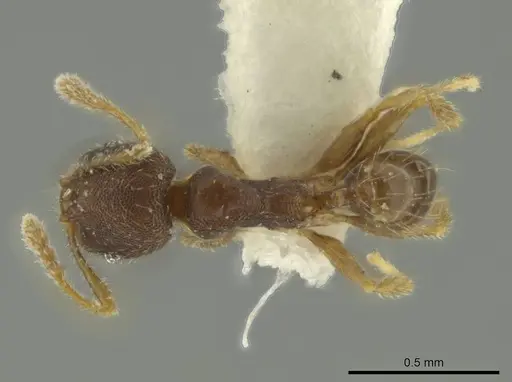
CBUMAGENT42071
View on AntWeb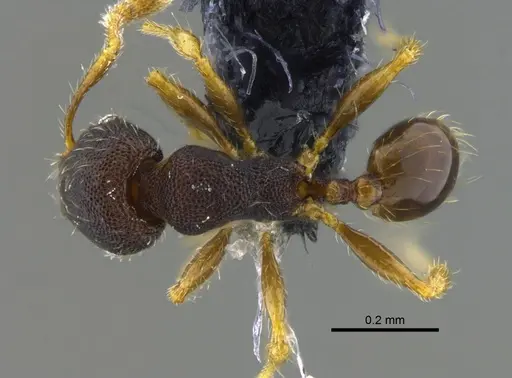
ECOFOG-IT14-0304-30-S
View on AntWeb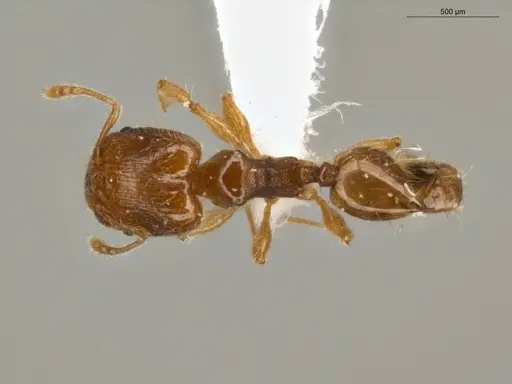
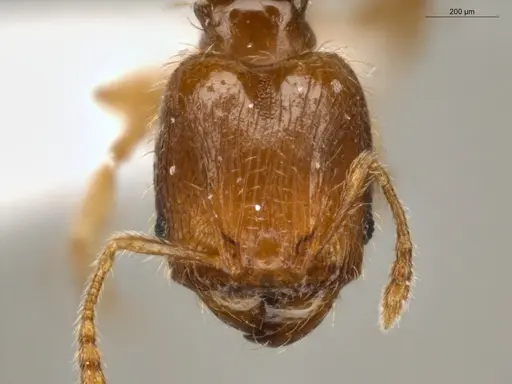
ECOFOG-IT14-0304-30
View on AntWeb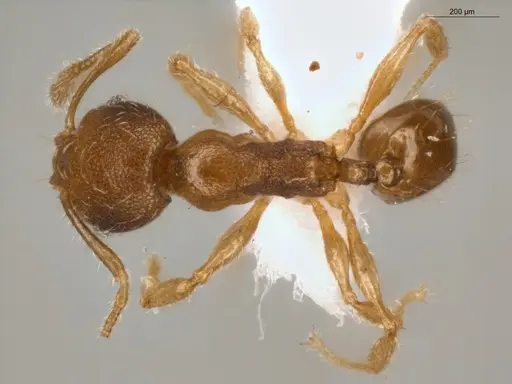
ECOFOG-IT14-0431-49
View on AntWeb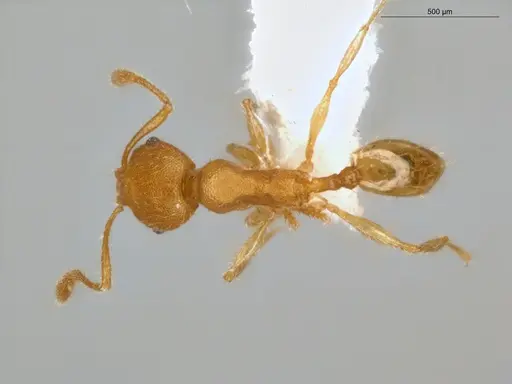
ECOFOG-MI15-0396-07-S
View on AntWeb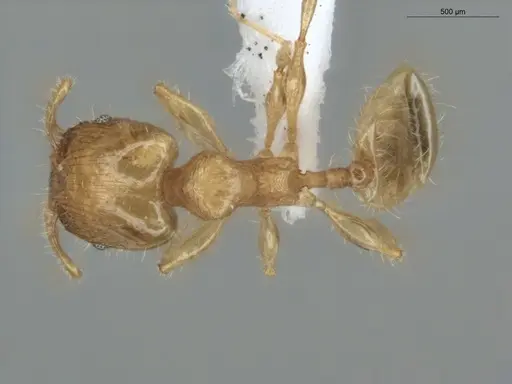
JTLC000016394
View on AntWeb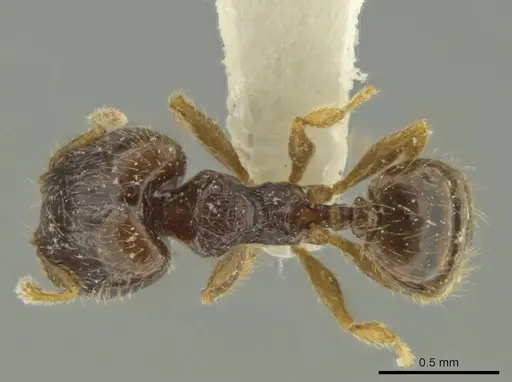
Literature
Loading...Loading products...