

Pheidole goeldii
- Scientific Name
- Pheidole goeldii
- Tribe
- Attini
- Subfamily
- Myrmicinae
- Author
- Forel, 1895
- Distribution
- Found in 1 countries
Pheidole goeldii Overview
Pheidole goeldii is an ant species of the genus Pheidole. It is primarily documented in 1 countries , including Brazil. Detailed taxonomic data and occurrence records can be further explored via authoritative databases such as AntWeb or the Global Biodiversity Information Facility (GBIF).
Pheidole goeldii
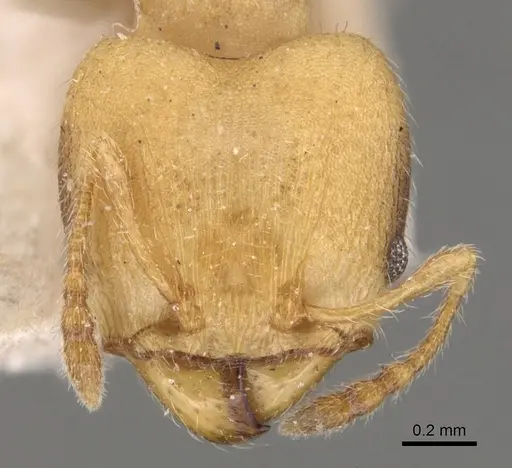
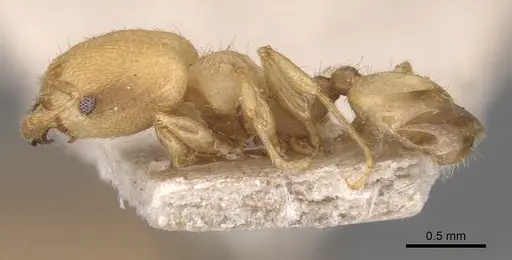
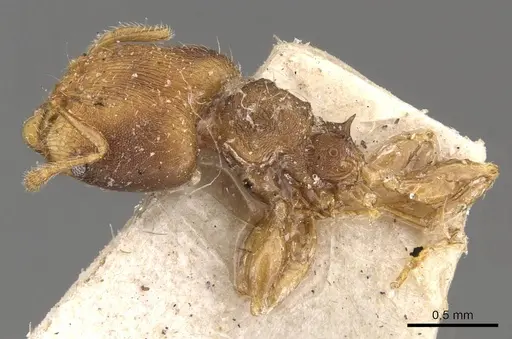
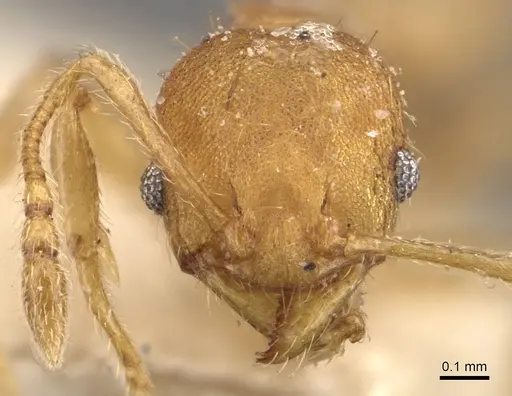
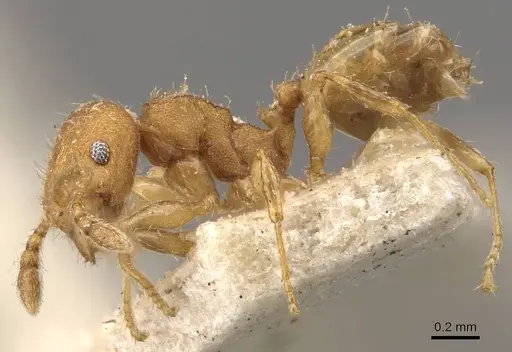
Pheidole goeldii is a small Neotropical ant species native to southeastern Brazil, specifically the mountainous region around Terasópolis in Rio de Janeiro state. This species belongs to the flavens group within the genus Pheidole, characterized by their distinctive 'big-headed' major workers. The major workers measure 2.6-2.9mm with an enlarged head that is broader than long, while minor workers are nearly 2mm. Both castes are a uniform yellow to ochre-yellow color, with the majors having a matt, densely punctate body and longitudinally striate-rugose head. The species was described by Forel in 1895 and is named in honor of collector Emilio A. Goeldi. This ant is known only from type specimens, meaning its complete biology has never been documented in the scientific literature.
Quick Summary
- Difficulty: Unknown
- Origin & Habitat: Southeastern Brazil, Neotropical region, specifically the Atlantic Forest zone around Terasópolis in Rio de Janeiro state at elevation [1]. The type locality was Colonia Alpina (highland area).
- Colony Type: Unconfirmed, no colony data exists for this species. Most Pheidole are monogyne (single-queen colonies), but this has not been verified for P. goeldii.
- Size & Growth:
- Queen: Undescribed, no queen specimens have been documented [2]
- Worker: Major workers 2.6-2.9mm, minor workers nearly 2mm [1]
- Colony: Unknown, no colony size data exists. Typical Pheidole colonies reach several hundred to a few thousand workers.
- Growth: Unknown, no development data exists for this species
- Development: Unknown, no direct measurements exist. Based on typical Pheidole patterns in tropical regions, estimate 5-8 weeks at warm temperatures. (Development timeline is unconfirmed. Related Pheidole species in the flavens group typically develop from egg to worker in 5-8 weeks under warm (24-28°C) conditions.)
- Antkeeping:
- Temperature: Based on its Brazilian Atlantic Forest origin, aim for warm conditions around 24-28°C. Avoid temperatures below 20°C. Room temperature (22-25°C) is likely suitable.
- Humidity: Based on Neotropical forest habitat, provide moderate to high humidity (60-80%). Keep the nest substrate consistently moist but not waterlogged.
- Diapause: Unlikely, this is a tropical species from southeastern Brazil. No diapause requirement has been documented, and tropical Pheidole typically remain active year-round.
- Nesting: No specific nesting data exists. Most Pheidole nest in soil, under stones, or in rotting wood. In captivity, standard test tubes, Y-tong nests, or plaster nests work well. Provide a moist substrate they can burrow into.
- Behavior: Pheidole are generally non-aggressive. Major workers use their enlarged heads to crack seeds and process protein, while minors handle most foraging and brood care. They are not known for stinging and pose no danger to keepers. Their small size (under 3mm) means escape prevention should be a priority, use fine mesh barriers and tight-fitting lids.
- Common Issues: no biological data exists, this is one of the least studied ant species, so unexpected issues may arise, tropical species may decline if kept too cool, monitor for sluggishness or brood developmental stalls, small size makes escapes likely without proper barriers, use fine mesh and check lid fit regularly, wild-caught colonies may be difficult to obtain since the species is only known from historical type specimens
Species Overview and Identification
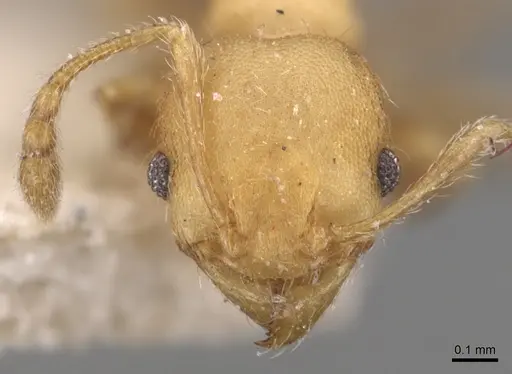
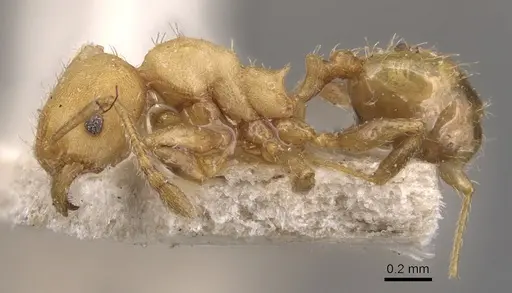
Pheidole goeldii is a member of the flavens group within the genus Pheidole, a large and diverse genus of 'big-headed ants' known for their pronounced major workers. This species was described in 1895 by Auguste Forel based on specimens collected by Emilio A. Goeldi from the highlands near Terasópolis in Rio de Janeiro state, Brazil. The species has only ever been known from these original type specimens, making it one of the least-studied ants in existence. Major workers reach 2.6-2.9mm and possess the characteristic enlarged head that gives Pheidole their common name. Both major and minor workers are a uniform yellow to ochre-yellow color, with the majors displaying a matt, densely punctate surface texture and distinctive longitudinal striations on the front of the head. The metanotal spines are notably longer than in related species like P. flavens, extending about two-thirds the breadth of their interspace. [1][2]
Natural Habitat and Distribution
Pheidole goeldii is known only from the type locality in southeastern Brazil, specifically the Atlantic Forest region around Terasópolis in Rio de Janeiro state. This area sits at elevation in the Serra dos Órgãos mountains, creating a cooler microclimate within the otherwise tropical Atlantic Forest biome. The region experiences high humidity and moderate temperatures year-round. Nothing is known about this species' specific habitat preferences in the wild, but members of the flavens group typically nest in soil, under stones, or in decaying wood in forest edge and disturbed areas. In captivity, provide conditions that mimic a warm, humid Neotropical environment. Avoid cool temperatures and dry conditions. [1]
Housing and Nesting
Since no specific nesting data exists for P. goeldii, housing recommendations are based on typical Pheidole husbandry. These ants do well in test tube setups for founding colonies, with a water reservoir connected to a cotton plug creating a humid chamber. For established colonies, Y-tong (acrylic) nests or plaster nests with moisture reservoirs work well. Provide a nest chamber sized appropriately for their colony size, Pheidole prefer snug chambers rather than vast open spaces. The outworld should include a foraging area with easy access to protein and sugar food sources. Because workers are only 2-3mm in size, ensure all connections and barriers are tight-fitting to prevent escapes. Fine mesh (0.5mm or smaller) is recommended for ventilation holes.
Feeding and Diet
Pheidole species are typically omnivorous, with a diet based on seeds and small insects in the wild. Major workers possess enlarged mandibles adapted for cracking seeds, while minor workers handle most foraging. In captivity, offer a varied diet including: protein sources like small crickets, mealworms, fruit flies, or other small insects, seeds such as millet, chia, or dandelion seeds, and sugar sources like honey water or sugar water. Feed protein 2-3 times per week, and keep sugar water available at all times. Remove uneaten prey after 24-48 hours to prevent mold. Since this species' specific dietary preferences are unknown, observe what your colony prefers and adjust accordingly.
Temperature and Humidity Requirements
As a Brazilian species from the Atlantic Forest region, P. goeldii requires warm, humid conditions. Target temperatures of 24-28°C for optimal colony activity and brood development. Temperatures below 20°C may cause sluggishness and slow or stop brood development entirely. A heating cable or mat on one side of the nest can create a temperature gradient, allowing the colony to self-regulate. Humidity should be maintained at 60-80%. The nest substrate should feel consistently moist but never waterlogged. Mist the outworld occasionally, but avoid excess condensation which can drown ants. Room temperature in most homes (22-25°C) may be adequate, but monitor colony behavior, active, foraging workers indicate good conditions, while sluggish ants suggest temperatures may be too low.
Colony Development and Growth
No specific development data exists for this species. The queen has never been described, so founding behavior is unconfirmed. Based on typical Pheidole biology, queens likely seal themselves in a claustral chamber and raise the first brood using stored fat reserves (claustral founding). First workers (nanitics) would typically be smaller than normal workers. Related tropical Pheidole species complete development from egg to worker in approximately 5-8 weeks under warm conditions. Colony growth rate is unknown but likely moderate, Pheidole colonies typically grow over several months to a few years before reaching several hundred workers. Patience is essential, as this species appears to be slow to establish in captivity.
Behavior and Temperament
Pheidole are generally calm, non-aggressive ants. Major workers are specialized for seed-crushing and defense rather than active foraging. When threatened, colonies may retreat into their nest rather than engage in aggressive defense. They do not possess a painful sting and pose no danger to keepers. Workers are active foragers, readily exploring the outworld for food. They communicate through chemical trails and will quickly recruit nestmates to good food sources. The small worker size (under 3mm) means they can squeeze through surprisingly small gaps, excellent escape prevention is essential. Check for gaps around lid seams, ventilation holes, and tube connections regularly.
Frequently Asked Questions
How long does it take for Pheidole goeldii to raise first workers?
The exact timeline is unknown, this species has never been documented in captivity. Based on typical Pheidole development in warm conditions (24-28°C), expect approximately 5-8 weeks from egg to first worker. Monitor your colony's progress and adjust temperature if development seems stalled.
What do Pheidole goeldii ants eat?
No specific dietary data exists for this species. Based on typical Pheidole behavior, offer small insects (fruit flies, small crickets, mealworms) as protein, seeds (millet, chia, dandelion), and constant access to sugar water or honey. Remove uneaten food after 24-48 hours.
Can I keep Pheidole goeldii in a test tube setup?
Yes, test tubes work well for founding colonies. Use a standard test tube setup with a water reservoir and cotton plug to maintain humidity. Once the colony reaches 20-30 workers, consider moving to a larger nest like a Y-tong or plaster formicarium.
What temperature do Pheidole goeldii need?
Based on their Brazilian origin, keep them warm at 24-28°C. Avoid temperatures below 20°C. Room temperature (22-25°C) in most homes should be adequate, but a slight heating gradient can improve activity and brood development.
How big do Pheidole goeldii colonies get?
Colony size is unknown for this species, no wild colonies have ever been documented. Based on typical Pheidole, expect colonies to reach several hundred to a few thousand workers over 1-3 years.
Does Pheidole goeldii need hibernation?
No, this is a tropical Brazilian species. No diapause or hibernation requirement has been documented, and tropical Pheidole typically remain active year-round. Maintain warm temperatures throughout the year.
Are Pheidole goeldii good for beginners?
Difficulty level is unknown since this species has never been kept in captivity. However, Pheidole in general are considered good beginner ants due to their calm temperament and straightforward care requirements. The main challenges are the lack of species-specific information and obtaining a colony.
Why is so little known about Pheidole goeldii?
This species is only known from the original type specimens collected in the 1890s. No biologist has documented its biology, colony structure, or behavior in the 130+ years since its description. It remains one of the most poorly documented ant species in existence.
Where can I get a Pheidole goeldii colony?
This species is extremely rare in the antkeeping hobby. It has never been documented in captivity and may not exist in any living collection. If available at all, it would only come from specialized ant breeders who have somehow obtained wild queens, which would be difficult given the species is only known from a single historical location in Brazil.
References

This caresheet is licensed under CC BY-SA 4.0 .
CASENT0904418
View on AntWeb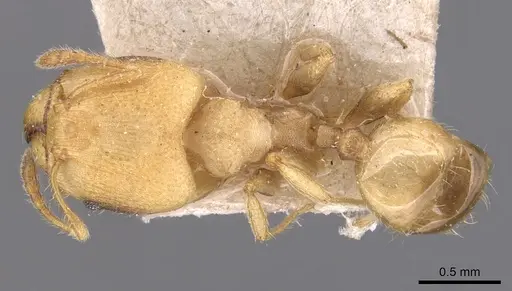
CASENT0904419
View on AntWeb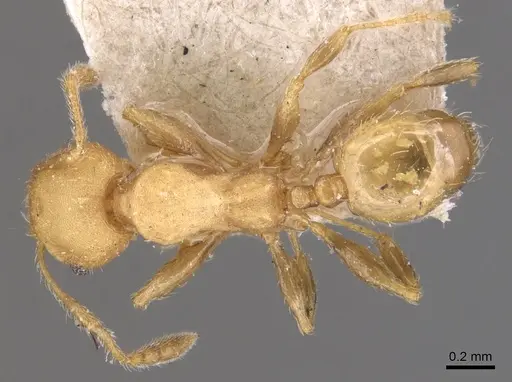
CASENT0908283
View on AntWeb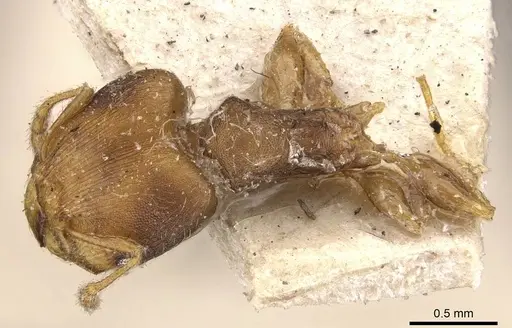
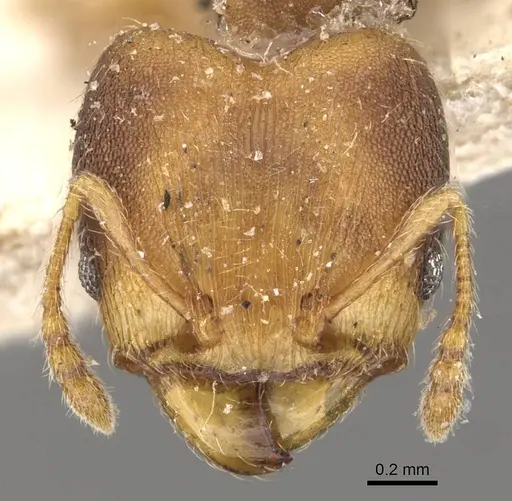
CASENT0908284
View on AntWeb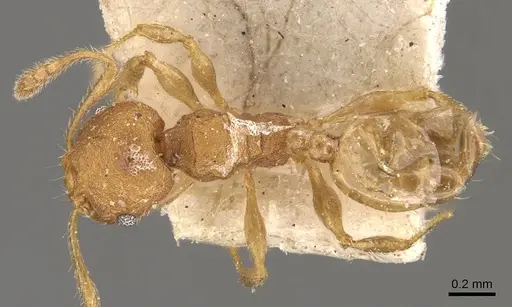
Literature
Loading...Loading products...