

Pheidole funki
- Scientific Name
- Pheidole funki
- Tribe
- Attini
- Subfamily
- Myrmicinae
- Author
- LaPolla, 2005
- Distribution
- Found in 1 countries
Pheidole funki Overview
Pheidole funki is an ant species of the genus Pheidole. It is primarily documented in 1 countries , including French Guiana. Detailed taxonomic data and occurrence records can be further explored via authoritative databases such as AntWeb or the Global Biodiversity Information Facility (GBIF).
Pheidole funki
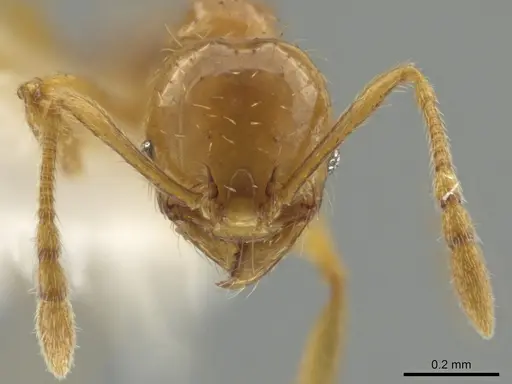
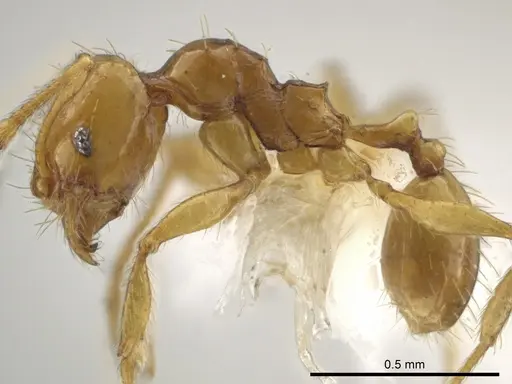
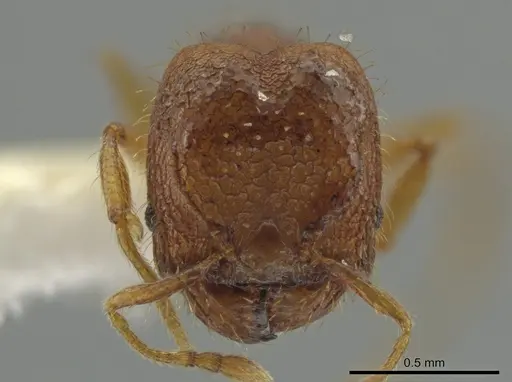
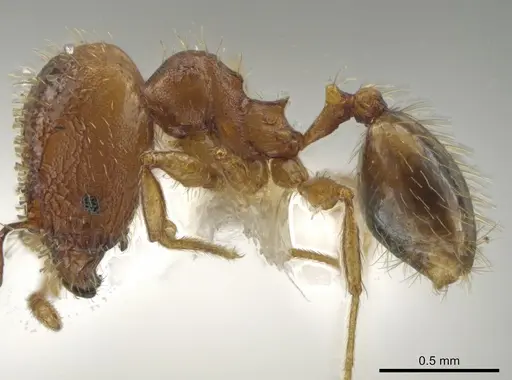
Pheidole funki is a tiny rainforest ant from Guyana, known only from a single specimen collected in the Iwokrama Forest Reserve. Major workers measure just 2.3mm total length with a distinctive reddish-brown coloration and deep grooves (called scrobes) running along the sides of their head [1]. This species belongs to the scrobifera-group, a small lineage of Pheidole ants mostly found in Central America, with P. funki being only the second species discovered in South America [1]. The species was named in honor of botanist Vicki A. Funk for her conservation work in the Guiana Shield region [1].
Because this ant is known from a single specimen, almost nothing is confirmed about its biology in captivity. We can only make educated guesses based on its relatives, other scrobifera-group species nest in soil and rotting wood on the forest floor, and at least one related species forages at night [1]. This makes Pheidole funki a species for experienced keepers who enjoy the challenge of working with poorly documented ants.
Quick Summary
- Difficulty: Expert
- Origin & Habitat: Guyana, Iwokrama Forest Reserve, Whitewater Camp, old-growth lowland rainforest at 60m elevation [1]. Found in leaf litter on the forest floor [1].
- Colony Type: Unconfirmed, colony structure has never been documented. Other scrobifera-group species are not known to be parasitic, so likely founding queen establishes a new colony alone.
- Size & Growth:
- Queen: Unknown, no queen has ever been described for this species
- Worker: Major workers approximately 2.3mm total length [1]. Minor workers have not been documented.
- Colony: Unknown, only a single specimen has ever been collected
- Growth: Unknown, no colony development has been observed
- Development: Unknown, no data exists. Based on typical Pheidole patterns from related species, estimate 6-10 weeks at optimal temperature, but this is a rough guess. (This is entirely speculative since no colony has ever been raised. Treat this estimate as a starting point, not a reliable prediction.)
- Antkeeping:
- Temperature: Likely 24-28°C based on being a tropical rainforest species from lowland Guyana. Provide a gentle gradient if possible.
- Humidity: High humidity expected, these are forest floor ants from a tropical rainforest. Keep substrate consistently moist but not waterlogged.
- Diapause: Unknown, no seasonal data exists. As a tropical species, may not require true hibernation but might slow down during drier/cooler periods.
- Nesting: Inferred from related species: soil and rotting wood nesting [1]. A naturalistic setup with moist substrate or a Y-tong/plaster nest works well. They likely prefer tight, humid chambers scaled to their tiny size.
- Behavior: Behavior is unconfirmed. Related species P. scrobifera forages at night [1], so expect primarily nocturnal activity. Pheidole species are generally non-aggressive and focus on foraging for small prey and seeds. Major workers have functional mandibles but are too small to penetrate human skin. Escape prevention is critical, these are tiny ants that can squeeze through standard barrier materials.
- Common Issues: almost no biological data exists, you will be pioneering captive care for this species, colony may fail because we cannot confirm proper founding conditions, temperature and humidity requirements are inferred, not confirmed, trial and error required, related species accept varied diet but specific acceptance for P. funki is unknown, wild-caught colonies may have parasites or diseases with no documented treatment
Discovery and Rarity
Pheidole funki is one of the rarest ants in the antkeeping hobby, it has been collected only once, ever, since the species was described in 2005 [1]. The single known specimen (the holotype) was collected in a leaf litter sample using a mini-Winkler extractor in Guyana's Iwokrama Forest Reserve [1]. This sampling method involves sifting leaf litter to extract tiny arthropods living inside. The fact that only one specimen exists means we know almost nothing about how this ant lives, builds colonies, or reproduces. Every piece of care advice for this species is either inferred from related ants or is pure speculation. This makes keeping P. funki an experimental endeavor, you may discover things about this species that have never been documented before.
Related Species and What They Tell Us
Since we know almost nothing about P. funki specifically, we must look at its relatives for clues. The scrobifera-group contains several species, mostly from Central America, that give us hints about what to expect [1]. Other species in this group nest in soil and rotting wood on the forest floor, this suggests P. funki would do well in a naturalistic setup with moist substrate [1]. One related species, P. scrobifera, has been observed foraging at night, so expect your ants to be most active after dark [1]. Another relative, P. simonsi from Costa Rica, has been found with seed caches in their nests, though they are not strict seed-eaters, workers readily recruited to various baits including protein and sugar sources [1]. This suggests P. funki might accept a varied diet including small seeds, though do not rely on seeds as a primary food source.
Housing and Nesting
Based on related scrobifera-group species, P. funki likely prefers nesting in moist soil or rotting wood on the forest floor [1]. For captivity, a naturalistic setup with a layer of humid substrate works well, think damp forest floor conditions rather than dry desert. A Y-tong (acrylic) nest with narrow chambers and a water reservoir can maintain the humidity they need. Alternatively, a plaster nest with a water chamber works similarly. Because they are tiny ants, use tight-fitting lids and fine mesh for escape prevention, these ants can squeeze through gaps that seem impossibly small. Provide a foraging area that is easy for you to observe and feed. A test tube setup can work for founding colonies if kept humid, but transition to a proper nest once the colony grows.
Feeding and Diet
Feeding recommendations for P. funki are speculative but based on reasonable inference. Pheidole ants are generalists, and related scrobifera-group species show varied diets, P. simonsi had seeds in their nests but also readily recruited to protein baits [2]. Start with small live prey appropriate to their size: fruit flies, pinhead crickets, or small mealworms. They will likely accept sugar water or honey as an energy source. Feed small amounts of protein every few days and keep a sugar source available at all times. Remove uneaten prey after 24 hours to prevent mold. Since this species has never been kept in captivity, be prepared to experiment with different foods and observe what they accept.
Temperature and Humidity
As a tropical lowland rainforest ant from Guyana, P. funki likely requires warm and humid conditions. Guyana sits near the equator with year-round temperatures in the 25-30°C range, so aim for 24-28°C in the nest area. Provide a temperature gradient so ants can choose their preferred warmth. Humidity is critical, these are forest floor ants that live in constantly moist leaf litter. Keep the nest substrate consistently damp but not sitting in water. A water reservoir connected to the nest helps maintain humidity. Avoid both drying out (which kills brood) and stagnant air (which causes mold). Good ventilation while maintaining humidity is the balance to strike. [1]
Behavior and Activity Patterns
Based on related species P. scrobifera foraging at night [1], expect P. funki to be primarily nocturnal or crepuscular. Major workers have the distinctive deep scrobes (grooves) on their head that give the scrobifera-group its name, these may serve some function in foraging or defense, though the exact purpose is unclear [1]. Pheidole species are generally not aggressive toward keepers, they focus on foraging and avoiding confrontation. Major workers have functional mandibles but are far too small to break human skin. The biggest concern is their tiny size making escape likely without proper barriers. Use fluon on container rims and fine mesh on any ventilation.
Frequently Asked Questions
How long does it take for Pheidole funki to go from egg to worker?
This is unknown, no colony has ever been raised. Based on typical Pheidole development, estimate 6-10 weeks at optimal temperature (around 26°C), but this is a rough guess, not a reliable prediction.
Can I keep multiple queens of Pheidole funki together?
Not enough is known to recommend this. Pheidole species typically start colonies with a single claustral queen, but some can be polygynous. Since we have no data on P. funki's colony structure, keep queens separate unless you observe them tolerating each other.
What do Pheidole funki ants eat?
Their diet is unconfirmed, but based on related species, they likely accept small live prey (fruit flies, small crickets), may take seeds, and will drink sugar water or honey. Start with protein prey and sugar sources, then experiment to see what they accept.
Are Pheidole funki ants good for beginners?
No, this is an expert-level species because almost nothing is known about its care. Only experienced keepers should attempt this species, and only if you enjoy experimentation and documenting new discoveries.
What temperature should I keep Pheidole funki at?
Based on their tropical rainforest origin in Guyana, aim for 24-28°C. Provide a gradient so they can choose their preferred temperature. Avoid temperatures below 20°C or above 32°C.
Do Pheidole funki ants need hibernation?
Unknown, no seasonal data exists. As a tropical species from near the equator, they likely do not require true hibernation, but may slow down during cooler or drier periods.
When should I move Pheidole funki from a test tube to a formicarium?
Move them when the colony reaches a moderate size (30-50 workers) and the test tube shows signs of crowding or mold. Make sure the new nest offers similar humidity conditions to reduce stress.
Why are my Pheidole funki dying?
Without documented care, diagnosing problems is extremely difficult. Common issues likely include: wrong humidity (too dry or too wet), temperature stress, escape leading to lost ants, or poor initial founding conditions. Document everything and adjust one variable at a time.
References

This caresheet is licensed under CC BY-SA 4.0 .
CASENT0645984
View on AntWeb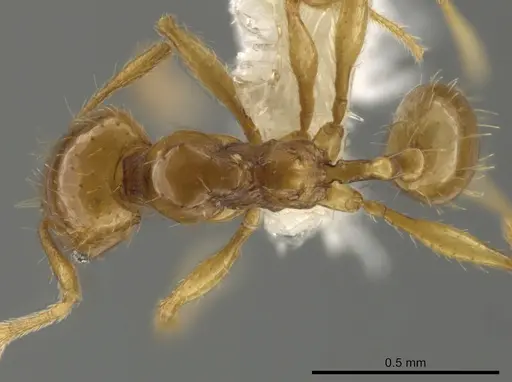
CASENT0646013
View on AntWeb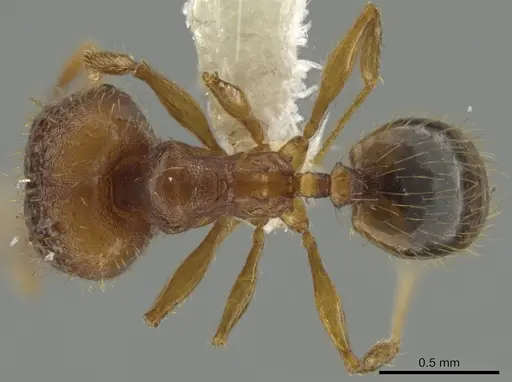
Literature
Loading...Loading products...