

Pheidole fortis
- Scientific Name
- Pheidole fortis
- Tribe
- Attini
- Subfamily
- Myrmicinae
- Author
- Eguchi, 2006
- Distribution
- Found in 1 countries
Pheidole fortis Overview
Pheidole fortis is an ant species of the genus Pheidole. It is primarily documented in 1 countries , including Lao People's Democratic Republic. Detailed taxonomic data and occurrence records can be further explored via authoritative databases such as AntWeb or the Global Biodiversity Information Facility (GBIF).
Pheidole fortis
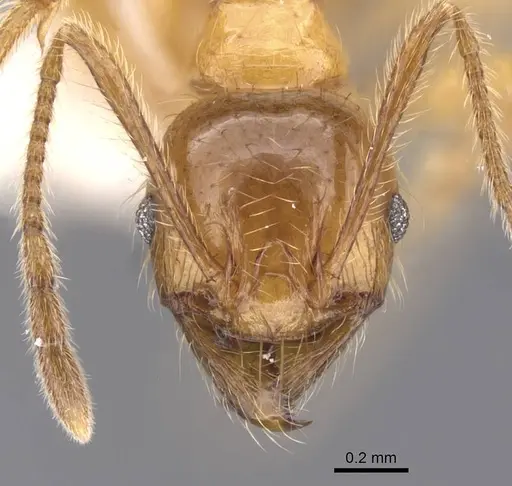
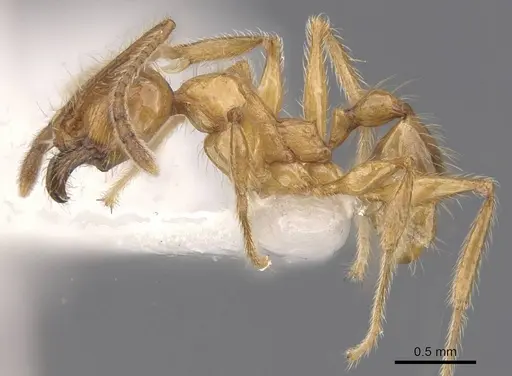
Pheidole fortis is a small ant species native to Southeast Asia, specifically found in northern Vietnam, Thailand, and recently recorded on Hainan Island, China. The major workers measure 2.12-2.23mm in head length with distinctive dense short hairs covering the head and longitudinal rugulae on the frons. Minor workers are much smaller at 0.71-0.75mm and have a smooth, shiny head. Both castes have a massive postpetiole (the segment behind the waist), which is a key identification feature. This species inhabits open forests and forest edges, nesting directly in the soil [1][2]. Like other Pheidole species, they are generalist foragers that can be recognized by their two-worker caste system, the larger majors serve as defenders and food processors while smaller minors handle most foraging duties.
Quick Summary
- Difficulty: Easy
- Origin & Habitat: Northern Vietnam and Thailand, with recent records from Hainan Island, China. Inhabits open forests and forest edges, nesting in soil [1][2][3].
- Colony Type: Presumably monogyne (single queen) based on typical Pheidole genus patterns. Colony structure in this specific species has not been directly studied.
- Colony: Monogyne
- Founding: Claustral
- Size & Growth:
- Queen: Not documented in original description, estimated 6-8mm based on genus patterns
- Worker: Major: 2.12-2.23mm head length, Minor: 0.71-0.75mm head length [1][2]
- Colony: Estimated 500-2000 workers based on typical Pheidole colony sizes
- Growth: Moderate, estimated 4-8 weeks from egg to first worker at tropical temperatures
- Development: Estimated 4-8 weeks at 24-28°C based on typical Pheidole development patterns (Development speed likely similar to other tropical Pheidole species, faster than temperate species)
- Antkeeping:
- Temperature: Keep at 24-28°C. This species comes from tropical/subtropical Vietnam and Thailand, so warmth supports optimal activity and brood development [1].
- Humidity: Moderate to high, they nest in soil in forest edges, so aim for 60-80% humidity. Keep the substrate consistently moist but not waterlogged.
- Diapause: Likely minimal or no true diapause given their tropical origin. However, a slight reduction in temperature during winter months (down to around 20-22°C) may simulate natural seasonal patterns.
- Nesting: Soil-nesting species. A naturalistic setup with soil or a plaster/acrylic nest with soil chamber works well. They prefer tight, enclosed spaces for the nest chamber with some open area for foraging.
- Behavior: Generally peaceful and not aggressive toward keepers. Like other Pheidole, they have two worker castes, majors are larger and handle seed processing and defense, while minors do most foraging. They are active foragers that will scout for food. Escape risk is moderate, minors are small but not as tiny as some ant species. Standard test tube setups work for founding colonies. They are not known to be particularly escape-prone compared to other small Myrmicines.
- Common Issues: colonies may slow growth if temperatures drop below 20°C consistently, soil nests can develop mold if overwatered, monitor moisture levels carefully, wild-caught colonies may carry parasites that affect captive health, major workers may not appear until colony reaches several dozen workers, this is normal for Pheidole, small colony size initially means careful feeding portions to prevent mold from uneaten food
Housing and Nest Setup
Pheidole fortis is a soil-nesting species that does well in naturalistic setups or acrylic nests with soil chambers. For founding colonies, a standard test tube setup works fine, the queen will seal herself into a dark corner. Once the colony reaches 20-30 workers, you can move them to a proper formicarium. They prefer tight, enclosed nest chambers that mimic their natural soil nesting sites. An outworld for foraging is essential, these ants are active foragers that will readily search for food. A simple setup with a test tube connected to a foraging area works well for smaller colonies. For established colonies, a naturalistic terracotta or acrylic nest with a connected foraging arena gives them space to move and forage. [1][2]
Feeding and Diet
Pheidole fortis is a generalist omnivore like other members of the genus. They readily accept sugar sources (honey, sugar water) for energy, and protein sources like small insects (fruit flies, pinhead crickets, mealworms). In the wild, they also consume seeds, which they process using their major workers' powerful jaws. Offer a varied diet: a constant sugar source and protein prey 2-3 times per week. Remove uneaten prey after 24-48 hours to prevent mold. Seeds can be offered occasionally but are not required in captivity. The major workers will help process larger food items, breaking them down for the minors to carry.
Temperature and Seasonal Care
As a species from tropical Vietnam and Thailand, Pheidole fortis prefers warm conditions. Keep the nest area at 24-28°C for optimal brood development and colony activity. A slight temperature gradient (warmer on one side) allows the ants to self-regulate. They can tolerate temperatures down to around 20°C but may become less active. Unlike temperate species, they likely do not require a true hibernation period. During winter, you can reduce temperatures slightly to around 20-22°C, but a full diapause is probably unnecessary. Avoid temperatures above 32°C as this can stress the colony. [1][2]
Colony Development and Growth
Pheidole colonies develop through a predictable series of stages. After the claustral queen seals herself in, she lays eggs that hatch into larvae over 1-2 weeks. Larvae then pupate, and the first workers (called nanitics) emerge 4-8 weeks after the eggs were laid, depending on temperature. These first workers are typically smaller than normal workers. The colony will grow slowly at first, but once the first nanitics emerge and begin foraging, growth accelerates. Major workers typically appear once the colony reaches 30-50 workers, this is normal for Pheidole species. The majors serve important roles in seed processing and colony defense. A healthy colony can reach several hundred workers within a year under good conditions.
Behavior and Temperament
Pheidole fortis is a generally peaceful species that poses no danger to keepers. They are not aggressive and will flee rather than attack when disturbed. However, major workers can deliver a mild bite if provoked. The two-caste system is fascinating to observe: minor workers handle most foraging, brood care, and general tasks, while major workers specialize in seed crushing, cutting larger prey, and colony defense. They are active foragers that will send out scouts to find food. Unlike some ants, they do not exhibit territorial swarming or mass raids. Their moderate size and peaceful nature make them suitable for observation, you can watch the interaction between majors and minors as they process food together.
Frequently Asked Questions
How long does it take for Pheidole fortis to get their first workers?
At optimal temperatures (24-28°C), expect first workers (nanitics) to emerge in 4-8 weeks after the queen lays eggs. This timeline is typical for tropical Pheidole species.
What do Pheidole fortis ants eat?
They are generalist omnivores. Offer sugar water or honey constantly for energy, and protein sources like fruit flies, small crickets, or mealworms 2-3 times per week. They will also accept seeds.
What temperature do Pheidole fortis need?
Keep them warm at 24-28°C. They come from tropical Vietnam and Thailand, so they thrive in warm conditions. Avoid temperatures below 20°C for extended periods.
Are Pheidole fortis good for beginners?
Yes, they are considered easy to keep. They are peaceful, tolerate typical captive conditions, and do not require complex setups. Their two-caste system is also interesting to observe.
How big do Pheidole fortis colonies get?
Based on typical Pheidole patterns, expect colonies to reach 500-2000 workers over several years. Major workers typically appear once the colony reaches 30-50 workers.
Do Pheidole fortis need hibernation?
Probably not. As a tropical species from Vietnam and Thailand, they do not require a true hibernation period. A slight temperature reduction in winter (to around 20-22°C) is optional but not necessary.
When should I move my colony to a formicarium?
Move them once the colony reaches 20-30 workers and the test tube is becoming crowded. A naturalistic setup with soil or an acrylic nest with chambers works well for this soil-nesting species.
Why aren't my major workers appearing?
This is normal for Pheidole. Major workers typically only appear once the colony reaches 30-50 workers. The colony prioritizes minor workers first for colony growth, majors are a later investment.
Can I keep multiple Pheidole fortis queens together?
This has not been studied for this specific species. Based on typical Pheidole behavior, single-queen colonies are standard. Combining unrelated queens is not recommended as they may fight.
References

This caresheet is licensed under CC BY-SA 4.0 .
CASENT0911215
View on AntWeb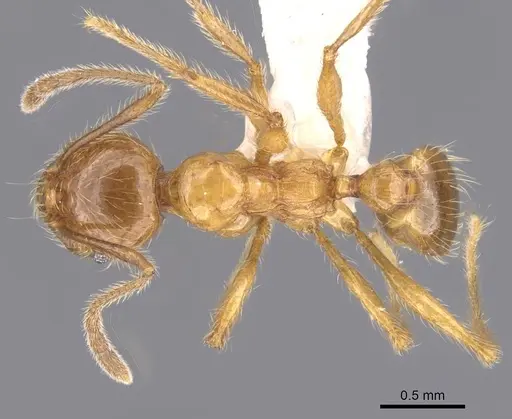
Literature
Loading...Loading products...