

Pheidole euryscopa
- Scientific Name
- Pheidole euryscopa
- Tribe
- Attini
- Subfamily
- Myrmicinae
- Author
- Wilson, 2003
- Distribution
- Found in 1 countries
Pheidole euryscopa Overview
Pheidole euryscopa is an ant species of the genus Pheidole. It is primarily documented in 1 countries , including Colombia. Detailed taxonomic data and occurrence records can be further explored via authoritative databases such as AntWeb or the Global Biodiversity Information Facility (GBIF).
Pheidole euryscopa
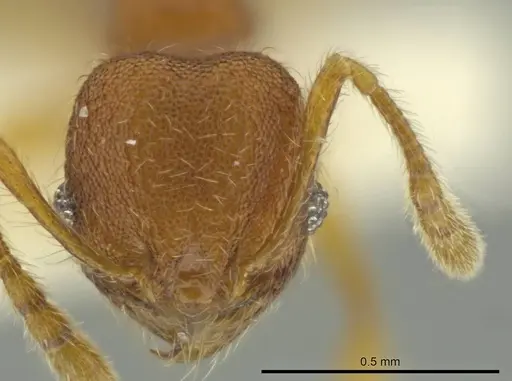
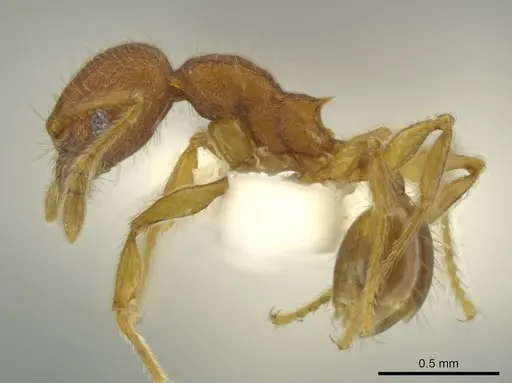
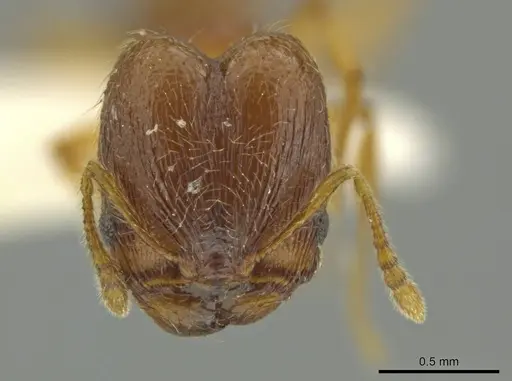
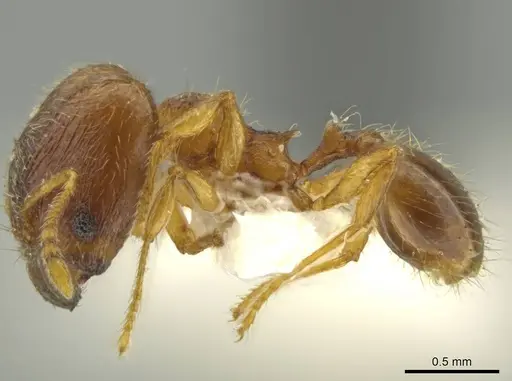
Pheidole euryscopa is a tiny Neotropical ant species described in 2003,known only from the type specimens collected in Huila, Colombia at 1900-2000m elevation [1][2]. The genus Pheidole is famous for its dimorphic workers, large major workers with oversized heads for seed-crushing, and smaller minor workers that handle most of the foraging and brood care. This species has majors measuring 0.92mm head width and minors at just 0.54mm, with a reddish-yellow coloration throughout [2]. The most distinctive feature is the large eyes placed well forward on the head, which gives the species its name (euryscopa means 'wide view'). Nothing is known about this species' biology in the wild or how it behaves in captivity, it's essentially a complete mystery to antkeepers.
Quick Summary
- Difficulty: Unknown
- Origin & Habitat: Only known from Parque Nacional Cuevas de los Guacheros,10km southeast of Palestina, Huila, Colombia at 1900-2000m elevation [2]. The region has tropical montane forest characteristics.
- Colony Type: Unconfirmed, no colony data exists for this species. Most Pheidole are monogyne (single queen), but this has not been documented for P. euryscopa.
- Size & Growth:
- Queen: Undescribed, no queen caste has been collected [2]
- Worker: Major: 0.92mm HW, Minor: 0.54mm HW [2]
- Colony: Unknown, no colony collections exist
- Growth: Unknown
- Development: Unknown, no development data exists for this species (Based on typical Pheidole patterns, expect 6-10 weeks at warm temperatures, but this is entirely speculative)
- Antkeeping:
- Temperature: Unknown, no thermal data exists. Based on Colombian montane location (1900-2000m), likely prefers cooler conditions than lowland tropicals, possibly 18-24°C range. Start around 20-22°C and observe colony behavior.
- Humidity: Unknown, no humidity data exists. Most Pheidole prefer moderately humid conditions. Keep nest substrate moist but not waterlogged.
- Diapause: Unknown, no seasonal data exists. Colombian species from montane habitat may not require strong diapause, but this is unconfirmed.
- Nesting: Unknown, no natural nesting observations exist. Most Pheidole nest in soil or under stones. Use standard Myrmicinae setups (test tubes, Y-tong, or plaster nests) with moderate humidity.
- Behavior: Unknown, no behavioral observations exist for this species. Pheidole in general are defensive, with majors using their powerful jaws for defense, but P. euryscopa-specific behavior is completely unstudied. Escape risk is moderate given the small worker size (0.54mm minors), use standard barrier precautions.
- Common Issues: this species has never been kept in captivity, there are no established care protocols, no breeding stock exists in the antkeeping hobby, nothing is known about their diet, what do they eat in the wild?, nothing is known about their founding behavior, claustral or semi-claustral?, no temperature or humidity preferences have been documented
Species Status and Availability
Pheidole euryscopa presents a unique challenge for antkeepers: it is one of the least-studied ant species in existence. The entire scientific knowledge base consists of six specimens (the holotype major and five paratype minors) collected in 1990,plus the original description published in 2003 [2]. No additional specimens have ever been found. No one has ever observed a colony, a queen, nuptial flights, or any aspect of their natural behavior. This species is essentially unknown to science and has never been kept in captivity by anyone. This means there is no established care protocol, no known diet preferences, no known temperature or humidity requirements, and no breeding stock in the antkeeping hobby. You cannot obtain this species from any supplier because no one has ever collected a live colony. This caresheet can only provide very general guidance based on what we know about the genus Pheidole as a whole, and even that is speculative for this specific species.
What We Know About the Species
From the type specimens, we know that P. euryscopa is a small Pheidole species with majors around 0.92mm head width and minors at 0.54mm [2]. They are reddish-yellow in color, matching many other Colombian Pheidole species. The most distinctive morphological feature is the eyes placed well forward on the head, unusually far forward compared to related species, which is reflected in the species name 'euryscopa' meaning 'wide view' [2]. They have long, curved propodeal spines pointing backward. The species is known only from a single location in Huila, Colombia at 1900-2000m elevation in the Andes mountains [2]. This montane cloud forest environment suggests they likely experience cooler temperatures and high humidity year-round, but this is inference rather than documented observation.
Inferring Care from Genus Patterns
Since nothing specific is known about P. euryscopa, we can only make educated guesses based on typical Pheidole biology. The genus Pheidole is one of the largest ant genera with over 1000 species worldwide, and they share certain common traits. Most Pheidole are granivorous (seed-eating) but also supplement their diet with protein from insects. Most species are monogyne (single queen per colony). Most are claustral, meaning the queen seals herself in a chamber and raises the first workers on stored body fat without foraging. Pheidole colonies can grow quite large, often reaching several thousand workers. However, these are general patterns, any of these could be different for P. euryscopa, and we simply have no way of knowing without actual observation of live colonies. Any care advice given here is highly speculative and should be treated as experimental.
Finding Live Colonies
The biggest practical challenge with Pheidole euryscopa is simply obtaining a colony. This species has never been collected since the type specimens in 1990,meaning no breeding stock exists in captivity. If you wanted to keep this species, you would need to travel to the type locality in Huila, Colombia and attempt to locate and collect a wild colony, a significant undertaking requiring permits and expertise. Even then, finding such a rare species would be extremely difficult. For most antkeepers, this species remains a theoretical exercise rather than a realistic keeping goal. If you are interested in rare Pheidole species, more commonly collected Colombian species like Pheidole species near cervalis or other documented species would be far more achievable. The antkeeping community simply has no experience with P. euryscopa to draw upon. [2]
Frequently Asked Questions
Can I keep Pheidole euryscopa in captivity?
No, this species has never been kept in captivity and no live colonies exist in the antkeeping hobby. The species is only known from six museum specimens collected in 1990. You cannot obtain this ant from any supplier.
What do Pheidole euryscopa eat?
Unknown, no feeding observations exist for this species. Based on genus patterns, they likely eat seeds and small insects like other Pheidole, but this is entirely speculative.
What temperature do Pheidole euryscopa need?
Unknown, no thermal data exists. Based on their Colombian montane location (1900-2000m elevation), they likely prefer cooler conditions than lowland tropicals, possibly around 18-24°C. This is a rough estimate based on habitat, not documented preference.
How big do Pheidole euryscopa colonies get?
Unknown, no colony has ever been observed. Most Pheidole colonies reach several thousand workers, but we have no data for this specific species.
Do Pheidole euryscopa queens need to forage during founding?
Unknown, founding behavior has not been documented. Most Pheidole are claustral (queen seals herself in and lives off stored fat), but this is unconfirmed for P. euryscopa.
Are Pheidole euryscopa good for beginners?
Not applicable, this species is not available in the antkeeping hobby and nothing is known about its care requirements. It would be impossible for a beginner to keep this species even if they could obtain a colony.
Where can I find Pheidole euryscopa?
Only at the type locality in Huila, Colombia, Parque Nacional Cuevas de los Guacheros,10km southeast of Palestina, at 1900-2000m elevation. No additional specimens have been collected since 1990. Even finding them there would require significant effort and permits.
References

This caresheet is licensed under CC BY-SA 4.0 .
CASENT0644198
View on AntWeb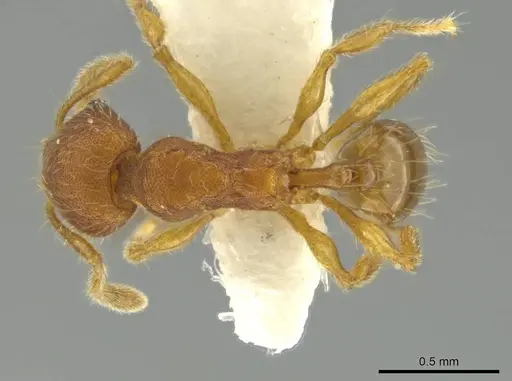
JTLC000016371
View on AntWeb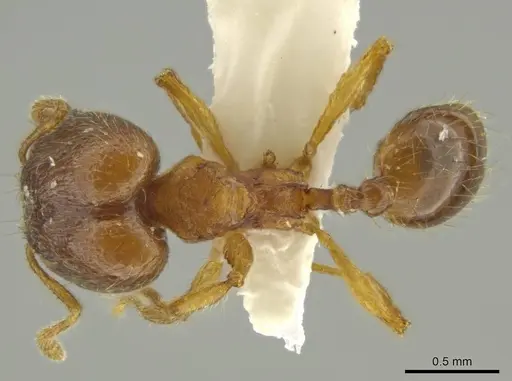
Literature
Loading...Loading products...