

Pheidole erethizon
- Scientific Name
- Pheidole erethizon
- Tribe
- Attini
- Subfamily
- Myrmicinae
- Author
- Wilson, 2003
- Distribution
- Found in 1 countries
Pheidole erethizon Overview
Pheidole erethizon is an ant species of the genus Pheidole. It is primarily documented in 1 countries , including Mexico. Detailed taxonomic data and occurrence records can be further explored via authoritative databases such as AntWeb or the Global Biodiversity Information Facility (GBIF).
Pheidole erethizon
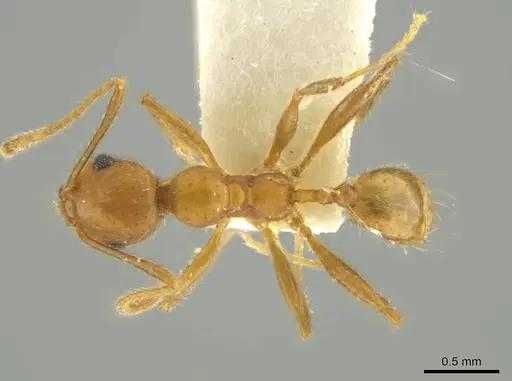
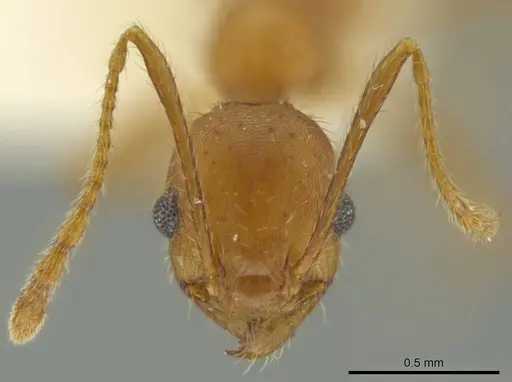
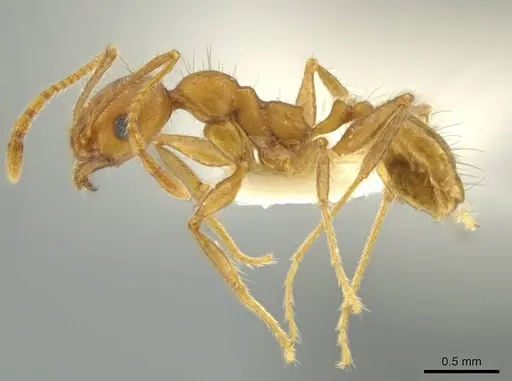
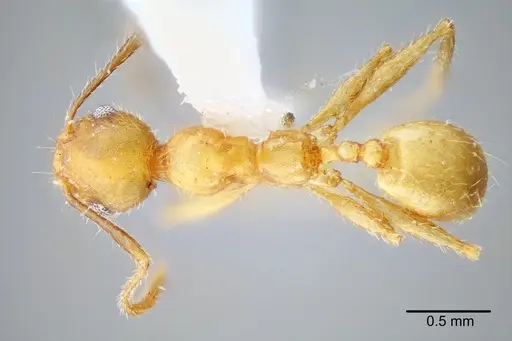
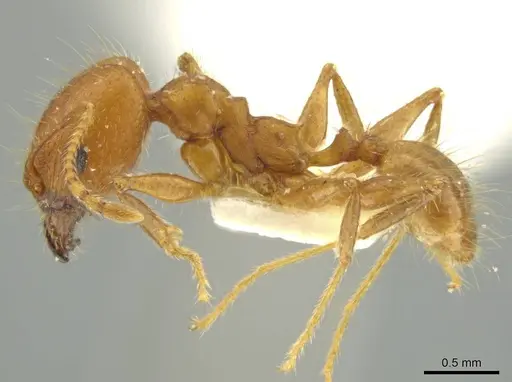
Pheidole erethizon is a small, yellow ant species native to central Mexico, first described by E.O. Wilson in 2003. The species gets its scientific name 'erethizon' (meaning porcupine) from its most distinctive feature: exceptionally dense, long hairs that cover its body, particularly prominent on the abdomen of major workers. This species belongs to the crassicornis group within the genus Pheidole and shows the characteristic dimorphic caste system with large major workers and smaller minor workers. Majors measure around 1.26mm head width while minors are roughly half that size at 0.58mm. The body coloration is a uniform medium yellow with a slight reddish tinge in majors. In the wild, this species has been recorded at elevations between 1,184-1,224m in the states of Michoacán, Guerrero, Morelos, and Puebla, making it a Mexican highland species [1][2].
The biology of P. erethizon remains completely unstudied in the scientific literature, making specific care requirements uncertain. However, as a member of the Attini tribe (which includes seed-harvesting ants), it likely follows typical Pheidole patterns of diet and colony structure. The species can be distinguished from similar species like P. azteca and P. obtusospinosa by its uniquely dense pilosity and the foveolate (pitted) texture of its head and body [1].
Quick Summary
- Difficulty: Medium
- Origin & Habitat: Native to central Mexico, specifically recorded from Michoacán, Guerrero, Morelos, and Puebla states at elevations around 1,200m. Found in the Neotropical region [1][2].
- Colony Type: Likely monogyne (single queen) based on typical Pheidole patterns, though colony structure is unconfirmed for this species.
- Size & Growth:
- Queen: Undocumented, no queen measurements available for this species
- Worker: Major workers: 1.26mm head width, Minor workers: 0.58mm head width [1]
- Colony: Unknown, no colony size data exists for this species
- Growth: Unknown, no development data available
- Development: Unknown, no direct data. Based on typical Pheidole development patterns, estimate 6-10 weeks at optimal temperature (This is a rough estimate based on genus-level patterns since no species-specific data exists)
- Antkeeping:
- Temperature: Start around 22-26°C and observe colony activity. As a Mexican highland species from moderate elevations, they likely prefer warmer conditions but not extreme heat. Adjust based on colony behavior, if workers cluster together, increase slightly, if they avoid heated areas, reduce temperature.
- Humidity: Keep nest substrate moderately moist. Mexican Pheidole species typically tolerate drier conditions than tropical rainforest ants. Allow substrate to partially dry between water additions rather than keeping it constantly wet.
- Diapause: Unknown, no data on overwintering requirements. Given the Mexican distribution with moderate altitude, they may tolerate cooler winter temperatures but likely do not require true hibernation. Consider a cool period (15-18°C) in winter months.
- Nesting: No specific nesting data exists. Based on typical Pheidole preferences, they likely nest in soil or under stones in captivity. A test tube setup works well for founding colonies, larger colonies can be moved to Y-tong or plaster nests with chambers scaled to their small size.
- Behavior: No specific behavioral observations exist for this species. As a Pheidole species, they likely show typical major/minor caste behavior where majors defend the nest and process seeds while minors tend brood and forage. Their small size (minors ~3mm, majors ~5-6mm total length) means escape prevention should be taken seriously, use fine mesh and tight-fitting barriers. The dense pilosity (long hairs) may serve as a defensive adaptation, making them appear larger to predators.
- Common Issues: completely unstudied biology means care is based on genus inference rather than species-specific data, no confirmed information on founding behavior, assume claustral like most Pheidole, unknown diapause requirements may lead to seasonal confusion, small size requires good escape prevention despite being larger than some Pheidole, no data on acceptable foods, must experiment with standard ant diets
Appearance and Identification
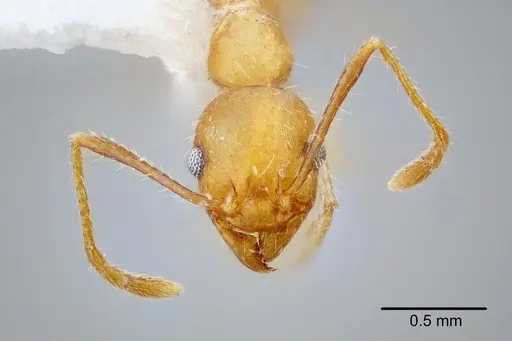
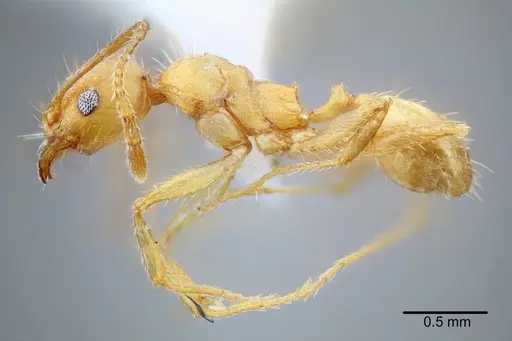
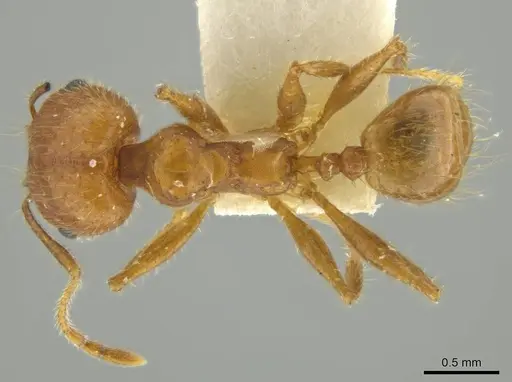
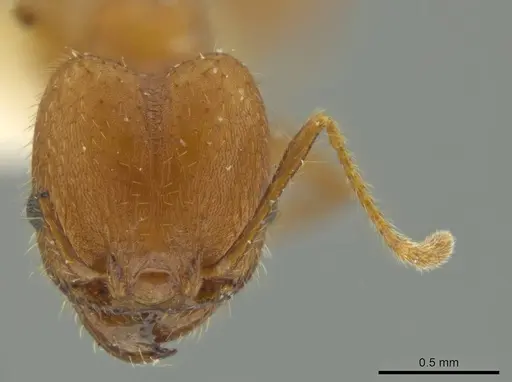
Pheidole erethizon is a small, yellow ant with a striking feature that sets it apart from most other Pheidole species: an exceptionally dense covering of long, bristly hairs. This porcupine-like pilosity is most pronounced on the first abdominal segment (gastral tergite) of major workers, giving them a fuzzy appearance. The species shows the classic Pheidole dimorphism with two distinct worker castes. Major workers have a head width of about 1.26mm and feature a foveolate (pitted) texture across most of their head, making it appear matte and opaque. Minor workers are roughly half the size at 0.58mm head width and possess an unusual narrowed occiput (back of the head) when viewed from the front, a trait that helps distinguish this species from relatives. Both castes are a uniform medium yellow color, with majors showing a slight reddish tinge. This combination of dense hairs and foveolate sculpture makes P. erethizon one of the more distinctive Mexican Pheidole species [1][2].
Natural Distribution and Habitat
This species is endemic to central Mexico, known only from three states: Michoacán (type locality at San José Purua), Guerrero (Azizintla), and Morelos (Miacatlan), with additional records from Puebla. The recorded elevations range from roughly 1,184m to 1,224m above sea level, placing it in the Mexican highland region. The Neotropical distribution means it experiences seasonal temperature variations typical of central Mexico, with warmer summers and cooler winters. No specific habitat information exists for this species, but the elevation range suggests it prefers cooler, more temperate conditions than lowland tropical ants. The limited distribution makes it a relatively rare species in the antkeeping hobby, as colonies are not commonly available [1][2].
Feeding and Diet
As a member of the Attini tribe, Pheidole erethizon likely follows the typical Pheidole diet of seeds and protein. Pheidole ants are opportunistic feeders that harvest seeds and hunt small insects. In captivity, you should offer a varied diet including: protein sources like small insects (fruit flies, pinhead crickets, mealworms), and carbohydrate sources like sugar water, honey, or specialized ant nectar. Since the biology is completely unknown, start with proven Pheidole foods and observe what the colony accepts. Remove uneaten protein within 24-48 hours to prevent mold. The major workers' large heads suggest they are adapted for processing larger food items and seeds, so don't be surprised if majors take on food-processing roles while minors handle brood care and basic foraging. Feed protein 2-3 times per week and keep sugar water available at all times.
Temperature and Heating Requirements
No specific temperature data exists for this species, but its Mexican highland distribution provides clues. Start with a temperature range of 22-26°C and monitor colony behavior. If workers become sluggish and cluster together, consider raising the temperature slightly. If they avoid the heated side of the nest, reduce heat. As a rule, Mexican Pheidole species tolerate a wider temperature range than strict tropical ants. A simple approach is to keep the colony at room temperature (around 22-24°C) if your home falls within this range, with a small heating cable on one side of the nest to create a gentle gradient. This allows ants to self-regulate by moving between warmer and cooler areas. Avoid temperatures above 30°C as this can stress the colony. During winter, a slight temperature reduction to 18-22°C may be appropriate given the natural seasonal cycle, though true hibernation is unlikely required.
Nesting and Housing
Since no specific nesting data exists for P. erethizon, we rely on typical Pheidole preferences. In the wild, many Pheidole species nest in soil or under stones, with some species using rotting wood. For captive colonies, start with a simple test tube setup for founding colonies, a water reservoir plugged with cotton provides consistent humidity and works well for claustral founding (queen seals herself in to raise first workers). Once the colony reaches 20-30 workers, consider moving to a more spacious formicarium. Y-tong (acrylic) nests or plaster nests with appropriately sized chambers work well. The chambers should be scaled to the ant size, avoid overly large, open spaces. Keep the nest substrate moderately moist but not waterlogged. The dense pilosity of this species is an interesting visual feature that becomes more apparent as you observe the ants in a well-designed setup.
Colony Development and Growth
The complete development timeline is unknown for this species since nothing has been documented about its biology. Based on typical Pheidole patterns, expect the following: claustral founding where the queen seals herself in a chamber and survives on stored fat reserves until her first workers emerge. First workers (nanitics) are typically smaller than normal workers and may take 6-10 weeks to emerge at optimal temperature. After the first workers hatch, the colony enters a growth phase where population increases gradually. Pheidole colonies can live for several years, with queens potentially living 10-15 years in ideal conditions. Major workers typically appear once the colony reaches a certain size, as the caste determination is based on larval nutrition rather than being present from the start. Be patient, Pheidole colonies often grow more slowly than some other genus, and this species' exact growth rate is completely unknown.
Frequently Asked Questions
How long does it take for Pheidole erethizon to produce first workers?
The exact timeline is unknown since no development data exists for this species. Based on typical Pheidole genus patterns, expect 6-10 weeks from egg to first worker at optimal temperature (around 24°C). This is a rough estimate, your colony may be faster or slower.
What do Pheidole erethizon ants eat?
Since the biology is unstudied, base your feeding on typical Pheidole preferences. Offer protein (small insects like fruit flies, pinhead crickets, mealworms) 2-3 times per week and keep sugar water (honey water or ant nectar) available constantly. Remove uneaten protein within 24-48 hours to prevent mold.
Do Pheidole erethizon ants need hibernation?
Diapause requirements are unknown for this species. Given its Mexican highland distribution, a cool period (15-18°C) during winter months may be appropriate but is likely not required. Monitor your colony's activity level, if they remain active year-round, no hibernation is necessary.
Are Pheidole erethizon good for beginners?
This species is rated Medium difficulty primarily because its biology is completely unstudied, there is no species-specific care guide to follow. You will need to rely on general Pheidole husbandry knowledge and adapt based on your observations. If you have experience with other Pheidole species, this can be an interesting challenge.
What temperature should I keep Pheidole erethizon at?
Start with 22-26°C and observe colony behavior. If your room temperature falls in this range, no additional heating may be needed. A small heating cable on one part of the nest creates a gradient for self-regulation. Avoid temperatures above 30°C.
How big do Pheidole erethizon colonies get?
Colony size is unknown, no wild colony data exists for this species. Based on typical Pheidole, colonies likely reach several hundred workers over several years. The major workers appear once the colony reaches sufficient size.
Can I keep multiple Pheidole erethizon queens together?
Colony structure is unconfirmed for this species. Most Pheidole are monogyne (single queen), but some species can be polygynous. Combining unrelated foundress queens is not recommended since this has not been studied and could result in aggression.
When should I move Pheidole erethizon from test tube to formicarium?
Move the colony when the test tube becomes crowded or shows signs of stress. Once you see 20-30 workers actively moving around, consider upgrading to a Y-tong or plaster formicarium with appropriately sized chambers.
Why is Pheidole erethizon called the 'porcupine' ant?
The species name 'erethizon' comes from the Greek word for porcupine. This refers to the ant's most distinctive feature: exceptionally dense, long hairs that cover its body, making it appear fuzzy or bristly, similar to a porcupine's quills [1][2].
References

This caresheet is licensed under CC BY-SA 4.0 .
Literature
Loading...Loading products...