

Pheidole embolopyx
- Scientific Name
- Pheidole embolopyx
- Tribe
- Attini
- Subfamily
- Myrmicinae
- Author
- Brown, 1968
- Distribution
- Found in 3 countries
Pheidole embolopyx Overview
Pheidole embolopyx is an ant species of the genus Pheidole. It is primarily documented in 3 countries , including Brazil, Ecuador, French Guiana. Detailed taxonomic data and occurrence records can be further explored via authoritative databases such as AntWeb or the Global Biodiversity Information Facility (GBIF).
Pheidole embolopyx
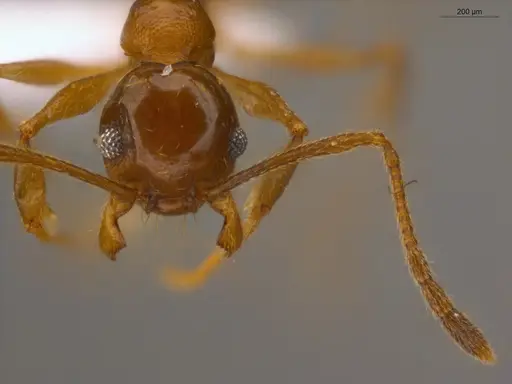
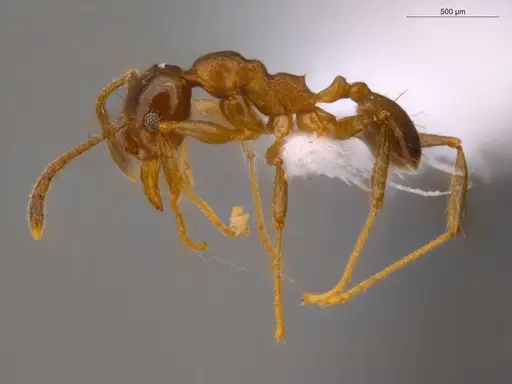
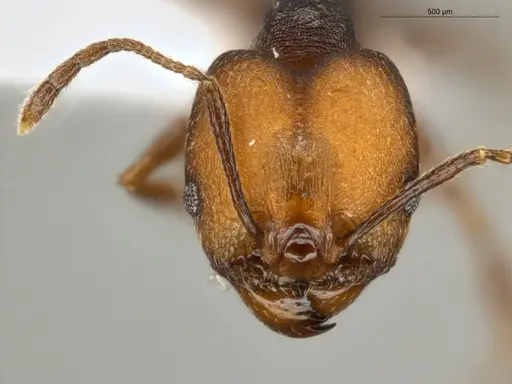
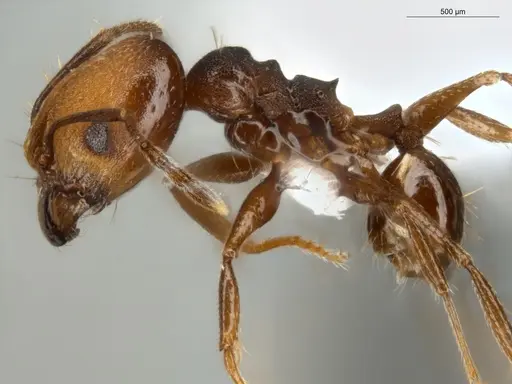
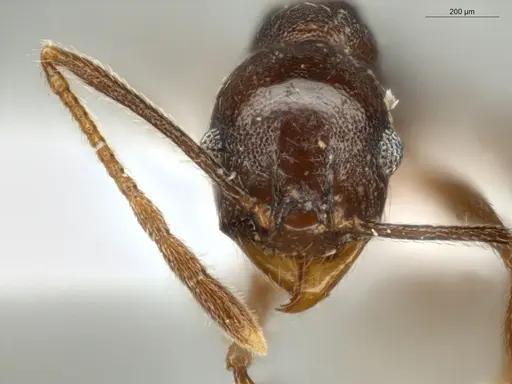
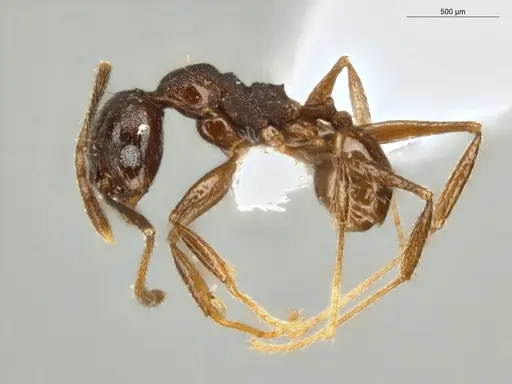
Pheidole embolopyx is a physically dimorphic Pheidole species from Amazonian rainforests, known for its remarkably unusual queen. The queen has a uniquely truncated (cut-off) abdomen, the feature that gives the species its name 'embolopyx' meaning 'stopper box' in Greek. This flattened rear gaster is covered with short hooked hairs. Workers come in two distinct sizes: major workers (soldiers) reach about 1mm head width and have robust, bicolored bodies, while minor workers are smaller at around 0.44mm head width and concolorous light brown. The species has been recorded across the northern Amazon region including Brazil (Manaus, Diamantino), Ecuador, Peru, and French Guiana [1].
This species shows fascinating division of labor between worker castes. Minor workers specialize in laying trail pheromones from their poison gland to mark food sources, while major workers follow these trails and handle the heavy lifting of food transport back to the nest. When defending food finds, minors guard the resource by biting competitor legs while majors target and attack the heads of enemies. Queens have additional defensive adaptations including gelatinous secretions on the front of the head and flanges on the pronotum, which they use in a turtle-like crouching defensive posture rather than using their truncated abdomen to physically block nest entrances as originally expected [2][1].
Quick Summary
- Difficulty: Medium
- Origin & Habitat: Amazonian rainforest in northern South America (Brazil, Ecuador, Peru, French Guiana). Nests in small pieces of rotting wood buried in leaf litter [1][3].
- Colony Type: Single-queen colonies (monogyne). Winged queens have been found in March near Manaus. Colonies contain several hundred workers at maturity [1].
- Colony: Monogyne
- Founding: Claustral
- Size & Growth:
- Queen: Approximately 6-7mm estimated based on genus patterns
- Worker: Major workers: HW 0.94mm, HL 1.00mm. Minor workers: HW 0.44mm, HL 0.56mm [1]
- Colony: Up to several hundred workers [1]
- Growth: Moderate, inferred from related Pheidole species
- Development: 6-10 weeks estimated based on typical Pheidole development at tropical temperatures (Development time estimated from related Amazonian Pheidole species. Exact timeline for P. embolopyx has not been directly studied.)
- Antkeeping:
- Temperature: Keep at 24-27°C. This is an Amazonian rainforest species requiring warm, stable temperatures. Avoid temperatures below 22°C as they are flood intolerant and prefer stable conditions [3].
- Humidity: High humidity required, rainforest species. Keep nest substrate consistently moist but not waterlogged. Provide a humid outworld area. These twig-nesting ants need damp conditions inside their nest chambers.
- Diapause: No, being a tropical species, they do not require hibernation. Maintain warm conditions year-round.
- Nesting: Twig-nesting species, they colonize small diameter twigs and rotting wood pieces in the leaf litter. In captivity, they do well in small formicariums or test tube setups with twig-sized chambers. Provide small-diameter chambers or natural twig sections. They prefer nesting in materials with small entrance holes [4].
- Behavior: Physically dimorphic with distinct caste roles. Minor workers handle trail-laying and food guarding, they bite the legs of competing ants. Major workers handle food transport and head attacks on enemies. Both castes cooperate in colony defense. They are ground-foraging ants that use chemical trails to recruit nestmates to food sources. Minor workers produce the trail pheromone from their poison gland while majors follow trails and carry food back. Escape risk is moderate, minor workers are small but majors are larger. Use standard antkeeping escape prevention [2][5].
- Common Issues: flood intolerance, these ants cannot survive flooding events, so keep nesting areas dry and elevated, temperature drops below 22°C can stress colonies as they are adapted to stable tropical conditions, small colony size at founding, expect slow initial growth typical of monogyne Pheidole, twig nesting means they need appropriately sized nest chambers, too large spaces stress them, infrequent species in the wild means wild-caught colonies may be difficult to locate
Housing and Nest Preferences
Pheidole embolopyx is a twig-nesting species that naturally colonizes small pieces of rotting wood buried in the rainforest leaf litter. In captivity, they do well in small formicariums or test tube setups designed for small Myrmicinae. The key is providing appropriately sized chambers, these ants prefer tight-fitting spaces similar to the twigs they occupy in the wild. You can use small acrylic nests, plaster nests with narrow chambers, or natural twig sections. Avoid large, open spaces that would stress them. The nest should have small entrance holes similar to what they would find in natural twig cavities. Provide a humid water reservoir connected to the nest to maintain moisture without direct flooding [4][3].
Feeding and Diet
Like other Pheidole species, P. embolopyx is a generalist forager that will collect proteins, sugars, and seeds. In the wild, they are ground-foraging ants that use chemical trails to recruit nestmates to food sources. Minor workers specialize in laying trail pheromones from their poison gland to mark food locations, while major workers follow these trails and transport food back to the nest. Feed them a varied diet including protein sources (small insects like fruit flies, mealworms, crickets) and sugar sources (honey water, sugar water). Both worker castes cooperate in defending food finds, minors guard the resource while majors carry it back. They are known to participate in ant-plant mutualisms, so they may show interest in seeds [2][6].
Temperature and Seasonal Care
As an Amazonian rainforest species, Pheidole embolopyx requires warm, stable temperatures in the range of 24-27°C. They are flood intolerant and cannot survive flooding events, so keep their nesting area dry and well-drained. Unlike temperate species, they do not require diapause or hibernation, maintain warm conditions year-round. Avoid temperature fluctuations and drops below 22°C, as this species is adapted to the stable tropical environment of the Amazon basin. A heating cable on one side of the nest can help maintain optimal temperatures, but always provide a temperature gradient so ants can choose their preferred zone. Room temperature within their range works well in most heated homes [3].
Colony Structure and Caste Roles
This species exhibits pronounced physical dimorphism with two distinct worker castes that have specialized roles. Minor workers (the smaller caste) specialize in laying trail pheromones from their poison gland, they create chemical paths to food sources. They also guard food finds by biting the legs of competing ants. Major workers (the larger, robust caste) do not lay trails but instead follow the paths created by minors and handle the heavy work of transporting food back to the nest. When defending against competitors or threats, both castes cooperate: minors target legs while majors go for the head. The queen has a unique truncated abdomen with hooked hairs and gelatinous head secretions that serve in defensive postures. Colonies are monogyne with a single reproductive queen. Queens are monandrous, meaning they mate with only one male [2][7][5].
Defense and Behavior
Pheidole embolopyx has several interesting defensive adaptations. The queen's most distinctive feature is her truncated (cut-off) abdomen, originally thought to function as a physical plug to block nest entrances. Research shows queens instead use a turtle-like crouching defensive posture, bringing their truncated abdomen, pronotal flanges, and gelatinous head secretions into play when threatened. Workers use chemical communication, trail pheromones from the poison gland and alarm pheromones from the pygidial gland. The division of labor extends to defense: minor workers guard food by biting competitor legs while major workers deliver more powerful bites to the head. They are not aggressive toward keepers but major worker bites can be noticeable due to their robust mandibles [2][5][1].
Frequently Asked Questions
How long does it take for Pheidole embolopyx to have first workers?
Expect first workers (nanitics) in approximately 6-10 weeks after the queen lays eggs, based on typical Pheidole development at tropical temperatures. This is an estimate as the exact development timeline for P. embolopyx has not been directly studied.
Can I keep multiple Pheidole embolopyx queens together?
No, this is a monogyne (single-queen) species. Unlike some Pheidole that can be polygynous, P. embolopyx colonies have only one queen. Do not attempt to keep multiple unrelated queens together as they will fight.
What do Pheidole embolopyx ants eat?
They are generalist foragers. Feed them protein sources like small insects (fruit flies, small mealworms, crickets) and sugar sources (honey water, sugar water). Both worker castes participate in food collection, minors create trails and guard food while majors transport it.
Are Pheidole embolopyx good for beginners?
This is a medium-difficulty species. They require warm, humid conditions typical of Amazonian rainforest species and are flood intolerant. Their twig-nesting preference requires appropriate housing. The division of labor between worker castes makes them interesting to observe. Not the best choice for absolute beginners, but manageable for those with some antkeeping experience.
What size colony does Pheidole embolopyx reach?
Mature colonies reach several hundred workers. This is moderate compared to some Pheidole species that can reach thousands. Growth rate is moderate, expect several months to a year to reach significant colony size.
Do Pheidole embolopyx need hibernation?
No, as a tropical Amazonian species, they do not require hibernation or diapause. Maintain warm temperatures (24-27°C) year-round. They are adapted to stable tropical conditions and do not tolerate temperature drops well.
What is the best nest type for Pheidole embolopyx?
Twig-nesting setup works best. Use small formicariums with narrow chambers or natural twig sections. They prefer tight-fitting spaces similar to the small rotting wood pieces they colonize in the wild. Avoid large, open spaces. Small acrylic nests or plaster nests with appropriately sized chambers are suitable.
Why is the queen's abdomen truncated?
The queen has a uniquely flattened rear gaster (abdomen), this is the feature that gives the species its name 'embolopyx' meaning 'stopper box' in Greek. Originally researchers thought she used it to block nest entrances, but later research shows she uses it in a defensive crouching posture along with pronotal flanges and gelatinous head secretions.
How do the worker castes differ in Pheidole embolopyx?
This is a physically dimorphic species with major and minor workers. Minor workers (about 0.44mm head width) specialize in laying trail pheromones from their poison gland and guard food finds by biting competitor legs. Major workers (about 0.94mm head width) follow trails created by minors and transport food back to the nest, they deliver head-targeted bites during defense.
References

This caresheet is licensed under CC BY-SA 4.0 .
ECOFOG-IT14-0798-30
View on AntWeb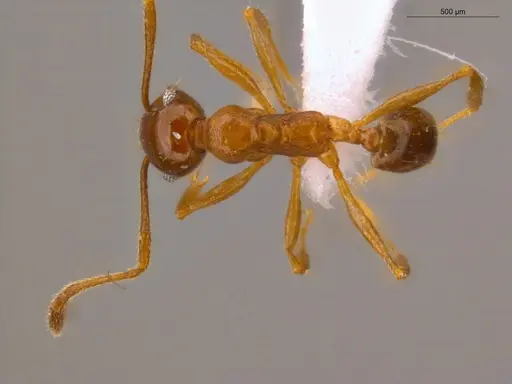
ECOFOG-MI15-0379-21-S
View on AntWeb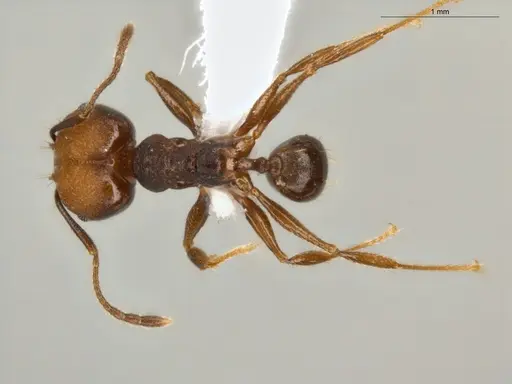
ECOFOG-MI15-0379-21
View on AntWeb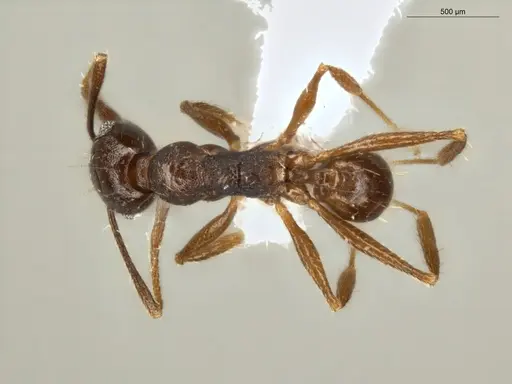
Literature
Loading...Loading products...