

Pheidole drogon
- Scientific Name
- Pheidole drogon
- Tribe
- Attini
- Subfamily
- Myrmicinae
- Author
- Sarnat <i>et al.</i>, 2016
- Distribution
- Found in 1 countries
Pheidole drogon Overview
Pheidole drogon is an ant species of the genus Pheidole. It is primarily documented in 1 countries , including Papua New Guinea. Detailed taxonomic data and occurrence records can be further explored via authoritative databases such as AntWeb or the Global Biodiversity Information Facility (GBIF).
Pheidole drogon
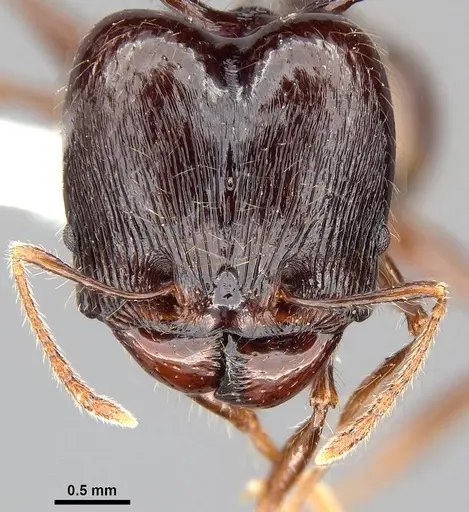
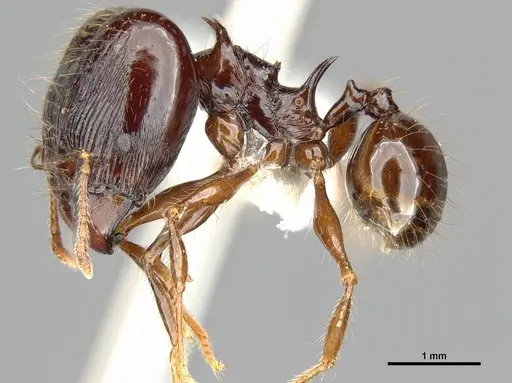
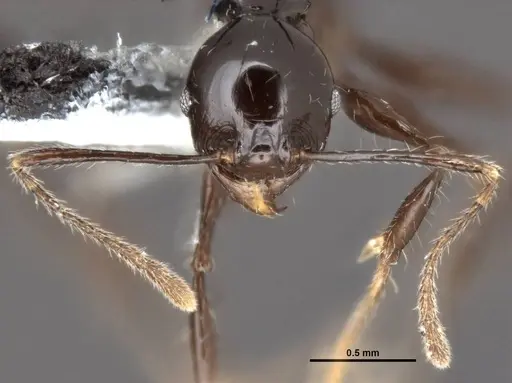
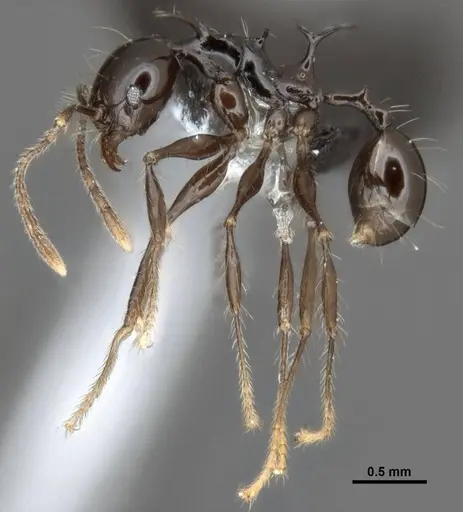
Pheidole drogon is a striking ant species native to the montane rainforests of Papua New Guinea, named after Drogon, the black dragon from Game of Thrones. The species gets its name from its dramatic appearance, major workers feature extremely long pronotal and propodeal spines, giving them an unforgettable silhouette. Both majors and minors are a uniform reddish-brown color with slightly lighter yellowish-brown legs and coxae. The major workers reach 2.16-2.19mm in head width and are distinguished by their glossy, sculpture-free posterolateral lobes. The tiny minor workers measure only 0.67-0.73mm and have similarly impressive spines relative to their body size. This species is only known from its type locality at 1900m elevation in the Baiyer River area of Morobe Province, making it a rare and sought-after species for antkeepers who appreciate unusual morphology.
Quick Summary
- Difficulty: Medium
- Origin & Habitat: Montane rainforest in Papua New Guinea at approximately 1900m elevation. The type locality is 11km east of Baiyer River Sanctuary in Morobe Province [1].
- Colony Type: Colony structure is unconfirmed. Based on typical Pheidole genus patterns, likely single-queen (monogyne) colonies. No data on ergatoid replacement reproductives for this species.
- Colony: Monogyne
- Founding: Claustral
- Size & Growth:
- Queen: Undescribed, queen has not been documented in scientific literature [1]. Estimate based on genus patterns: likely 6-8mm.
- Worker: Major workers: 2.16-2.19mm head width,2.08-2.14mm head length. Minor workers: 0.67-0.73mm head width,0.75-0.81mm head length [1].
- Colony: Unknown, only known from type locality with limited specimens collected [1]. Based on related Pheidole species, likely reaches several hundred to a few thousand workers.
- Growth: Moderate, estimated based on typical Pheidole development patterns.
- Development: 6-10 weeks estimated based on typical Pheidole genus patterns at optimal temperature. (Timeline is estimated, no specific development data exists for this species. Temperature dependency applies: warmer temperatures within safe range accelerate development.)
- Antkeeping:
- Temperature: Keep at 22-26°C. The montane rainforest origin at 1900m elevation suggests they prefer cooler conditions than typical lowland tropical ants. A gentle temperature gradient allows workers to self-regulate. Room temperature in this range is suitable without additional heating in most homes.
- Humidity: Keep substrate moderately moist but not waterlogged. Montane rainforest conditions mean they appreciate humidity but need ventilation to prevent mold. Allow substrate surface to dry slightly between rehydrations.
- Diapause: Unknown, no studies on overwintering requirements exist. Given the montane origin, they may tolerate cooler temperatures but diapause is not confirmed. Monitor colony behavior for seasonal slowdowns.
- Nesting: Use a nest with fine chambers scaled to their small size. Y-tong (AAC) nests or plaster nests work well. The long spines on both castes mean they may have difficulty navigating very narrow tunnels. Provide damp substrate but ensure good ventilation. Test tube setups work for founding colonies.
- Behavior: This species is not aggressive and major workers serve as soldiers/defenders. They recruit to food sources, the type specimens were collected at a tuna bait, indicating they are opportunistic scavengers that readily find and exploit protein sources. Minor workers are tiny (under 1mm) so escape prevention must be excellent, they can squeeze through standard test tube cotton if given the opportunity. majors are larger but still small. Both castes are active foragers. No stinging behavior has been documented, though the genus Pheidole can bite if threatened.
- Common Issues: escape prevention is critical, minor workers are extremely tiny and can squeeze through standard mesh and cotton barriers, limited availability as only known from type locality, captive colonies may be rare or non-existent in the hobby, no established captive breeding protocols exist since species was only described in 2016, humidity control is important, too wet causes mold, too dry causes desiccation, slow colony growth may frustrate beginners expecting rapid development
Appearance and Identification
Pheidole drogon is one of the most visually striking Pheidole species due to its extraordinarily long spines. Major workers reach 2.16-2.19mm in head width and feature pronotal spines and propodeal spines that are nearly as long as their body. The minor workers are tiny at only 0.67-0.73mm but proportionally have even longer spines relative to their body size, their pronotal spines are approximately equal in length to their tibiae. Both castes are a uniform reddish-brown with slightly lighter yellowish-brown legs. The most distinctive feature of major workers is the glossy, sculpture-free posterolateral lobes and gastral tergite, which shine brightly against the otherwise sculptured head and mesosoma. This species belongs to the P. cervicornis group, all of which feature dramatically elongated spines. The name 'drogon' references the black dragon from Game of Thrones, chosen for the ant's imposing and dragon-like appearance due to its spiny silhouette. [1]
Natural History and Distribution
This species is endemic to Papua New Guinea and is only known from its type locality in Morobe Province. Specimens were collected at 1900m elevation in montane rainforest, approximately 11km east of the Baiyer River Sanctuary. The elevation suggests a cooler, more temperate climate than typical lowland tropical rainforests. The ants were collected on low vegetation and were actively recruiting to a tuna bait, demonstrating that they are opportunistic scavengers that readily exploit protein-rich food sources. This foraging behavior suggests they are day-active ants that patrol the forest floor and low vegetation in search of carrion and other protein sources. The limited distribution and specific habitat requirements make this a rare species both in the wild and potentially in captivity. [1]
Feeding and Diet
Based on the collection data showing recruitment to tuna bait, Pheidole drogon is an opportunistic scavenger that readily accepts protein sources. In captivity, offer protein-rich foods such as small insects (fruit flies, small crickets, mealworms), and occasionally tuna or other fish as a treat. Sugar sources may be accepted but are not a primary dietary need for this genus, offer occasional sugar water or honey to test acceptance. Feed protein 2-3 times per week for established colonies, and remove any uneaten prey after 24-48 hours to prevent mold. The minor workers are extremely small, so prey items should be appropriately sized, tiny fruit flies or pre-killed small insects work well. The major workers, while larger, are also not equipped for taking down large prey. [1]
Housing and Nesting
Keep founding colonies in test tubes with a water reservoir and cotton stoppers. Once the colony reaches 20-30 workers, consider moving to a proper nest. Y-tong (AAC) nests or plaster nests work well for this species, providing chambers that can be kept humid. The extremely long spines on both castes mean very narrow tunnels may be difficult to navigate, opt for chambers with some vertical space. Ensure escape prevention is excellent, especially for the tiny minor workers, use fine mesh barriers and check all connections regularly. A small outworld area allows for foraging. Maintain moderate humidity inside the nest while providing a dry foraging area.
Temperature and Seasonal Care
The montane origin of this species suggests they prefer cooler temperatures than typical tropical ants. Aim for 22-26°C, which is achievable in most homes without additional heating. If your room temperature runs cooler, a gentle heat mat on one side of the nest can provide a gradient. Avoid temperatures above 30°C as this can stress the colony. No specific data exists on diapause requirements, but monitor your colony for seasonal slowdowns. If workers become less active in winter months, reduce feeding and allow cooler temperatures within the safe range. The highland origin may make them more tolerant of temperature fluctuations than true lowland tropical species. [1]
Colony Development
The queen has not been described in scientific literature, so exact founding behavior is unknown. Based on typical Pheidole patterns, the queen likely seals herself in a claustral chamber and raises the first brood alone without foraging. First workers (nanitics) will be smaller than normal workers. Development from egg to worker is estimated at 6-10 weeks at optimal temperature, but this is based on genus-level inference rather than specific data for this species. Colony growth will be moderate, expect several months to reach 50 workers, and potentially a year or more to reach several hundred. The dramatic spines become more pronounced as workers mature. Major workers typically appear when the colony reaches a certain threshold, usually several dozen workers.
Frequently Asked Questions
How long does it take for Pheidole drogon to produce first workers?
First workers typically appear within 6-10 weeks after the queen lays eggs, assuming optimal temperature around 24°C. This is an estimate based on typical Pheidole development patterns since no specific data exists for this species. The first workers (nanitics) will be smaller than mature workers.
What do Pheidole drogon ants eat?
They are opportunistic scavengers that accept protein-rich foods. Offer small insects like fruit flies, small crickets, or mealworms. They will also accept tuna or other fish as a protein source, this is how they were collected in the wild. Sugar sources like honey water may be accepted occasionally but are not required.
Are Pheidole drogon ants aggressive?
No, Pheidole drogon is not considered aggressive. Major workers serve as soldiers and defenders but primarily for defense against predators. They are not known to bite humans and pose no danger to keepers. They focus on foraging and colony maintenance.
What temperature do Pheidole drogon ants need?
Keep them at 22-26°C. The montane rainforest origin at 1900m elevation suggests they prefer cooler conditions than typical tropical ants. Room temperature in this range is usually suitable without additional heating.
How big do Pheidole drogon colonies get?
Colony size is not documented, but based on related Pheidole species, colonies likely reach several hundred to a few thousand workers. Major workers appear once the colony reaches sufficient size, typically several dozen workers.
Do Pheidole drogon ants need hibernation?
Diapause requirements are unknown. The montane origin suggests they may tolerate cooler temperatures but true hibernation may not be necessary. Monitor your colony for seasonal slowdowns and adjust care accordingly.
Can I keep multiple Pheidole drogon queens together?
Not recommended. Pheidole species are typically single-queen (monogyne) colonies. Combining unrelated queens has not been documented for this species and would likely result in aggression. Start with one queen per colony.
Why are my Pheidole drogon ants dying?
Common causes include: escape (minor workers are extremely tiny), improper humidity (too wet causes mold, too dry causes desiccation), temperature stress (above 30°C or below 20°C), and poor nutrition. Ensure excellent escape prevention, maintain moderate humidity, keep temperatures stable, and offer appropriate protein foods.
What makes Pheidole drogon special compared to other Pheidole?
Pheidole drogon has some of the most dramatic spines in the entire genus. The pronotal and propodeal spines are extraordinarily long relative to body size, giving majors and minors alike an unforgettable dragon-like silhouette. It is also one of the rarest Pheidole species in captivity, being only known from a single location in Papua New Guinea.
Are Pheidole drogon ants hard to keep?
Difficulty is rated Medium. The main challenges are escape prevention (tiny minors), limited availability (only known from type locality), and lack of established captive protocols. Otherwise, their care is straightforward, moderate temperature, humidity, and protein feeding.
References

This caresheet is licensed under CC BY-SA 4.0 .
CASENT0716380
View on AntWeb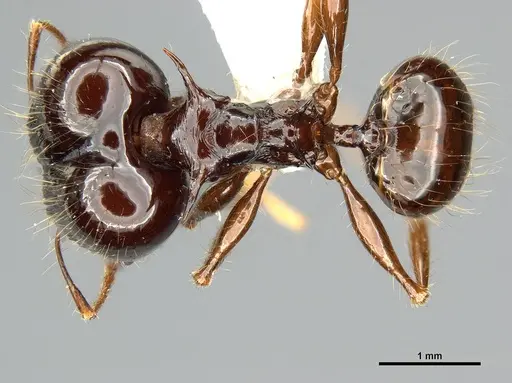
CASENT0753009
View on AntWeb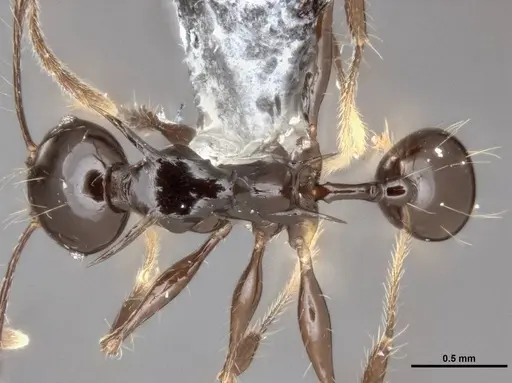
Literature
Loading...Loading products...