

Pheidole davidsonae
- Scientific Name
- Pheidole davidsonae
- Tribe
- Attini
- Subfamily
- Myrmicinae
- Author
- Wilson, 2003
- Distribution
- Found in 1 countries
Pheidole davidsonae Overview
Pheidole davidsonae is an ant species of the genus Pheidole. It is primarily documented in 1 countries , including Peru. Detailed taxonomic data and occurrence records can be further explored via authoritative databases such as AntWeb or the Global Biodiversity Information Facility (GBIF).
Pheidole davidsonae
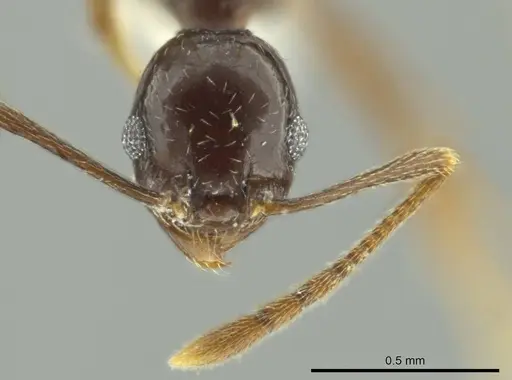
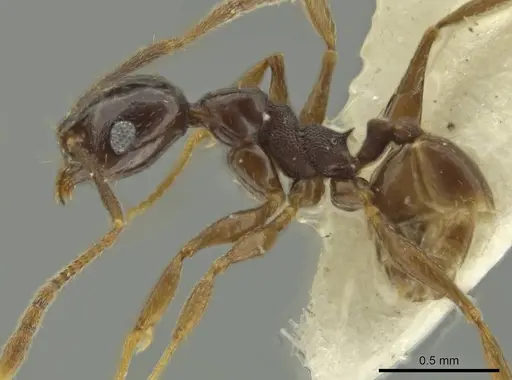
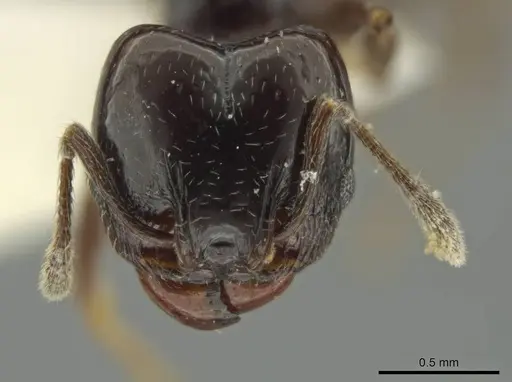
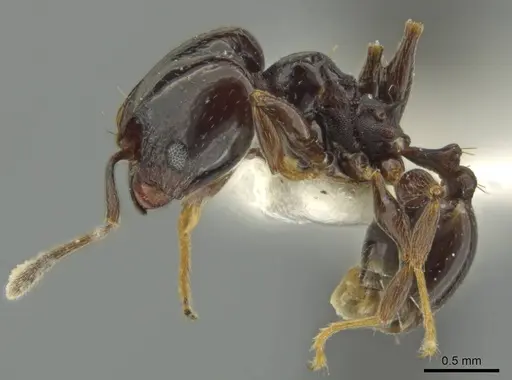
Pheidole davidsonae is a small ant species belonging to the diligens group, native to the Amazon basin in South America. The species is known only from the type locality in Peru (Cocha Cashu Research Station, Madre de Dios at 400m elevation) with additional records in Colombia's terra firme forests [1][2]. This species exhibits the classic Pheidole dimorphism with major workers (soldiers) that have notably large heads and minor workers that are much smaller. Major workers measure about 1mm in head width, while minor workers are roughly half that size at 0.48mm. The species was described by Wilson in 2003 and named after the collector, insect ecologist Diane W. Davidson. Nothing is known about the biology of this species in the wild, this is one of the least studied Pheidole species in captivity.
Quick Summary
- Difficulty: Unknown
- Origin & Habitat: Amazon basin in Peru and Colombia. Found in lowland tropical rainforest (terra firme forest) at around 400m elevation [1][2].
- Colony Type: Colony structure is unconfirmed. As a Pheidole species, they likely form single-queen colonies (monogyne) but this has not been documented for this specific species.
- Size & Growth:
- Queen: Undescribed, no queen measurements available for this species [3]
- Worker: Major workers: 1.06mm HW. Minor workers: 0.48mm HW [3]
- Colony: Unknown, no colony size data exists for this species
- Growth: Unknown, no development data available
- Development: Unknown, no direct measurements exist. Based on typical Pheidole patterns in tropical species, estimate 4-8 weeks at warm temperatures, but this is a rough guess. (This is entirely unconfirmed, no research has studied development in this species. Infer from genus-level patterns only.)
- Antkeeping:
- Temperature: No specific data exists. Based on origin (Amazonian lowland Peru/Colombia), they likely prefer warm conditions around 24-28°C. Start in this range and observe colony activity.
- Humidity: No specific data exists. As a species from the Amazon basin, they likely need moderate to high humidity (60-80%). Keep the nest substrate consistently moist but not waterlogged.
- Diapause: Unknown, no research has examined seasonal behavior. Amazonian species typically do not undergo true hibernation, but may have reduced activity periods.
- Nesting: No natural nesting observations exist. Based on related species in the diligens group, they likely nest in soil or rotting wood in humid forest floor environments. A naturalistic setup with moist substrate or a Y-tong/plaster nest works well for Pheidole.
- Behavior: Behavior is completely unstudied. As a Pheidole species, they likely have typical big-headed ant behaviors, majors defend the nest and help process food, while minors handle most foraging and brood care. Escape risk is moderate, minor workers are small (0.48mm) so fine mesh barriers are recommended. Aggression level is unknown but Pheidole species are generally not aggressive toward keepers.
- Common Issues: completely unstudied biology means all care recommendations are educated guesses based on genus patterns, no confirmed diet acceptance, start with standard ant foods (sugar water, protein sources) and observe what they accept, humidity requirements are inferred, not confirmed, monitor for signs of stress (unusual clustering, inactivity), no information on founding behavior, assume claustral like most Pheidole (queen seals herself in and raises first workers alone), escape prevention needed due to small minor worker size
Understanding This Species
Pheidole davidsonae is one of the least studied ant species in the hobby. It was described relatively recently in 2003 and is known only from a handful of specimens collected in the Amazon basin of Peru and Colombia. The scientific name honors Diane W. Davidson, the entomologist who collected the type specimens. What makes this species particularly interesting is that it belongs to the diligens group, which contains various Neotropical Pheidole species, but beyond basic morphology, almost nothing has been documented about its behavior, colony structure, or captive care requirements. This means keepers who obtain this species are essentially pioneers, any observations you make could be new contributions to antkeeping knowledge. [1][2][3]
Housing and Nest Setup
Since no natural nesting observations exist for this species, recommendations are based on typical Pheidole preferences and the species' likely Amazonian habitat. A naturalistic setup with moist soil or a Y-tong/plaster nest works well for Pheidole species. The nest should maintain consistent humidity without becoming waterlogged. Given the small size of minor workers (0.48mm), escape prevention should be taken seriously, use fine mesh barriers and ensure any gaps in the outworld are sealed. A test tube setup can work for founding colonies, but be prepared to move them to a more spacious setup as the colony grows.
Feeding and Diet
No specific diet data exists for this species. As a Pheidole in the diligens group, they likely have typical ant dietary preferences, a mix of sugars (from honeydew or nectar) and protein (from insects). Start with standard captive foods: sugar water or honey as a constant carbohydrate source, and protein sources like fruit flies, small crickets, or mealworms. Observe what the colony accepts and adjust accordingly. Pheidole species typically store food in their nests, so minor workers will often grab and carry prey items back to the colony. Remove uneaten prey after 24-48 hours to prevent mold.
Temperature and Humidity
No specific thermal data exists for this species. However, since it comes from the Amazon basin in Peru and Colombia (lowland tropical rainforest at 400m elevation), it almost certainly requires warm, humid conditions. Aim for temperatures in the 24-28°C range, this matches typical Amazonian conditions. For humidity, target 60-80%, damp but not stagnant. Use a water reservoir in your nest setup to maintain moisture over time. Avoid temperature extremes, especially cold, this species has no adaptation to cool conditions. A small heating cable on one side of the nest can create a gradient if your room temperature is below 24°C. [1][2]
Colony Development and Growth
No development timeline data exists for this species. Queens have not been described in the scientific literature, so exact measurements are unavailable. Based on typical Pheidole patterns for tropical species, expect the first workers (nanitics) to emerge in roughly 4-8 weeks under warm conditions, but this is a very rough estimate. The major workers (soldiers) with their distinctive large heads will appear as the colony matures, Pheidole majors typically develop once the colony reaches several dozen workers. Growth rate is unknown. Be patient with this species, without documented development times, expect some trial and error. [3]
Behavior Observations
No specific behavioral studies exist for this species. However, Pheidole in general are known for their caste system: minor workers handle most tasks (foraging, brood care, nest maintenance) while major workers (soldiers) defend the nest and help process large food items. The majors' large heads are adapted for mandible strength, allowing them to crush seeds or defend against predators. Expect to see minor workers doing most of the visible activity in the outworld, with majors more commonly remaining in or near the nest. As with most Pheidole, they are not typically aggressive toward keepers but will defend their nest if threatened.
Frequently Asked Questions
How do I care for Pheidole davidsonae ants?
Since this species has no documented care requirements, all recommendations are educated guesses based on typical Pheidole preferences and the species' Amazonian origin. Keep them warm (24-28°C), humid (60-80% moisture), and feed standard ant foods (sugar water + protein). This is essentially an experimental species in captivity, your observations could be valuable to the antkeeping community.
What do Pheidole davidsonae eat?
No specific diet data exists. Start with sugar water or honey as a constant carbohydrate source, and offer protein sources like fruit flies, small crickets, or mealworms. Observe what your colony accepts and adjust accordingly.
How long does it take for Pheidole davidsonae to produce first workers?
Unknown, no development data exists for this species. Based on typical tropical Pheidole patterns, estimate 4-8 weeks from egg to first worker under warm conditions (around 26°C), but this is a rough guess.
Are Pheidole davidsonae good for beginners?
This species is NOT recommended for beginners. Almost nothing is known about its biology, meaning keepers must rely on guesswork and genus-level assumptions rather than documented care guides. This makes it an experimental species best suited for experienced antkeepers who can interpret colony behavior and adjust care accordingly.
What size colony does Pheidole davidsonae reach?
Unknown, no colony size data exists for this species. Related Pheidole species in the diligens group typically reach several hundred to a few thousand workers, but this is just an estimate.
What temperature should I keep Pheidole davidsonae at?
No specific data exists, but based on their Amazonian origin (Peru/Colombia lowlands), aim for 24-28°C. This is warmer than most room temperatures, so you may need a small heating setup.
Does Pheidole davidsonae need hibernation?
Unknown, no research has examined seasonal behavior. As an Amazonian species from near the equator, they likely do not require true hibernation. They may have reduced activity periods during drier seasons, but this is unconfirmed.
Can I keep multiple Pheidole davidsonae queens together?
Unknown, colony structure has not been documented for this species. Most Pheidole are single-queen (monogyne) colonies. Combining unrelated queens is not recommended without documented evidence that they can found colonies together successfully.
What nest type is best for Pheidole davidsonae?
No documented preferences exist. Based on typical Pheidole behavior, a naturalistic setup with moist substrate or a Y-tong/plaster nest works well. The key is maintaining consistent humidity without waterlogging.
References

This caresheet is licensed under CC BY-SA 4.0 .
CASENT0644183
View on AntWeb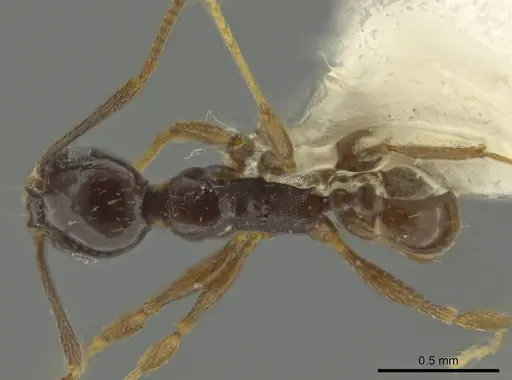
JTLC000016359
View on AntWeb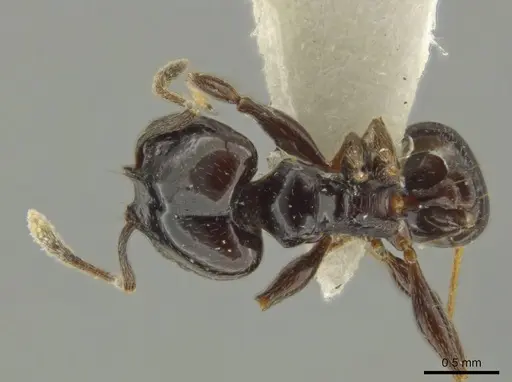
Literature
Loading...Loading products...