

Pheidole dasypyx
- Scientific Name
- Pheidole dasypyx
- Tribe
- Attini
- Subfamily
- Myrmicinae
- Author
- Wilson, 2003
- Distribution
- Found in 1 countries
Pheidole dasypyx Overview
Pheidole dasypyx is an ant species of the genus Pheidole. It is primarily documented in 1 countries , including Panama. Detailed taxonomic data and occurrence records can be further explored via authoritative databases such as AntWeb or the Global Biodiversity Information Facility (GBIF).
Pheidole dasypyx
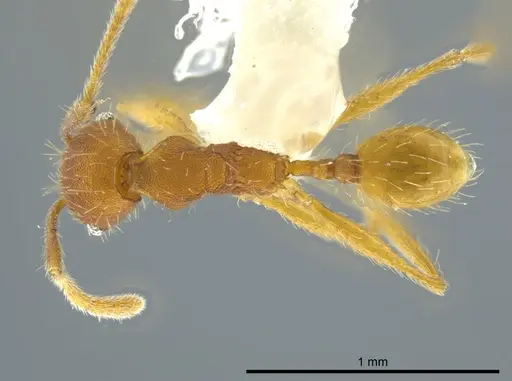
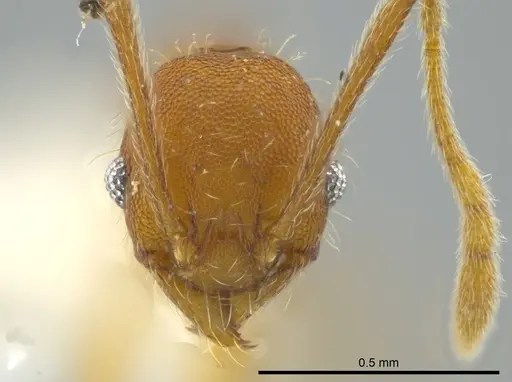
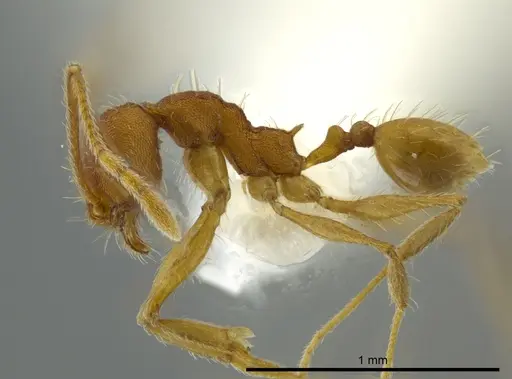
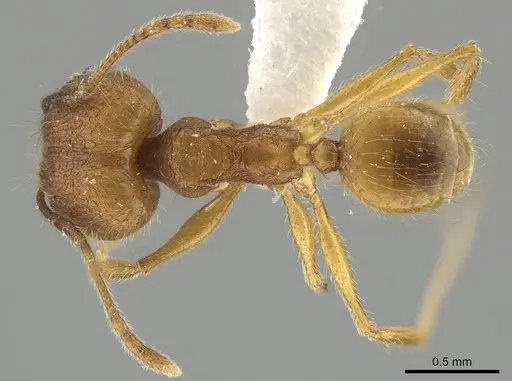
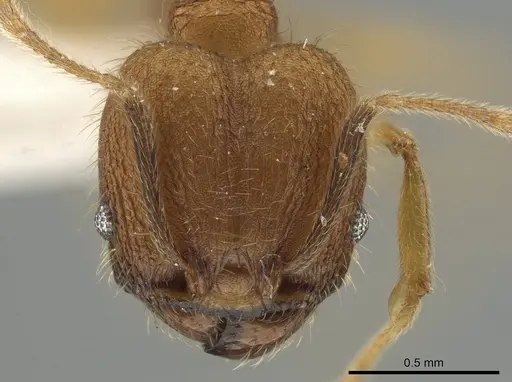
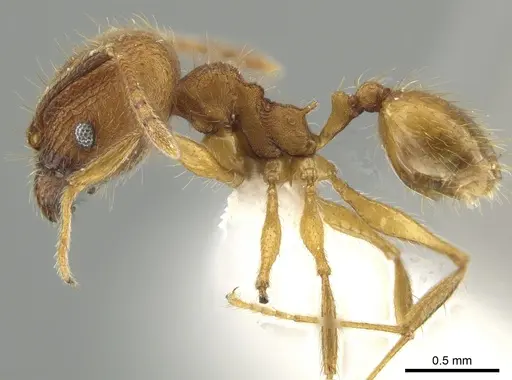
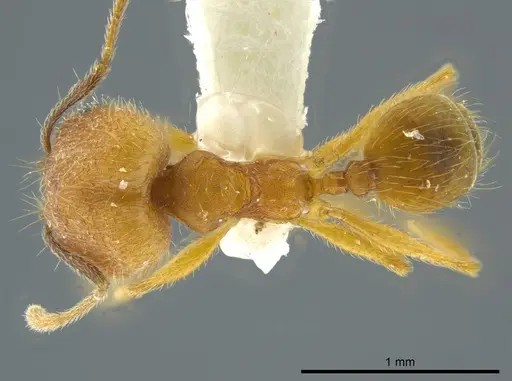
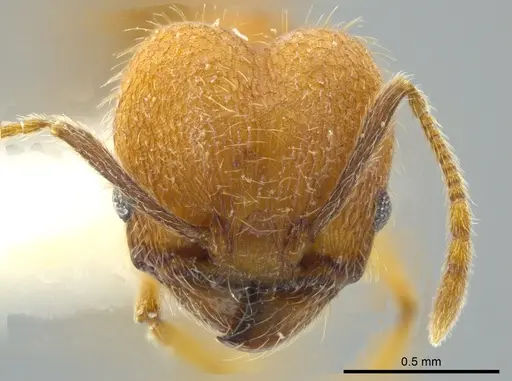
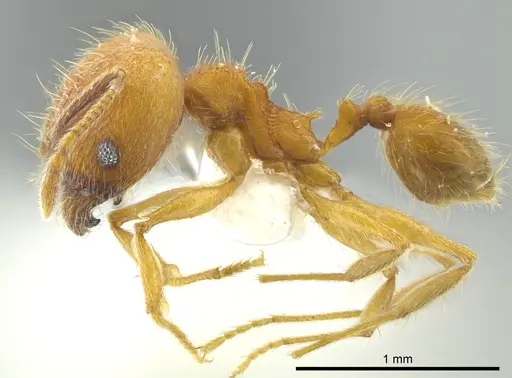
Pheidole dasypyx is a small yellow ant species native to the Neotropical region, found specifically in Costa Rica and Panama. The species was described by Wilson in 2003 and belongs to the punctatissima group. Major workers measure around 0.96mm in head width, while minors are much smaller at around 0.46mm. Both castes share a uniform medium yellow coloration. The major workers have distinctive features including a 3-lobed promesonotal profile, long propodeal spines, and dense pilosity (hair) covering the gaster, this last trait is where the species gets its name 'dasypyx' meaning 'hairy rump' [1].
This is a poorly studied species with no documented biology in the scientific literature. What we know comes from the original species description and a few genetic studies. As a tropical litter ant from Central American rainforests, it likely lives in moist forest floor environments and has typical Pheidole colony structure with major and minor workers. The lack of biological data means keepers will need to rely on genus-level care patterns while observing their specific colony's preferences [2][3].
Quick Summary
- Difficulty: Medium
- Origin & Habitat: Tropical Central America, Costa Rica and Panama, specifically documented from Barlo Colorado Island in Panama. Found in rainforest litter environments in the Neotropical region [1].
- Colony Type: Colony structure is unconfirmed for this species. Pheidole genus typically forms single-queen colonies (monogyne) with major and minor worker castes. The presence of distinct major workers confirms this species has the typical Pheidole polymorphic colony structure.
- Size & Growth:
- Queen: Unconfirmed, no queen measurements published. Based on genus patterns, expect queens around 5-7mm.
- Worker: Minor workers: 0.46mm HW,0.54mm HL. Major workers: 0.96mm HW,0.94mm HL [1].
- Colony: Unknown, no colony size data exists. Related tropical Pheidole species typically reach several hundred to a few thousand workers.
- Growth: Unknown, no development data exists. Tropical Pheidole species generally develop faster than temperate species.
- Development: Unconfirmed, no direct measurements. Based on typical tropical Pheidole patterns, estimate 4-8 weeks at optimal temperature. (Development timeline is unconfirmed for this species. Related tropical Pheidole species typically have faster development than temperate relatives.)
- Antkeeping:
- Temperature: Based on its tropical origin (Costa Rica/Panama), keep temperatures warm. Aim for 24-28°C with a slight gradient. Room temperature (22-25°C) is likely suitable. Avoid temperatures below 20°C as this is a tropical species [1].
- Humidity: Tropical rainforest litter species require high humidity. Keep nest substrate consistently moist but not waterlogged. Aim for 70-85% humidity. Provide a water tube and ensure the nest area retains moisture, these ants are likely sensitive to drying out.
- Diapause: No, as a tropical species from Costa Rica and Panama, no winter dormancy is expected. Maintain consistent temperatures year-round.
- Nesting: In the wild, this species likely nests in soil or rotting wood in the forest floor litter layer. In captivity, standard test tube setups work well for founding colonies. For established colonies, a Y-tong or plaster nest with good moisture retention is appropriate. Avoid dry nests, this is a moisture-dependent species.
- Behavior: Pheidole species are generally non-aggressive and focus on seed collection and small prey. Major workers (soldiers) defend the colony but are not particularly aggressive toward keepers. Minor workers forage while majors handle seed processing and defense. This species is small (majors under 1mm) so escape prevention should be adequate, they cannot squeeze through standard test tube barriers. Activity level is moderate, they will forage actively once established.
- Common Issues: humidity control is critical, being a tropical litter ant, they are highly sensitive to drying out and may abandon brood if substrate becomes too dry, lack of biological data means keepers must experiment with care conditions, what works may not be known, observe your colony closely, small colony size initially may make them vulnerable to stress, avoid disturbing founding colonies too often, tropical species may not tolerate temperature drops, keep away from air conditioning vents and cold windows in winter
Nest Preferences and Setup
In their natural habitat in Costa Rica and Panama, Pheidole dasypyx lives in the rainforest litter layer, typically nesting in moist soil or rotting wood fragments on the forest floor. This is a litter ant species, meaning they thrive in humid, shaded microenvironments with stable temperatures. For captivity, test tube setups work well for founding colonies, the queen can be placed in a test tube with a water reservoir and given a small piece of damp cotton for the founding chamber. Once the colony reaches 20-30 workers, consider moving to a more permanent setup. Y-tong nests or plaster nests with good moisture retention are appropriate choices. Avoid dry setups entirely, this species will likely fail if kept in dry conditions. Provide a gradient so the ants can choose their preferred humidity zone. [1]
Feeding and Diet
Pheidole species are generalist foragers with a diet based on seeds, small insects, and honeydew. In captivity, offer a varied diet: protein sources like small mealworms, fruit flies, or other tiny insects 2-3 times per week. Sugar sources like honey water or sugar water should be available constantly, Pheidole majors will readily consume sweet liquids. Seeds are also typically accepted once the colony is established, and major workers will process larger seeds for the colony. Remove uneaten prey after 24-48 hours to prevent mold. Since this species has majors, they can handle larger food items than purely minor-worker species. Start with small prey items and observe what your colony accepts.
Temperature and Seasonal Care
As a tropical species from Costa Rica and Panama, Pheidole dasypyx requires warm, stable temperatures year-round. Unlike temperate ants, this species does not enter diapause or hibernation. Maintain temperatures between 24-28°C, with the ideal range likely around 26°C. A heating cable on one side of the nest can create a gentle gradient, but ensure the entire nest doesn't overheat. Room temperature in most homes (22-25°C) may be adequate, but monitor colony activity, if workers seem sluggish, increase temperature slightly. Avoid placing the colony near air conditioning vents, cold windows, or any area with temperature fluctuations. Tropical ants are generally more sensitive to temperature drops than temperate species. [1]
Colony Structure and Castes
Pheidole dasypyx is polymorphic, meaning the colony has distinct major and minor worker castes. Minor workers are tiny at around 0.46mm head width and handle most foraging and brood care. Major workers are larger at around 0.96mm head width and specialize in defense, seed processing, and food transport. This polymorphism is a key trait of the Pheidole genus and is clearly expressed in this species based on the type specimens described. The colony will likely produce more minors than majors, with majors appearing as the colony grows. Understanding this caste system helps keepers provide appropriately sized food items, majors can handle larger prey and seeds that minors cannot manage alone. [1]
Observations and Unknown Biology
This species has almost no documented biology in the scientific literature, the original description by Wilson in 2003 provides only morphological details, and subsequent research has focused on genetic analysis rather than natural history. What we know about care must be inferred from the genus patterns and the species' geographic origin. This means keepers are essentially pioneering captive husbandry for this species. Be prepared to experiment with humidity levels, feeding schedules, and nest setups. Document your observations, they could be valuable for other keepers. The lack of data also means we don't know their exact temperature tolerance, humidity preferences, or development timeline. Start with the guidelines provided and adjust based on your colony's behavior. [2][3]
Frequently Asked Questions
How long does it take for Pheidole dasypyx to produce first workers?
The exact timeline is unconfirmed since no development studies exist for this species. Based on typical tropical Pheidole patterns, expect first workers (nanitics) around 4-8 weeks after the queen lays eggs, assuming temperatures around 26°C. The claustral founding period likely takes 3-6 weeks before eggs appear, then another 2-4 weeks for eggs to develop into workers.
What do Pheidole dasypyx ants eat?
Pheidole species are generalists. Offer small insects (fruit flies, small mealworms, pinhead crickets) as protein 2-3 times per week. Keep sugar water or honey water available constantly. Seeds are also typically accepted once the colony is established. Remove uneaten food after 24-48 hours to prevent mold.
What temperature do Pheidole dasypyx ants need?
Keep them warm at 24-28°C. This is a tropical species from Costa Rica and Panama, so avoid temperatures below 20°C. Room temperature (22-25°C) may work, but warmer is better for growth. A gentle heat gradient allows the colony to self-regulate.
How big do Pheidole dasypyx colonies get?
Colony size is unconfirmed, no natural colony size data exists for this species. Based on related tropical Pheidole species, expect several hundred to a few thousand workers at maturity. The colony will grow gradually over several years.
Can I keep multiple Pheidole dasypyx queens together?
Colony structure is unconfirmed for this species. Most Pheidole species are single-queen (monogyne), but some can form multi-queen colonies. Until documented otherwise, it is safest to found colonies with a single queen. Combining unrelated foundresses has not been studied for this species.
Do Pheidole dasypyx need hibernation?
No, as a tropical species from Costa Rica and Panama, no winter dormancy or hibernation is expected. Maintain warm temperatures year-round. Unlike temperate ants, they do not benefit from a cooling period.
Is Pheidole dasypyx good for beginners?
This species is rated Medium difficulty. The main challenge is the lack of documented care information, you will need to experiment and observe your colony closely. However, basic Pheidole care is straightforward: keep warm, maintain humidity, and feed a varied diet. If you have experience with other Pheidole species, this one should be manageable.
What humidity do Pheidole dasypyx ants need?
High humidity is critical, this is a tropical litter ant from rainforest environments. Keep nest substrate consistently moist but not waterlogged. Aim for 70-85% humidity. Provide a water tube and consider a moist棉花 chamber. Do not let the nest dry out.
When should I move Pheidole dasypyx to a formicarium?
Keep them in a test tube setup for the founding stage. Once the colony reaches 20-30 workers and the test tube shows signs of stress (condensation issues, mold, or the water reservoir running low), consider moving to a Y-tong or plaster nest. Move them before the colony becomes too large, as moving established colonies can be stressful.
References

This caresheet is licensed under CC BY-SA 4.0 .
Literature
Loading...Loading products...