

Pheidole cyrtostela
- Scientific Name
- Pheidole cyrtostela
- Tribe
- Attini
- Subfamily
- Myrmicinae
- Author
- Wilson, 2003
- Distribution
- Found in 2 countries
Pheidole cyrtostela Overview
Pheidole cyrtostela is an ant species of the genus Pheidole. It is primarily documented in 2 countries , including Brazil, Paraguay. Detailed taxonomic data and occurrence records can be further explored via authoritative databases such as AntWeb or the Global Biodiversity Information Facility (GBIF).
Pheidole cyrtostela
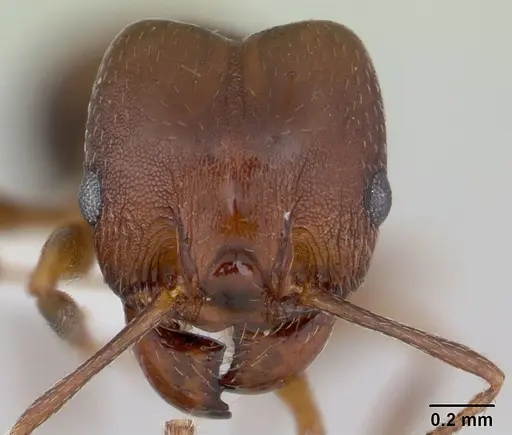
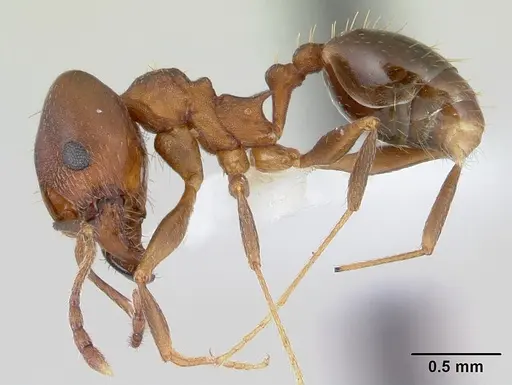
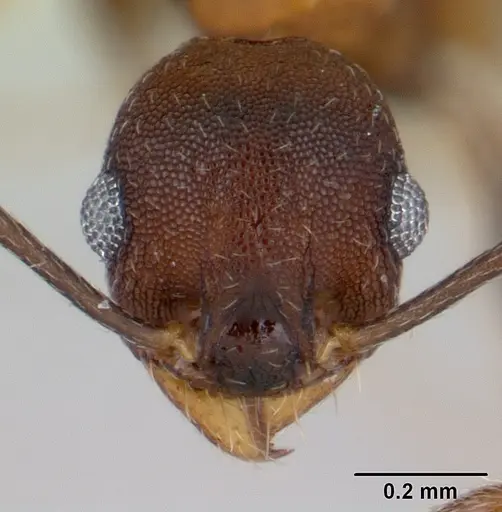
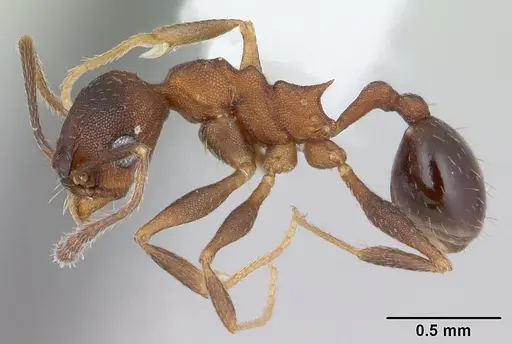
Pheidole cyrtostela is a small Neotropical ant first described by Wilson in 2003 from Brazil. Workers are two sizes: majors (major workers) measure around 0.90mm head width, while minors (minor workers) are much smaller at around 0.42mm head width. The species gets its name 'cyrtostela' (curved column) from its most distinctive feature, a sharply bent petiole that no other Pheidole species shares [1]. Their body is medium yellow with a darker brown abdomen (gaster). This ant nests in soil in grazed cerrado (tropical savanna) habitats across Paraguay, Brazil, and northern Argentina. Workers are attracted to bait, meaning they forage actively on the ground surface. The colony structure is typical of Pheidole, they have major and minor workers, with majors specializing in seed-cracking and defense.
Quick Summary
- Difficulty: Medium
- Origin & Habitat: Native to the Neotropical region, found in Paraguay, Brazil (Mato Grosso, Mato Grosso do Sul), and northern Argentina. They live in grazed cerrado (tropical savanna) and nest directly in soil [1][2].
- Colony Type: Colony structure is unconfirmed for this specific species, but Pheidole colonies typically have a single queen (monogyne). The genus is known for having major and minor worker castes.
- Colony: Monogyne
- Founding: Claustral
- Size & Growth:
- Queen: Unknown, no queen has been described in the original description or subsequent records
- Worker: Major workers: 0.90mm head width,0.92mm body length. Minor workers: 0.42mm head width,0.52mm body length [1]
- Colony: Unknown, no colony size data exists for this species. Based on typical Pheidole patterns, expect several hundred workers at maturity.
- Growth: Unknown, no development data exists. Estimated as moderate based on genus patterns.
- Development: Unknown, no direct measurements exist. Based on related Neotropical Pheidole species, estimate 6-10 weeks at warm temperatures (24-28°C). (Development timeline is estimated from genus-level data since no species-specific research exists.)
- Antkeeping:
- Temperature: Keep at 24-28°C. This species comes from tropical savanna habitats in Brazil and Paraguay, so warmth is important. A heating cable on one side of the nest creates a temperature gradient they can choose between.
- Humidity: Moderate humidity around 50-70%. These are ground-nesting ants from seasonally dry tropical savanna, so they tolerate some dryness but need access to moisture. Keep the nest substrate lightly moist, not waterlogged.
- Diapause: Likely minimal or no true diapause. As a Neotropical species from southern Brazil/Paraguay, they may slow down slightly in cooler months but probably don't require hibernation like temperate species.
- Nesting: Soil-nesting species. In captivity, a naturalistic setup with compact earth or a Y-tong/plaster nest works well. They prefer tight chambers and narrow passages scaled to their tiny size. Avoid tall open spaces.
- Behavior: Workers are ground-foraging and attracted to bait, meaning they actively search for food on the surface. Pheidole ants are known for their major workers (with enlarged heads) that specialize in cracking seeds and defending the colony. These ants are not aggressive toward keepers but majors can deliver a mild sting if handled. Escape prevention should be good, while small, they are not as tiny as some Myrmicinae and standard barriers work well. They are primarily granivorous (seed-eating) but also collect insects and honeydew.
- Common Issues: no specific data exists on this species, much of care is inferred from genus patterns, colony growth may be slow since no development studies exist, wild-caught colonies may carry parasites not yet documented, temperature needs are estimated, not directly studied, founding behavior is unconfirmed, unknown if queen seals herself in or forages during founding
Nest Preferences and Housing
Pheidole cyrtostela is a soil-nesting species found in tropical savanna habitats. In captivity, they do well in naturalistic setups with compact soil or in Y-tong/plaster nests designed for small Myrmicinae. The nest should have tight chambers and narrow passages scaled to their tiny minor workers (around 0.5mm body length). Major workers at about 1mm are larger but still small. Provide a foraging area (outworld) where workers can search for food. Because they nest in soil in the wild, a layer of compact earth or coconut fiber in part of the formicarium gives them natural digging opportunities. Escape prevention should be moderate, they are small but not among the tiniest ants, so standard mesh and barriers work adequately. [1]
Feeding and Diet
Pheidole ants are primarily granivorous, meaning they eat seeds. In the wild, major workers use their enlarged heads to crack open seeds and access the nutritious contents inside. In captivity, offer a variety of small seeds like millet, chia, or grass seeds. They also readily accept protein sources like small insects (fruit flies, pinhead crickets, mealworms) and will collect honeydew or sugar water. Feed seeds constantly available, protein 2-3 times per week, and sugar water or honey as a supplement. Remove uneaten seeds periodically to prevent mold. The major workers will do the heavy lifting of seed-cracking while minor workers handle brood care and foraging. [1]
Temperature and Seasonal Care
As a Neotropical species from Brazil and Paraguay, Pheidole cyrtostela prefers warm conditions around 24-28°C. Their native habitat in the Pantanal and cerrado regions experiences hot summers and mild winters, so they are adapted to warmth. Use a heating cable on one side of the nest to create a temperature gradient, allowing ants to move between warmer and cooler areas. Room temperature (around 22-24°C) may be acceptable, but warmer conditions will support more active foraging and faster colony growth. Regarding diapause: this species likely does not require a true hibernation period. In the cooler months, activity may decrease naturally, but no special overwintering setup is needed unless you notice the colony becoming completely inactive. [2][1]
Colony Structure and Castes
Pheidole cyrtostela exhibits the classic Pheidole worker polymorphism, colonies have two distinct worker castes: major workers (also called soldiers) and minor workers. Major workers have enlarged heads (0.90mm head width) with powerful mandibles for cracking seeds and defending the colony. Minor workers are much smaller (0.42mm head width) and handle most day-to-day tasks like foraging, brood care, and nest maintenance. The species is unique within Pheidole for its sharply bent petiole (the narrow waist segment connecting the thorax and abdomen). The colony structure is typical of the genus, likely a single queen (monogyne) with her brood and a mix of majors and minors. No ergatoid (wingless replacement queen) behavior has been documented for this species. [1]
Frequently Asked Questions
How long does it take for Pheidole cyrtostela to produce first workers?
The exact timeline is unknown since no development studies exist for this species. Based on related Neotropical Pheidole species, expect first workers (nanitics) around 6-10 weeks after the queen lays eggs, assuming warm temperatures around 24-28°C. Be patient, this species may grow slowly since it has limited documentation.
Can I keep multiple Pheidole cyrtostela queens together?
Not recommended. While some Pheidole species can be polygynous (multiple queens), there is no data on this species. Combining unrelated foundress queens carries high risk of fighting and colony failure. Start with a single queen for best success.
What do Pheidole cyrtostela ants eat?
They are primarily seed-eaters like most Pheidole. Offer small seeds (millet, chia, grass seeds) that majors can crack open. They also accept protein (small insects like fruit flies or pinhead crickets) and sugar sources (honey water). Seeds should be constantly available, protein 2-3 times weekly.
Are Pheidole cyrtostela good for beginners?
This species is rated as medium difficulty. While not the most challenging ant, there is very limited specific care information since it was only described in 2003. Expect some trial and error. If you want an easier Pheidole, consider more common species like Pheidole metallescens or Pheidole nodus with better-documented care.
What temperature do Pheidole cyrtostela need?
Keep them warm at 24-28°C. This is a Neotropical species from Brazil and Paraguay where temperatures are consistently warm. A heating cable on part of the nest creates a gradient they can regulate themselves. Room temperature may be acceptable but warmer conditions support better growth.
How big do Pheidole cyrtostela colonies get?
The maximum colony size is unknown, no colony size data exists for this species. Based on typical Pheidole patterns, expect several hundred workers at maturity. They have major and minor castes, so the colony structure is complex but colony size is likely moderate.
Do Pheidole cyrtostela need hibernation?
Probably not. As a Neotropical species from tropical Brazil and Paraguay, they do not experience cold winters that would require diapause. They may slow down slightly in cooler months, but no special overwintering care is needed.
When should I move Pheidole cyrtostela to a formicarium?
Keep them in a founding setup (test tube or small container) until the colony reaches at least 20-30 workers. Once the colony is established and growing, you can move them to a proper formicarium with a foraging area. They are small, so ensure any connections between nest and outworld are not too large.
Why is my Pheidole cyrtostela colony not growing?
Several factors could be involved: temperatures below 24°C slow development, insufficient protein limits brood production, or the colony may be too young. Since this species has limited documentation, growth may naturally be slower than more common ants. Ensure proper warmth, varied diet, and patience.
References

This caresheet is licensed under CC BY-SA 4.0 .
CASENT0178014
View on AntWeb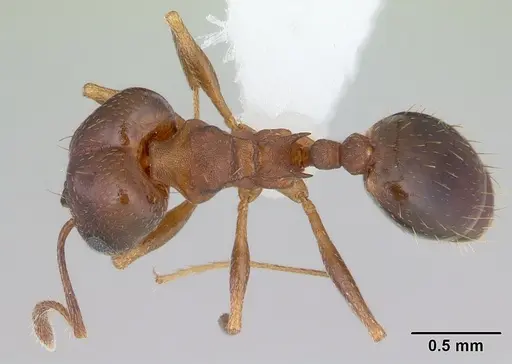
CASENT0178015
View on AntWeb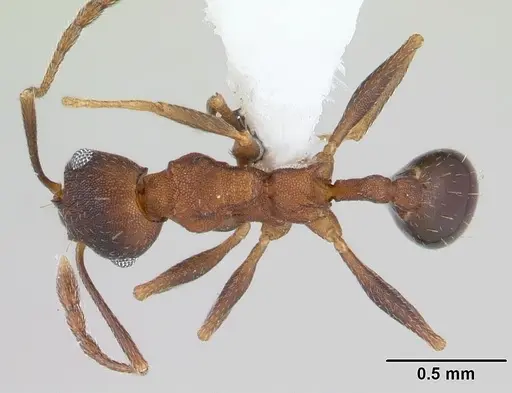
Literature
Loading...Loading products...