

Pheidole colobopsis
- Scientific Name
- Pheidole colobopsis
- Tribe
- Attini
- Subfamily
- Myrmicinae
- Author
- Mann, 1916
- Distribution
- Found in 6 countries
Pheidole colobopsis Overview
Pheidole colobopsis is an ant species of the genus Pheidole. It is primarily documented in 6 countries , including Costa Rica, Guatemala, Honduras. Detailed taxonomic data and occurrence records can be further explored via authoritative databases such as AntWeb or the Global Biodiversity Information Facility (GBIF).
Pheidole colobopsis
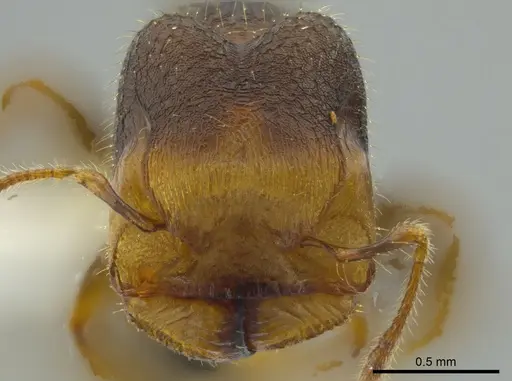
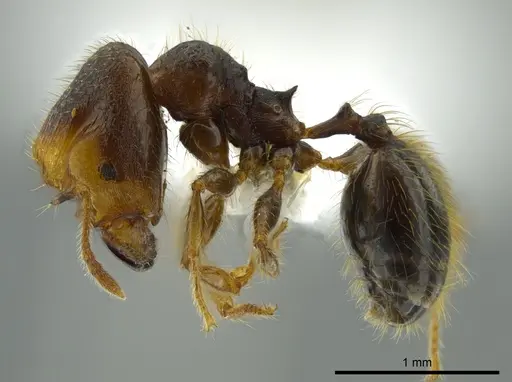
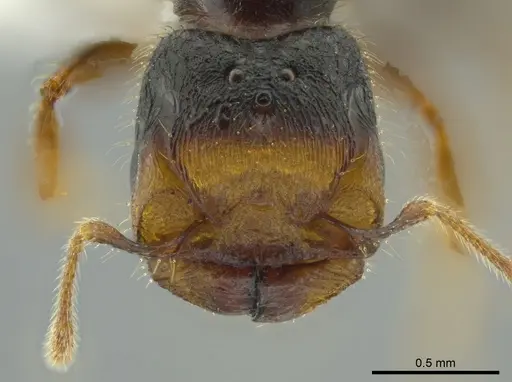
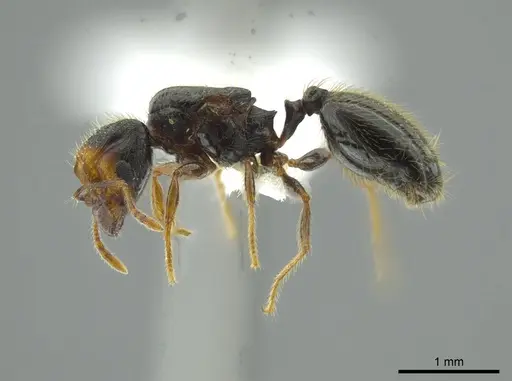
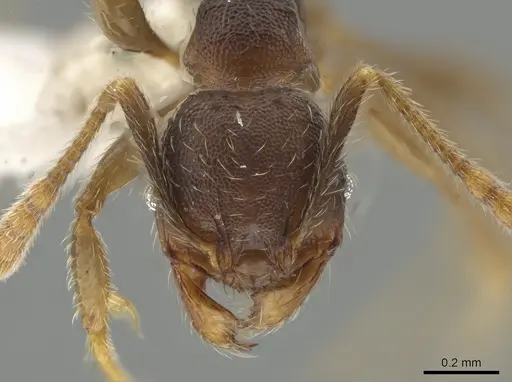
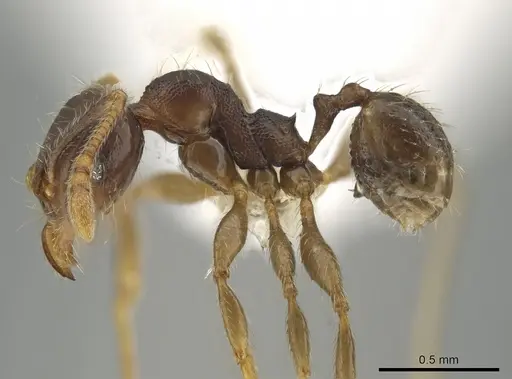
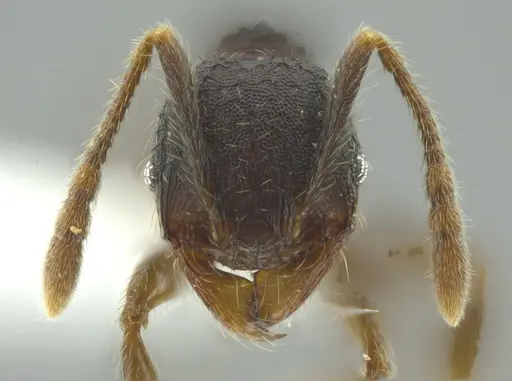
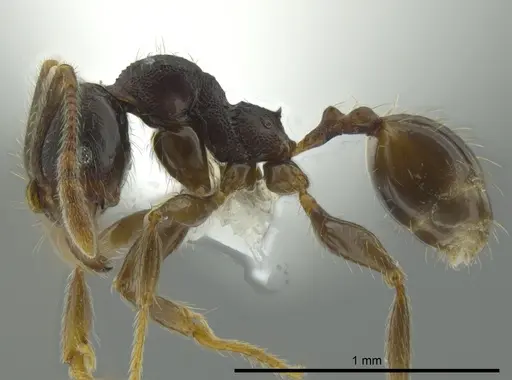
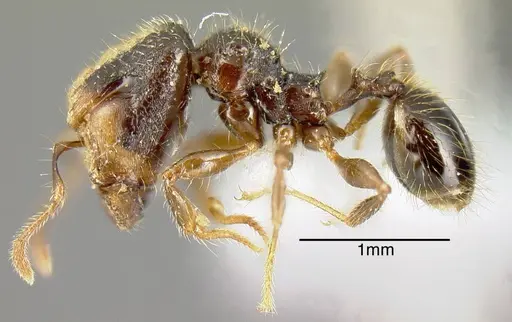
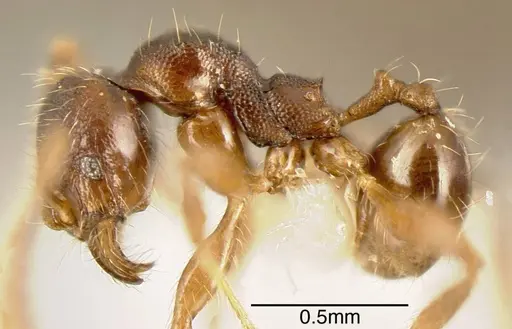
Pheidole colobopsis is a small dimorphic ant native to the Neotropical rainforests, ranging from southern Mexico through Central America to Colombia, Venezuela, Brazil and Peru [1][2]. Workers come in two distinct sizes: tiny minors with heads just over half a millimeter wide, and larger majors sporting a bizarre flattened, truncated head that looks like it has been cut off square at the front [1]. In the wild, colonies nest in clay soil at the base of trees in terra firme rainforest, with one observed nest 12 centimeters deep containing a single queen, five majors, and about 200 minors [2].
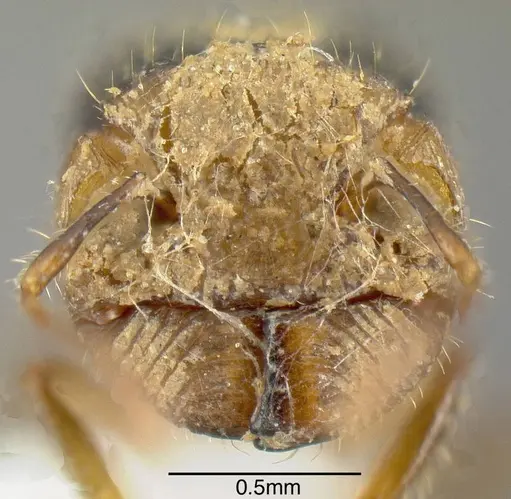
The major workers possess a phragmotic head, the anterior portion incorporating the clypeus and mandibles is flattened and truncated, allowing them to block nest entrances like living doors to defend against intruders [1]. This specialization makes majors primarily sedentary defenders, while the smaller minors handle all foraging and brood care. The majors and minors in some populations show a nearly uniform dark yellow to amber color, though other collections show medium reddish brown tones with yellowish appendages [2][1].
Quick Summary
- Difficulty: Medium
- Origin & Habitat: Neotropical terra firme rainforest, southern Mexico through Central America to northern South America (Colombia, Venezuela, Brazil, Peru) [1][2]
- Colony Type: Single-queen colonies (monogyne) [2]
- Colony: Monogyne
- Founding: Claustral
- Size & Growth:
- Antkeeping:
- Behavior: Defensive majors block nest entrances with their flattened heads, minors forage. High escape risk due to tiny minor size.
- Common Issues: minors are extremely small (0.52mm head width) and can escape through gaps larger than 0.4mm., majors do not forage and rely entirely on minors to bring them food., require consistent warmth, temperatures below 20°C stress the colony., clay soil preference may make them difficult to keep in pure gypsum or plaster nests.
The Phragmotic Major (Living Door)
The major workers of Pheidole colobopsis have a phragmotic head, the front of their head is flattened and truncated, incorporating the clypeus and mandibles into a flat surface that can seal nest entrances [1]. This adaptation allows them to block tunnels like corks, defending the colony against intruders and maintaining nest humidity. In captivity, you may observe majors positioning themselves at nest openings, ready to plug the gap if disturbed.
Unlike the minors, majors do not forage. They are specialized for defense and food storage, relying on minors to bring them prey and sugars. Do not expect majors to hunt or leave the nest, they are sedentary soldiers. When feeding, ensure minors can access the food and transport it to the majors, or place small prey items directly near major workers.
Nest Preferences and Setup
In nature, Pheidole colobopsis nests in clay soil at the base of trees in terra firme rainforest, with nests approximately 12 centimeters deep [2]. For captive colonies, provide a nest with soil or clay-based substrate that holds moisture well. A standard test tube setup with water reservoir and cotton plug works well for founding queens and small colonies up to about 50 workers.
Once the colony grows larger, move them to a formicarium with small chambers and narrow passages scaled to their size. The minors are tiny with a head width of only 0.52mm, so any gap in the nest or outworld will result in escapes [1]. Use tight-fitting lids and fine mesh (less than 0.4mm) for ventilation.
Temperature and Humidity
As a tropical rainforest species, Pheidole colobopsis needs warm, humid conditions. Keep the nest area between 24-28°C with a gentle heat gradient [2]. You can achieve this with a heating cable on one side of the nest placed on top to avoid drying out the water reservoir.
High humidity is essential. Maintain moist substrate similar to the damp clay soil of their natural nests, but ensure adequate ventilation to prevent mold growth. Do not allow temperatures to drop below 20°C for extended periods. They do not require hibernation and remain active year-round.
Feeding and Diet
Like most Pheidole, they are generalist omnivores. Feed small prey items appropriate for the minor workers' tiny size, fruit flies, small springtails, or tiny pieces of mealworm. Provide sugar sources like honey water or sugar water in small droplets.
Majors may accept larger prey pieces, but since they do not forage, ensure minors can transport food to them or place food directly near major workers. Feed small amounts frequently to prevent mold buildup in the humid environment. Remove uneaten food within 24 hours.
Colony Founding and Growth
Founding behavior is unconfirmed, but based on typical Pheidole patterns, queens are likely claustral, sealing themselves in a chamber and living off stored fat reserves until the first workers hatch. Start new queens in a test tube with water reservoir and cotton plug.
First workers (nanitics) should emerge in approximately 6-10 weeks if kept warm at 25-28°C, though this timeline is estimated from related tropical Pheidole species. The colony grows at a moderate pace, with observed wild colonies reaching about 200 workers with a single queen. [2]
Frequently Asked Questions
What is a phragmotic head in Pheidole colobopsis?
It is a flattened, truncated head shape on the major workers where the front looks like it has been cut off square [1]. This allows them to block nest entrances like living doors to defend the colony.
Can I keep Pheidole colobopsis in a test tube?
Yes, test tubes work well for founding colonies and small colonies up to about 50 workers. Use a standard setup with water reservoir and cotton plug.
How long until first workers for Pheidole colobopsis?
Approximately 6-10 weeks at 25-28°C, though this is estimated based on related tropical Pheidole species as direct studies are lacking.
Do Pheidole colobopsis need hibernation?
No, they are a tropical species and remain active year-round. Keep them warm consistently between 24-28°C.
How do I prevent escapes with Pheidole colobopsis?
The minor workers are extremely small with a head width of only 0.52mm and can fit through tiny gaps [1]. Use fine mesh under 0.4mm and apply barrier products like Fluon or talcum powder on all outworld surfaces.
Do the majors forage for food?
No, majors are specialized for defense with their phragmotic heads and do not leave the nest to forage. They rely on minors to bring them food.
How big do Pheidole colobopsis colonies get?
Observed colonies contain around 200 workers, but they may grow larger in captivity, potentially reaching 500 workers based on typical Pheidole growth patterns.
Are Pheidole colobopsis good for beginners?
They are medium difficulty. While they grow at a moderate pace and accept general foods, their tiny size makes escape prevention challenging, and they require consistent tropical temperatures.
What temperature should I keep Pheidole colobopsis?
Keep them warm between 24-28°C, appropriate for their tropical rainforest origin.
Can I keep multiple Pheidole colobopsis queens together?
Not recommended. Wild colonies contain a single queen, suggesting they are monogyne (single-queen) [2]. Combining unrelated queens likely leads to fighting.
References

This caresheet is licensed under CC BY-SA 4.0 .
CASENT0619464
View on AntWeb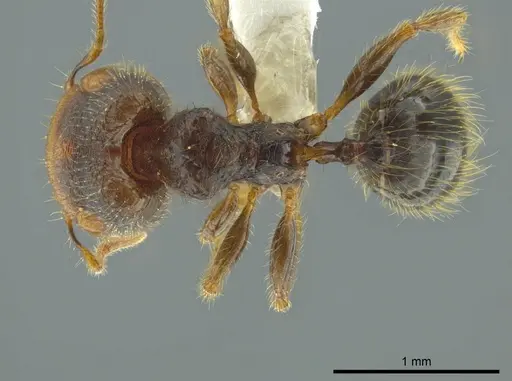
CASENT0619476
View on AntWeb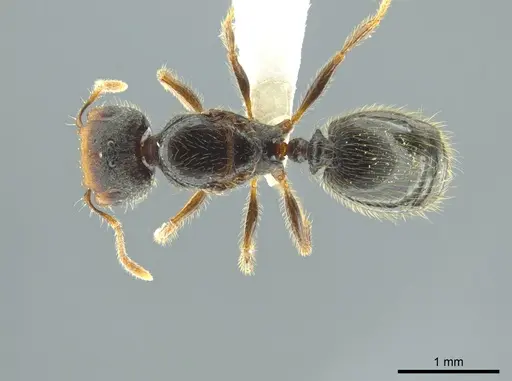
CASENT0619478
View on AntWeb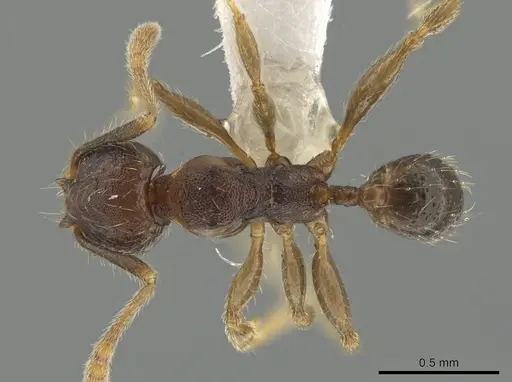
CASENT0619698
View on AntWeb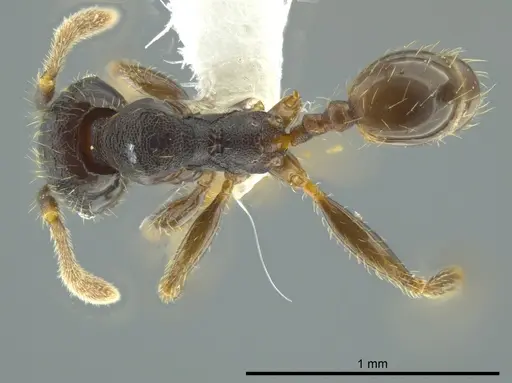
INB0003622456
View on AntWeb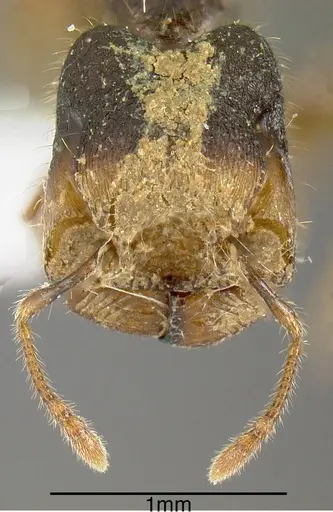
INBIOCRI001282072
View on AntWeb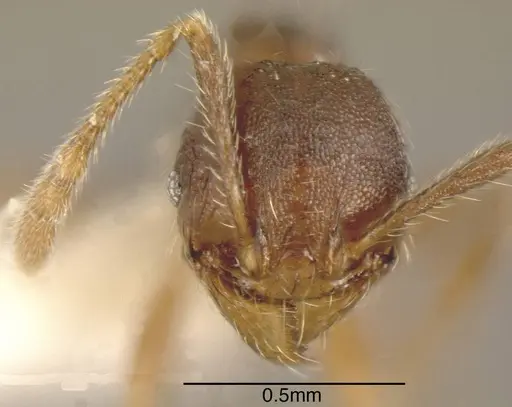
Literature
Loading...Loading products...