

Pheidole cockerelli
- Scientific Name
- Pheidole cockerelli
- Tribe
- Attini
- Subfamily
- Myrmicinae
- Author
- Wheeler, 1908
- Distribution
- Found in 1 countries
Pheidole cockerelli Overview
Pheidole cockerelli is an ant species of the genus Pheidole. It is primarily documented in 1 countries , including United States of America. Detailed taxonomic data and occurrence records can be further explored via authoritative databases such as AntWeb or the Global Biodiversity Information Facility (GBIF).
Pheidole cockerelli
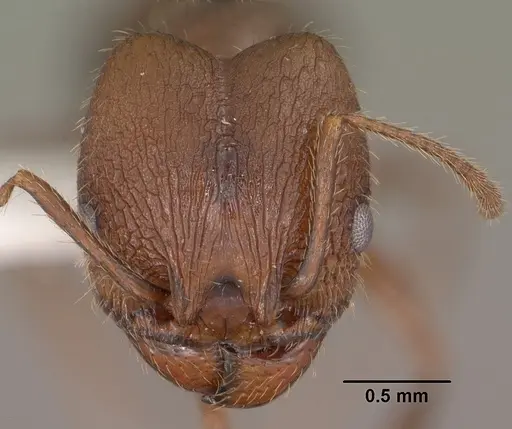
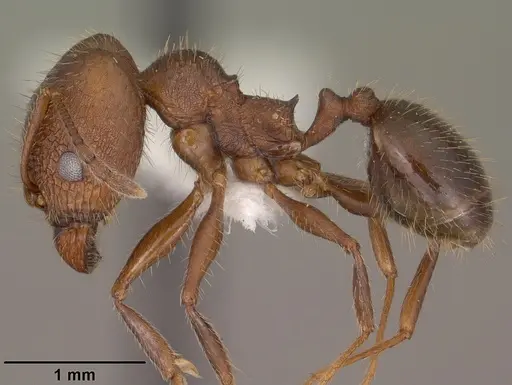
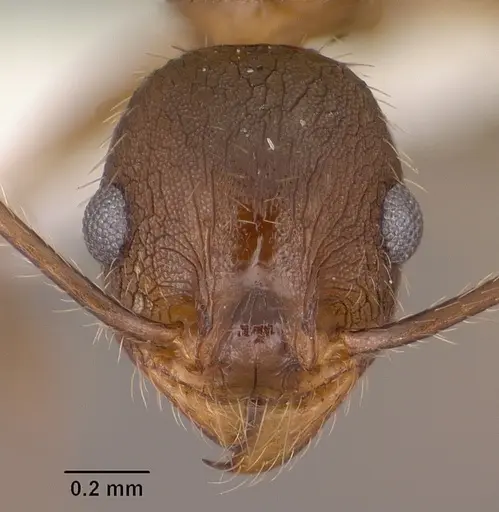
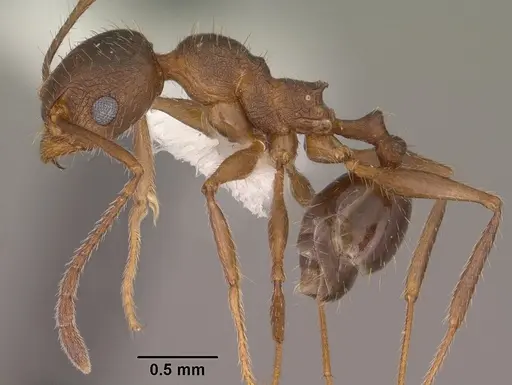
Pheidole cockerelli is a North American big-headed ant known for its strongly polymorphic worker caste, major workers develop large heads with powerful mandibles for seed-crushing and colony defense, while minor workers handle most foraging and brood care. The species belongs to the fallax group and shows distinct coloration: major workers are light reddish brown with a darker brown rear abdomen, while minor workers are yellowish brown. Queens measure around 1.50mm in head length, making them moderate-sized among Pheidole species. This ant is native to the southwestern United States and northern Mexico, where it inhabits desert and grassland ecosystems at elevations between 1460-1900m [1].
What makes P. cockerelli particularly interesting is its adaptation to harsh desert environments. The species nests under rocks in clayey soil and in open ground among grass clumps, often in areas with sparse vegetation. Colonies can reach several thousand workers, and the presence of distinct major and minor castes allows for efficient task division, majors defend the nest and process large food items while minors handle daily foraging and brood care [2].
Quick Summary
- Difficulty: Easy
- Origin & Habitat: Native to the southwestern United States (Oklahoma, Colorado, western Texas, New Mexico, Arizona) and northern Mexico. Found in short-grass prairie, desert grassland, and juniper-oak woodland at elevations of 1460-1900m. Nests under rocks in clayey soil and in open soil among grass clumps[1].
- Colony Type: Monogyne (single-queen colonies). The species has strongly polymorphic workers with distinct major and minor castes [2].
- Colony: Monogyne
- Founding: Claustral
- Size & Growth:
- Queen: Queens approximately 1.50mm HL (head length). Estimated 9-12mm total length.
- Worker: Major workers: HW 1.38mm. Minor workers: HW 0.62mm.
- Colony: Colonies reach several thousand workers typical of Pheidole species. Estimated 2,000-5,000 workers at maturity.
- Growth: Moderate, Pheidole species typically develop major workers within 3-6 months in good conditions.
- Development: 6-10 weeks at optimal temperature (25-28°C). This is estimated based on typical Pheidole development patterns. (Development time varies with temperature. Major workers (soldiers) appear after the colony is established with several hundred workers. Nanitics are smaller than normal minor workers.)
- Antkeeping:
- Temperature: Keep nest area at 25-28°C. This species tolerates warmer conditions given its desert origin. A heating cable on one side of the nest creates a temperature gradient allowing ants to self-regulate. Room temperature (20-24°C) is acceptable but will slow development.
- Humidity: Low to moderate. Provide a dry outworld and a moist nest chamber. Desert species prefer drier conditions, aim for 30-50% humidity in the nest, with a water tube for drinking access. Avoid constant dampness.
- Diapause: Yes. This species experiences winter dormancy in its native range (Colorado at 1700-1900m). Reduce temperature to 10-15°C for 3-4 months (November-February) to simulate natural seasonal cycle. Do not feed during diapause.
- Nesting: Y-tong (acrylic) nests work well, or a plaster/soil nest that allows for some dryness. Provide a dry outworld for foraging. Test tube setups are suitable for founding colonies. Avoid overly humid conditions, this is a desert species.
- Behavior: Temperament varies by caste, minor workers are docile and avoid confrontation, while major workers will defend the colony aggressively if threatened. Foraging is primarily done by minor workers, who gather seeds, insects, and honeydew. Major workers stay near the nest and process larger food items. Escape risk is moderate, minor workers are small (2-3mm) but majors are larger. Standard escape prevention (fluon on edges) is sufficient. This species is not aggressive toward humans and rarely stings.
- Common Issues: overheating, desert species can tolerate heat but not direct sunlight or temperatures above 35°C, excessive humidity, too much moisture causes fungal growth and colony decline, colonies may fail if majors appear before the colony is strong enough to support them, wild-caught colonies may have parasites that kill them in captivity, slow founding phase, queens may take 2-3 months to produce first workers
Housing and Nest Setup
Pheidole cockerelli does well in Y-tong (acrylic) nests or plaster nests with dry to moderately moist conditions. For founding colonies, a simple test tube setup works well, fill one end with water, plug with cotton, and place the queen in the dry portion. Once the colony reaches 50+ workers, you can move them to a formicarium. The outworld should be dry with a water source (test tube with cotton) for drinking. Because this is a desert species, avoid setups that stay constantly humid. A layer of substrate (sand or soil mix) in the outworld allows minors to forage naturally. Escape prevention: use fluon on the edges of the formicarium, minor workers can climb smooth surfaces but are not strong climbers like some species. [2][1]
Feeding and Diet
Pheidole cockerelli is omnivorous with a preference for protein-rich foods. In captivity, they readily accept protein sources like mealworms, small crickets, fruit flies, and other small insects. Seeds are also appreciated, their major workers have specialized mandibles for seed processing. Offer a mix of protein (2-3 times per week for established colonies) and sugar sources (honey water, sugar water, or occasional fruit). Minor workers will collect most food, then majors will process larger items. Remove uneaten protein within 24-48 hours to prevent mold. A constant sugar water supply is recommended once workers are present.
Temperature and Seasonal Care
This desert species prefers warmer temperatures. Keep the nest area at 25-28°C for optimal brood development. A small heating cable on one side of the nest creates a gradient, ants will move to their preferred temperature. During summer (peak activity), room temperature is usually sufficient. In winter, you must simulate diapause: reduce temperature to 10-15°C from November through February. This matches their natural cycle in Colorado and high-elevation Arizona habitats. During diapause, stop feeding entirely and minimize disturbance. Do not feed during the cold period as ants cannot digest food properly. Return to warm conditions gradually in spring. [1]
Colony Development and Castes
One of the fascinating aspects of P. cockerelli is the strongly polymorphic worker caste. Minor workers (2-3mm) handle most tasks: foraging, brood care, and nest maintenance. Major workers (5-7mm) develop larger heads with powerful mandibles, they specialize in seed processing, defending the colony, and cracking hard food items. The first workers (nanitics) are smaller than normal minors and the colony may not produce majors until it reaches several hundred workers. This is normal, the colony invests in workers first before producing the more energetically expensive major caste. A mature colony will have a ratio of roughly 10-20 majors per 100 minors. [2][1]
Behavior and Defense
Minor workers are docile and focused on foraging. They will retreat from threats rather than engage. Major workers, however, will aggressively defend the nest if disturbed. They can deliver a mild sting, though most keepers report minimal pain. The species is not particularly aggressive toward humans and rarely attempts to escape aggressively. Minor workers are active foragers and will explore the outworld, but standard escape prevention with fluon is adequate. The colony maintains a clean nest and does not produce excessive waste, this makes them relatively low-maintenance once established.
Frequently Asked Questions
How long does it take for Pheidole cockerelli to produce first workers?
Expect 6-10 weeks from egg to first worker at 25-28°C. The claustral queen seals herself in and raises the first brood alone. First workers (nanitics) are smaller than normal minors. The colony will grow slowly at first, patience is key.
What do I feed Pheidole cockerelli?
Offer a varied diet: protein sources like mealworms, small crickets, or fruit flies 2-3 times per week, plus constant access to sugar water or honey. They also accept seeds. Remove uneaten protein within 24-48 hours to prevent mold.
Do Pheidole cockerelli need hibernation?
Yes. This species requires a winter dormancy period of 3-4 months (roughly November-February). Reduce temperature to 10-15°C and stop feeding during this period. This mimics their natural cycle in high-elevation desert habitats.
How big do Pheidole cockerelli colonies get?
Mature colonies reach several thousand workers. The presence of major workers (soldiers) becomes noticeable once the colony reaches several hundred workers. This is a moderately large species for the antkeeping hobby.
Can I keep multiple Pheidole cockerelli queens together?
No. This is a monogyne species, colonies have a single queen. Combining unrelated queens will result in fighting. Only keep one queen per colony.
What is the best nest type for Pheidole cockerelli?
Y-tong (acrylic) nests or plaster nests work well. This desert species prefers drier conditions than tropical ants. Provide a moist nest chamber but avoid constant dampness. Test tubes are suitable for founding colonies.
Are Pheidole cockerelli good for beginners?
Yes. They are relatively easy to care for, tolerate a range of temperatures, and are not aggressive. The main challenges are their slow founding phase and the need for winter diapause. They are a good choice for someone wanting to try Pheidole species.
Why are my major workers dying?
Some mortality among majors is normal as they age. However, if you see many majors dying, it could indicate the colony is stressed, check humidity levels (avoid too much moisture), ensure food is adequate, and verify temperature is in the optimal range. Major workers have shorter lifespans than minors.
When will my colony produce major workers?
Majors typically appear once the colony reaches several hundred workers (usually 3-6 months after founding). The colony must be nutritionally stable before investing in the energetically expensive major caste. Be patient, early majors are a sign of a healthy, growing colony.
References

This caresheet is licensed under CC BY-SA 4.0 .
CASENT0102872
View on AntWeb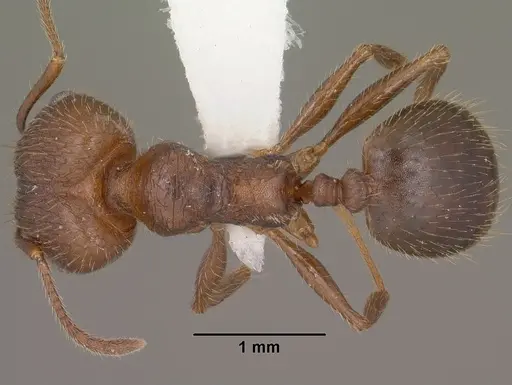
CASENT0102873
View on AntWeb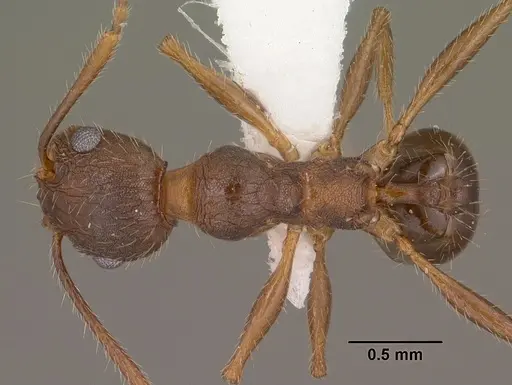
Literature
Loading...Loading products...