

Pheidole chalca
- Scientific Name
- Pheidole chalca
- Tribe
- Attini
- Subfamily
- Myrmicinae
- Author
- Wheeler, 1914
- Distribution
- Found in 1 countries
Pheidole chalca Overview
Pheidole chalca is an ant species of the genus Pheidole. It is primarily documented in 1 countries , including Mexico. Detailed taxonomic data and occurrence records can be further explored via authoritative databases such as AntWeb or the Global Biodiversity Information Facility (GBIF).
Pheidole chalca
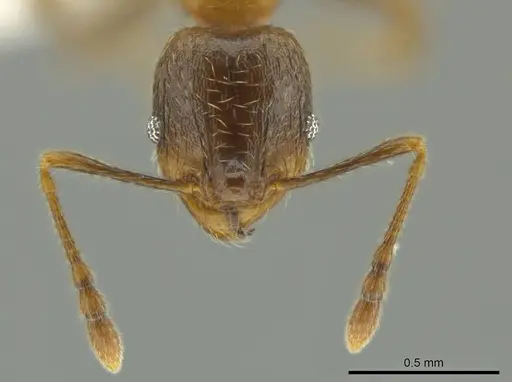
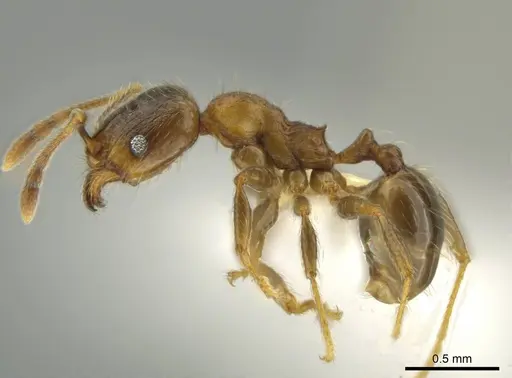
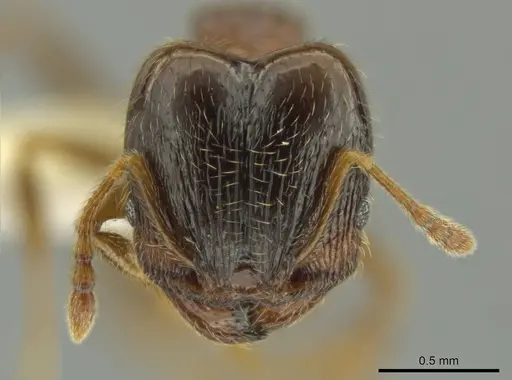
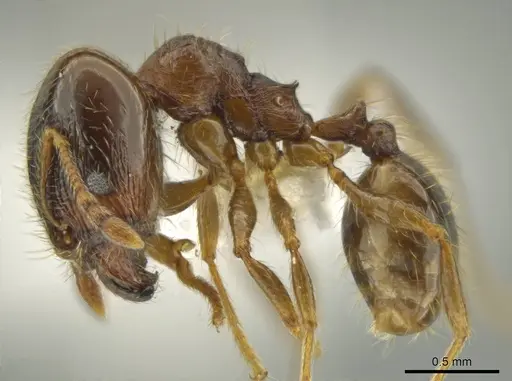
Pheidole chalca is a small to medium-sized ant belonging to the genus Pheidole, known for their distinctive polymorphic caste system with major (soldier) and minor workers. The major workers have a square head with a smooth, shiny posterior third, while the minor workers have a smooth, shiny pronotum. Coloration is bicolorous in majors, the anterior third of the head and occiput are yellow, while the remainder of the head is brown. The body is yellowish to light brown, with light yellow appendages. Minors are brownish yellow throughout. This species is endemic to central Mexico, found only in Hidalgo, Veracruz, Puebla, and Tlaxcala states at high elevations between 1700-2900m[1].
Quick Summary
- Difficulty: Easy
- Origin & Habitat: Central Mexico (Hidalgo, Veracruz, Puebla, Tlaxcala) in oak-pine woodland and pine forest at 2600-2900m elevation. Nests are found under stones or in chambers dug about 15cm below the surface in dense clay soil[1].
- Colony Type: Likely monogyne (single queen colony), typical for most Pheidole species. No documented polygyny or ergatoid replacement reproductives for this specific species.
- Colony: Monogyne
- Founding: Claustral
- Size & Growth:
- Queen: Undescribed in available literature, estimate 7-9mm based on genus patterns for small Pheidole species
- Worker: Major workers: HW 1.04mm, HL 1.24mm. Minor workers: HW 0.52mm, HL 0.60mm
- Colony: Unknown for this species, typical Pheidole colonies reach several hundred to a few thousand workers
- Growth: Moderate, typical for montane Pheidole species
- Development: Estimated 6-10 weeks at optimal temperature based on genus patterns for small Pheidole species (Development time is inferred from related Pheidole species. Montane origin suggests slightly slower development than tropical relatives.)
- Antkeeping:
- Temperature: Keep at 18-22°C, this is a montane species from high elevations (2700-2900m) in central Mexico, so they prefer cooler conditions than most ants. Avoid temperatures above 25°C [1].
- Humidity: Moderate humidity around 50-60%. Found in pine forest and oak-pine woodland, not in extremely wet or dry habitats. Keep nest substrate lightly moist but not waterlogged.
- Diapause: Yes, as a montane species from central Mexico, they likely require a winter rest period. Provide 2-3 months of reduced temperatures (10-15°C) during winter months.
- Nesting: Use a naturalistic setup with soil substrate or a Y-tong/plaster nest. They naturally nest under stones or in underground chambers in clay soil. Provide some dry areas within the nest for workers to regulate moisture exposure.
- Behavior: Workers are active foragers that search along trails. They are not particularly aggressive but will defend their nest. Major workers serve as soldiers and help process larger prey. These ants are ground-nesting and likely good climbers, so use standard escape prevention. Their small size (minors are only ~0.5mm) means escape prevention should be adequate, fine mesh barriers recommended.
- Common Issues: high elevation species means they do poorly in warm conditions, keep cool, small minor workers (0.5mm) can escape through standard mesh, use fine mesh or fluon barriers, colonies may be slow to establish due to montane origin, patience required, winter diapause is likely required, skipping hibernation may weaken colonies over time, limited distribution means wild colonies are rare in the hobby, may be difficult to acquire
Nest Preferences
In the wild, Pheidole chalca nests under stones or digs chambers about 15cm below the surface in dense clay soil. They have been found in both oak-pine woodland at lower elevations (~1700m) and pine forest at higher elevations (2700-2900m). For captive colonies, a naturalistic setup with a soil substrate works well, allowing them to dig their own chambers. Alternatively, a Y-tong (acrylic) nest with narrow chambers scaled to their small size is suitable. Provide a moisture reservoir or regular misting to maintain moderate humidity. Include some flat stones or surfaces in the outworld to simulate their natural under-stone nesting sites. [1]
Feeding and Diet
Pheidole species are generalist omnivores that accept both protein and carbohydrate sources. Workers forage along trails and will collect small insects, honeydew, and nectar. In captivity, offer protein sources like small crickets, mealworms, fruit flies, or other small insects twice weekly. Sugar sources like honey water or sugar water should be available constantly. The major workers help process larger prey items that the smaller minors cannot handle alone. Fresh water should always be available.
Temperature and Seasonal Care
This is a montane species from high elevations in central Mexico, so temperature management is crucial. Keep the nest area at 18-22°C, avoid temperatures above 25°C which can stress these ants. During winter months (roughly November-February in the Northern Hemisphere), provide a diapause period at 10-15°C. This simulates their natural seasonal cycle in the cool Mexican highlands. Do not feed during deep hibernation but ensure some moisture is available. Return to normal temperatures gradually in spring to trigger renewed activity and brood development. [1]
Behavior and Colony Structure
Pheidole chalca has the classic Pheidole polymorphic caste system with distinct major and minor workers. Major workers have the characteristic large, square head and serve as soldiers and food processors. Minor workers handle most forager and nursing tasks. Colonies are founded by a single claustral queen who seals herself in a chamber and raises the first brood (nanitic workers) entirely on her stored fat reserves. Once the first majors appear, the colony enters a growth phase. Workers forage in visible trails, making them active and engaging to watch. They are not overly aggressive but will readily defend the nest.
Frequently Asked Questions
How long does it take for Pheidole chalca to raise first workers?
Expect first workers (nanitics) to emerge in 6-10 weeks after the queen lays eggs, assuming optimal temperature around 20°C. This is an estimate based on related small Pheidole species since specific development data for P. chalca is not available.
What temperature do Pheidole chalca ants need?
Keep them cool compared to most ants, aim for 18-22°C. This is a montane species from high elevations in central Mexico, so they do not tolerate heat well. Avoid temperatures above 25°C.
Do Pheidole chalca ants need hibernation?
Yes, they likely require a winter diapause period. As a montane species from 2700-2900m elevation in central Mexico, they are adapted to seasonal temperature changes. Provide 2-3 months at 10-15°C during winter.
How big do Pheidole chalca colonies get?
Specific colony size data is not available for this species, but typical small Pheidole species reach several hundred to a few thousand workers. Growth is moderate, expect several months to a year before the colony reaches 100 workers.
What do Pheidole chalca ants eat?
They are generalist omnivores. Offer small insects (crickets, mealworms, fruit flies) as protein twice weekly, and keep sugar water or honey water available at all times. They also forage for honeydew in the wild.
Can I keep multiple Pheidole chalca queens together?
Pheidole chalca is likely monogyne (single queen colony) like most Pheidole species. Combining unrelated queens is not recommended as they will likely fight. Only one queen per colony is standard practice.
Are Pheidole chalca ants good for beginners?
Yes, they are considered an easy species to keep. They are not aggressive, tolerate moderate humidity, and have straightforward feeding requirements. The main challenge is providing cooler temperatures than most tropical ants and ensuring proper winter diapause.
What size nest does Pheidole chalca need?
Start with a test tube setup for the founding queen. Once the colony reaches 20-30 workers, you can move them to a small Y-tong or naturalistic formicarium with soil. They naturally nest under stones or in underground chambers, so a setup with some soil depth works well.
Why are my Pheidole chalca workers dying?
The most common cause is overheating, this is a cool-adapted montane species that does poorly in warm conditions. Check that your setup is not above 25°C. Other possibilities include low humidity, lack of protein food, or stress from too frequent disturbances.
References

This caresheet is licensed under CC BY-SA 4.0 .
CASENT0631888
View on AntWeb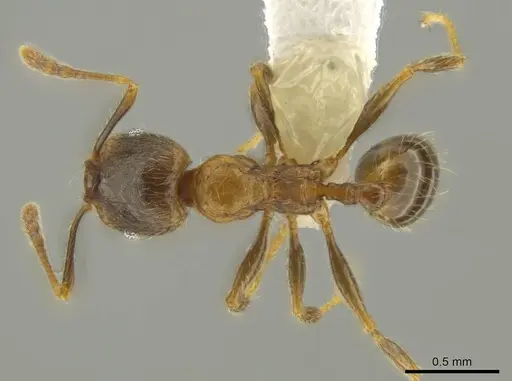
CASENT0631889
View on AntWeb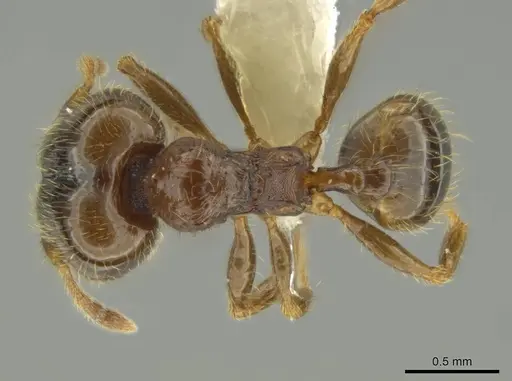
Literature
Loading...Loading products...