

Pheidole cervicornis
- Scientific Name
- Pheidole cervicornis
- Tribe
- Attini
- Subfamily
- Myrmicinae
- Author
- Emery, 1900
- Distribution
- Found in 2 countries
Pheidole cervicornis Overview
Pheidole cervicornis is an ant species of the genus Pheidole. It is primarily documented in 2 countries , including Indonesia, Papua New Guinea. Detailed taxonomic data and occurrence records can be further explored via authoritative databases such as AntWeb or the Global Biodiversity Information Facility (GBIF).
Pheidole cervicornis
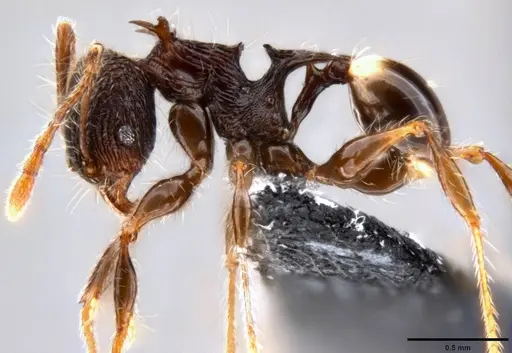
Pheidole cervicornis is a small, spinescent ant species native to New Guinea and far northern Queensland, Australia. Minor workers measure just 0.58-0.64mm in head width and are instantly recognizable by their extraordinarily long bifurcated pronotal spines, the only member of the cervicornis group with this feature [1]. Their dark reddish-brown bodies feature a striking contrasting white spot on the first gastral tergite (though some eastern populations lack this marking) [1]. These ants are ground-nesting specialists found at elevations of 30-800m along the northern coast of New Guinea, making them the lowest-dwelling member of their group [1]. Unlike their relatives, P. cervicornis shows remarkable tolerance for disturbed habitats, being the most widely collected species in the group and found in secondary forest edges [1]. The major worker caste remains unknown, with only minor workers described in scientific literature [1].
Quick Summary
- Difficulty: Medium
- Origin & Habitat: New Guinea (northern coast) and far northern Queensland, Australia. Found in lowland tropical forests at 30-800m elevation, often in disturbed and secondary forest habitats [1][2].
- Colony Type: Colony structure is unconfirmed. Pheidole species are typically single-queen (monogyne) colonies, but this has not been documented for P. cervicornis specifically.
- Size & Growth:
- Queen: Unknown, the queen caste has not been described in scientific literature [1].
- Worker: Minor workers: 0.58-0.64mm head width,0.58-0.67mm head length [1].
- Colony: Unknown for this species. Related Pheidole species typically reach several hundred to a few thousand workers.
- Growth: Unknown, no development data exists for this species. Based on typical Pheidole patterns, expect moderate growth.
- Development: Estimated 6-8 weeks based on typical Pheidole genus development at optimal tropical temperatures. (No specific development data exists for P. cervicornis. Temperature range of 24-28°C is recommended based on their lowland tropical origin.)
- Antkeeping:
- Temperature: Keep at 24-28°C. As a lowland tropical species from New Guinea, they require warm, stable conditions year-round [1]. A heating cable on one side of the nest can create a gentle gradient.
- Humidity: Moderate to high humidity (60-80%). Their natural habitat in leaf litter and rotting logs suggests they prefer damp substrate conditions. Keep the nest substrate consistently moist but not waterlogged.
- Diapause: No, being a tropical species, they do not require hibernation. Maintain warm conditions year-round.
- Nesting: In captivity, they do well in test tubes (for founding) transitioning to Y-tong or plaster nests with narrow chambers scaled to their tiny size. In the wild they nest beneath stones, in rotting logs, and leaf litter [1].
- Behavior: Minor workers are small but active foragers. Pheidole species are not aggressive toward keepers but will defend their colony vigorously. They are ground-nesting and likely prefer to forage on the substrate surface. Their very small size (under 1mm) means escape prevention must be excellent, they can squeeze through remarkably tiny gaps. Major workers, if produced in captivity, would be larger and more robust.
- Common Issues: escape prevention is critical due to their tiny size, use fine mesh and tight-fitting barriers, colony size is unknown so growth expectations are uncertain, queen caste is undescribed, founding behavior is unconfirmed, tropical species requires year-round warmth, room temperature may be insufficient in cooler climates, no specific diet data exists for this species, offer varied protein sources and monitor acceptance
Appearance and Identification
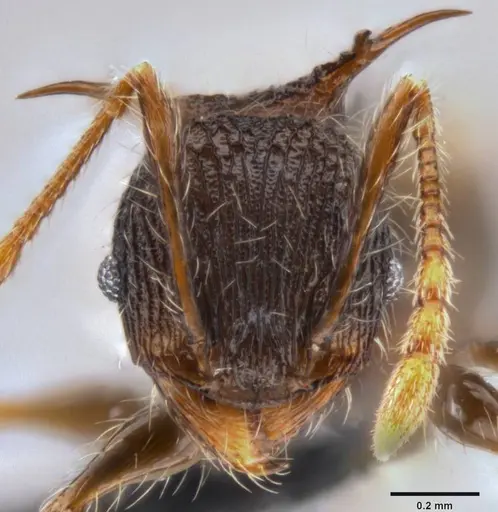
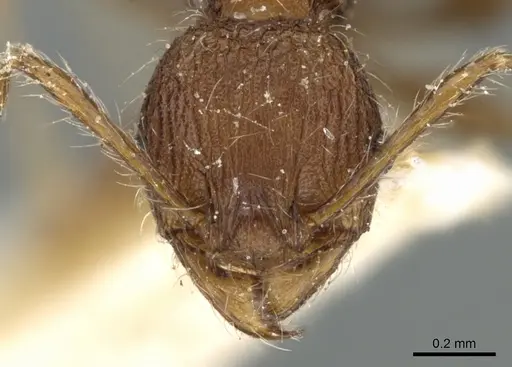
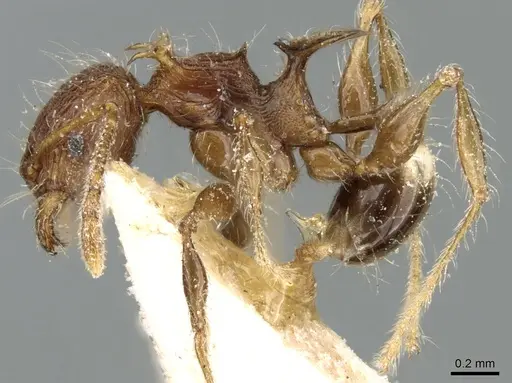
Pheidole cervicornis is one of the most visually striking small ants you can keep. Minor workers reach just 0.58-0.64mm in head width, making them among the smaller ants in the hobby [1]. Their most distinctive feature is the pair of extremely long bifurcated pronotal spines, two prongs pointing forward from the thorax that make them instantly recognizable [1]. The propodeal spines are also modified into distinctive forked structures with elongated concavities on their dorsal surfaces [1]. Color varies by population: western New Guinea specimens are dark reddish-brown with a bold white spot on the first abdominal segment, while eastern populations are lighter and lack this contrasting mark [1]. The head is more circular compared to relatives (cephalic index 94-101), and the entire body has a sculpted, matte appearance from the thick crenulated rugulae covering the head and mesosoma [1]. The major worker caste remains unknown to science, so you may never see major workers in captivity, this is unusual among Pheidole species where majors are typically prominent [1].
Natural History and Distribution
Pheidole cervicornis is endemic to the Australasian region, found along the northern coast of New Guinea and into far northern Queensland, Australia [1][2]. They occupy the lowest elevation range of any species in the cervicornis group, found from just 30 meters up to 800 meters above sea level [1]. This makes them a true lowland tropical species. Unlike many ant species that require pristine forest, P. cervicornis shows remarkable tolerance for disturbed habitats, it's the most widely collected species in its group partly because it thrives in secondary forest and edge habitats [1]. In the wild, they nest beneath stones, in rotting logs, in leaf litter, and as ground foragers [1]. This adaptability to disturbed areas suggests they can tolerate some variation in captive conditions, though you should still provide appropriate warmth and humidity.
Housing and Nest Setup
For such tiny ants, appropriate housing is critical. Start colonies in test tubes with a water reservoir, the small chambers prevent minor workers from getting lost or drowning [1]. Once the colony reaches 20-30 workers, consider transitioning to a Y-tong (acrylic) nest or plaster nest with very small chambers and narrow passages scaled to their minute size. The chambers should be tight enough that workers can touch the walls on both sides while walking. Provide a shallow outworld for foraging, these ants are too small to use standard foraging areas effectively. Escape prevention cannot be overstated: because workers are under 1mm, they can squeeze through gaps that seem impossible. Use fluon on container rims, fine mesh (at least 0.5mm or smaller), and check seals regularly. A humidity reservoir in the nest helps maintain the damp conditions they prefer from their leaf-litter origins.
Feeding and Diet
Specific feeding data for P. cervicornis does not exist in scientific literature, but like other Pheidole species, they are likely omnivorous with a preference for protein. Offer small protein sources: fruit flies, pinhead crickets (very small pieces), bloodworms, and commercial ant jelly. They will likely accept sugar water or honey as an energy source, though some tropical Pheidole species prefer honeydew. Feed small amounts every 2-3 days and remove uneaten food to prevent mold. Because they are so small, prey items must be appropriately sized, what seems tiny to you is actually large to these ants. Observe what your colony accepts and adjust accordingly. A varied diet helps ensure proper nutrition for brood development.
Temperature and Seasonal Care
As a lowland tropical species from New Guinea, P. cervicornis requires warm conditions year-round. Maintain temperatures between 24-28°C (75-82°F) [1]. Unlike temperate species, they do not enter diapause or hibernation, keeping them cool will slow or stop brood development and may weaken the colony. Use a heating cable on one side of the nest to create a gentle temperature gradient, allowing workers to self-regulate by moving between warmer and cooler areas. Place the heating on top of the nest rather than underneath to avoid drying out the substrate too quickly. Room temperature may be insufficient in cooler climates or air-conditioned spaces, so monitor with a thermometer. Consistent warmth is more important than exact precision.
Colony Development Expectations
Because the queen caste remains undescribed in scientific literature, starting a colony from a wild-caught queen may be challenging or impossible [1]. If you obtain a colony, expect slow initial growth typical of Pheidole species, the first workers (nanitics) may take 6-8 weeks to develop, then growth accelerates as more workers are produced. The colony will likely remain relatively small compared to larger Pheidole species, potentially reaching a few hundred workers. You may never see major workers since this caste has never been documented, the colony will function with only minor workers. Patience is key: small colonies can take months to establish, and disturbing them too often during founding can cause queen abandonment or colony failure.
Frequently Asked Questions
How long does it take for Pheidole cervicornis to produce first workers?
Specific development data does not exist for this species. Based on typical Pheidole genus patterns, expect 6-8 weeks from egg to first worker at optimal tropical temperatures (24-28°C). Growth is likely slower than larger Pheidole species due to their tiny size.
What do Pheidole cervicornis ants eat?
Like other Pheidole species, they likely accept small protein sources (fruit flies, tiny crickets, bloodworms) and sugar sources (honey water, sugar water). Start with small prey items appropriately sized for their minute workers and observe what they accept.
Do Pheidole cervicornis ants need hibernation?
No. Being a lowland tropical species from New Guinea, they do not require hibernation. Keep them warm year-round at 24-28°C. Cool temperatures will slow development and may harm the colony.
Are Pheidole cervicornis good for beginners?
This species is best suited for intermediate antkeepers. While they are tolerant of disturbed habitats in the wild, their tiny size makes escape prevention critical, and the lack of documented care information means you may encounter unexpected challenges. Their unusual biology (unknown queen caste) also adds uncertainty.
How big do Pheidole cervicornis colonies get?
Colony size is not documented for this species. Based on related Pheidole species, they will likely reach several hundred to perhaps a few thousand workers. The absence of a known major worker caste means colonies may remain smaller than typical Pheidole species.
Can I keep multiple Pheidole cervicornis queens together?
This has not been documented. Pheidole species are typically single-queen (monogyne) colonies. Without specific data on P. cervicornis, do not attempt to combine unrelated queens, they likely will fight.
What size nest do Pheidole cervicornis need?
Use very small chambers and narrow passages scaled to their tiny size (workers are under 1mm). Test tubes work for founding colonies. For established colonies, Y-tong nests or plaster nests with miniature chambers work well. The key is tight spaces that prevent workers from wandering too far from the queen and brood.
Why are my Pheidole cervicornis dying?
Common causes include: escape through tiny gaps (check your barriers), temperatures below 24°C (they need warmth), too dry conditions (keep substrate moist), or inadequate protein (offer varied small prey). Also ensure they are not being overfed, excess food mold can be deadly.
When should I move Pheidole cervicornis to a formicarium?
Wait until the colony has at least 20-30 workers and is actively foraging in the outworld. Moving too early stresses the colony. The transition should be gradual, connect the test tube to the formicarium and let them move on their own schedule.
References

This caresheet is licensed under CC BY-SA 4.0 .
CASENT0199287
View on AntWeb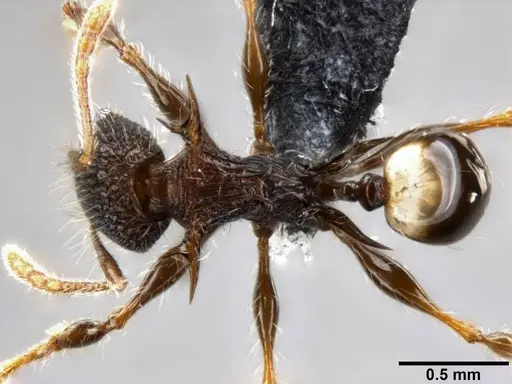
CASENT0906634
View on AntWeb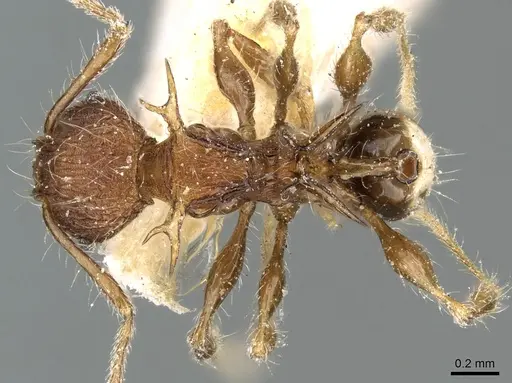
Literature
Loading...Loading products...