

Pheidole bufo
- Scientific Name
- Pheidole bufo
- Tribe
- Attini
- Subfamily
- Myrmicinae
- Author
- Wilson, 2003
- Distribution
- Found in 2 countries
Pheidole bufo Overview
Pheidole bufo is an ant species of the genus Pheidole. It is primarily documented in 2 countries , including Brazil, French Guiana. Detailed taxonomic data and occurrence records can be further explored via authoritative databases such as AntWeb or the Global Biodiversity Information Facility (GBIF).
Pheidole bufo
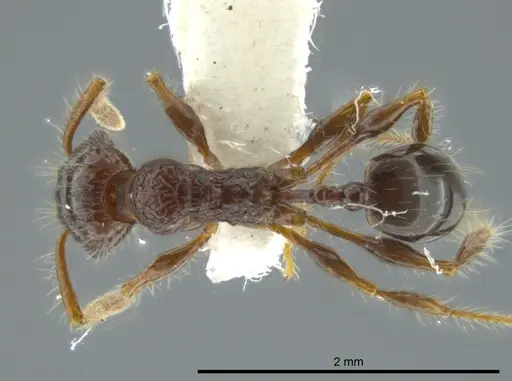
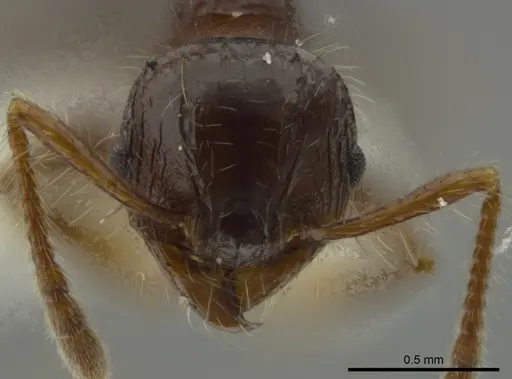
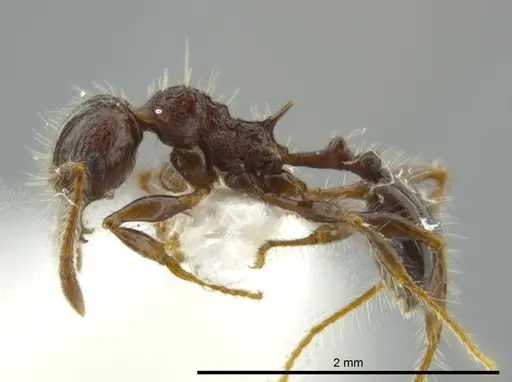
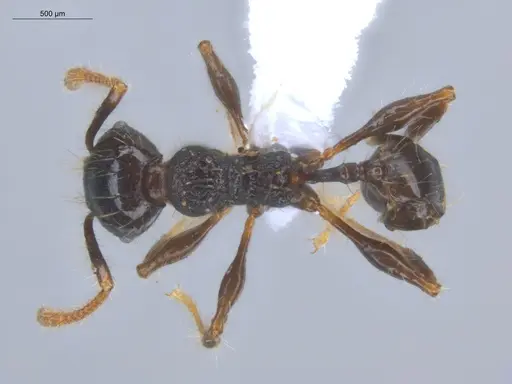
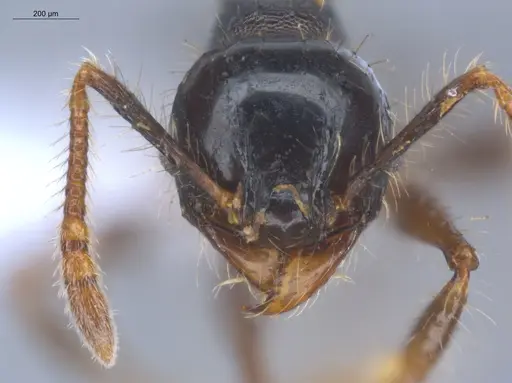
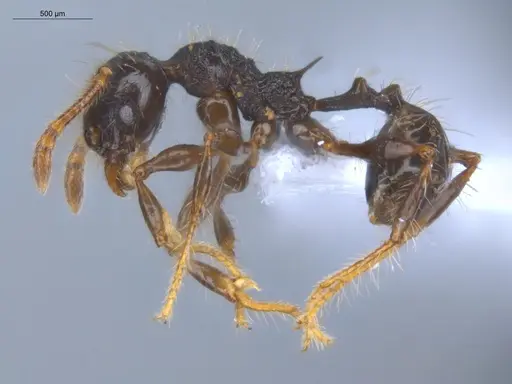
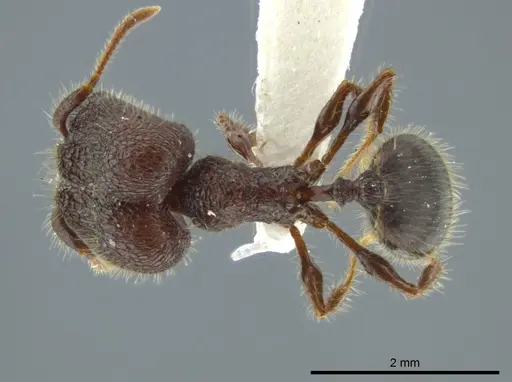
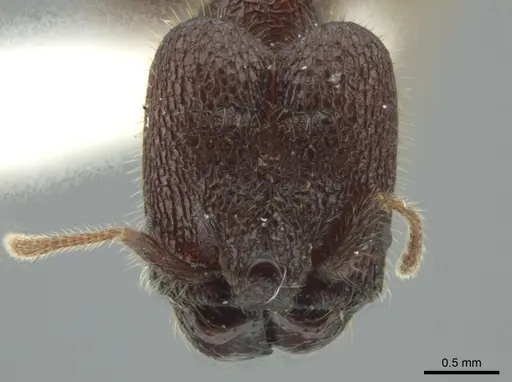
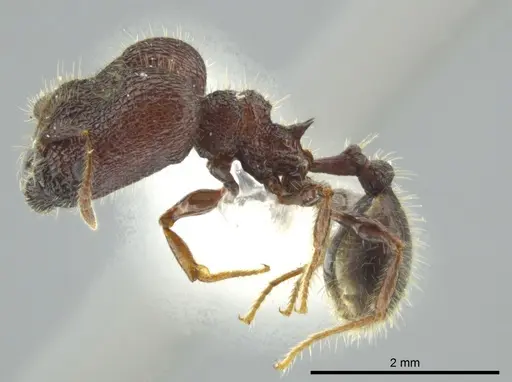
Pheidole bufo is a distinctive Neotropical ant species belonging to the distorta group. The major workers are relatively large at 1.64mm head width, with a uniquely concave dorsal head surface and strongly rugoreticulate (wrinkled) patterning on the head and pronotum. Minor workers are smaller at around 0.84mm head width. Both castes have a dark brown body with lighter brown appendages. The species was described by Wilson in 2003 and gets its name 'bufo' (Latin for toad) due to its robust appearance. Found across the northern South American region including Brazil, Colombia, Ecuador, and French Guiana, these ants inhabit tropical rainforest environments where they forage on vegetation.
Quick Summary
- Difficulty: Unknown, no captive husbandry data available
- Origin & Habitat: Tropical rainforests of northern South America (Brazil, Colombia, Ecuador, French Guiana). Type locality is Chapada dos Guimarães in Mato Grosso, Brazil. Found in lowland Amazonian forest areas and associated with natural forest habitats rather than disturbed areas[1][2].
- Colony Type: Colony structure is unconfirmed. Based on typical Pheidole genus patterns, likely single-queen (monogyne) colonies, but this has not been documented for this specific species.
- Size & Growth:
- Queen: Undescribed, no queen measurements available in scientific literature
- Worker: Major: HW 1.64mm, HL 1.92mm. Minor: HW 0.73-0.84mm, HL 0.69-0.82mm[1].
- Colony: Unknown, no colony size data available for this species
- Growth: Unknown
- Development: Unconfirmed, no development data exists for this species. Based on typical Pheidole patterns in tropical regions, estimate 4-8 weeks at optimal temperature. (Development timeline is unconfirmed. Related tropical Pheidole species typically develop faster than temperate species due to year-round warm conditions.)
- Antkeeping:
- Temperature: Keep warm, roughly 24-28°C. This species comes from tropical lowland Amazonian forests where temperatures are consistently warm year-round. A heating cable on one side of the nest can create a gentle gradient if room temperature is below this range.
- Humidity: Keep moderately to high humidity, think damp tropical forest floor. The substrate should remain consistently moist but not waterlogged. Provide a water tube for drinking access.
- Diapause: No, this is a tropical species from the Amazon region. It does not require hibernation or winter rest. Keep temperatures stable year-round.
- Nesting: Nesting preferences are unconfirmed. In captivity, standard test tubes or acrylic nests work well for starting colonies. As a tropical species, they likely prefer enclosed nests with moisture-retaining substrate. A Y-tong or plaster nest with good humidity retention would be appropriate.
- Behavior: The type colony was observed feeding on a crushed scarab larva, indicating a predatory or scavenger diet focused on protein sources. Pheidole species typically have major and minor worker castes, majors handle larger food items and defense while minors handle foraging and brood care. They are not known to be particularly aggressive toward keepers but will defend their nest. Escape risk is moderate, major workers at 1.64mm HW are not tiny but can still fit through small gaps. Use standard escape prevention.
- Common Issues: No captive husbandry data exists, this species has never been kept in captivity, so all care recommendations are speculative, Tropical humidity requirements may be difficult to maintain consistently in dry climates, Specific dietary needs are unknown, may require live prey similar to what was observed in the type colony, Distribution data shows they are absent from logged forest areas, may be sensitive to habitat disturbance
Species Identification and Morphology
Pheidole bufo is a member of the distorta species group and can be identified by several distinctive traits. Major workers have a deeply concave central third of the dorsal head surface when viewed from the side, and the entire dorsal surface of the head (except the clypeus and frontal triangle) is strongly rugoreticulated (covered in a network of wrinkles). The pronotum is also strongly rugoreticulated. The propodeal spines are very large, nearly twice as long as the basal face of the propodeum. Minor workers have a humerus topped with a blunt spine when viewed from above, and propodeal spines that are nearly as long as the basal propodeal space. The mesosoma of minors is almost completely covered by longitudinal carinulae (raised lines). Both castes are dark brown with lighter brown legs and antennae. [1][2]
Distribution and Habitat
This species is found across the northern Neotropical region. The type colony was collected in Brazil at the trail to Véu de Noira waterfall in Chapada dos Guimarães, Mato Grosso. Additional records exist from Colombia (near Leticia in the Amazonas region), Ecuador (Yasuni National Park near Puerto Tiputini), and French Guiana. The species appears to be associated with lowland tropical rainforest environments. Notably, one study found P. bufo in 10% of natural fall plots but 0% of logged plots and 0% of control plots, suggesting it may be sensitive to forest disturbance or logging activities. [1][2]
Feeding and Diet
The only documented feeding observation comes from the type colony in Brazil, where workers were found feeding on a crushed scarab larva. This suggests P. bufo is predatory or scavenges on protein sources, particularly soft-bodied insects and larvae. In captivity, you should likely offer similar protein foods, small insects like fruit flies, small mealworms, or other soft-bodied prey. Pheidole species typically also accept sugar sources, but this species' specific dietary preferences are unconfirmed. Start with protein-rich foods and observe acceptance. [2]
Foraging Behavior
One study specifically found P. bufo on vegetation (not on the ground), indicating they are arboreal or at least forage on plants rather than solely on the forest floor. This is unusual for many Pheidole species that are primarily ground-foraging. They were also captured more frequently in unbaited pitfall traps compared to baited traps, suggesting they may not be strongly attracted to sweet baits or protein baits. Their foraging style likely involves searching for prey items on vegetation rather than recruiting heavily to food sources. [2]
Keeping This Species in Captivity
This is one of the least-documented Pheidole species in captivity, there is no established husbandry history or care guide for P. bufo. All recommendations are speculative based on what is known about the species' natural history and typical Pheidole care. You will need to experiment with temperature, humidity, and food acceptance. Start with warm (24-28°C), humid conditions and offer small protein prey items. Monitor colony behavior and adjust conditions based on their response. This species would be best suited for experienced antkeepers comfortable with experimental care, as no established protocol exists.
Frequently Asked Questions
How do I keep Pheidole bufo ants?
No established captive care protocol exists for this species. Based on its tropical origin, provide warm temperatures (24-28°C), moderate to high humidity, and protein-rich foods. This is an experimental species best suited for experienced antkeepers.
What do Pheidole bufo ants eat?
The only documented feeding observation shows them consuming a crushed scarab larva. They likely accept small insects and larvae as prey. Sugar acceptance is unconfirmed but likely based on typical Pheidole behavior.
How big do Pheidole bufo colonies get?
Colony size is unknown, no data exists on maximum colony size for this species.
Does Pheidole bufo need hibernation?
No, this is a tropical Amazonian species that does not require hibernation. Keep temperatures stable and warm year-round.
How long does it take for Pheidole bufo to develop from egg to worker?
Development timeline is unconfirmed. Based on typical tropical Pheidole species, estimate 4-8 weeks at optimal warm temperatures.
Are Pheidole bufo ants good for beginners?
No, this species has never been kept in captivity and has no established care guidelines. It is not recommended for beginners.
What is the colony structure of Pheidole bufo?
Colony structure is unconfirmed. Based on typical Pheidole genus patterns, likely single-queen colonies, but this has not been documented for this specific species.
Where is Pheidole bufo found?
This species is found in northern South America: Brazil (Mato Grosso), Colombia (Amazonas region near Leticia), Ecuador (Yasuni National Park), and French Guiana. They inhabit tropical rainforest environments.
What size are Pheidole bufo workers?
Major workers have a head width of 1.64mm. Minor workers are smaller at 0.73-0.84mm head width.
References

This caresheet is licensed under CC BY-SA 4.0 .
Literature
Loading...Loading products...