

Pheidole binghamii
- Scientific Name
- Pheidole binghamii
- Tribe
- Attini
- Subfamily
- Myrmicinae
- Author
- Forel, 1902
- Distribution
- Found in 3 countries
Pheidole binghamii Overview
Pheidole binghamii is an ant species of the genus Pheidole. It is primarily documented in 3 countries , including Brunei Darussalam, China, Thailand. Detailed taxonomic data and occurrence records can be further explored via authoritative databases such as AntWeb or the Global Biodiversity Information Facility (GBIF).
Pheidole binghamii
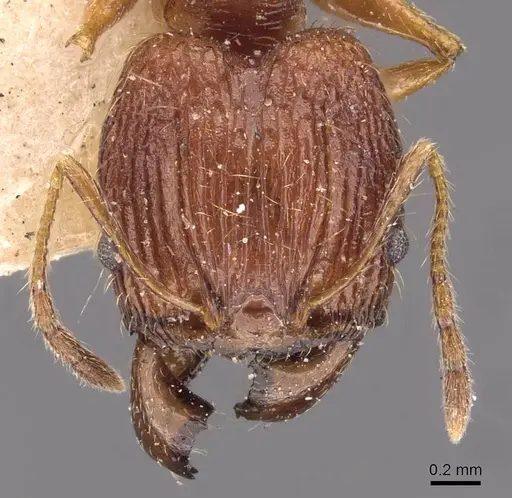
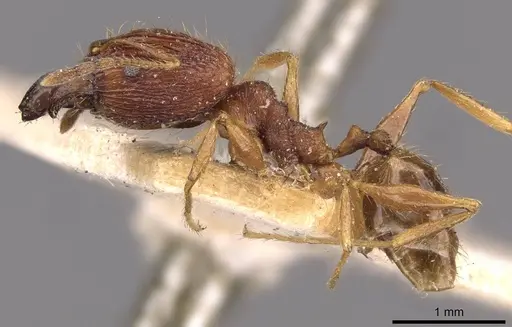
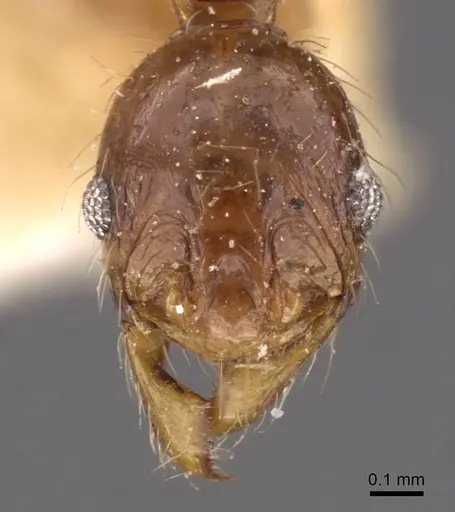
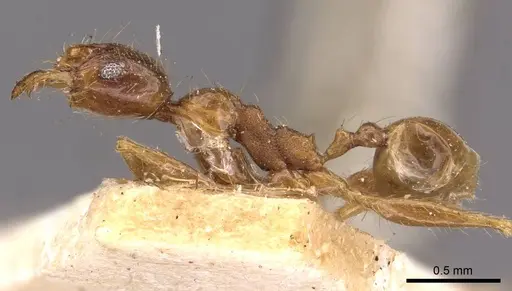
Pheidole binghamii is a small species of big-headed ant known for its distinctive soldier caste with an enlarged head. Soldiers measure around 4.2mm while workers are 3.0-3.3mm [1]. The head and gaster are dark brown, while the mandibles, antennae, thorax, legs, petiole and postpetiole are reddish brown [1]. This species belongs to the Myrmicinae subfamily and is part of the Attini tribe, which includes seed-harvesting ants.
This ant is found across South and Southeast Asia, including India, Pakistan, Singapore, Vietnam, and southern China (Yunnan Province) [2]. In the Himalayas, they occur at elevations between 1000-2000m [3], while in Vietnam they inhabit lowland areas like Binh Chau-Phuoc Buu and Nam Cat Tien [4]. Their wide elevational range suggests adaptability to different temperature conditions.
Quick Summary
- Difficulty: Easy
- Origin & Habitat: Native to the Indomalaya region (India, Pakistan, Singapore, Vietnam) and Palaearctic region (southern China). Found in tropical and subtropical forests, from lowland areas in Vietnam to mid-elevation Himalayan zones at 1000-2000m [3][4].
- Colony Type: Likely monogyne (single queen colony) based on typical Pheidole patterns. Pheidole species typically have colonies with one queen, though some can be polygynous.
- Colony: Monogyne
- Founding: Claustral
- Size & Growth:
- Queen: Estimated 6-8mm based on genus patterns (not directly measured for this species)
- Worker: 3.0-3.3mm [1]
- Colony: Colony size data not directly studied, typical Pheidole colonies reach several hundred to a few thousand workers
- Growth: Moderate, based on typical Pheidole development patterns
- Development: Estimated 6-8 weeks at optimal temperature based on genus patterns for small Myrmicinae (Development time is inferred from related Pheidole species, actual timeline may vary)
- Antkeeping:
- Temperature: Keep at 22-26°C. The wide elevational range (1000-2000m in Himalayas to lowland Vietnam) suggests they tolerate a broad range. Start in the mid-range and adjust based on colony activity.
- Humidity: Moderate humidity around 50-70%. Provide a moist nest area but allow some drying between waterings. These ants are found in forest environments with variable moisture.
- Diapause: Likely a minor slowdown during cooler months but not a true hibernation given their tropical/subtropical range. No formal diapause required.
- Nesting: Use a standard test tube setup for founding colonies. Once established, Y-tong or plaster nests work well. They prefer enclosed spaces with moderate moisture.
- Behavior: Pheidole binghamii is a docile species typical of the genus. Workers are small and not aggressive. They are generalist foragers, collecting seeds and small insects. Their small size (3mm workers) means escape prevention is important, they can squeeze through small gaps. Soldiers use their enlarged heads to process seeds and defend the colony.
- Common Issues: small size makes escape likely without fine mesh barriers, overfeeding can lead to mold in enclosed nests, colonies may be slow to establish initially, soldier production may be low in young colonies
Nest Preferences
In the wild, Pheidole binghamii nests in soil, often under stones or in rotting wood in forest environments. They are not arboreal nesters but will use various ground-level cavities. For captive care, start with a standard test tube setup for the founding queen. Once the colony reaches 20-30 workers, you can move them to a Y-tong (acrylic) nest or plaster nest. They prefer nests with moderate humidity and tight-fitting chambers. Avoid overly wet conditions that can cause mold. A small water reservoir connected to the nest helps maintain humidity without constant misting. [1][4]
Feeding and Diet
Pheidole binghamii is a generalist feeder like most Pheidole species. They readily accept protein sources like small insects (fruit flies, pinhead crickets, mealworms) and will also collect seeds. Offer protein prey 2-3 times per week, removing any uneaten prey after 24 hours. Sugar water or honey can be offered occasionally, though they are not strongly attracted to sweets like some ants. Seeds can be provided as enrichment, and soldiers will help process them with their enlarged mandibles. Fresh water should always be available.
Temperature and Care
Keep your colony at 22-26°C. This species tolerates a range due to its wide distribution from tropical Vietnam to Himalayan midlands. Room temperature in most homes works well. If your space is cooler, a heating cable on one side of the nest creates a gradient. Monitor colony activity, if workers are clustered near the heat source, increase temperature slightly. They do not require true hibernation but may slow down slightly during winter months. Avoid temperatures below 18°C or above 30°C. [3][4]
Behavior and Temperament
This is a peaceful, non-aggressive species suitable for beginners. Workers are small (3mm) and go about their foraging without bothering humans. The soldiers, while visually striking with their enlarged heads, are not particularly aggressive and are used mainly for seed processing and colony defense. They are active foragers and will readily explore their outworld for food. Because of their small size, escape prevention is important, use fine mesh barriers and ensure all connections are sealed. They do not bite or sting significantly. [1]
Colony Growth and Development
A newly mated queen will seal herself in a claustral chamber and lay eggs without leaving to forage. She lives entirely on her stored fat reserves until the first workers emerge (nanitics) after 4-6 weeks. The first workers are smaller than normal workers but will begin foraging to feed the colony. Soldier production typically begins once the colony reaches 50-100 workers. Growth is moderate, expect 6-12 months to reach a established colony of 100+ workers. Maximum colony size is likely several hundred to a few thousand workers based on genus patterns.
Frequently Asked Questions
How long does it take for Pheidole binghamii to have first workers?
Expect first workers (nanitics) to emerge 6-8 weeks after the queen lays eggs, at optimal temperature around 24°C. The queen seals herself in and raises the first brood alone.
Can I keep Pheidole binghamii in a test tube?
Yes, test tubes work well for founding colonies. Use a standard test tube setup with a water reservoir and cotton plug. Keep it horizontal in a dark, quiet location until workers emerge.
What do Pheidole binghamii ants eat?
They are generalists that accept small insects (fruit flies, pinhead crickets, mealworms), seeds, and occasionally sugar water or honey. Offer protein prey 2-3 times per week.
How big do Pheidole binghamii colonies get?
Based on typical Pheidole patterns, colonies likely reach several hundred to a few thousand workers. Growth is moderate, taking several months to a year to establish.
What temperature do Pheidole binghamii need?
Keep them at 22-26°C. They tolerate a range due to their wide distribution. Room temperature is usually suitable.
When should I move my colony to a formicarium?
Move to a larger nest (Y-tong or plaster) once the colony reaches 20-30 workers and the test tube becomes crowded. Make sure the colony is actively foraging before the move.
Are Pheidole binghamii good for beginners?
Yes, they are one of the easier Pheidole species to keep. They are docile, tolerate a range of conditions, and are not aggressive. Their small size requires attention to escape prevention.
Do Pheidole binghamii need hibernation?
No true hibernation is required. They are from tropical/subtropical regions and may only slow slightly during cooler months. Keep them at normal temperatures year-round.
Why are my Pheidole binghamii escaping?
Their small 3mm size means they can squeeze through tiny gaps. Use fine mesh (0.5mm or smaller), seal all connections, and apply fluon or other barriers to prevent escapes.
References

This caresheet is licensed under CC BY-SA 4.0 .
CASENT0907866
View on AntWeb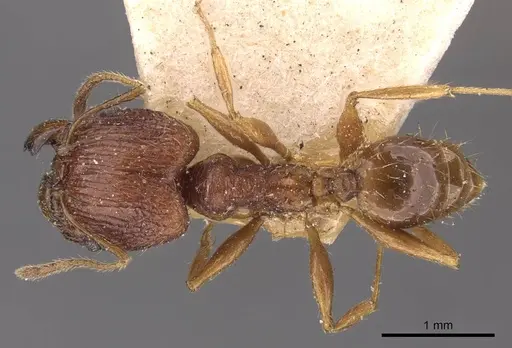
CASENT0907867
View on AntWeb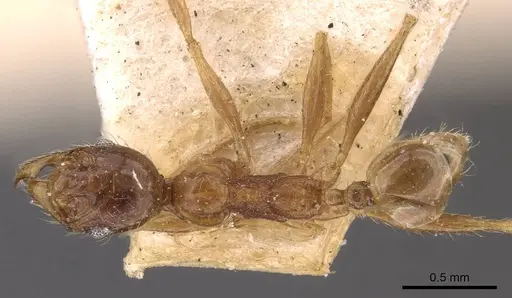
Literature
Loading...Loading products...