

Pheidole avaratra
- Scientific Name
- Pheidole avaratra
- Tribe
- Attini
- Subfamily
- Myrmicinae
- Author
- Salata & Fisher, 2020
- Distribution
- Found in 1 countries
Pheidole avaratra Overview
Pheidole avaratra is an ant species of the genus Pheidole. It is primarily documented in 1 countries , including Madagascar. Detailed taxonomic data and occurrence records can be further explored via authoritative databases such as AntWeb or the Global Biodiversity Information Facility (GBIF).
Pheidole avaratra
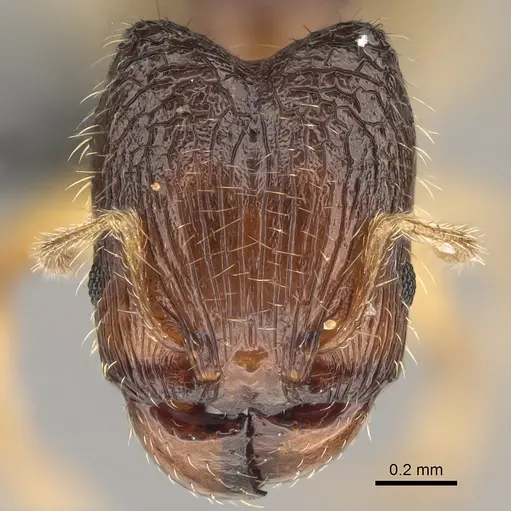
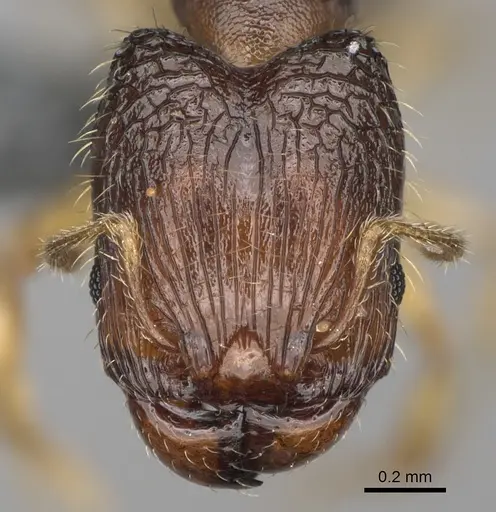
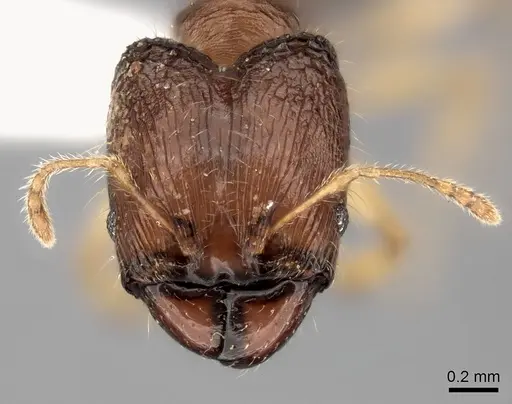
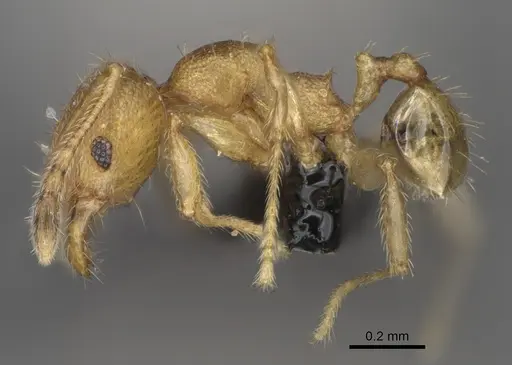
Pheidole avaratra is a small ant species native to northern Madagascar, recently described in 2020. Major workers measure 0.92-1.20 mm in head length and have a distinctive elongated head with thick, irregular rugae on the occipital lobes, while minor workers are much smaller at 0.43-0.48 mm and appear entirely yellow [1]. The species name 'avaratra' means 'north' in Malagasy, reflecting its distribution in the Antsiranana region of northern Madagascar [1].
This species belongs to the Pheidole makaensis group and inhabits low-elevation areas between 15-210 meters in rainforest, tropical dry forest, and open secondary vegetation. Nests are found in rotten sticks on the ground, under moss, and in soil [1]. Like other Pheidole species, they have major and minor worker castes, with majors having the characteristic enlarged head for seed-processing and colony defense.
Quick Summary
- Difficulty: Medium
- Origin & Habitat: Northern Madagascar (Antsiranana region), specifically Forêt Ambato near Ambanja. They inhabit low-elevation areas (15-210m) in rainforest, tropical dry forest, and open secondary vegetation [1].
- Colony Type: Colony structure is unconfirmed for this recently described species. Based on typical Pheidole patterns, they likely form single-queen colonies (monogyne).
- Size & Growth:
- Queen: Undescribed, no queen measurements available in the original description [1]
- Worker: Major workers: 0.92-1.20 mm head length (HL), minor workers: 0.43-0.48 mm HL [1]
- Colony: Unknown, no colony size data available for this species
- Growth: Moderate, estimated based on typical Pheidole development patterns
- Development: 6-10 weeks, estimated based on typical Pheidole genus development at tropical temperatures (Development timeline is unconfirmed for this specific species. Tropical Pheidole species typically develop faster than temperate species due to year-round warm conditions.)
- Antkeeping:
- Temperature: Keep at 24-28°C, this matches their natural habitat in tropical Madagascar. A gentle gradient allowing warmer and cooler areas is recommended
- Humidity: Moderate to high, they naturally nest in rotten sticks, under moss, and in soil in humid forest environments. Keep substrate consistently moist but not waterlogged [1]
- Diapause: No, as a tropical species from Madagascar, they do not require hibernation. Maintain year-round warm conditions
- Nesting: They naturally nest in rotten sticks on the ground, under moss, and in soil [1]. In captivity, a naturalistic setup with soil substrate and decaying wood pieces works well, or a Y-tong/plaster nest with moisture provision. They prefer tight, enclosed spaces scaled to their small size.
- Behavior: Pheidole species are generally non-aggressive but will defend their nest vigorously. Major workers have enlarged heads for seed milling and colony defense. They are foragers and likely collect seeds, small insects, and honeydew. Escape risk is moderate, their small size (especially minor workers at ~0.4mm) requires fine mesh barriers and tight-fitting lids [1].
- Common Issues: escape prevention is critical due to their very small minor workers, use fine mesh barriers, tropical species require consistent warmth year-round, cold temperatures can be fatal, rotten wood nesting preference means they need humid substrate that doesn't dry out quickly, newly described species means limited captive care information, monitor colony closely for issues, wild-caught colonies may carry parasites that can cause problems in captivity
Natural History and Distribution
Pheidole avaratra is endemic to northern Madagascar, specifically the Antsiranana region around Forêt Ambato near Ambanja [1]. The species was described in 2020 by Salata and Fisher as part of their comprehensive revision of Madagascar Pheidole species. The name 'avaratra' is Malagasy for 'north', directly referencing the species' northerly distribution on the island [1].
They inhabit low elevations between 15-210 meters above sea level, living in rainforest, tropical dry forest, and open secondary vegetation [1]. This indicates they prefer warm, humid tropical conditions with some tolerance for drier or more open areas. Their presence in secondary vegetation suggests they can adapt to disturbed habitats, which is useful for captive care.
Nests are constructed in decaying organic material on the forest floor, specifically rotten sticks, under moss, and directly in soil [1]. This microhabitat preference indicates they thrive in humid, decomposing material with stable moisture levels.
Identification and Morphology
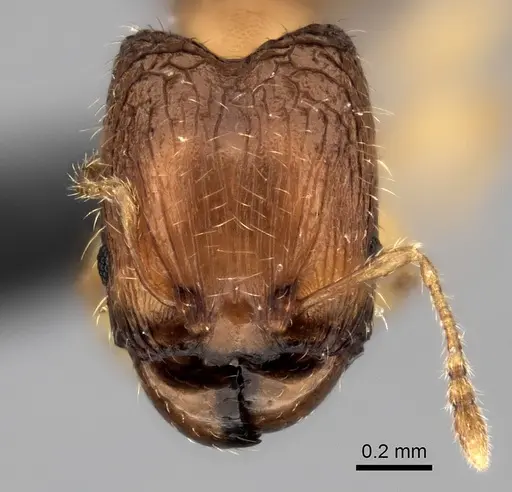
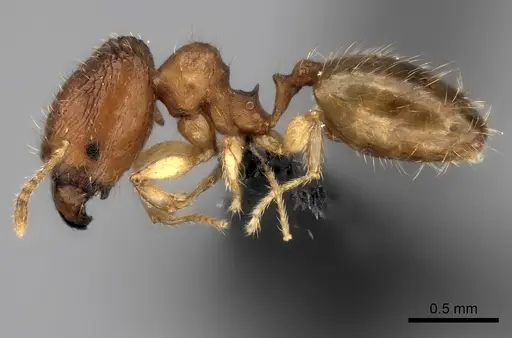
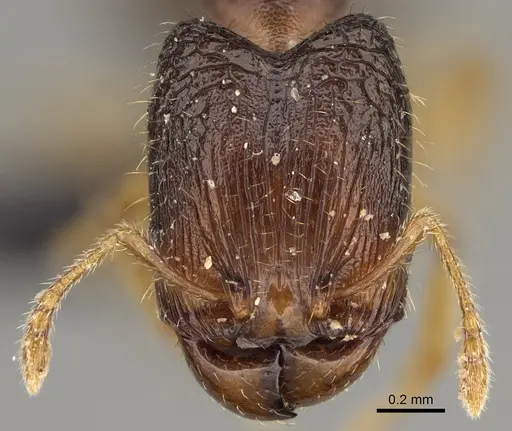
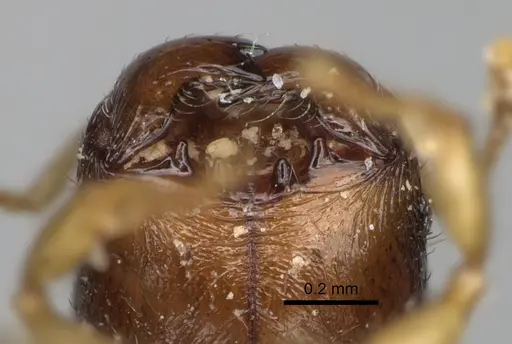
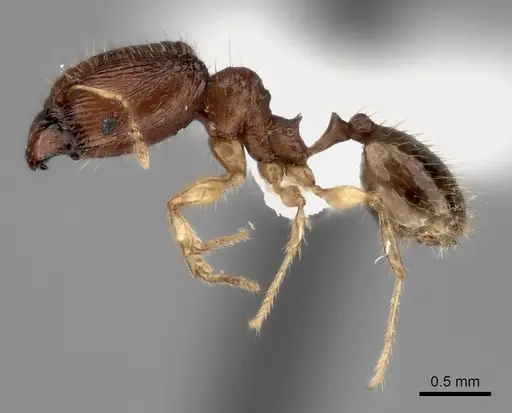
This species belongs to the Pheidole makaensis species group, characterized by specific head and hypostomal tooth structures [1]. Major workers have an elongated head with distinctive features: thick, sparse, short, irregular, and arcuate rugae on the occipital lobes, and prominent inner hypostomal teeth that are high, closely spaced, triangular, with rounded apices [1].
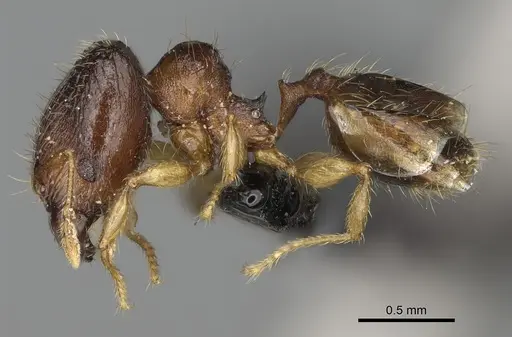
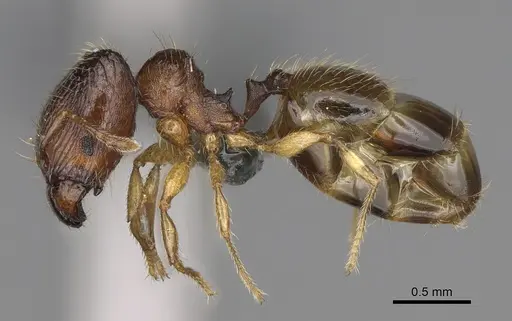
Major workers measure 0.92-1.20 mm in head length (mean 1.00 mm) and 0.71-1.02 mm in head width (mean 0.80 mm) [1]. Their body coloration is brown to dark brown, with yellowish-brown markings on the lateral sides of the mesosoma, malar area, and lower frons [1].
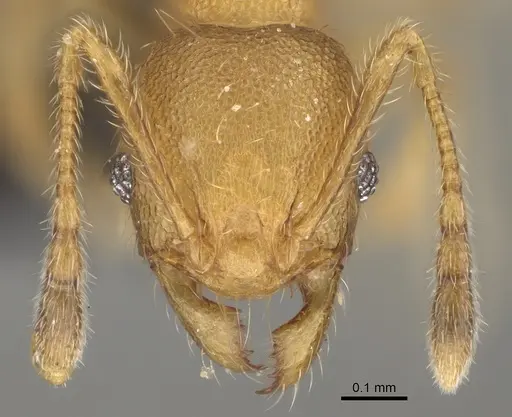
Minor workers are much smaller at 0.43-0.48 mm HL (mean 0.46 mm) and 0.39-0.44 mm HW (mean 0.42 mm) [1]. They are entirely yellow in color and have a foveolate (pitted) head sculpture with a smooth notch behind the eyes [1]. Their scape, when laid back, surpasses the posterior head margin by one-fifth of its length [1].
The presence of major and minor castes is typical of Pheidole species, with majors specialized for seed processing and colony defense.
Housing and Nesting Preferences
In their natural habitat, Pheidole avaratra nests in rotten sticks on the ground, under moss, and in soil at low elevations (15-210m) [1]. This indicates a preference for humid, enclosed spaces with decaying organic material. For captive care, replicate these conditions using a naturalistic setup with soil substrate, pieces of decaying wood, and moss covering part of the nest area.
Alternatively, a Y-tong (acrylic) or plaster nest works well if you provide consistent moisture. The key is maintaining humidity without creating standing water, these are forest floor ants, not aquatic species. A water reservoir or regular misting to keep substrate damp is essential.
Because minor workers are very small (around 0.4mm), escape prevention must be excellent. Use fine mesh (at least 0.5mm) on any ventilation holes and ensure all connections are tight-fitting. Even small gaps in tubing or lids can allow escape.
Feeding and Diet
Pheidole species are generalist foragers that collect seeds, small insects, and honeydew from aphids and scale insects. While specific dietary studies for P. avaratra don't exist, they likely follow typical Pheidole patterns. Feed a varied diet including:
Protein sources: small live or frozen insects (fruit flies, small crickets, mealworms), protein paste, or boiled egg. Offer protein 2-3 times per week depending on colony size.
Carbohydrate sources: sugar water, honey, or honeydew. Pheidole majors can have a distended gaster due to liquid food storage in their crop [2], so having a constant sugar source is beneficial.
Seeds: Pheidole majors are specialized for seed processing, offering small seeds can provide enrichment and additional nutrition.
Remove uneaten food after 24-48 hours to prevent mold, which can be deadly in humid nest conditions.
Temperature and Seasonal Care
As a tropical species from northern Madagascar, Pheidole avaratra requires warm conditions year-round. Maintain temperatures between 24-28°C, with a slight gradient allowing workers to self-regulate by moving between warmer and cooler areas of the nest.
Unlike temperate species, they do not require diapause (winter rest). Maintaining consistent tropical conditions is essential for colony health and growth. Temperatures below 20°C for extended periods can be harmful.
If your room temperature falls below this range, use a heating cable or mat on one side of the nest (placed on top of the nest, not underneath, to avoid excessive drying). Monitor colony activity, if workers cluster near the heat source, increase temperature slightly, if they avoid it, reduce heat. [1]
Colony Development and Growth
Pheidole avaratra is a recently described species (2020), so specific development timelines are unconfirmed. Based on typical Pheidole genus patterns in tropical environments, expect 6-10 weeks from egg to first worker (nanitic) at optimal temperatures.
Colony growth is likely moderate, faster than cold-climate species but not as rapid as some tropical specialists. The presence of major and minor castes means colony structure becomes more complex as it grows, with majors typically appearing after the colony reaches several dozen workers.
Founding colonies (queen + brood only) should be kept in a warm, dark, humid test tube setup. Once the first workers (nanitics) emerge and the colony grows to 20-30 workers, you can consider moving to a larger formicarium or naturalistic setup if desired.
Frequently Asked Questions
How long does it take for Pheidole avaratra to produce first workers?
The exact timeline is unconfirmed for this recently described species. Based on typical Pheidole development in tropical conditions, expect 6-10 weeks from egg to first worker at 24-28°C. Nanitics (first workers) are typically smaller than normal workers.
What temperature do Pheidole avaratra ants need?
Keep them at 24-28°C year-round. This tropical species from Madagascar does not tolerate cold well. Use a heating cable on one side of the nest if your room temperature is below this range.
Do Pheidole avaratra ants need hibernation?
No, they do not require hibernation. As a tropical species from Madagascar, they need consistent warmth year-round. Temperatures below 20°C for extended periods can be harmful.
What do Pheidole avaratra ants eat?
Like other Pheidole species, they likely accept small insects (protein), seeds, sugar water, and honey. Offer protein 2-3 times per week and keep a constant sugar water source available. Pheidole majors can store liquid food in their crop.
How big do Pheidole avaratra colonies get?
Colony size data is not available for this recently described species. Based on typical Pheidole patterns, colonies likely reach several hundred to a few thousand workers over time.
Can I keep multiple Pheidole avaratra queens together?
The colony structure is unconfirmed for this species. Pheidole species are typically monogyne (single queen), but some can be polygynous. Until more information is available, keeping a single queen is recommended.
What type of nest is best for Pheidole avaratra?
They naturally nest in rotten sticks, under moss, and in soil. A naturalistic setup with soil substrate and decaying wood pieces works well. Alternatively, a Y-tong or plaster nest with moisture provision is suitable. Keep substrate consistently humid.
Are Pheidole avaratra good for beginners?
This species is rated Medium difficulty. They require tropical conditions and escape prevention due to their small size. Their recently described status (2020) means limited captive care information is available, so some experimentation may be needed.
Why are my Pheidole avaratra dying?
Common causes include: temperatures below 20°C (tropical species are cold-sensitive), dry substrate (they need humid conditions), escape through small gaps (use fine mesh), mold from overwatering or uneaten food, or parasites from wild-caught colonies. Monitor conditions closely and adjust accordingly.
When should I move my colony to a formicarium?
Keep founding colonies in a test tube setup until you have 20-30 workers. At this point, a larger naturalistic setup or formicarium can be introduced. Ensure the new setup maintains similar humidity levels to prevent stress.
How do I identify Pheidole avaratra major and minor workers?
Major workers have an elongated head with thick, irregular rugae on the occipital lobes and measure 0.92-1.20 mm in head length. They are brown to dark brown in color. Minor workers are much smaller (0.43-0.48 mm HL), entirely yellow, and have a foveolate head with a smooth notch behind the eyes.
References

This caresheet is licensed under CC BY-SA 4.0 .
CASENT0056727
View on AntWeb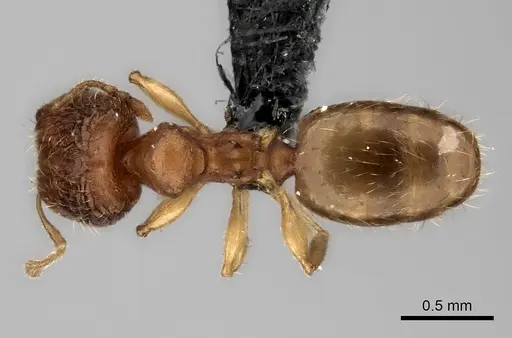
CASENT0107719
View on AntWeb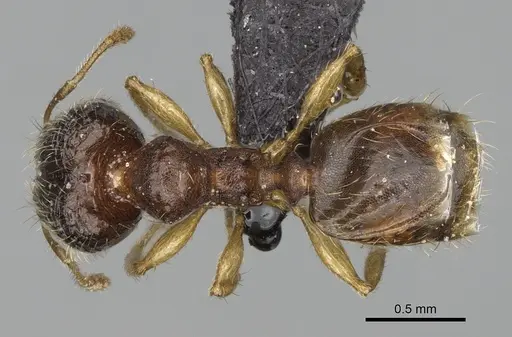
CASENT0303182
View on AntWeb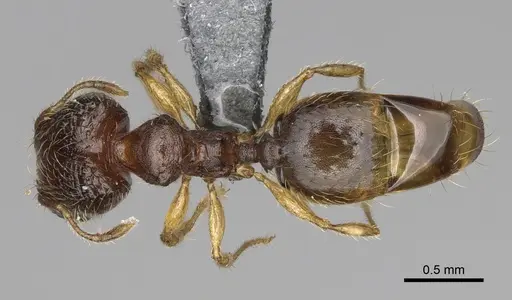
CASENT0406688
View on AntWeb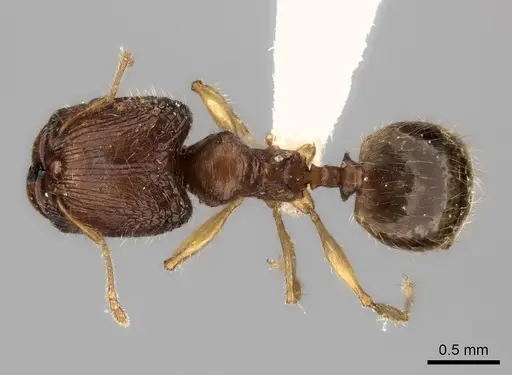
CASENT0923184
View on AntWeb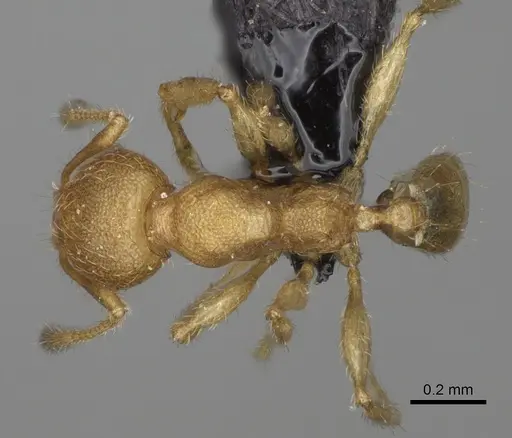
Literature
Loading...Loading products...