

Pheidole angusta
- Scientific Name
- Pheidole angusta
- Tribe
- Attini
- Subfamily
- Myrmicinae
- Author
- Forel, 1908
- Distribution
- Found in 1 countries
Pheidole angusta Overview
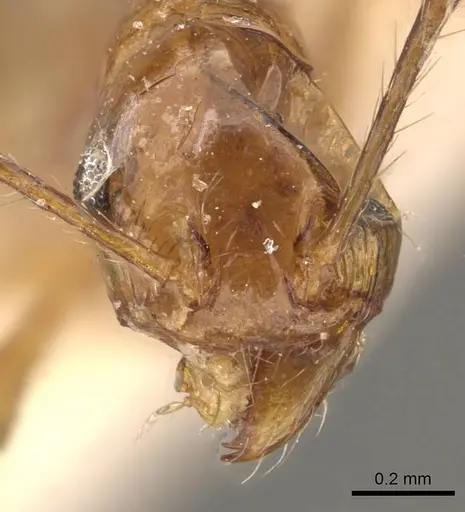
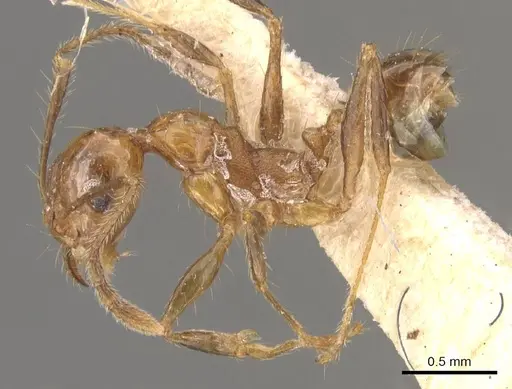
Pheidole angusta is an ant species of the genus Pheidole. It is primarily documented in 1 countries , including Brazil. Detailed taxonomic data and occurrence records can be further explored via authoritative databases such as AntWeb or the Global Biodiversity Information Facility (GBIF).
Pheidole angusta
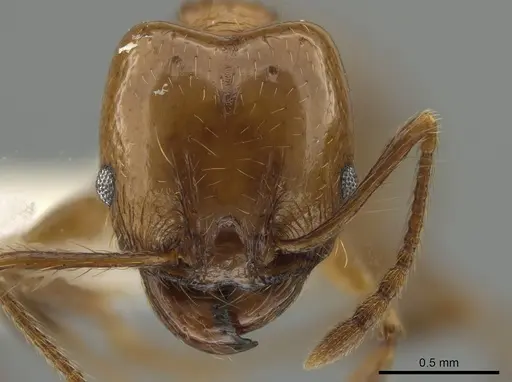
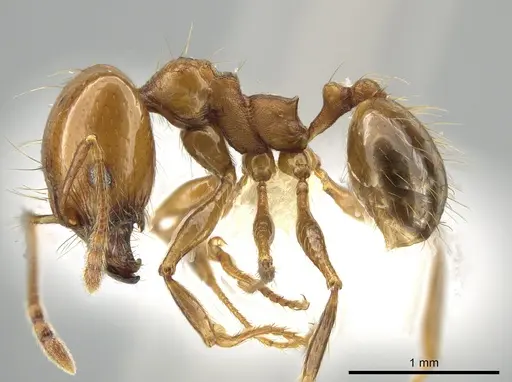
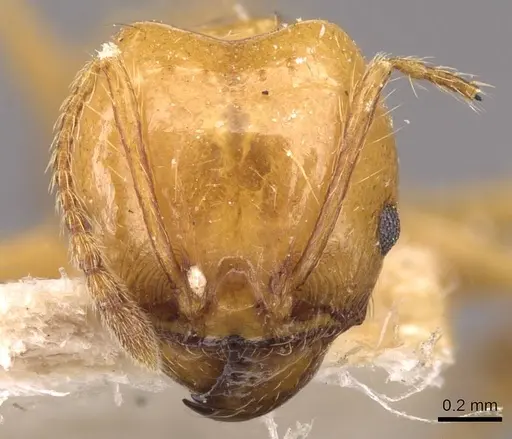
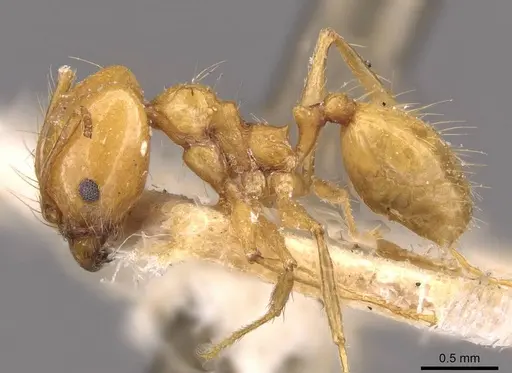
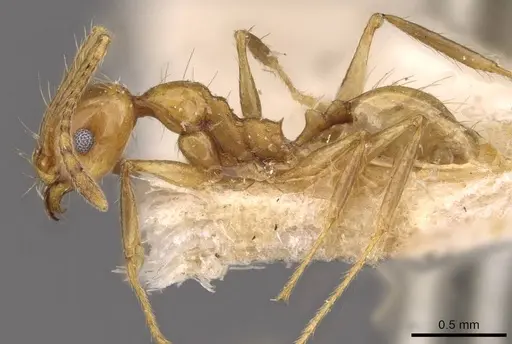
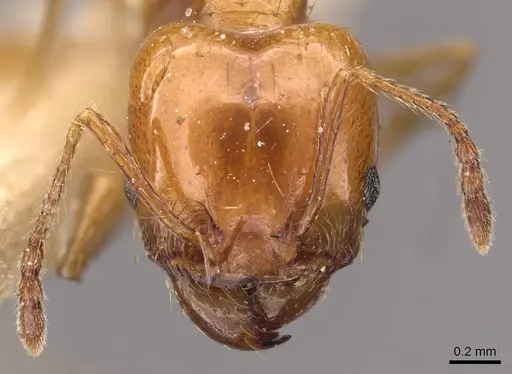
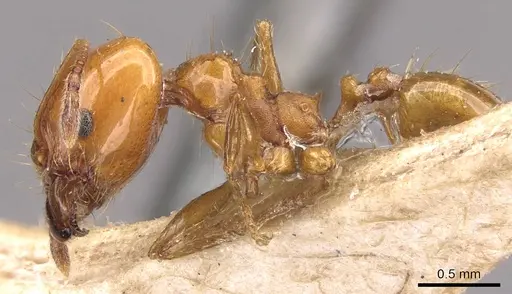
Pheidole angusta is a small yellow ant species native to southeastern Brazil, specifically found in São Paulo and Rio de Janeiro states. This species belongs to the diligens group and is recognized by its long antennal scapes and yellow coloration. Major workers have a head width of about 1.12mm, while minor workers are much smaller at around 0.60mm. The species features distinct major and minor worker castes, with majors having sparse long hairs on the head and a petiolar node that tapers to a near point. As a member of the Myrmicinae subfamily and Attini tribe, this ant is part of the diverse leaf-cutter ant relative group.
This species is a soil-nesting ant that builds subterranean colonies among the roots of herbs [1]. Like other Pheidole species, they are aggressive colony defenders that use mass recruitment to overwhelm competitors at food sources. They are generalist omnivores, typical of the 'soil omnivores' functional group, capable of exploiting diverse food resources. Their colonies can grow quite large, and they are known to dominate competitive interactions with other ant species.
Quick Summary
- Difficulty: Easy
- Origin & Habitat: Southeastern Brazil, São Paulo and Rio de Janeiro states. Found in seasonal semidecidual forest regions, nesting in soil among roots of herbs [1][2].
- Colony Type: Likely monogyne (single queen colonies) based on typical Pheidole patterns. Colonies can become large, with mass recruitment behavior.
- Colony: Monogyne
- Founding: Claustral
- Size & Growth:
- Queen: Estimated 6-8mm based on genus patterns
- Worker: Major: 1.12mm head width, Minor: 0.60mm head width
- Colony: Large colonies expected, Pheidole soil omnivores form substantial colonies [2]
- Growth: Moderate, typical for tropical Pheidole
- Development: Estimated 6-8 weeks at optimal tropical temperatures based on related species (Development likely faster than temperate species due to tropical origin)
- Antkeeping:
- Temperature: Keep at 24-28°C. As a tropical Brazilian species, they prefer warm conditions. A heating cable on one side of the nest creates a suitable gradient.
- Humidity: Maintain moderate to high humidity. Keep the nest substrate consistently moist but not waterlogged. They naturally nest in soil among roots, so some damp substrate is essential.
- Diapause: No true diapause required. As a tropical species, they do not need hibernation. Maintain stable warm conditions year-round.
- Nesting: Soil-nesting species. A naturalistic setup with soil or a plaster/acrylic nest works well. They prefer subterranean nests with chambers connected to the surface. Y-tong nests with soil chambers or test tube setups with moist cotton work for founding colonies.
- Behavior: This is an aggressive, competitive species. They use mass recruitment to quickly overwhelm food sources and competitor ants. Major workers serve as soldiers and defenders, while minor workers handle most foraging and brood care. They are generalist omnivores accepting seeds, insects, and sugar sources. Escape risk is moderate, majors are relatively large but minors are small enough to squeeze through small gaps. Use standard escape prevention with fluon barriers.
- Common Issues: colonies may fail if kept too cold, maintain warm temperatures, large colony size means they need expanding space as they grow, aggressive behavior makes them prone to escaping when disturbed, wild-caught colonies may carry parasites that affect captive health, test tube setups can flood if water reservoirs are overfilled
Nest Preferences and Housing
Pheidole angusta is a soil-nesting species that naturally builds colonies among the roots of herbs [1]. For captive care, you have several good options. A naturalistic setup with soil substrate allows them to create their own tunnel system, which mimics their natural nesting behavior. Alternatively, Y-tong (AAC) nests with soil chambers or plaster nests with moisture chambers work well. For founding colonies, a standard test tube setup with a water reservoir works, but be sure the cotton is packed firmly to prevent flooding. As colonies grow, they will need expanding space, these ants form large colonies and will quickly outgrow small starter nests. The key is providing damp substrate that stays moist but doesn't become waterlogged.
Feeding and Diet
As a member of the 'soil omnivores' functional group, Pheidole angusta is a generalist that accepts a wide variety of foods [2]. In captivity, offer protein sources like small insects (fruit flies, pinhead crickets, mealworms) and seeds. Pheidole species are known for harvesting and processing seeds, so you can offer small seeds like dandelion or grass seeds. They also readily accept sugar sources, a drop of honey water or sugar water will be quickly consumed. Feed protein 2-3 times per week and keep sugar water available constantly. Their mass recruitment behavior means once a worker finds food, many more will follow quickly.
Temperature and Seasonal Care
This is a tropical species from southeastern Brazil, so warm temperatures are essential. Keep the nest area at 24-28°C for optimal brood development. A heating cable placed on one side of the nest creates a temperature gradient that allows ants to regulate their own exposure to warmth. Unlike temperate species, they do not require a diapause or hibernation period. Maintain stable temperatures year-round, sudden drops below 20°C can stress colonies and slow or stop brood development. Room temperature in a warm home is often suitable, but in cooler climates you'll need supplemental heating.
Behavior and Colony Dynamics
Pheidole angusta exhibits classic Pheidole colony structure with distinct major and minor worker castes. Major workers (soldiers) have larger heads and serve as colony defenders, while minor workers handle most daily tasks including foraging, brood care, and nest maintenance. This species is known for mass recruitment, when a forager finds a good food source, it returns to the nest and leads many more workers to the resource. They are aggressive in interspecific interactions and will readily compete with other ant species at food baits [2]. Colonies can become quite large, potentially reaching several hundred to over a thousand workers. The colony will expand dramatically once the first major workers (nanitics) hatch.
Growth and Development
Like other Pheidole species, founding queens seal themselves in a claustral chamber and raise their first brood without leaving to forage. The queen uses stored fat reserves to produce eggs and feed the developing larvae. First workers (nanitics) are typically smaller than normal workers but already include both majors and minors. After the first workers emerge, the queen returns to laying eggs while workers take over all foraging and brood care tasks. Expect 6-8 weeks from egg to first worker at optimal temperatures (24-28°C). Growth rate is moderate, the colony will expand steadily as more workers emerge. Large colony size means you'll need to plan for expansion space as the colony matures.
Frequently Asked Questions
How long does it take for Pheidole angusta to have first workers?
Expect first workers (nanitics) to emerge in about 6-8 weeks at optimal tropical temperatures (24-28°C). This is typical for Pheidole species.
What do Pheidole angusta ants eat?
They are generalist omnivores. Offer small insects (fruit flies, mealworms), seeds, and sugar sources (honey water or sugar water). Feed protein 2-3 times per week with constant sugar water available.
Do Pheidole angusta ants need hibernation?
No. As a tropical Brazilian species, they do not require diapause or hibernation. Keep them warm year-round at 24-28°C.
How big do Pheidole angusta colonies get?
They form large colonies, expect several hundred to over 1000 workers as the colony matures. Plan for expanding nest space.
Are Pheidole angusta ants aggressive?
Yes. They are aggressive in interspecific interactions and use mass recruitment to dominate food sources. Major workers serve as soldiers for colony defense.
What temperature is best for Pheidole angusta?
Keep them at 24-28°C. A heating cable on one side of the nest creates a suitable gradient. Avoid temperatures below 20°C.
Can I keep multiple Pheidole angusta queens together?
Not recommended. Like most Pheidole species, they likely form single-queen colonies. Combining unrelated queens has not been documented and would likely result in fighting.
Are Pheidole angusta good for beginners?
Yes. They are relatively hardy and adaptable, with straightforward care requirements. The main challenges are maintaining warm temperatures and providing enough space as the colony grows.
References

This caresheet is licensed under CC BY-SA 4.0 .
CASENT0644303
View on AntWeb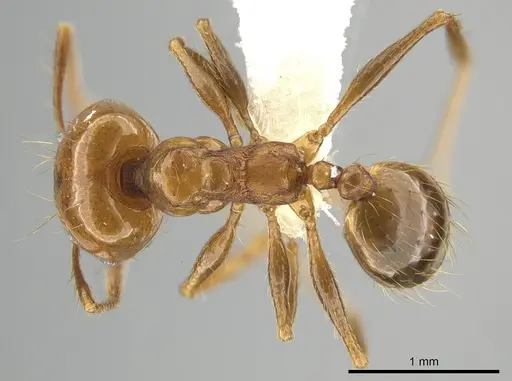
CASENT0908214
View on AntWeb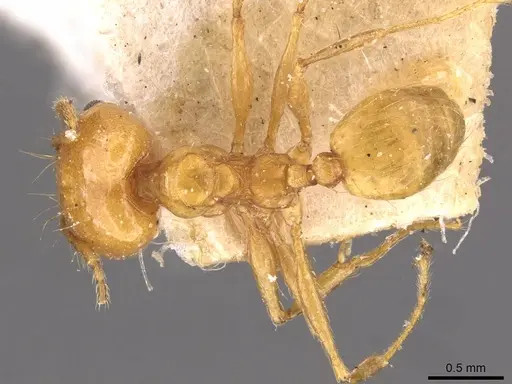
CASENT0908215
View on AntWeb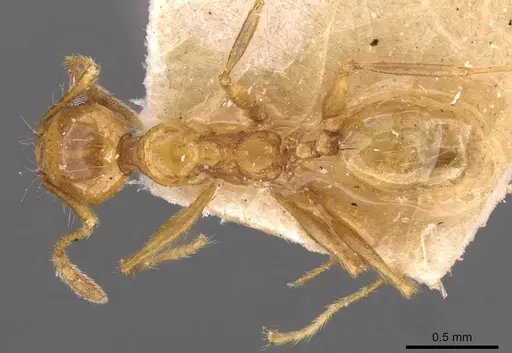
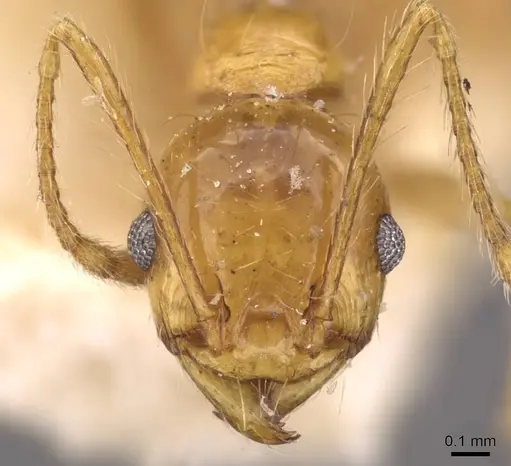
CASENT0908216
View on AntWeb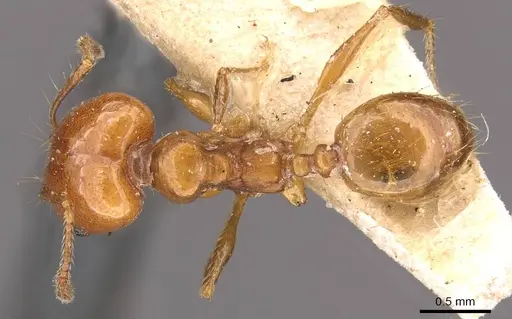
CASENT0908217
View on AntWeb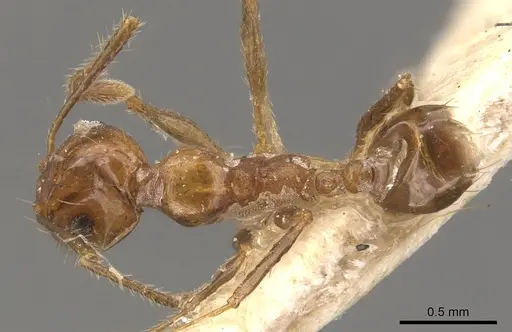
Literature
Loading...Loading products...