

Peronomyrmex bartoni
- Scientific Name
- Peronomyrmex bartoni
- Tribe
- Crematogastrini
- Subfamily
- Myrmicinae
- Author
- Shattuck & Hinkley, 2002
- Distribution
- Found in 1 countries
Peronomyrmex bartoni Overview
Peronomyrmex bartoni is an ant species of the genus Peronomyrmex. It is primarily documented in 1 countries , including Australia. Detailed taxonomic data and occurrence records can be further explored via authoritative databases such as AntWeb or the Global Biodiversity Information Facility (GBIF).
Peronomyrmex bartoni
Peronomyrmex bartoni is an extremely rare Australian ant species known only from two locations in central Victoria. Workers measure approximately 4.3mm total length with a distinctive chestnut-brown coloration, the head and mesosoma are chestnut-brown while the gaster is dark red-black. They have well-developed longitudinal rugae (wrinkles) on the head and mesosoma, and the gaster is covered with abundant elongated hairs. This species is part of the Myrmicinae subfamily and is one of only three described species in the genus Peronomyrmex, making it a true collector's species for ant enthusiasts. They inhabit open eucalyptus forests in the Box Ironbark and Sandstonerise Broombush vegetation classes of central Victoria, where annual rainfall averages 400-600mm.
Quick Summary
- Difficulty: Expert
- Origin & Habitat: Central Victoria, Australia, specifically the Inglewood Flora Reserve and Wehla State Forest. These areas feature open eucalyptus forest dominated by Eucalyptus viridis, E. leucoxylon, and E. microcarpa with sparse ground cover and an open shrubby understorey. Altitude ranges 194-220m with annual rainfall of 400-600mm [1][2].
- Colony Type: Colony structure is unconfirmed. Only workers have ever been collected, no queens or males have been described. The genus Peronomyrmex is extremely poorly known with no documented colony structure.
- Size & Growth:
- Queen: Unknown, queens have never been described
- Worker: 4.3mm total length, head 1.04mm, scape 0.62mm [2]
- Colony: Unknown, only two workers have ever been collected [2]
- Growth: Unknown
- Development: Unknown, no breeding or development data exists for this species (No data exists on colony development. Based on being a Myrmicinae and similar to related genera, expect development of several months but this is entirely speculative.)
- Antkeeping:
- Temperature: Based on the temperate Victorian habitat with 400-600mm annual rainfall, keep in the low-to-mid 20s°C range (approximately 20-24°C). Australian temperate ants generally tolerate room temperature well. Provide a gentle temperature gradient if possible.
- Humidity: The natural habitat receives moderate rainfall (400-600mm annually). Keep nest substrate moderately moist but not waterlogged, think damp forest floor conditions. Allow some variation between moist and slightly drier areas within the setup.
- Diapause: Likely yes. Central Victoria experiences cold winters with temperatures regularly dropping below 10°C. Based on similar Australian temperate Myrmicinae, a winter rest period of 2-3 months at 10-15°C is probably beneficial.
- Nesting: Inferred from habitat, they likely nest in soil under stones or in decaying wood in open forest habitats. For captivity, a naturalistic setup with compact nest chambers or a small Y-tong/plaster nest works well. The single known workers were collected in pitfall traps, suggesting ground-foraging behavior.
- Behavior: Behavior is essentially unstudied. Based on related Myrmicinae and the habitat, they are likely generalist foragers that search for food on the forest floor. The genus shows no special defense mechanisms documented. Their small size (4.3mm) means escape prevention should be taken seriously, they can slip through standard gaps. Temperament is unknown but related genera are typically non-aggressive.
- Common Issues: This species is known only from two worker specimens ever collected, captive husbandry protocols are entirely unestablished, No queen has ever been described, making captive breeding essentially impossible at this time, Extremely rare in the wild and potentially threatened, ethical considerations should guide any collection attempts, Complete lack of documented diet preferences means experimental feeding is required, Growth rates and development times are entirely unknown, making colony establishment very difficult
Species Overview and Rarity
Peronomyrmex bartoni is one of the rarest ants in the world to keep. It was described in 2002 by Shattuck and Hinkley from just two workers collected in pitfall traps in central Victoria, Australia. The genus Peronomyrmex contains only three species, all from Australia, and this species remains known only from the type material, no additional specimens have been collected since its description. This makes P. bartoni a genuinely obscure species with essentially no established captive husbandry protocols. The workers were collected in the Inglewood Flora Reserve (dominated by green mallee) and the Wehla State Forest (yellow gum and grey box open forest), both in the Box Ironbark region of Victoria at altitudes around 200m with moderate annual rainfall of 400-600mm. For antkeepers, this represents both a challenge and an opportunity: you would be pioneering the captive husbandry of a species that has never been kept before. [2][1]
Appearance and Identification
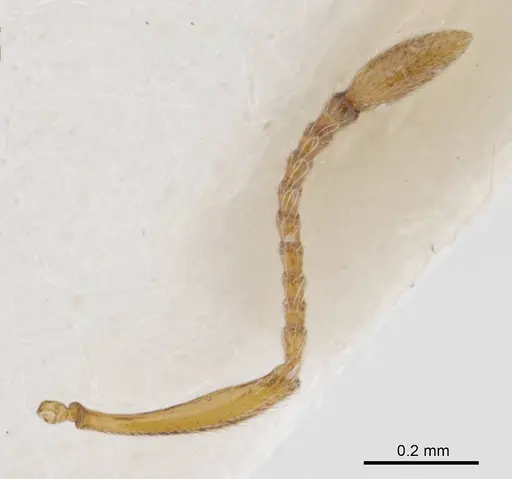
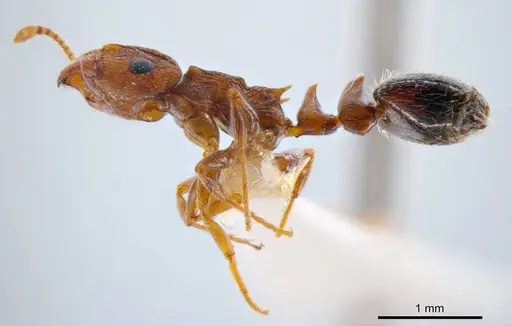
Workers measure approximately 4.3mm in total length, making them small but not tiny. The head is about 1.04mm long with a scape (the antenna segment that extends from the head) of 0.62mm. The most distinctive feature is the well-developed longitudinal rugae, these are raised wrinkle-like lines that run lengthwise along the head and mesosoma (the middle body section). The body coloration is chestnut-brown on the head and mesosoma, with the petiole and postpetiole (the narrow waist segments) being slightly darker, and the gaster (the rear segment, basically the abdomen) being a distinctive dark red-black. Unlike some related species, P. bartoni lacks erect hairs on the upper surface of the mesosoma, petiole, and postpetiole, though the gaster has abundant elongated hairs standing at various angles. The eyes are relatively small at 0.24mm diameter. This species can be distinguished from its close relative P. overbecki by its longer overall body, shorter scape (scape index 74 vs 87), and the flat rather than concave anterior face of the petiole. [2]
Natural Habitat and Climate
Peronomyrmex bartoni comes from central Victoria in southeastern Australia, a region with a temperate climate characterized by warm summers and cool winters. The two collection sites, Inglewood Flora Reserve and Wehla State Forest, are approximately 25km apart and sit at altitudes of 194-220m. The area receives 400-600mm of annual rainfall, placing it in the moderate rainfall zone. The vegetation is open eucalyptus forest: the Inglewood site is in the Sandstonerise Broombush class dominated by Eucalyptus viridis (green mallee), while Wehla is in the Box Ironbark class with E. leucoxylon (yellow gum) and E. microcarpa (grey box). The ground layer is sparse with an open, shrubby understorey. This habitat suggests ants adapted to temperate conditions with moderate moisture, likely nesting in soil or under stones in areas with some ground cover but not dense rainforest. [1][2]
Housing and Nesting
Since this species has never been kept in captivity, housing recommendations must be inferred from habitat and related genera. The collection method (pitfall traps) suggests they forage on the ground surface, and the open forest habitat indicates they likely nest in soil or under stones. A naturalistic setup with a small nest chamber (or multiple connected chambers) in compact substrate would be appropriate. Given their small size (4.3mm), ensure any setup has no large gaps that could allow escapes. A small Y-tong (acrylic) nest or plaster nest with appropriately scaled chambers would work. Provide a water tube for humidity but avoid oversaturation, the moderate rainfall of their habitat suggests they prefer damp but not wet conditions. Include some Dekovaki or similar substrate that can hold some moisture while also providing dry areas.
Feeding and Diet
Diet preferences are completely unstudied for this species. As a Myrmicinae ant, they likely have typical ant dietary requirements: proteins (insects, small prey) and carbohydrates (honey, sugar water). However, without any documented feeding observations, this is entirely speculative. Start with standard ant foods: small live prey (fruit flies, pinhead crickets, mealworms), and offer sugar water or honey regularly. Related Australian Myrmicinae often accept both sugar and protein sources. If the colony accepts food readily, you can experiment with variety. If they show no interest, try different prey types or smaller prey items. The key is patience and careful observation, this is experimental husbandry with no established protocols.
Temperature and Seasonal Care
Based on the temperate Victorian habitat, aim for temperatures in the low-to-mid 20s°C (approximately 20-24°C). This aligns with typical room temperature in many homes and matches the moderate climate of their natural range. Provide a temperature gradient if possible so the ants can choose their preferred zone. For winter, central Victoria experiences cold winters, and based on similar Australian temperate ants, a diapause (winter rest) period of 2-3 months at 10-15°C would likely benefit the colony. During this period, reduce feeding significantly and allow the ants to slow down. Do not keep them warm year-round, the seasonal temperature variation is part of their natural cycle and likely important for colony health. [1]
Challenges and Ethical Considerations
Keeping Peronomyrmex bartoni presents extraordinary challenges beyond typical antkeeping. First, no queen has ever been described, you cannot establish a colony from scratch because we don't know what a queen looks like or how they reproduce. Any colony would have to be wild-caught, which raises significant ethical concerns given how rare and poorly understood this species is. Second, even if you obtained workers, we have no data on their lifespan, social structure, or what they need to survive long-term. Third, they may be legally protected in Australia given their extreme rarity. Before attempting to keep this species, research local regulations and consider whether your interest is better served by supporting field research or working with more established species. This is truly a species for expert antkeepers with research interests, not casual hobbyists. [2]
Frequently Asked Questions
Can I keep Peronomyrmex bartoni as a pet ant?
Technically possible but practically impossible. No queen has ever been described, meaning you cannot establish a colony from scratch. Only two workers have ever been collected, making wild-caught colonies essentially unavailable. This is not a species for hobbyists, it remains one of the most poorly known ants in the world.
What does Peronomyrmex bartoni look like?
Workers are about 4.3mm total length with a distinctive appearance: chestnut-brown head and mesosoma, dark red-black gaster, and well-developed longitudinal wrinkles (rugae) on the head and upper body. The gaster has abundant elongated hairs while the mesosoma lacks erect hairs.
Where does Peronomyrmex bartoni live?
Only known from two locations in central Victoria, Australia: the Inglewood Flora Reserve and Wehla State Forest. These are open eucalyptus forests at about 200m altitude with 400-600mm annual rainfall.
How big do Peronomyrmex bartoni colonies get?
Unknown. Only two workers have ever been collected, so we have no data on natural colony size. Related Myrmicinae typically form colonies of dozens to hundreds of workers, but this is purely speculative for this species.
Do Peronomyrmex bartoni ants sting?
Unknown. As Myrmicinae, they have a stinger but it may be too small to penetrate human skin effectively. No documented stinging behavior exists in scientific literature.
What do Peronomyrmex bartoni eat?
Unconfirmed. Based on related genera, they likely accept standard ant foods: small insects and sugar sources. However, no documented feeding observations exist, this would be entirely experimental.
Is Peronomyrmex bartoni endangered?
Not officially assessed, but extremely rare. Known only from type specimens collected in 2002,with no additional records since. Their limited distribution in central Victoria could make them vulnerable to habitat changes.
Can I find Peronomyrmex bartoni in the wild?
Extremely unlikely. Only two workers have ever been collected despite targeted sampling. The species appears to be either very rare, very localized, or difficult to capture. Professional entomologists would struggle to find them.
Do Peronomyrmex bartoni need hibernation?
Likely yes, based on the temperate climate of central Victoria with cold winters. A winter rest period of 2-3 months at 10-15°C is probably beneficial, similar to other Australian temperate ants.
Are Peronomyrmex bartoni good for beginners?
Absolutely not. This is an expert-only species that has never been kept in captivity. There are no established care protocols, no described queens, and no documented colony structure. Even experienced antkeepers would struggle with this species.
References

This caresheet is licensed under CC BY-SA 4.0 .
ANTWEB1008219
View on AntWeb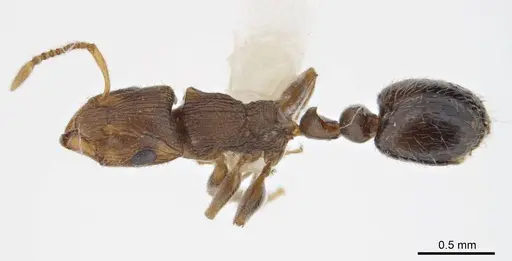
Literature
Loading...Loading products...