

Perissomyrmex bidentatus
- Scientific Name
- Perissomyrmex bidentatus
- Tribe
- Crematogastrini
- Subfamily
- Myrmicinae
- Author
- Zhou & Huang, 2006
- Distribution
- Found in 1 countries
Perissomyrmex bidentatus Overview
Perissomyrmex bidentatus is an ant species of the genus Perissomyrmex. It is primarily documented in 1 countries , including China. Detailed taxonomic data and occurrence records can be further explored via authoritative databases such as AntWeb or the Global Biodiversity Information Facility (GBIF).
Perissomyrmex bidentatus
Perissomyrmex bidentatus is a small myrmicine ant native to the Hengduan Mountains of southwestern China. Workers measure 3.7-4.1mm with a distinctive reddish-brown coloration and a darker gaster. The species is instantly recognizable by its unique clypeal dentition, only two teeth on the front of the head, compared to the four teeth found in most related species. They have 9-segmented antennae with a 3-segmented club, and their bodies are coarsely striated. Queens are larger at 4.6-5.0mm, and colonies may include a small percentage of soldier caste (about 6.7%).
This is a high-elevation species found between 2300-3700m in China's mountain forests, from Henan Province west through the Hengduan Mountains to Yunnan. They nest in soil and forage on the ground surface. Nuptial flights occur in mid-October. The species is monogyne, meaning colonies have a single queen, confirmed through nest sampling. This is an extremely rare species in the antkeeping hobby with almost no captive breeding records.
Quick Summary
- Difficulty: Expert
- Origin & Habitat: High-elevation forests of the Hengduan Mountains in southwestern China (Henan, Shaanxi, Sichuan, Yunnan Provinces), at elevations of 2300-3700m. They inhabit mixed coniferous forest, warm conifer-broadleaf forest, and semi-evergreen broadleaf forest, nesting in topsoil [1][2][3].
- Colony Type: Monogyne (single-queen colonies). One queen was found per nest in field samples. Workers are weakly dimorphic, with a small soldier caste comprising about 6.7% of the colony [1].
- Colony: Monogyne
- Size & Growth:
- Queen: 4.6-5.0mm [1]
- Worker: 3.7-4.1mm [1]
- Colony: Estimated 30-100 workers based on nest samples (30 individuals collected from one nest) [1]
- Growth: Unknown, no captive breeding data available
- Development: Unknown, no development data exists for this species (Development timeline has not been studied. Related Myrmicinae species suggest 6-10 weeks at optimal temperature, but this is a rough estimate.)
- Antkeeping:
- Temperature: Likely needs cool to moderate temperatures given high-elevation habitat. Start around 18-22°C and observe colony behavior. Avoid overheating, these mountain ants probably prefer conditions cooler than typical room temperature [1].
- Humidity: Moderate humidity likely needed. Forest floor soil conditions suggest 50-70% humidity with moist substrate. Keep nest substrate damp but not waterlogged [1][3].
- Diapause: Yes, nuptial flights occur in mid-October, indicating a strong seasonal cycle. Likely requires a winter dormancy period matching the high-elevation climate [1].
- Nesting: Soil-nesting species. In captivity, a naturalistic setup with moist soil/substrate in a shallow container or a plaster/acrylic nest with soil chamber would be appropriate. They forage on the ground, so a foraging area with substrate is important [1].
- Behavior: Workers forage on the ground surface. They are weakly dimorphic, most workers are minor workers, with a small soldier caste that has larger heads and reduced mandibles. The species is not known to be aggressive but may use soldiers for colony defense. Escape risk is moderate, workers are small (under 5mm) but not tiny, so standard barriers should suffice. No sting data available, but Myrmicinae ants typically have stingers.
- Common Issues: no captive breeding records means no established care protocols exist, high-elevation species may be sensitive to overheating and improper humidity, very rare in the hobby, virtually impossible to acquire, winter dormancy requirements are not fully understood but likely strict, soil-nesting behavior requires specialized setup unlike typical test tube arrangements
Natural History and Distribution
Perissomyrmex bidentatus is endemic to the Hengduan Mountains region of southwestern China, one of China's most biodiverse mountain ranges. The species has been confirmed in Henan, Shaanxi, Sichuan, and Yunnan provinces at elevations between 2300-3700m [1]. This makes it a true mountain ant, adapted to cooler conditions than most lowland tropical ants.
They inhabit various forest types including mixed coniferous forest, warm conifer-broadleaf mixed forest, and semi-evergreen broadleaf forest. Nests are constructed in topsoil, with workers foraging on the ground surface [1][3]. The species is monogyne, with one queen per colony confirmed through nest sampling. Colonies contain both minor and major (soldier) workers, though soldiers make up only about 6.7% of the workforce [1].
Nuptial flights occur in mid-October in the Hengduan Mountains, with winged females collected from October 10-19. This timing suggests the species has a strong seasonal breeding cycle adapted to the high-elevation climate with distinct winters [1].
Identification and Morphology
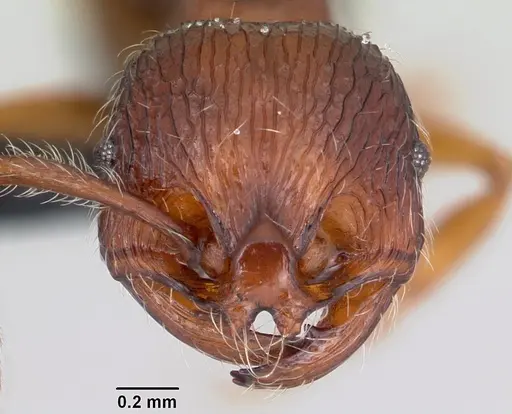
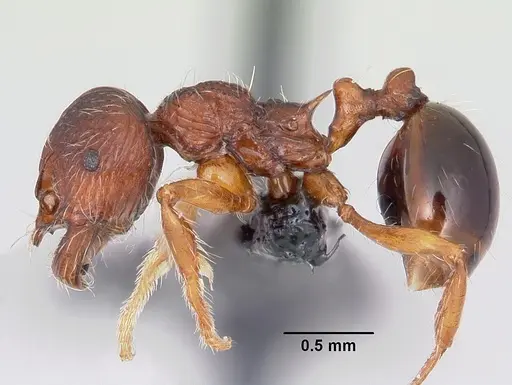
Perissomyrmex bidentatus can be identified by its unique clypeal dentition, the front of the head has only two teeth, compared to four teeth in other Perissomyrmex species. This is a diagnostic feature that distinguishes it from all other known species in the genus [4][1].
Workers measure 3.7-4.1mm with a reddish-brown body and darker gaster. The head is as broad as long, slightly widened forward, with a slightly concave occipital margin. Antennae are 9-segmented with the apical three segments forming a club. The body is coarsely longitudinally striate, giving it a textured appearance [4][1].
Queens are larger at 4.6-5.0mm, with three ocelli on the vertex and a robust mesosoma. They may be winged or dealate (having shed wings). The queen's clypeal teeth show variation, either apically truncated or apically obliquely truncated [1].
Soldiers (major workers) measure 4.3-4.4mm and have proportionally larger heads with more deeply concave occipital margins. Their mandible teeth are reduced and blunt compared to workers. This dimorphic caste makes up only a small percentage of the colony [1].
Temperature and Seasonal Care
As a high-elevation mountain species from 2300-3700m, Perissomyrmex bidentatus likely requires cooler temperatures than typical antkeeping setups. Based on their natural habitat in the Hengduan Mountains, they probably experience cold winters and mild summers [1].
For captive care, aim for temperatures in the range of 18-22°C. Avoid overheating, these ants are not tropical and may struggle in warm conditions above 25°C. A cooling setup or placement in a cool room would be appropriate. The nuptial flight timing in mid-October indicates a strong seasonal cycle, so expect reduced activity in winter months.
A hibernation or winter dormancy period is likely required, though the exact duration and temperature parameters are not documented. Plan for a 2-3 month cool period during winter, keeping the colony at roughly 10-15°C if possible. This mimics the high-elevation seasonal conditions they evolved in [1].
Housing and Nesting
Perissomyrmex bidentatus is a soil-nesting species that forages on the ground surface. In captivity, they need a setup that accommodates this behavior. A naturalistic setup with a soil-filled chamber or container works best, as they naturally nest in topsoil [1].
Avoid test tube setups designed for claustral founding, these ants are ground-nesters that need space to forage. A shallow naturalistic formicarium or a plaster/acrylic nest with a soil chamber provides appropriate conditions. The substrate should be kept moist but not waterlogged, mimicking forest floor conditions.
Since they forage on the ground, provide a proper outworld with substrate where workers can search for food. Escape prevention should be moderate, workers are small (under 5mm) but not tiny, so standard barriers like fluon on smooth surfaces should be adequate [1][3].
Feeding and Diet
The natural diet of Perissomyrmex bidentatus has not been documented, but as a Myrmicinae ant, they likely have an omnivorous diet similar to related genera. They probably consume small insects, honeydew, and plant matter in the wild.
For captive feeding, offer a varied diet including protein sources (small insects like fruit flies, pinhead crickets, or mealworms) and carbohydrate sources (sugar water, honey, or diluted honey). Feed protein 2-3 times per week and keep a constant sugar water source available.
Since this species forages on the ground, place food in the foraging area rather than in the nest chamber. Remove uneaten food after 24-48 hours to prevent mold. Start with small amounts and observe what the colony accepts [5].
Colony Structure and Development
Perissomyrmex bidentatus forms monogyne colonies with a single queen. Field sampling found one queen in 30-individual nest samples, confirming single-queen colony structure [1]. The species shows weak worker dimorphism, most workers are minor workers, with a small soldier caste comprising only about 6.7% of the colony.
Colony size in the wild appears relatively small, with nest samples of around 30 individuals. Expect colonies to potentially reach 50-100 workers at maturity based on similar Myrmicinae patterns, though this is an estimate.
The development timeline is completely unstudied. Related Myrmicinae species typically develop from egg to worker in 6-10 weeks at optimal temperatures, but this is a rough guess for this species. The presence of soldiers suggests the colony must reach a significant size before producing major workers [1].
Frequently Asked Questions
How long does it take for Perissomyrmex bidentatus to develop from egg to worker?
The development timeline is completely unstudied for this species. There is no data on egg-to-worker development time. Based on related Myrmicinae ants, a rough estimate would be 6-10 weeks at optimal temperature, but this is speculative. If you obtain this species, expect a wait of several months for first workers.
What temperature do Perissomyrmex bidentatus ants need?
As a high-elevation mountain species from 2300-3700m, they likely prefer cool to moderate temperatures. Start around 18-22°C and avoid overheating. They probably cannot tolerate temperatures above 25°C. Keep them in a cool room and avoid heat sources.
Do Perissomyrmex bidentatus ants need hibernation?
Yes, based on nuptial flights occurring in mid-October, they have a strong seasonal cycle and likely require a winter dormancy period. Plan for a 2-3 month cool period during winter, keeping the colony at roughly 10-15°C if possible.
What do Perissomyrmex bidentatus ants eat?
Their natural diet is unstudied, but as Myrmicinae ants they are likely omnivorous. Feed small insects (fruit flies, pinhead crickets, mealworms) for protein 2-3 times per week, and provide constant sugar water or honey for carbohydrates. Place food in the foraging area.
How big do Perissomyrmex bidentatus colonies get?
Colony size is not well documented. Field samples found around 30 individuals per nest. Based on similar species, colonies likely reach 50-100 workers at maturity. They are weakly dimorphic with a small soldier caste making up about 6.7% of workers.
Can I keep multiple Perissomyrmex bidentatus queens together?
No. This species is confirmed monogyne, colonies have a single queen. Multiple queens would likely fight. Do not attempt to combine unrelated queens.
What type of nest does Perissomyrmex bidentatus need?
They are soil-nesting ants that forage on the ground. Use a naturalistic setup with moist soil substrate or a plaster/acrylic nest with a soil chamber. Avoid test tube setups, they need space to forage on substrate.
Are Perissomyrmex bidentatus ants aggressive?
Aggression levels are not documented. As a small Myrmicinae species, they are unlikely to be highly aggressive but may use soldiers for defense. They are not known to be particularly dangerous to humans.
Is Perissomyrmex bidentatus a good species for beginners?
No. This is an expert-level species with almost no captive breeding records. There are no established care protocols, they are virtually impossible to acquire, and their high-elevation requirements make them challenging to keep. This species is not recommended for beginners.
Where does Perissomyrmex bidentatus live in the wild?
They live in the Hengduan Mountains of southwestern China (Henan, Shaanxi, Sichuan, Yunnan provinces) at elevations of 2300-3700m. They inhabit mixed coniferous forest, warm conifer-broadleaf forest, and semi-evergreen broadleaf forest, nesting in topsoil.
How do I identify Perissomyrmex bidentatus?
They have only two teeth on the front of the clypeus (head), which is unique in the genus. Workers are 3.7-4.1mm with reddish-brown coloration and a darker gaster. They have 9-segmented antennae with a 3-segmented club. The body is coarsely striated.
Why are Perissomyrmex bidentatus so rare in antkeeping?
This species has an extremely limited distribution in high-elevation mountain forests of China and is rarely collected. There are virtually no captive breeding records, and they are not available in the antkeeping hobby. They remain one of the most obscure and difficult-to-obtain ant species.
References

This caresheet is licensed under CC BY-SA 4.0 .
CASENT0103099
View on AntWeb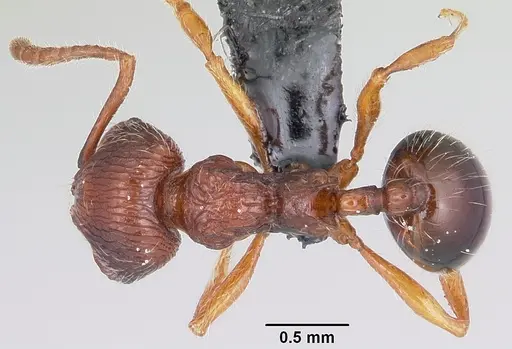
Literature
Loading...Loading products...