

Paratopula oculata
- Scientific Name
- Paratopula oculata
- Tribe
- Crematogastrini
- Subfamily
- Myrmicinae
- Author
- Smith, 1857
- Distribution
- Found in 1 countries
Paratopula oculata Overview
Paratopula oculata is an ant species of the genus Paratopula. It is primarily documented in 1 countries , including Malaysia. Detailed taxonomic data and occurrence records can be further explored via authoritative databases such as AntWeb or the Global Biodiversity Information Facility (GBIF).
Paratopula oculata
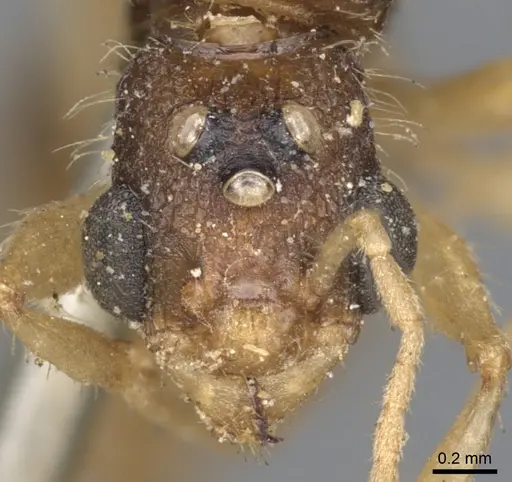
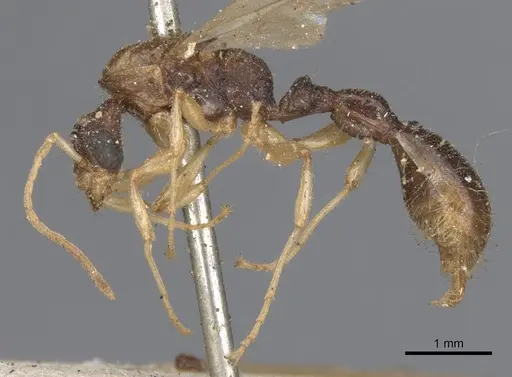
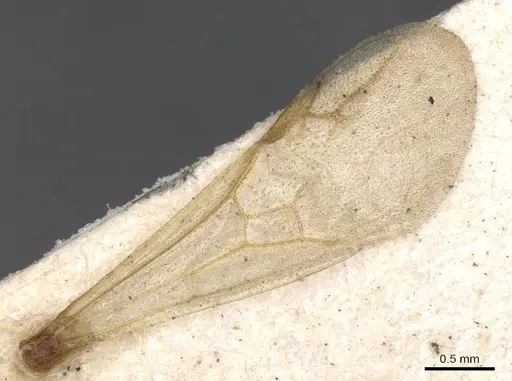
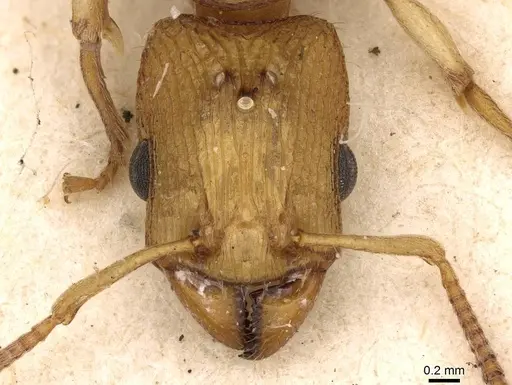
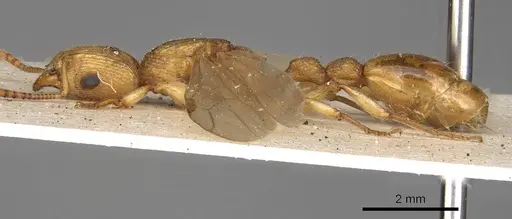
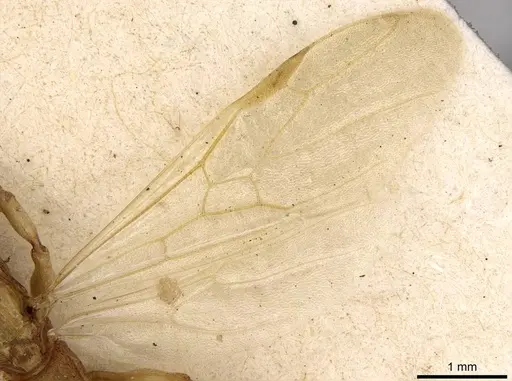
Paratopula oculata is one of the most mysterious ants in the world, it has only ever been observed in its reproductive forms (queens and males), with no workers ever documented [1]. This small to medium-sized ant is known from only a handful of specimens collected across Borneo, western Malaysia, and Singapore in the Indomalaya region [1][2]. The queen measures approximately 6-7mm, while the males are smaller at around 4-5mm. Despite being formally described in 1857,virtually nothing is known about this species' biology, nesting habits, or colony structure in the wild.
This is not a species for antkeeping. It is extremely rare in both museum collections and the wild, and no one has ever successfully kept a colony. The complete absence of worker caste information means no one can confirm what these ants eat, how they nest, or even whether they're safe to handle. For antkeepers seeking an interesting and documentable species, Paratopula oculata represents an extreme example of how little we still know about tropical ants.
Quick Summary
- Difficulty: Expert
- Origin & Habitat: Borneo, western Malaysia, and Singapore in the Indomalaya region. The natural habitat is essentially unknown, only winged queens and males have been collected, likely from light traps or during brief nuptial flight events [1][2].
- Colony Type: Unknown, only queens and males have ever been observed. No workers have been documented, making it impossible to determine whether this species forms single-queen or multi-queen colonies, or what their social structure looks like [1].
- Size & Growth:
- Queen: Approximately 6-7mm (estimated from related Paratopula species)
- Worker: Unknown, workers have never been described
- Colony: Unknown
- Growth: Unknown
- Development: Unknown, no colony has ever been established (Workers have never been observed, so the complete development cycle is unconfirmed)
- Antkeeping:
- Temperature: Unknown, likely tropical, so warm conditions in the low-to-mid 20s°C would be a starting point if keeping were attempted
- Humidity: Unknown, likely requires high humidity given the tropical rainforest origin of specimens
- Diapause: Unknown, no data on seasonal behavior
- Nesting: Unknown, no natural nesting observations exist. Arboreal nesting is suspected based on the genus Paratopula, but this is unconfirmed for this specific species [1]
- Behavior: Completely unknown. No behavioral observations of any kind exist in the scientific literature. Even basic traits like aggression level, foraging style, or escape risk are unconfirmed. This represents one of the least-known ant species on Earth.
- Common Issues: no workers have ever been documented, making captive establishment impossible, the complete lack of biological data means no established care guidelines exist, this species is extremely rare in the wild and may be endangered, no one has ever successfully established a colony, there is no keeper knowledge to draw from, the queen may require specific conditions that are completely unknown
Why Paratopula oculata Cannot Be Kept
Paratopula oculata represents one of the most significant gaps in ant-keeping knowledge. This species has only ever been observed in its reproductive forms, queens and males. Workers have never been documented, described, or collected [1]. This means no scientist, researcher, or antkeeper has ever seen a functioning colony of this species. Without workers, we have no information about what these ants eat, how they build nests, their temperature preferences, or any aspect of their daily biology. The last confirmed sighting of this species in the scientific literature was decades ago, and it remains poorly understood even by professional myrmecologists. There are no established protocols for keeping this species, no documented successful colonies, and no way to obtain founding queens for captive breeding. This is not a species that can be ethically or practically kept in ant farms.
Taxonomic History and Confusion
Paratopula oculata has undergone more name changes than almost any other ant species, reflecting the historical difficulty in classifying this mysterious insect. Originally described as Paratopula oculata by Frederick Smith in 1857 from specimens collected in Sarawak, Borneo, it has since been moved through Sima, back to Cerapachys, then to Rhopalothrix, then to Acanthomyrmex, and finally to Paratopula by Bolton in 1988 [3]. This shuffling across genera occurred because the species was known only from males and later queens, without workers, taxonomists struggled to place it correctly. The genus Paratopula is itself very rare, with only a handful of species known from tropical Asia, and most are poorly documented [1]. The species was finally placed in its current genus based on morphological features of the queen, but the fundamental biological questions remain unanswered.
What Would Need to Be Discovered
Before any attempt at captive keeping could succeed, basic biological information must first be gathered through field research. The most critical missing piece is the worker caste, until workers are found and described, we cannot begin to understand this species' ecology. Researchers would need to locate nesting sites (likely in rotting wood or tree cavities based on related genera), observe foraging behavior, document colony size, and understand the reproductive cycle. The nuptial flight timing is completely unknown, we don't know when or how the alates (winged reproductives) take flight. Given that this species has only been collected a handful of times in over 150 years, it appears to be either genuinely rare, extremely cryptic, or found in very specialized microhabitats that researchers rarely encounter. Any field discovery would represent a significant contribution to ant biology. [1]
Frequently Asked Questions
Can I keep Paratopula oculata ants?
No. This species cannot be kept because workers have never been documented. No one knows what these ants eat, how they nest, or how to establish a colony. Even if you obtained a queen, there would be no established care guidelines to follow.
Where can I find Paratopula oculata for sale?
Paratopula oculata is not available in the ant-keeping hobby. It is extremely rare in the wild and has never been successfully kept by anyone. Reputable sellers do not offer this species.
Why are workers unknown for this species?
Workers have never been discovered or described in the scientific literature. This could mean the species is genuinely rare, nests in inaccessible locations (like tree canopies), or has very small colonies that are difficult to find. Only winged queens and males have ever been collected, typically from light traps.
What does Paratopula oculata eat?
Unknown. No feeding observations of any kind exist for this species. Related Paratopula species are likely predatory or omnivorous like other Myrmicinae ants, but this is entirely speculative.
How big do Paratopula oculata colonies get?
Unknown. Colony size has never been documented because no colony has ever been found or observed.
Do Paratopula oculata ants sting?
Unknown. Without workers, we cannot determine whether they possess a stinger or their defensive behavior. Related Myrmicinae ants typically can sting, but this cannot be confirmed for this species.
What is the natural habitat of Paratopula oculata?
The natural habitat is essentially unknown. Specimens have been collected in Borneo, western Malaysia, and Singapore, but no specific nesting observations exist. The region is tropical rainforest, so they likely prefer warm, humid conditions, but this is inferred from geography rather than direct observation.
Are Paratopula oculata endangered?
We don't know. The species has only been collected a handful of times in over 150 years, but without systematic surveys, its conservation status cannot be assessed. It may be rare, or it may simply be difficult to find.
Can I help research this species?
Professional ant researchers would need to conduct field surveys in Borneo, Malaysia, and Singapore to locate nesting colonies and document workers. This would require expertise in ant taxonomy and field collection techniques. Citizen scientists can help by reporting any sightings of unusual ants in these regions to local entomologists.
What similar species can I keep instead?
If you're interested in rare, tropical Myrmicinae ants, consider better-documented species like Diacamma, certain Strumigenys, or other less-common genera that have established care protocols. Always choose species with documented worker castes and established husbandry guidelines.
References

This caresheet is licensed under CC BY-SA 4.0 .
CASENT0901348
View on AntWeb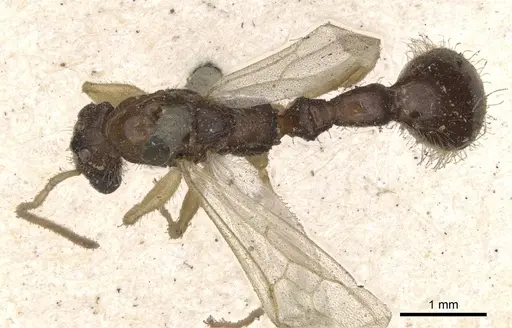
CASENT0914168
View on AntWeb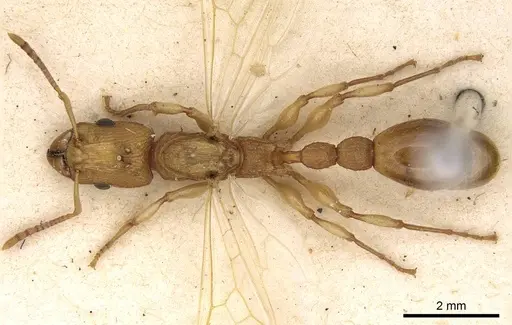
Literature
Loading...Loading products...