

Parasyscia ganeshaiahi
- Scientific Name
- Parasyscia ganeshaiahi
- Subfamily
- Dorylinae
- Author
- Aswaj <i>et al.</i>, 2021
- Distribution
- Found in 1 countries
Parasyscia ganeshaiahi Overview
Parasyscia ganeshaiahi is an ant species of the genus Parasyscia. It is primarily documented in 1 countries , including China. Detailed taxonomic data and occurrence records can be further explored via authoritative databases such as AntWeb or the Global Biodiversity Information Facility (GBIF).
Parasyscia ganeshaiahi
Parasyscia ganeshaiahi is an extremely tiny doryline ant species newly described from India. Workers measure just 2.82mm in total length, making them among the smallest army ant relatives you'll encounter. They have a distinctive 11-segmented antennae (most doryline ants have 10), a yellowish-brown body with reddish-brown antennae and mandibles, and strong sculpturing with deep foveolae (tiny pit-like structures) covering their body [1]. These ants were discovered in the Eaglenest Wildlife Sanctuary in Arunachal Pradesh, India, at 1400m elevation, and have since been recorded in southern China as well [2][3]. The genus Parasyscia belongs to the Dorylinae subfamily, which includes army ants, meaning this species is likely predatory on other small invertebrates.
Quick Summary
- Difficulty: Expert
- Origin & Habitat: Found in the Eaglenest Wildlife Sanctuary in Arunachal Pradesh, India at 1400m elevation, with records also in Hainan Province, China. They live in shaded, humid leaf litter in high-canopy forest (90% canopy cover) with low light penetration. Soil pH was 6.83 and temperature was 17°C at the time of collection [1][2][3].
- Colony Type: Unknown, this species was only recently described in 2021 and colony structure has not been documented. Only the worker holotype has been studied.
- Size & Growth:
- Queen: Unknown, queens have not been described for this species
- Worker: 2.82mm total length,0.46mm head width [1]
- Colony: Unknown, no colony data available
- Growth: Unknown
- Development: Unknown, no development data exists for this species (No research has documented the development timeline. Related doryline ants typically take several months, but this species is so small that development may be faster.)
- Antkeeping:
- Temperature: Keep cool, around 18-22°C. The type specimen was collected at 17°C in a shaded forest environment, suggesting they prefer cooler conditions than most tropical ants. Avoid overheating.
- Humidity: High humidity is essential. They live in damp leaf litter under dense forest canopy. Keep the nest substrate consistently moist but not waterlogged, with good ventilation to prevent mold.
- Diapause: Unknown, no research on seasonal behavior. Given their high-elevation habitat in India, they likely experience cooler winters and may benefit from a slight cool period.
- Nesting: These tiny ants live in leaf litter and soil. In captivity, a small test tube setup or a miniature naturalistic setup with damp soil works well. The key is maintaining high humidity while ensuring excellent escape prevention, at 2.82mm they can slip through surprisingly small gaps.
- Behavior: No specific behavioral studies exist for this species. As a doryline ant, they are likely predatory on other small invertebrates. Their small eyes (EI 11) suggest they rely less on vision and more on chemical cues. They are probably cryptic foragers in leaf litter rather than active raiding army ants. Escape prevention is critical due to their tiny size.
- Common Issues: escape prevention is critical, at 2.82mm they can squeeze through gaps that seem sealed, no colony data means you have no reference for healthy vs unhealthy colony sizes, humidity management is challenging, too wet causes mold, too dry kills them, this species may be extremely difficult to establish in captivity given how recently it was discovered, no information on what foods they accept, feeding may be experimental
Discovery and Taxonomy
Parasyscia ganeshaiahi was only described in 2021,making it one of the most recently discovered ant species available in the hobby. It was found in the Eaglenest Wildlife Sanctuary in Arunachal Pradesh, India, a region known for its extraordinary biodiversity. The species was named to honor Prof. K.N. Ganeshaiah, one of the founders of ATREE (Ashoka Trust for Research in Ecology and the Environment), on the occasion of their 25th anniversary [1]. What makes this species particularly interesting is its 11-segmented antennae, most doryline ants have only 10 segments, making this an unusual trait that helps distinguish it from related species. The type specimen was collected using a Winkler extractor from sifted leaf litter, meaning these ants live deep within the forest floor litter layer [1].
Habitat and Distribution
This species is known from two geographically separated areas: the type locality in Arunachal Pradesh, India (around 1400m elevation) and multiple locations in Hainan Province, China (including Bawangling Nature Reserve at 1004m and Leiqiong Geopark at 147m elevation) [1][3]. The Indian collection site had 90% canopy cover with very low light penetration, indicating these ants live in deeply shaded, cool environments. The soil at collection had a pH of 6.83 and temperature of 17°C, notably cool for an ant species. This suggests they prefer montane forest conditions rather than tropical lowland heat. The elevation range from 147m to 1400m in China indicates some flexibility, but the consistent requirement for shaded, humid conditions appears critical [1].
Identification and Morphology
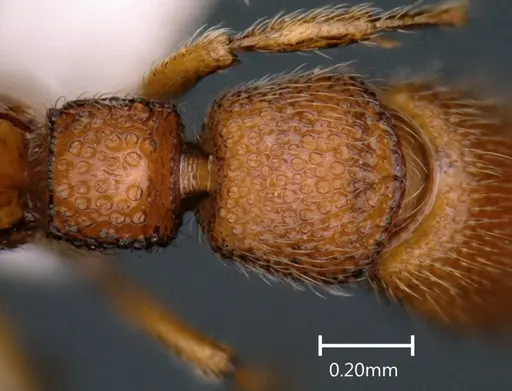
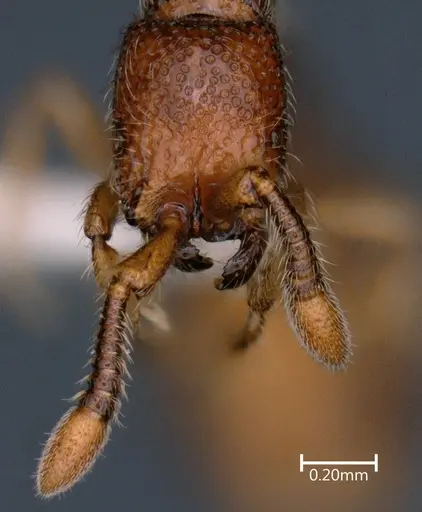
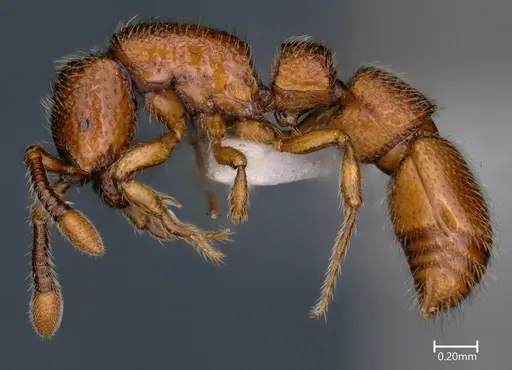
Workers are tiny at only 2.82mm total length with a head width of 0.46mm. They have a distinctive rectangular head that is longer than wide, with weakly convex lateral sides. Their eyes are relatively large for the genus (EI 11,compared to EI 6 in the similar P. piochardi), which may indicate better vision than typical doryline ants. The body is covered with numerous distinct foveolae (small pit-like sculptures), and the first gastral segment has large foveolae anteriorly transitioning to smaller ones posteriorly. Body coloration is mainly yellowish brown, with antennal segments III-X and the mandibles being reddish brown [1]. The 11-segmented antennae with a distinct 2-segmented club (the apical segment is swollen and twice as long as segments IX-X combined) is a key identifying feature [1].
Housing and Escape Prevention
Given their minute size of 2.82mm, excellent escape prevention is absolutely essential. These ants can slip through gaps that would hold back much larger species. Use tightly sealed test tubes or mini formicariums with fine mesh barriers. Even standard ant keeping equipment may have gaps too large for them. A small test tube setup with a cotton plug works well for founding colonies. Because they come from humid leaf litter environments, the setup should maintain consistent moisture without flooding. Good ventilation is also critical to prevent mold while maintaining humidity. Given how recently this species was described, there are no established captive husbandry protocols, you will be pioneering keeping this species. [1]
Feeding and Diet
As a doryline ant, this species is likely predatory on other small invertebrates, similar to other army ants and their relatives. However, no direct observations of feeding behavior exist. In captivity, you should start with tiny live prey such as springtails, fruit fly larvae, or other small micro-arthropods. Given their extremely small size, standard ant prey items may be too large. Sugar sources are unlikely to be accepted, doryline ants are typically strict predators. Feed small amounts of live prey and remove uneaten items to prevent mold. Because nothing is known about their captive diet, be prepared for experimental feeding trials and document what works [1].
Temperature and Environmental Needs
Based on collection data showing the type specimen was found at 17°C in shaded forest conditions, these ants prefer cool, stable temperatures. Aim for 18-22°C in captivity, avoiding temperatures above 25°C. The high-elevation Indian habitat and shaded forest floor suggest they are adapted to cooler conditions than typical tropical ants. Room temperature in most homes should work well, but avoid placing the colony near heat sources. Humidity should be high, these ants lived in damp leaf litter with low light penetration. Keep the nest substrate consistently moist but not waterlogged. The combination of high humidity and cool temperatures can encourage mold, so ensure adequate ventilation while maintaining moisture [1].
Frequently Asked Questions
How long does it take for Parasyscia ganeshaiahi to develop from egg to worker?
This is unknown, no research has documented the development timeline for this species. As a recently described species (2021), no one has successfully bred them in captivity yet. Related doryline ants typically take several months, but their tiny size may mean faster development.
What do Parasyscia ganeshaiahi ants eat?
No feeding observations exist for this species. As a doryline ant, they are likely predatory on small invertebrates. In captivity, you should offer tiny live prey like springtails, fruit fly larvae, or other micro-arthropods. Standard ant prey may be too large. Sugar sources are unlikely to be accepted.
Are Parasyscia ganeshaiahi ants dangerous?
At 2.82mm, these ants are far too small to sting humans effectively. Their mandibles could theoretically bite, but the tiny size makes any bite harmless. The real concern is their predatory nature toward other small invertebrates.
Can beginners keep Parasyscia ganeshaiahi?
This species is not recommended for beginners. It was only described in 2021,meaning almost no captive husbandry information exists. Their tiny size makes escape prevention challenging, and their environmental requirements (cool, high humidity) are specific. They are an expert-level species for pioneering keepers willing to experiment.
Do Parasyscia ganeshaiahi need hibernation?
Unknown, no research exists on their seasonal behavior. However, their high-elevation habitat in India suggests they experience cooler winters and may benefit from a slight cool period. Based on their collection at 17°C, they likely prefer consistently cool conditions year-round rather than dramatic seasonal swings.
What temperature should I keep Parasyscia ganeshaiahi at?
Keep them cool, around 18-22°C. The type specimen was collected at 17°C in a shaded forest environment. Avoid temperatures above 25°C. Most room temperatures should work well, but keep them away from heat sources and direct sunlight.
How big do Parasyscia ganeshaiahi colonies get?
Unknown, only a single worker (the holotype) has ever been documented. No colony size data exists. Related Parasyscia species typically have small colonies, but without any research on this specific species, colony size is entirely speculative.
Can I keep multiple Parasyscia ganeshaiahi queens together?
Unknown, no research exists on colony structure for this species. The colony type (single queen vs multiple queen) has not been documented. Do not attempt combining unrelated queens until more is known about their natural colony structure.
Why are my Parasyscia ganeshaiahi dying?
Without any established husbandry protocols, colony failures are likely. Common causes may include: escape through tiny gaps, improper temperature (too warm), humidity issues (too dry or too wet causing mold), unsuitable food, or stress from captivity. This species may simply not survive in captivity given how recently it was discovered.
References

This caresheet is licensed under CC BY-SA 4.0 .
NBAIRHYM-FOR1721-1
View on AntWeb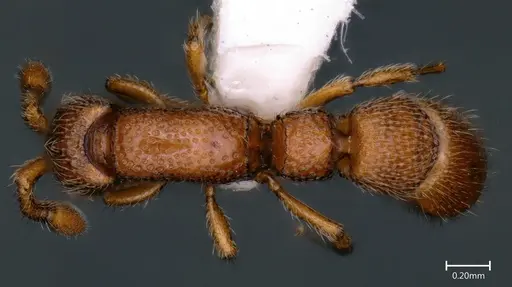
Literature
Loading...Loading products...