

Paraparatrechina malaccana
- Scientific Name
- Paraparatrechina malaccana
- Tribe
- Lasiini
- Subfamily
- Formicinae
- Author
- Viehmeyer, 1916
- Distribution
- Found in 1 countries
Paraparatrechina malaccana Overview
Paraparatrechina malaccana is an ant species of the genus Paraparatrechina. It is primarily documented in 1 countries , including Malaysia. Detailed taxonomic data and occurrence records can be further explored via authoritative databases such as AntWeb or the Global Biodiversity Information Facility (GBIF).
Paraparatrechina malaccana
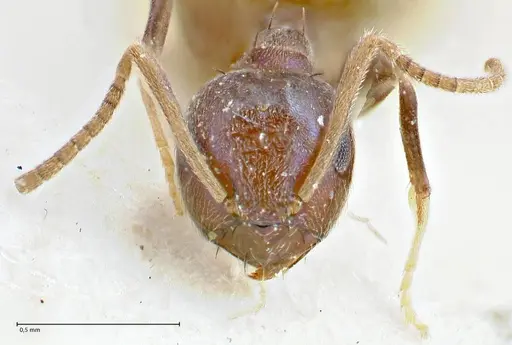
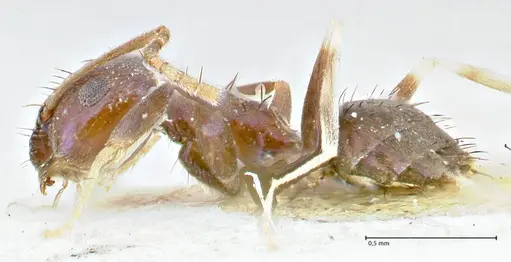
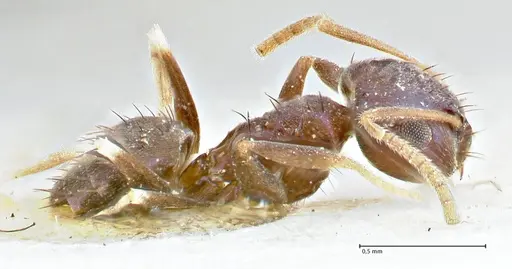
Paraparatrechina malaccana is a small, slender ant native to the forests of Malaysia and Singapore. Workers are tiny at around 2-3mm, with a distinctive appearance featuring a rounded head with widely spaced eyes positioned above the midline, and a bluish-green sheen on the head combined with a brownish body showing faint metallic purple or violet reflections. Their most striking feature is the pale whitish coloring on the mid and hind tibiae, tarsi, and the distal ends of the femora, which contrasts sharply with their darker body. This species was originally described as a subspecies of P. butteli but has been raised to full species status based on careful comparison of specimens [1].
These ants are primarily arboreal and forest-dwelling, found in both young and mature secondary forests across Singapore's nature reserves. They forage on shrubs and foliage, and can be collected by beating vegetation. Unlike many ground-nesting ants, they prefer the canopy layer and understory, making them a unique addition for antkeepers interested in observing arboreal foraging behavior.
Quick Summary
- Difficulty: Medium
- Origin & Habitat: Native to Malaysia and Singapore in the Indomalaya region. Found in secondary forests, both young and mature, where they forage on shrubs and foliage [1].
- Colony Type: Colony structure is unconfirmed. Based on related Paraparatrechina and Nylanderia species, likely monogyne (single queen) colonies, though this requires confirmation.
- Size & Growth:
- Queen: Unknown, no queen specimens have been documented in the literature. Estimated around 4-5mm based on genus patterns.
- Worker: 2-3mm [1]
- Colony: Unknown, no colony size data exists. Related Nylanderia species typically reach several hundred workers.
- Growth: Unknown, likely moderate based on genus patterns
- Development: Unknown, estimated 6-10 weeks based on related Formicinae species at optimal temperature (Development timeline has not been directly studied. Estimates based on typical Nylanderia and Paratrechina patterns.)
- Antkeeping:
- Temperature: Keep around 22-26°C. These are tropical forest ants from Southeast Asia, so they prefer warm, stable conditions. A gentle gradient allowing them to choose their preferred temperature is ideal.
- Humidity: Moderate to high humidity (60-80%). Their natural habitat in Singaporean forests is humid, but avoid waterlogging. Provide a moist nest substrate while allowing some drier areas for them to regulate.
- Diapause: Likely no true diapause, being a tropical species from Singapore, they probably do not require a hibernation period. However, slight temperature reduction during "winter" months may be beneficial.
- Nesting: Based on their arboreal foraging habits, these ants likely nest in decaying wood, under bark, or in hollow stems. In captivity, a Y-tong (AAC) nest or plaster nest with small chambers works well. Avoid large, open spaces, they prefer tight, enclosed spaces scaled to their tiny size.
- Behavior: These are small, active ants with a generally peaceful temperament. They are arboreal foragers, spending much of their time on vegetation rather than the ground. They are not aggressive and unlikely to sting humans, their small size means any sting would be negligible. They are escape artists due to their tiny size, excellent escape prevention with fine mesh barriers is essential. They are generalist foragers, likely feeding on honeydew, small insects, and nectar in nature.
- Common Issues: escape prevention is critical, their tiny 2-3mm size means they can squeeze through standard barrier materials, no documented colony size or development data makes it difficult to assess growth expectations, wild-caught colonies may have parasites or diseases that can cause colony failure, their arboreal nature means they may not thrive in ground-based setups, provide climbing structures, humidity control is important, too dry and they desiccate, too wet and mold becomes a problem
Housing and Nest Setup
Paraparatrechina malaccana is a tiny ant, so your housing must account for their small size. A Y-tong (AAC) nest or acrylic formicarium with small chambers works well. They prefer tight spaces, avoid large, open foraging areas. Because they are arboreal by nature, include climbing structures like twigs, fake leaves, or mesh in their outworld. This lets them exhibit their natural foraging behavior on vegetation rather than just crawling on a flat surface. Test tube setups work for founding colonies, but be prepared to move them to a proper nest once the colony grows past 20-30 workers. Escape prevention is critical, use fine mesh barriers (at least 0.5mm) and apply fluon to the edges of any barrier. These ants can squeeze through gaps that would hold back larger species. [1]
Feeding and Diet
Like most Paraparatrechina and Nylanderia species, these ants are generalist feeders. Offer sugar water, honey, or diluted maple syrup as a constant carbohydrate source. For protein, provide small live prey like fruit flies, pinhead crickets, or other tiny insects. They may also accept nectar and honeydew if you have live plants in their setup. Feed small amounts at first and observe what they accept. Remove any uneaten protein within 24 hours to prevent mold. Because they are tiny, even very small prey items are suitable, avoid offering anything larger than their workers.
Temperature and Humidity
Being from tropical Singapore and Malaysia, these ants need warm conditions. Maintain temperatures between 22-26°C, ideally around 24°C. A heating cable on one side of the nest can create a temperature gradient, but ensure there are cooler areas too. For humidity, aim for 60-80%, their natural habitat in secondary forests is consistently humid. Keep the nest substrate moist but not waterlogged. A moisture reservoir in a test tube setup works well for founding colonies. Monitor for mold, which can be a problem in overly humid conditions. Good ventilation helps prevent stagnant air while maintaining humidity. [1]
Behavior and Observation
Paraparatrechina malaccana is an arboreal species, meaning they spend more time on vegetation than on the ground. In your setup, you will see them climbing on branches, fake leaves, or mesh rather than just walking along the bottom of the outworld. They are active foragers and will quickly discover and recruit to food sources. Their small size and peaceful nature make them fascinating to observe but challenging to photograph, they move quickly and are easily lost on camera. They are not aggressive toward humans and unlikely to attempt escape through aggressive behavior, but their small size means they will escape through any gap they can find. Watch for tandem-running recruitment when you add new food, this is common in related species and helps the colony efficiently exploit food sources. [1]
Growth and Development
Unfortunately, there is no specific data on the development timeline for Paraparatrechina malaccana. Based on related Nylanderia and Paratrechina species in the Formicinae subfamily, expect the following: claustral founding where the queen seals herself in and raises the first brood alone on stored fat reserves. The first workers (nanitics) should appear in 6-10 weeks under optimal warm conditions (around 24°C). Initial colony growth is slow, the first batch of workers will be small in number (typically 3-10 nanitics). After that, growth should accelerate as more workers are produced. Patience is key with this species, as their small size and likely moderate growth rate mean it takes time to build a sizable colony. Do not be alarmed if development seems slow, this is normal for tiny tropical ants.
Frequently Asked Questions
How long does it take for Paraparatrechina malaccana to produce first workers?
The exact timeline is unknown, but based on related species, expect 6-10 weeks from egg to worker at optimal temperature (around 24°C). The queen will seal herself in and raise the first brood alone.
What do Paraparatrechina malaccana ants eat?
They are generalist feeders. Offer sugar water, honey, or maple syrup constantly for carbohydrates. For protein, provide small live prey like fruit flies, pinhead crickets, or other tiny insects.
Are Paraparatrechina malaccana ants difficult to keep?
They are rated as medium difficulty. The main challenges are their tiny size (escape prevention is critical), lack of documented care information, and arboreal nature requiring appropriate setup with climbing structures.
Do Paraparatrechina malaccana ants need hibernation?
Likely no, being a tropical species from Singapore, they probably do not require a diapause period. However, slight temperature reduction during cooler months may be natural and beneficial.
What size colony do Paraparatrechina malaccana reach?
Colony size is not documented in the literature. Based on related Nylanderia species, they likely reach several hundred workers over time.
Can I keep multiple Paraparatrechina malaccana queens together?
The colony structure is unconfirmed. It is unknown whether they are monogyne (single queen) or can form multi-queen colonies. Combining unrelated queens is not recommended due to lack of documented success.
Where is Paraparatrechina malaccana found in the wild?
They are native to Malaysia and Singapore. In Singapore, they have been found in multiple nature reserves including MacRitchie Reservoir, Central Catchment Nature Reserve, and Upper Thomson Nature Park, typically in secondary forest habitats foraging on shrubs and foliage.
Why are my Paraparatrechina malaccana escaping?
Their tiny 2-3mm size means they can squeeze through gaps that hold back larger ants. Use fine mesh barriers (0.5mm or smaller) and apply fluon to all barrier edges. Check for any tiny gaps in your setup.
References

This caresheet is licensed under CC BY-SA 4.0 .
FOCOL2717
View on AntWeb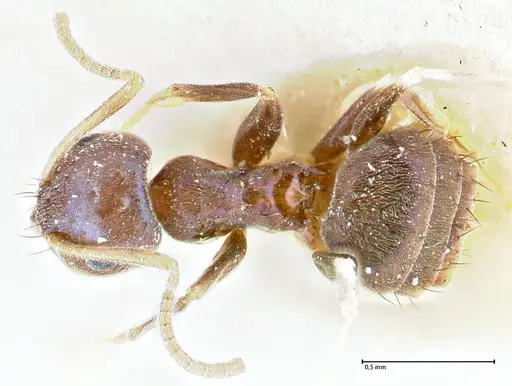
Literature
Loading...Loading products...