

Oxyopomyrmex laevibus
- Scientific Name
- Oxyopomyrmex laevibus
- Tribe
- Stenammini
- Subfamily
- Myrmicinae
- Author
- Salata & Borowiec, 2015
- Distribution
- Found in 1 countries
Oxyopomyrmex laevibus Overview
Oxyopomyrmex laevibus is an ant species of the genus Oxyopomyrmex. It is primarily documented in 1 countries , including Greece. Detailed taxonomic data and occurrence records can be further explored via authoritative databases such as AntWeb or the Global Biodiversity Information Facility (GBIF).
Oxyopomyrmex laevibus
Oxyopomyrmex laevibus is a tiny, dark ant species endemic to Crete, Greece. Workers measure approximately 4.5mm in total length, with a black head, thorax, and abdomen. The species was only described in 2015 and is known from just a few specimens collected on a small peninsula near Chania on Crete's northern coast. This is one of the more recently described ant species in the hobby, and its biology remains poorly documented in scientific literature. The species gets its name from the smooth, shiny surface at the center of the pronotum and the reduced sculpture on the dorsal surface of its head and genae, 'laevibus' means smooth in Latin [1]. As a Mediterranean coastal species from arid littoral habitat, these ants likely have different care requirements than typical temperate ants.
Quick Summary
- Difficulty: Unknown, insufficient data for reliable assessment
- Origin & Habitat: Crete, Greece, endemic. Found in arid littoral habitat on a small peninsula close to the sea, vegetated by pine grove and Mediterranean scrubland [1][2]
- Colony Type: Unconfirmed, only known from worker specimens, queen caste has not been described
- Size & Growth:
- Queen: Unknown, queen caste not yet described [1]
- Worker: 4.5mm (TL), HL 0.603-0.682mm, HW 0.575-0.659mm [1]
- Colony: Unknown, colony size data not available
- Growth: Unknown, no development data exists
- Development: Unknown, no development studies exist for this species (No data available on egg-to-worker development time. Related Oxyopomyrmex species may provide rough estimates, but this species remains poorly studied.)
- Antkeeping:
- Temperature: Likely warm conditions based on Mediterranean coastal habitat. Estimate 22-28°C as a starting point, with Crete experiencing hot summers and mild winters. Adjust based on colony activity.
- Humidity: Arid to semi-arid preference expected. Coastal littoral habitat on Crete is relatively dry. Provide a gradient with a moist area and dry area, avoiding both waterlogging and complete drying.
- Diapause: Likely, most Mediterranean ants from Crete have some winter dormancy period given the seasonal climate. Specific requirements unknown.
- Nesting: Natural nesting habits unconfirmed. Based on habitat (arid littoral with pine and scrub), likely nests in soil under stones or in shallow cavities. Captive suggestions: test tube setups work for founding, Y-tong or plaster nests for established colonies. Keep nest chambers relatively small to match their tiny size.
- Behavior: Behavior is unstudied in captivity. Based on related Stenammini ants and the habitat where collected (arid littoral with other surface-active species), they are likely generalist foragers. Their small size (under 5mm) means escape prevention is critical, they can squeeze through tiny gaps. No data on sting potency, but given their tiny size, any sting would be negligible to humans. Exercise caution with any aggressive defense behavior until documented.
- Common Issues: no captive husbandry data exists, this species has never been kept in captivity to our knowledge, queen caste unknown, cannot confirm founding type or colony structure, development timeline completely unknown, keepers will be pioneers, extreme escape risk due to tiny worker size, fine mesh barriers essential, endemic to Crete, potential legal restrictions on export or keeping outside Greece
Species Discovery and Status
Oxyopomyrmex laevibus was only described in 2015 by Salata and Borowiec, making it one of the more recently described ant species available in the antkeeping hobby. The species is endemic to Crete, meaning it is found nowhere else on Earth. Only eight worker specimens have been documented, all collected from a single location near Chania on Crete's northern coast. The queen caste has never been described, and no scientific papers exist on this species' biology, colony structure, or development. This makes Oxyopomyrmex laevibus a true pioneer species in antkeeping, there is no established care protocol, and every successful keeper will be contributing new knowledge to the hobby [1][2].
Natural Habitat and Distribution
This species is known only from Crete, the largest Greek island and one of the most southerly points in the Aegean Sea. Specimens were collected in arid littoral habitat on a small peninsula close to the sea, an environment characterized by pine grove and Mediterranean scrubland vegetation. The collection site was at low elevation (10-25m), indicating this is a coastal species adapted to warm, relatively dry conditions. Crete has a typical Mediterranean climate with hot, dry summers and mild, wet winters. The ant community at the collection site included other Mediterranean species like Aphaenogaster simonellii, various Camponotus species, Crematogaster species, and Temnothorax species, giving us context for the competitive environment this species evolved in [1][2].
Identification and Appearance
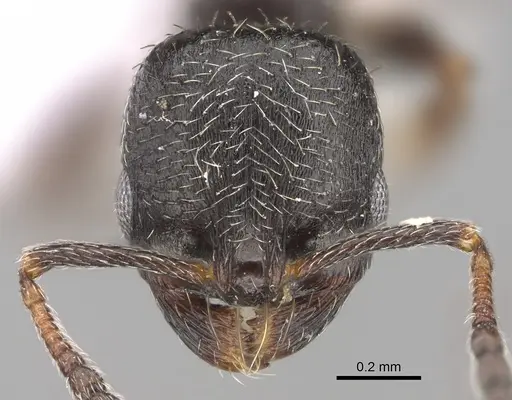
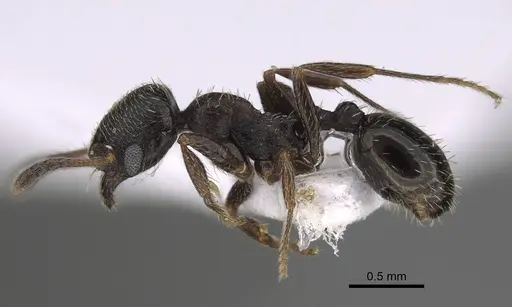
Workers are tiny at approximately 4.5mm total length, with a distinct black coloration covering the head, thorax, and abdomen. The antennal scapes are smoked brown, with the apex of the scapes and first six funiculus segments being brown to yellowish. The legs are also dark brown with yellowish-brown knees and tarsi. The species is distinguished from related Oxyopomyrmex species by its smooth, shiny surface at the center of the pronotum (the middle section of the thorax) and reduced sculpture on the head and genae. The head is rectangular and longer than wide, with large eyes that strongly narrow downward. The scape (the first antennal segment) is notably short, only about 0.7 times the width of the head [1].
Housing Recommendations
Since no captive care data exists, recommendations must be based on habitat inference and related species. Use test tubes for any founding colony, the small size suggests narrow chambers will be appreciated. For established colonies, Y-tong nests or plaster nests with small chambers would likely work well. Escape prevention is critical given their tiny 4.5mm size, standard gap-sealing and fine mesh barriers are essential. Provide a temperature gradient of roughly 22-28°C, starting in the middle and adjusting based on colony behavior. For humidity, create a gradient with a moist cotton area and allow part of the outworld to remain dry, the arid littoral habitat suggests they prefer drier conditions than many ants. Provide typical antkeeping outworld items like a water tube and feeding area [1].
Feeding and Diet
No specific dietary studies exist for this species. As a member of the Myrmicinae subfamily and Stenammini tribe, they likely have a typical omnivorous diet similar to related genera like Messor (seed-harvesting ants) or Aphaenogaster (generalist foragers). Based on the habitat and related species in the collection area, they probably scavenge for small insects, seeds, and honeydew. Offer standard ant foods: small insects like fruit flies or pinhead crickets, sugar water or honey, and observe acceptance. Given their tiny size, prey items should be appropriately scaled, very small insects or pre-killed portions. Start with small live prey and sugar sources, then adjust based on what the colony accepts [1].
Important Considerations for Keepers
This species represents an exciting opportunity but also significant challenges. As a recently described species with no captive history, keepers should expect to be pioneers. Document everything: feeding acceptance, temperature preferences, humidity tolerance, egg-laying rates, development times, and any behaviors observed. Be prepared for slow progress, with no baseline to work from, establishing successful husbandry may take years rather than months. Consider the ethical implications of keeping an endemic species, ensure your source is legal and sustainable. The extreme lack of biological data means almost any observation could be new to science. Join antkeeping communities and share your findings, this species could contribute meaningfully to our understanding of Mediterranean ant biology [2][1].
Frequently Asked Questions
How long does it take for Oxyopopmyrmex laevibus to produce first workers?
This is completely unknown. No development studies exist for this species. Without documented egg-to-worker timelines, keepers will need to observe and record their own colony's development. Expect a learning curve as this is a pioneer species in antkeeping.
What do Oxyopomyrmex laevibus eat?
Their specific diet is unstudied. Based on related Stenammini ants and their Mediterranean habitat, they likely accept small insects, seeds, and honeydew. Offer small live prey (fruit flies, pinhead crickets) and sugar sources (honey, sugar water). Start with variety and observe what they accept.
Are Oxyopomyrmex laevibus good for beginners?
No. This species cannot be recommended for beginners due to the complete lack of captive husbandry data. Every aspect of care is uncertain, and successful keeping requires extensive experience with ant biology and willingness to experiment. This is a species for experienced keepers who want to contribute to new knowledge.
Do Oxyopomyrmex laevibus ants sting?
Sting capability is not documented. Given their very small size (under 5mm), any sting would likely be negligible to humans, too weak to penetrate skin. However, defensive behavior has not been studied, so exercise normal caution.
What temperature should I keep Oxyopomyrmex laevibus at?
No specific data exists. Based on their Mediterranean coastal habitat on Crete, aim for 22-28°C as a starting range. Crete experiences hot summers, so the upper end may be preferred. Use a temperature gradient and observe colony behavior to find the optimal range.
Do Oxyopomyrmex laevibus need hibernation?
Likely yes, given their origin from Crete with its seasonal climate. Mediterranean ants typically have a winter dormancy period. However, specific diapause requirements are completely unstudied. If keeping in a temperate climate, a cool period around 10-15°C for 2-3 months during winter is probably appropriate.
Can I keep multiple Oxyopomyrmex laevibus queens together?
Unknown. The colony structure has never been documented, we don't even know if colonies are single-queen or multi-queen. Until queen biology is documented, combining unrelated queens is not recommended.
How big do Oxyopomyrmex laevibus colonies get?
Unknown. No colony size data exists. The related Oxyopomyrmex species are typically small colonies, but maximum size for O. laevibus is completely unstudied. Expect small to moderate colony sizes based on the worker measurements.
What is the best nest type for Oxyopomyrmex laevibus?
No established recommendation exists. Based on their tiny size and arid habitat, test tubes work for founding. For established colonies, Y-tong or plaster nests with small chambers would likely be appropriate. Ensure excellent escape prevention regardless of nest type.
Where is Oxyopomyrmex laevibus native to?
Crete, Greece, specifically near Chania on the northern coast. This species is endemic to Crete, meaning it is found nowhere else in the world. It was only described in 2015 and remains one of the more recently discovered ant species in the hobby [1][2].
References

This caresheet is licensed under CC BY-SA 4.0 .
CASENT0106267
View on AntWeb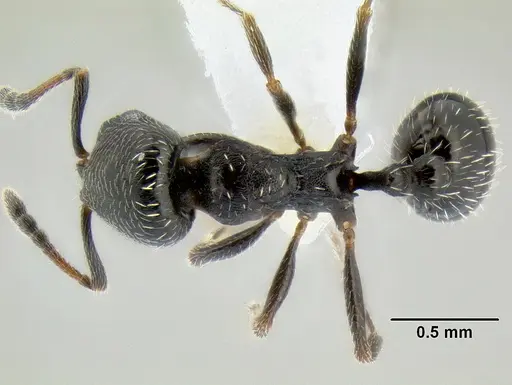
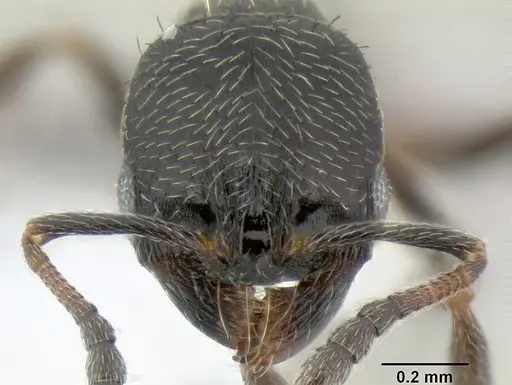
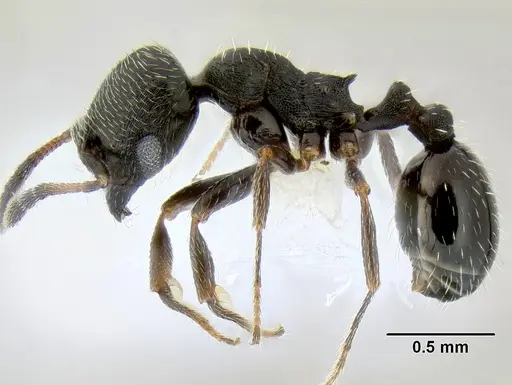
CASENT0923230
View on AntWeb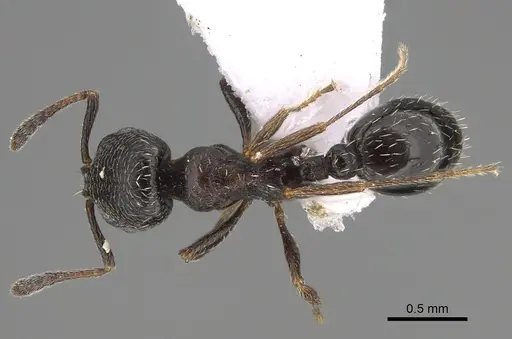
Literature
Loading...Loading products...