

Oxyepoecus rosai
- Scientific Name
- Oxyepoecus rosai
- Tribe
- Solenopsidini
- Subfamily
- Myrmicinae
- Author
- Albuquerque & Brandão, 2009
- Distribution
- Found in 1 countries
Oxyepoecus rosai Overview
Oxyepoecus rosai is an ant species of the genus Oxyepoecus. It is primarily documented in 1 countries , including Brazil. Detailed taxonomic data and occurrence records can be further explored via authoritative databases such as AntWeb or the Global Biodiversity Information Facility (GBIF).
Oxyepoecus rosai
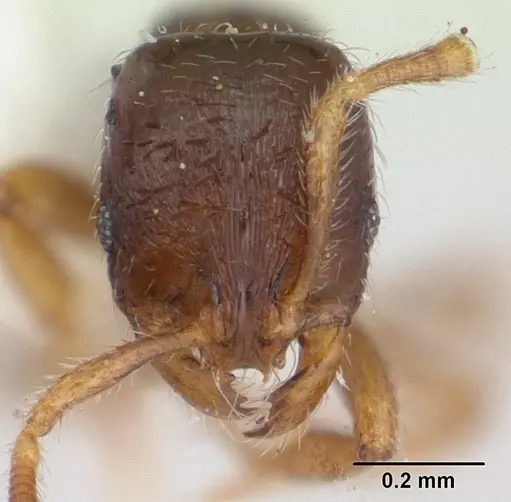
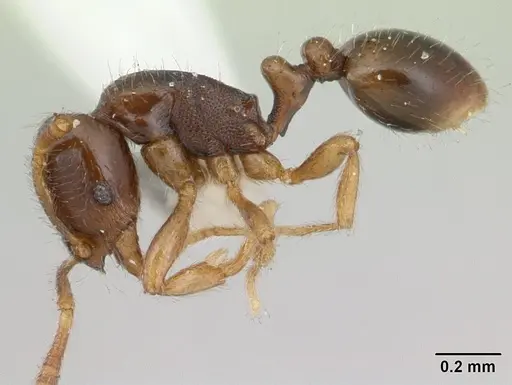
Oxyepoecus rosai is a tiny ant species native to the Atlantic Forest of southeastern Brazil, specifically found in São Paulo and Santa Catarina states. Workers measure just 2.3-2.4mm, making them among the smallest ants in the Solenopsidini tribe. They have a chestnut brown body with a darker gaster (abdomen), and their most distinctive feature is their very small compound eyes with only 4-5 facets in workers. Queens are slightly larger at 2.8-2.9mm. These ants live in leaf-litter and are attracted to protein baits like sardines in the wild, suggesting they actively hunt small prey. This is a relatively recently described species (2009), and like many leaf-litter ants, they remain poorly studied in captivity.
Quick Summary
- Difficulty: Unknown, likely Expert
- Origin & Habitat: Brazilian Atlantic Forest in São Paulo and Santa Catarina states. Found in leaf-litter using Winkler extractors and attracted to sardine protein baits [1][2].
- Colony Type: Colony structure is unconfirmed. Based on typical Solenopsidini patterns, likely single-queen colonies, but this has not been documented.
- Size & Growth:
- Queen: 2.8-2.93 mm [1]
- Worker: 2.30-2.40 mm [1]
- Colony: Unknown, likely small colonies under 500 workers based on related leaf-litter Solenopsidini
- Growth: Unknown
- Development: Unconfirmed, likely 4-8 weeks based on typical Solenopsidini development at tropical temperatures (No direct development data exists for this species. Estimates based on related genera in the Solenopsidini tribe.)
- Antkeeping:
- Temperature: Keep at 22-26°C. These are Brazilian Atlantic Forest ants that prefer warm, stable conditions. A gentle heat gradient allows them to regulate their temperature.
- Humidity: Keep moderately humid. Leaf-litter species need damp substrate, aim for substrate that feels moist but not waterlogged, with some drier areas for escape.
- Diapause: Unconfirmed, Brazilian ants from subtropical regions may reduce activity in cooler months but true hibernation is unlikely.
- Nesting: Use a naturalistic setup with fine substrate or a Y-tong/plaster nest with small chambers scaled to their tiny size. They are leaf-litter dwellers so they need tight spaces and good traction on surfaces.
- Behavior: These ants are tiny and likely predatory based on their attraction to sardine baits in the wild. They probably hunt small micro-arthropods in the leaf-litter. Their small size means excellent escape prevention is critical, they can squeeze through tiny gaps. Workers have very small eyes, suggesting they rely more on chemical cues than visual navigation. Temperament is unknown but related Solenopsidini are typically non-aggressive toward humans.
- Common Issues: tiny size makes escape likely without fine mesh barriers, no established captive breeding protocols exist for this species, wild-caught colonies may have parasites or fail to adapt to captivity, protein-focused diet may be difficult to provide in captivity, slow colony growth can lead to keeper impatience and overfeeding
Species Discovery and Naming
Oxyepoecus rosai was described in 2009 by Albuquerque & Brandão and named in honor of Rogério Rosa da Silva, a colleague and efficient ant collector on the research team. The species belongs to the Rastratus species-group within the genus Oxyepoecus. It was discovered in the Atlantic Forest region of São Paulo state at the Estação Biológica de Boracéia, a well-known biodiversity hotspot. The type specimens were collected using two methods: attracted to sardine baits (protein-based) and extracted from leaf-litter using Winkler extractors, which is a standard technique for sampling tiny leaf-litter ants. [1]
Identification and Distinguishing Features
Workers of O. rosai can be distinguished from other Oxyepoecus species, particularly O. myops (their closest relative), by several features. They have larger compound eyes than O. myops, and the integument on their head vertex, lateral portions of the pronotum, petiolar node, and postpetiole is smooth and shining rather than sculptured. Workers measure just 2.30-2.40mm in total length, making them very small ants. Their body is chestnut brown with a darker (fuscous) gaster. The compound eyes are remarkably simple, with only 4-5 facets in workers, this is one of the lowest eye counts seen in ants and suggests they may be somewhat blind, relying more on chemical pheromone trails. [1]
Natural History and Foraging
In the wild, O. rosai has been collected exclusively from leaf-litter in the Brazilian Atlantic Forest, a humid tropical/subtropical ecosystem. The fact that specimens were attracted to sardine baits is significant, sardines are protein-rich, suggesting these ants are predatory or scavengers that target other insects and arthropods. This is consistent with the Solenopsidini tribe, which includes many predatory species. They were also recovered using Winkler extractors, which gently separate insects from leaf-litter samples, confirming they live in the forest floor layer. Their tiny size (under 2.5mm) allows them to hunt very small prey and navigate through the complex microhabitats of the leaf-litter. [1]
Housing and Care Recommendations
Based on their natural history as leaf-litter ants from southeastern Brazil, these ants need warm, humid conditions with small-scale environments. Keep temperatures in the 22-26°C range, stable and warm like their native Atlantic Forest habitat. Humidity should be moderate to high, with substrate that stays damp but not soggy. Because they are so tiny, escape prevention is critical, even small gaps in tubing or nest connections can allow escapes. Use fine mesh on any ventilation. For nesting, a naturalistic setup with a thin layer of moist substrate works well, or a small-chambered plaster/acrylic nest scaled to their minute size. Feed protein-rich foods like small live prey (fruit flies, pinhead crickets, springtails) since they responded to sardine baits in the wild. Sugar water may also be accepted but protein should be the primary food source.
Distribution and Habitat
Oxyepoecus rosai has a limited distribution restricted to the Atlantic Forest of South and Southeastern Brazil, specifically between São Paulo and Santa Catarina states. This region is known for its high biodiversity and humid subtropical climate. They've been recorded in Santa Catarina in both the western region (São Miguel do Oeste, Chapecó) and the plateau region (Otacílio Costa), as well as in São Paulo state at Salesópolis. The Atlantic Forest is a threatened ecosystem, and this species' limited range makes it potentially vulnerable to habitat changes. In captivity, keeping these conditions in mind, humid, warm, forest-floor style setup, is important for success. [1][2]
Frequently Asked Questions
How long does it take for Oxyepoecus rosai to produce first workers?
The egg-to-worker timeline is unconfirmed for this species. Based on typical Solenopsidini development at warm temperatures (24-26°C), estimate 4-8 weeks from egg to first worker, but this is an educated guess rather than documented data.
What do Oxyepoecus rosai ants eat?
In the wild, they are attracted to protein baits like sardines, suggesting they are predatory on small arthropods. In captivity, offer small live prey such as fruit flies, springtails, and tiny crickets. They may accept sugar water, but protein should be the primary food source.
Are Oxyepoecus rosai good for beginners?
This species is not recommended for beginners. It was only described in 2009 and has no established captive breeding protocols. Their tiny size makes them difficult to house and feed properly, and they may have specific requirements we don't yet understand.
What temperature do Oxyepoecus rosai need?
Keep them at 22-26°C. These are Brazilian Atlantic Forest ants that prefer warm, stable conditions. A gentle temperature gradient allows them to regulate their body temperature.
How big do Oxyepoecus rosai colonies get?
Colony size is unconfirmed, but based on related leaf-litter Solenopsidini, colonies likely remain small, probably under 500 workers. Their tiny body size and leaf-litter habitat suggest they form small, localized colonies.
Can I keep multiple Oxyepoecus rosai queens together?
The colony structure is unconfirmed for this species. Combining unrelated queens is not recommended since it hasn't been documented and could result in aggression.
Do Oxyepoecus rosai need hibernation?
Diapause requirements are unconfirmed. As Brazilian ants from a subtropical region, they likely do not require true hibernation but may reduce activity in cooler months. Keep them warm year-round.
Why are my Oxyepoecus rosai dying?
Without established captive protocols, colony failures are common. Potential issues include: inability to provide appropriate live prey, stress from handling, parasites from wild-caught colonies, temperature extremes, or escape-related losses. Their tiny size also makes them vulnerable to drying out.
What type of nest should I use for Oxyepoecus rosai?
Use a naturalistic setup with fine, moist substrate or a small-chambered nest scaled to their tiny size. They are leaf-litter dwellers so they need tight spaces and good traction. Avoid large, open areas.
References

This caresheet is licensed under CC BY-SA 4.0 .
CASENT0178852
View on AntWeb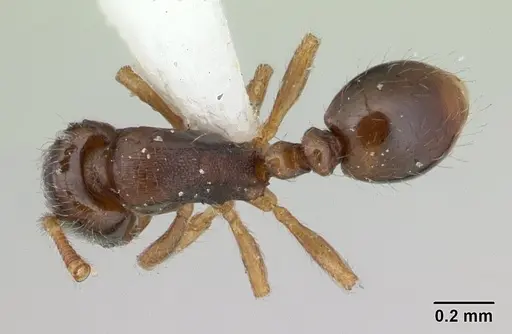
Literature
Loading...Loading products...