

Orectognathus sarasini
- Scientific Name
- Orectognathus sarasini
- Tribe
- Attini
- Subfamily
- Myrmicinae
- Author
- Emery, 1914
- Distribution
- Found in 1 countries
Orectognathus sarasini Overview
Orectognathus sarasini is an ant species of the genus Orectognathus. It is primarily documented in 1 countries , including New Caledonia. Detailed taxonomic data and occurrence records can be further explored via authoritative databases such as AntWeb or the Global Biodiversity Information Facility (GBIF).
Orectognathus sarasini
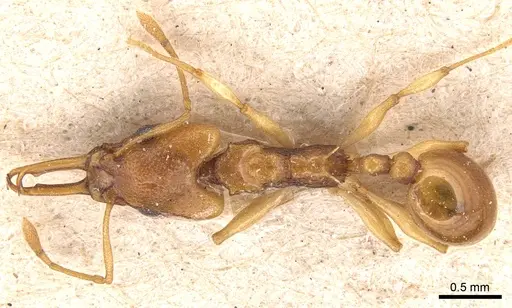
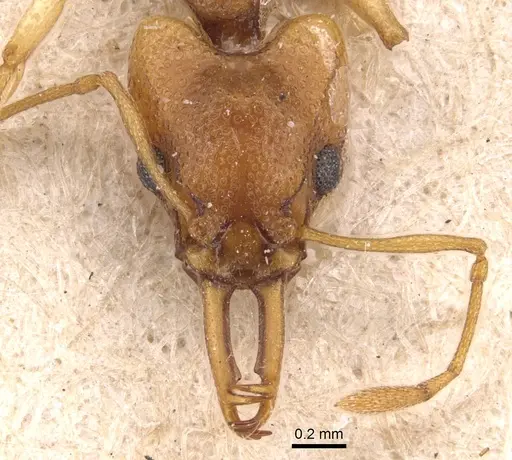
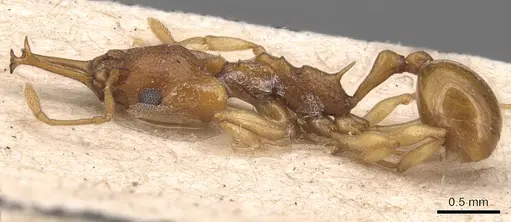
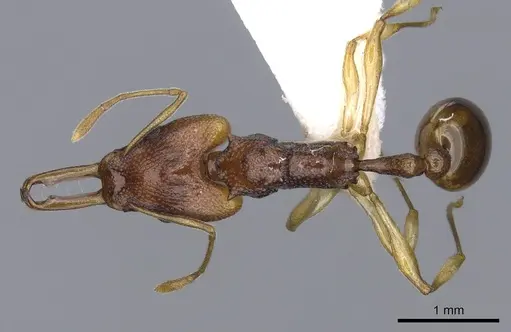
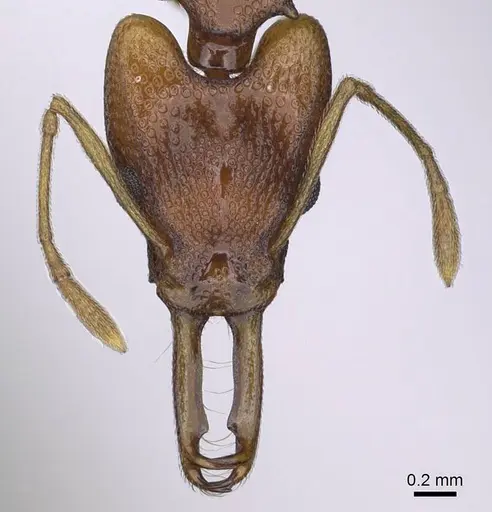
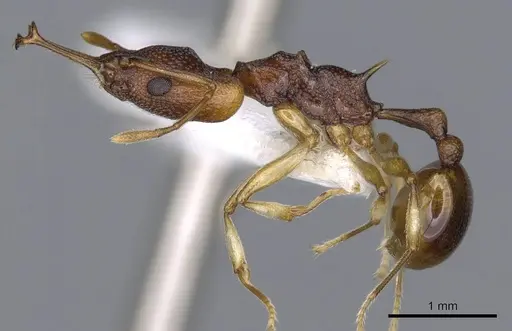
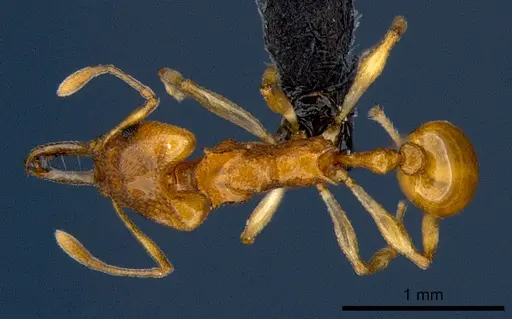
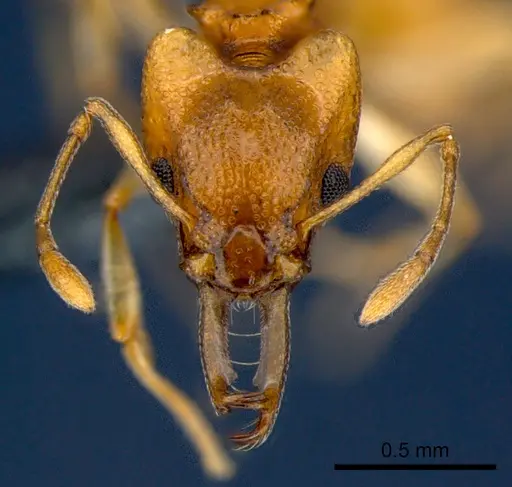
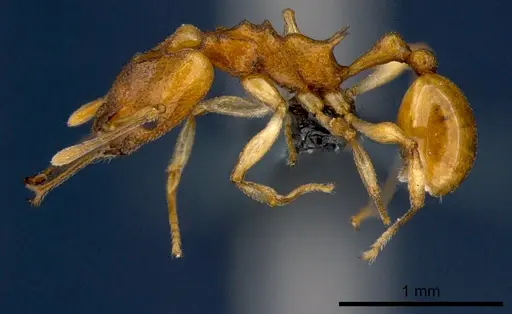
Orectognathus sarasini is a tiny dacetine ant endemic to southern New Caledonia. Workers measure just 4.2-5.3mm and occur in two distinct color forms, a yellow-headed form and a dark-headed form (possibly sibling species). The genus Orectognathus belongs to the tribe Attini, known for their specialized hunting behaviors. These ants nest in small cavities in rainforest leaf litter, typically under rocks or inside twigs and dead branches. Colonies are small, with field observations finding around 30 workers plus a single queen. Workers are nocturnal foragers, hunting on low vegetation and tree trunks during the first hours of darkness. This is a rare species found only in New Caledonia's forests [1][2].
Quick Summary
- Difficulty: Medium
- Origin & Habitat: Southern New Caledonia, rainforest leaf litter. Nests are found under rocks or in twigs in wet soil by streams and in dead branches lying on the forest floor [3].
- Colony Type: Monogyne, colonies observed with a single queen. Small colony size of approximately 30 workers [3].
- Colony: Monogyne
- Size & Growth:
- Queen: 5.6mm [3]
- Worker: 4.2-5.3mm [3]
- Colony: Approximately 30 workers based on field observations [3]
- Growth: Unknown, likely slow to moderate based on small colony sizes
- Development: Unknown, no direct data available. Based on typical dacetine ant patterns, estimate 6-10 weeks at tropical temperatures (Development timeline unconfirmed for this species. Related dacetine species typically take 6-10 weeks from egg to worker)
- Antkeeping:
- Temperature: Keep warm, around 24-28°C. New Caledonia has a tropical climate, so these ants need warmth. A heating cable on one side of the nest creates a suitable gradient [3].
- Humidity: High humidity required, they live in rainforest leaf litter. Keep the nest substrate consistently moist but not waterlogged. Provide a water tube for drinking water [3].
- Diapause: Unlikely, being from tropical New Caledonia, they probably do not require a hibernation period. Keep at stable warm temperatures year-round.
- Nesting: Small nests work well, they naturally nest in small cavities under rocks and in twigs. A Y-tong (AAC) nest with small chambers or a small naturalistic setup with flat stones and moist substrate mimics their natural habitat. Tight chambers scaled to their tiny size are important [3].
- Behavior: Nocturnal foragers, workers hunt at night on low vegetation and tree trunks. They are predators, likely hunting small arthropods like springtails. Small colony size means they are not aggressive and pose no real sting risk to humans. Their tiny size means escape prevention is critical, use fine mesh barriers [3].
- Common Issues: escape prevention is critical due to their very small size, they can squeeze through tiny gaps, small colony sizes mean slow population growth, don't expect rapid expansion, they may refuse offered food initially, one observed colony did not feed on collembolans in captivity, high humidity needs must be balanced with ventilation to prevent mold, rare species with limited availability, source from reputable dealers if available
Housing and Nest Setup
Orectognathus sarasini requires a small, humid nest setup. In the wild, they nest in small cavities about 3-4cm across under rocks in wet soil, or inside dead twigs and branches on the forest floor. For captivity, a Y-tong (AAC) formicarium with small chambers works well, or you can create a naturalistic setup with moist substrate and hiding spots like small stones or pieces of twig. The key is providing tight, appropriately-sized chambers, these are tiny ants that feel exposed in large open spaces. A water tube should be provided for drinking water, as high humidity can make free water sources risky. Use fine mesh on any openings because their small size means they can escape through gaps that would hold larger ants. [1][3]
Feeding and Diet
As dacetine ants, Orectognathus sarasini are predators. They likely hunt small arthropods like springtails, mites, and other micro-invertebrates found in leaf litter. In captivity, offer small live prey such as springtails, fruit flies, and other tiny insects. One observed colony in captivity refused offered collembolans and other small arthropods, so acceptance may vary [3]. Feed protein prey 2-3 times per week, and remove any uneaten prey after 24 hours. Sugar sources are not typically accepted by dacetine ants, they are obligate predators. Always provide a clean water source.
Temperature and Humidity
Being from tropical New Caledonia, these ants need warm and humid conditions. Maintain temperatures around 24-28°C, which mimics their natural rainforest environment. A heating cable placed on one side of the nest creates a temperature gradient allowing the ants to regulate their own exposure. High humidity is essential, their natural habitat is wet rainforest leaf litter. Keep the nest substrate consistently moist but not waterlogged. If using a test tube setup, ensure condensation is present but the棉花 is not flooded. Allow for some ventilation to prevent mold buildup while maintaining humidity. [3]
Colony Dynamics and Growth
Field observations show colonies remain small, with approximately 30 workers plus a single queen. This is typical for the genus, they are not rapid growers like some other Myrmicinae. Queens are slightly larger than workers at 5.6mm. Growth will be slow, so patience is required. Do not expect rapid colony expansion. The founding period likely takes several months before the first workers (nanitics) emerge. Once established, colonies may slowly grow to maximum sizes of perhaps 50-100 workers over time. Unlike many ants, they do not appear to form large colonies, so space requirements remain modest even for mature colonies. [3]
Behavior and Observation
These ants are fascinating to observe due to their nocturnal hunting behavior. Workers emerge at night to forage on low vegetation and tree trunks, hunting small prey. During the day, they remain inside the nest. This behavior means you may not see much activity unless you observe in the evening or night hours. They are not aggressive and pose no real threat to keepers. Their small size and cryptic lifestyle make them more of a 'watch from afar' species rather than one you'll handle frequently. The two color morphs (yellow-headed and dark-headed) are interesting, if you keep both, you may observe the variation in your colony. [3]
Frequently Asked Questions
How long does it take for Orectognathus sarasini to produce first workers?
The exact timeline is unconfirmed for this species. Based on typical dacetine ant development patterns, expect 6-10 months from founding to first workers. They are slow-growing ants with small colony sizes.
What do Orectognathus sarasini ants eat?
They are predators that hunt small arthropods. Offer live springtails, fruit flies, and other tiny insects. One observed colony refused collembolans, so prey acceptance may vary. They are not typically interested in sugar sources.
How big do Orectognathus sarasini colonies get?
Colonies remain small, field observations found approximately 30 workers. In captivity, they may grow to 50-100 workers over time, but large colonies should not be expected.
Can I keep multiple Orectognathus sarasini queens together?
Field observations consistently show single-queen colonies. Combining unrelated queens is not recommended as this has not been documented and may result in aggression.
Do Orectognathus sarasini need hibernation?
No, being from tropical New Caledonia, they do not require hibernation. Keep them at warm temperatures (24-28°C) year-round.
What is the best nest type for Orectognathus sarasini?
Small nests with tight chambers work best. A Y-tong (AAC) formicarium with small chambers or a naturalistic setup with moist substrate and small hiding spots mimics their natural cavities under rocks and in twigs.
Are Orectognathus sarasini good for beginners?
This is a medium-difficulty species. Their small size, high humidity needs, and specific dietary requirements make them better suited for intermediate antkeepers. Their rarity also means they may be difficult to source.
Why are my Orectognathus sarasini not foraging?
They are nocturnal, workers only forage at night. You may not see activity during daylight hours. Ensure prey is offered in the evening and that the nest setup provides appropriate darkness during their active hours.
What temperature should I keep Orectognathus sarasini at?
Keep them warm at 24-28°C. A heating cable on one side of the nest creates a gradient. This matches their tropical New Caledonia habitat.
References

This caresheet is licensed under CC BY-SA 4.0 .
Literature
Loading...Loading products...