

Orectognathus antennatus
- Scientific Name
- Orectognathus antennatus
- Tribe
- Attini
- Subfamily
- Myrmicinae
- Author
- Smith, 1853
- Distribution
- Found in 2 countries
Orectognathus antennatus Overview
Orectognathus antennatus is an ant species of the genus Orectognathus. It is primarily documented in 2 countries , including Australia, New Zealand. Detailed taxonomic data and occurrence records can be further explored via authoritative databases such as AntWeb or the Global Biodiversity Information Facility (GBIF).
Orectognathus antennatus
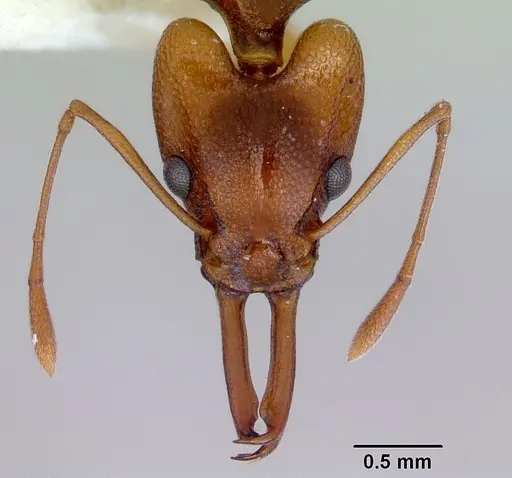
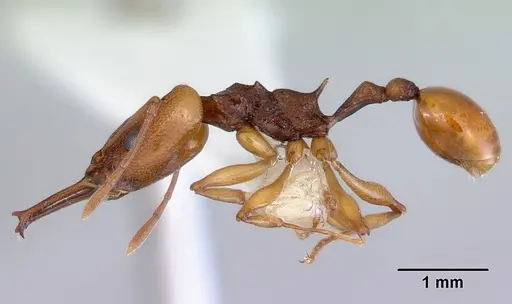
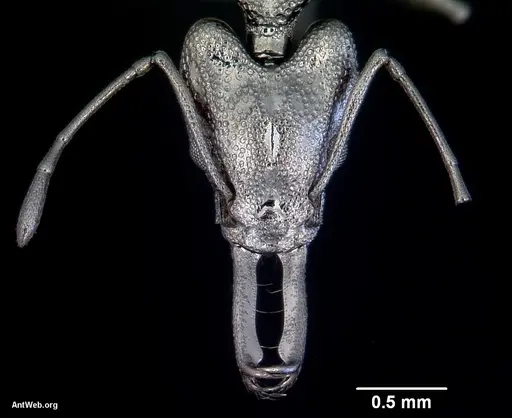
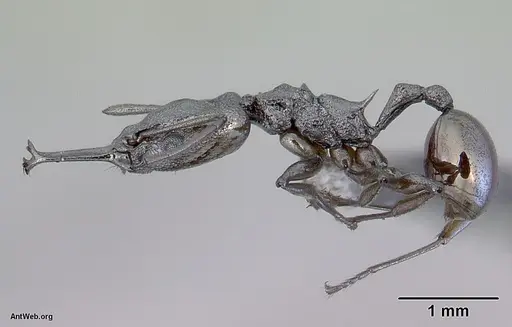
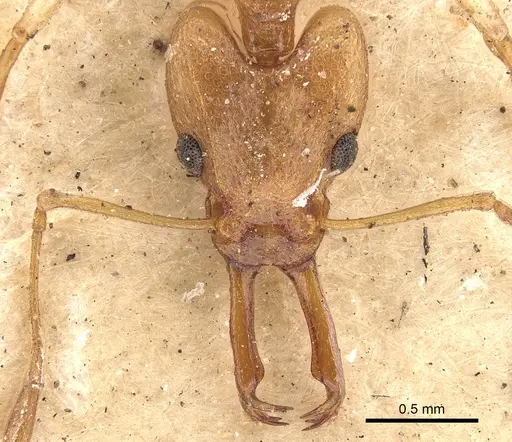
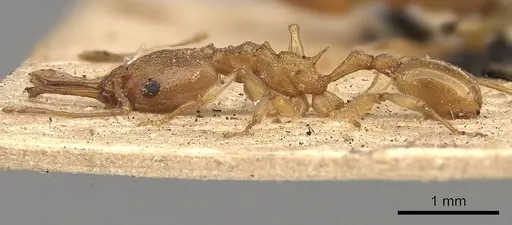
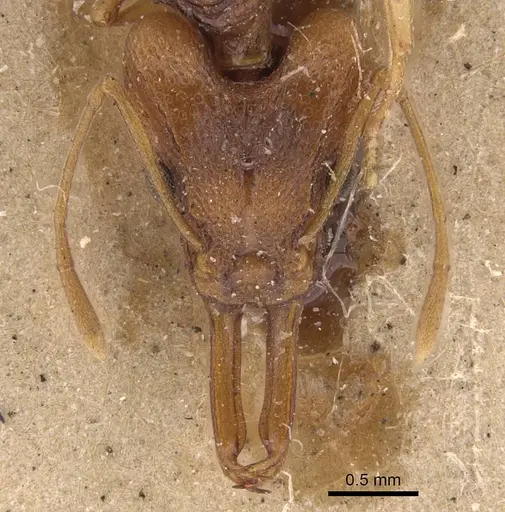
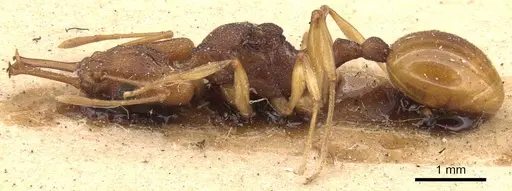
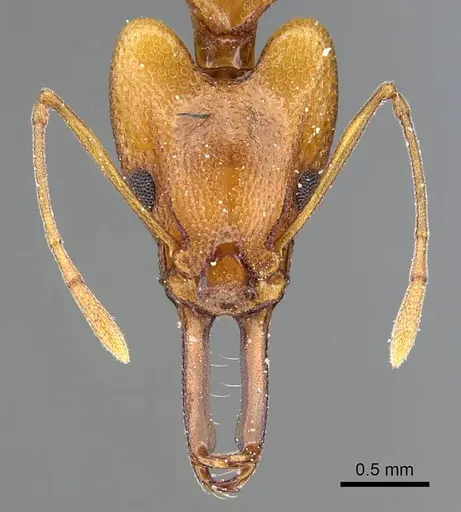
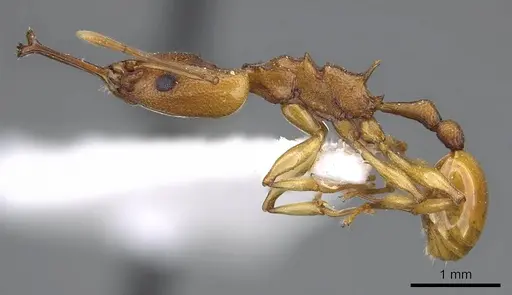
Orectognathus antennatus is a tiny predatory ant species native to Australia, with introduced populations established in New Zealand [1]. Workers are small at around 3-4mm, with distinctive elongated mandibles that give them a 'snake-like' appearance, this is where their common name comes from. They belong to the tribe Attini (fungus-growing ants), though many dacetine ants like this are predatory rather than fungus-cultivating. The genus is known for its unusual mandible structure, with workers having long, slender jaws adapted for hunting small prey. Queens are slightly larger than workers and were described by Brown in 1953. This species has been intercepted at New Zealand borders multiple times, indicating it's prone to accidental transport via human commerce [2].
Quick Summary
- Difficulty: Medium
- Origin & Habitat: Native to Australia, introduced to and established in New Zealand [1]. Found across the Australasian region, particularly New Zealand's North Island [3]. In their natural habitat, these ants typically nest in soil or under stones in forested areas.
- Colony Type: Monogyne (single queen colonies). Colony size is relatively small, typically reaching a few hundred workers at most.
- Colony: Monogyne
- Founding: Claustral
- Size & Growth:
- Queen: Approximately 4-5mm (estimated based on genus patterns)
- Worker: Approximately 3-4mm [4]
- Colony: Up to a few hundred workers (estimated)
- Growth: Moderate
- Development: Approximately 6-10 weeks (estimated based on related dacetine ants) (Development time is estimated from similar small Myrmicinae species. Specific data for this species is lacking.)
- Antkeeping:
- Temperature: Keep at room temperature, roughly 20-24°C. They do well at typical indoor temperatures and don't require additional heating. Avoid temperatures below 15°C or above 30°C.
- Humidity: Moderate humidity around 50-60%. These ants prefer somewhat drier conditions compared to many tropical species. Keep the nest substrate slightly moist but allow it to dry out partially between waterings.
- Diapause: Unknown for this species. Given their Australian origin, they may tolerate cooler winter temperatures but likely don't require a true hibernation period in captivity.
- Nesting: Small test tube setups work well for founding colonies. Once established, they do well in small acrylic nests or naturalistic setups with moist soil. They prefer tight, enclosed spaces scaled to their tiny size.
- Behavior: These ants are predatory and active hunters. Workers use their elongated mandibles to capture small prey items. They are not aggressive toward keepers and rarely sting. Their small size makes them relatively harmless to handle. They are escape artists due to their tiny stature, use fine mesh and tight-fitting barriers. Workers are primarily ground-dwelling and forage in the lower regions of the nest and outworld.
- Common Issues: escape prevention is critical due to their very small size, they can squeeze through standard mesh, predatory diet means they need live prey, they won't survive on sugar alone, small colony size means slow growth, beginners may lose patience, wild-caught colonies may carry parasites that can decimate the colony in captivity, overfeeding can lead to mold problems in small nest setups
Housing and Nest Setup
For founding colonies, use a standard test tube setup with a water reservoir. The tube should be small to medium-sized, these are tiny ants that don't need large spaces. Fill the tube about 1/3 with water, plug with cotton, and place the queen inside. Once workers have hatched (usually 20-30+ workers), you can move to a small formicarium or continue in the test tube setup with an outworld attached.
For established colonies, small acrylic nests work well, or you can use a naturalistic setup with moist soil in a small container. The key is providing tight chambers and narrow passages scaled to their tiny size. They don't need large foraging areas, a small outworld connected to the nest is sufficient. Ensure all connections are secure as these small ants are excellent escape artists. [1][4]
Feeding and Diet
Orectognathus antennatus are predatory ants that hunt small invertebrates. In captivity, their primary food should be small live prey such as fruit flies, pinhead crickets, small mealworms, and other tiny insects. They are unlikely to accept pre-killed prey, the movement triggers their hunting response.
You can occasionally offer a small drop of sugar water or honey, but protein-rich live prey should make up the bulk of their diet. Feed every 2-3 days, offering prey items that are roughly the size of their head or smaller. Remove any uneaten prey after 24 hours to prevent mold. A well-fed colony will have workers with distended abdomens storing food reserves.
Temperature and Seasonal Care
These ants do well at typical room temperature, around 20-24°C. They don't require heating pads or thermal gradients like some tropical species. However, they should be kept away from cold drafts, air conditioning vents, and direct sunlight.
Regarding winter care, specific diapause requirements are not documented for this species. Their Australian origin suggests they may be tolerant of cooler temperatures but probably don't need a true hibernation period. If your room temperature drops significantly in winter, they may become less active but should survive. Simply maintain normal room temperature and they should continue developing slowly through winter months.
Behavior and Observation
Watching Orectognathus ants hunt is fascinating. Their elongated mandibles are specialized hunting tools, workers will stalk small prey and snap their jaws shut with remarkable speed. Unlike many ants that simply carry or dismember prey, these hunters actively pursue and capture live targets.
Workers are relatively calm and not prone to biting or stinging humans. They are primarily nocturnal or crepuscular in the wild, but in captivity they'll adjust their activity to your feeding schedule. Colonies are not aggressive and won't defend their nest aggressively, their defense strategy is more about hiding than attacking.
The small colony size means you can observe interesting behaviors like tandem running (when workers lead nestmates to food) and brood care. Queens remain relatively active after founding, often visible tending to eggs and larvae in the early stages.
Colony Growth Timeline
After the queen is sealed in her founding chamber, she will lay eggs within the first week or two. These eggs develop through larval and pupal stages before the first workers (nanitics) emerge, typically 6-10 weeks after founding, depending on temperature. The first nanitics are usually smaller than mature workers.
Once the first workers emerge, the queen stops directly caring for brood, workers take over all colony maintenance tasks. Colony growth from this point is relatively slow compared to larger ant species. Expect several months to reach 30-50 workers, and a year or more to reach 100+ workers. The colony will continue growing steadily but max out at a few hundred workers in most captive situations.
Frequently Asked Questions
How long does it take for Orectognathus antennatus to have first workers?
Expect first workers (nanitics) to emerge 6-10 weeks after the queen is sealed in for founding. This timeline varies based on temperature, warmer conditions (around 22-24°C) speed development, while cooler temperatures slow it down.
What do Orectognathus antennatus ants eat?
They are predatory ants that need live small invertebrates. Feed them fruit flies, tiny crickets, small mealworms, or other small live prey. They rarely accept pre-killed food. You can offer a small amount of sugar water or honey occasionally, but protein from live prey is essential.
Are Orectognathus antennatus good for beginners?
They are moderate difficulty, not the easiest but not among the hardest. Their small size and need for live prey make them slightly more challenging than species that accept prepared foods. They're best suited for keepers who have successfully kept at least one other ant species through founding.
How big do Orectognathus antennatus colonies get?
Colony size is relatively small, typically a few hundred workers at maximum. This is typical for dacetine ants, which don't form the large supercolonies seen in some Myrmicinae species.
Can I keep multiple Orectognathus antennatus queens together?
This species is monogyne, meaning single queen colonies. Combining unrelated queens is not recommended as they will likely fight. Only one queen should be kept per colony setup.
What temperature do Orectognathus antennatus need?
Room temperature of 20-24°C is ideal. They do well at typical indoor temperatures and don't require additional heating. Avoid temperatures below 15°C or above 30°C.
Why are my Orectognathus antennatus escaping?
Their tiny size makes them excellent escape artists. Use fine mesh (0.5mm or smaller) on all openings, and ensure all connections between nest and outworld are tightly sealed. Check for tiny gaps around tubing connections.
Do Orectognathus antennatus need hibernation?
Diapause requirements are not well documented for this species. Given their Australian origin, they may tolerate cooler winter temperatures but likely don't require a true hibernation period. Simply maintain normal room temperature year-round.
When should I move Orectognathus antennatus to a formicarium?
Wait until the colony has at least 30-50 workers before moving to a formicarium. They do well in small acrylic nests or can continue in a test tube setup with an attached outworld. Moving too early can stress the colony.
References

This caresheet is licensed under CC BY-SA 4.0 .
CASENT0172360
View on AntWeb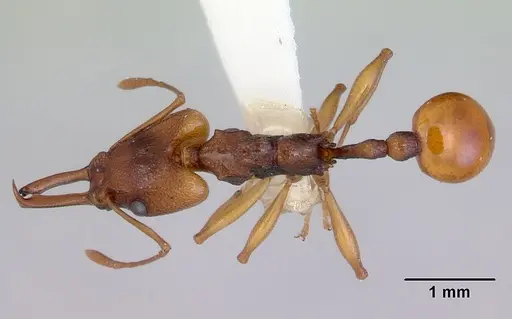
CASENT0172361
View on AntWeb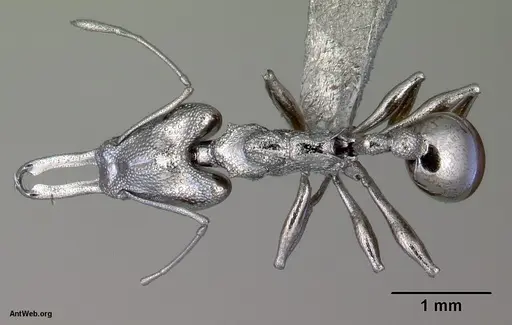
CASENT0900011
View on AntWeb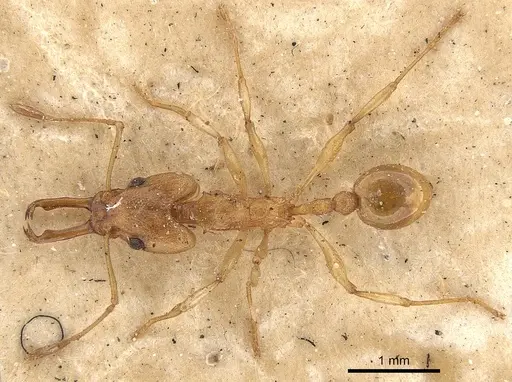
CASENT0911209
View on AntWeb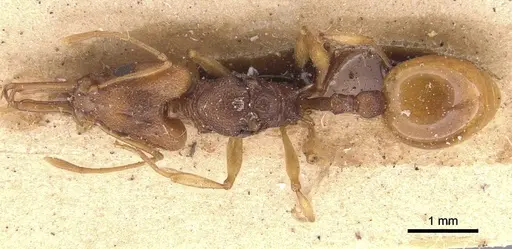
CASENT0914669
View on AntWeb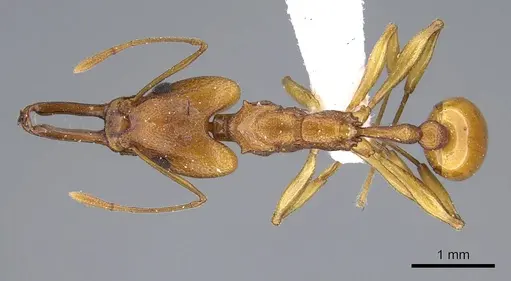
Literature
Loading...Loading products...