
Opisthopsis rufithorax
- Scientific Name
- Opisthopsis rufithorax
- Tribe
- Camponotini
- Subfamily
- Formicinae
- Author
- Emery, 1895
- Common Name
- black-headed strobe ant
- Distribution
- Found in 1 countries
Opisthopsis rufithorax Overview
Opisthopsis rufithorax (commonly known as the black-headed strobe ant) is an ant species of the genus Opisthopsis. It is primarily documented in 1 countries , including Australia. Detailed taxonomic data and occurrence records can be further explored via authoritative databases such as AntWeb or the Global Biodiversity Information Facility (GBIF).
Opisthopsis rufithorax - "black-headed strobe ant"
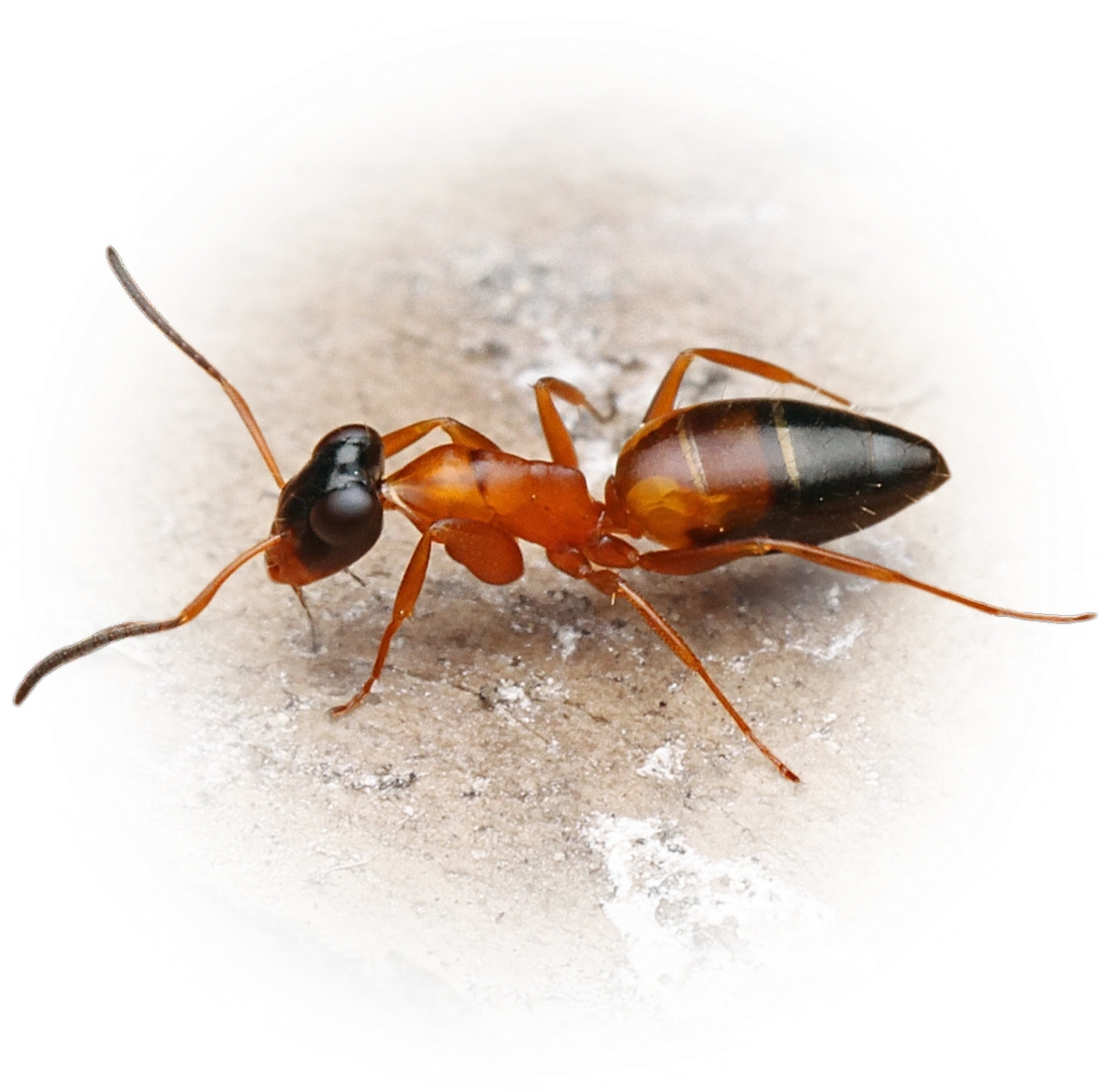
Opisthopsis rufithorax is a distinctive Australian ant species known for its unique jerky, strobe-like movement pattern that has earned it the common names 'electric ant', 'robot ant', and 'strobe ant'. Workers are small but immediately recognizable by their massive compound eyes that are visible to the naked eye, giving them a wasp-like appearance. The species has an Australia-wide distribution, found throughout the continent including New Guinea, and is the only Opisthopsis species with such a broad range in southwestern Australia where it occurs mainly east and north of Perth [1]. These ants are highly adaptable, thriving in both natural tropical habitats and urban environments where they have been observed raiding filthy rubbish bins in Brisbane [1].
Quick Summary
- Difficulty: Easy
- Origin & Habitat: Australia-wide distribution, found throughout the continent and New Guinea. Most common in tropical areas but tolerant of urban environments. In southwestern Australia, found mainly east and north of Perth [1].
- Colony Type: Colony structure is not well documented in scientific literature. Likely single-queen colonies based on typical Formicinae patterns, but this requires confirmation.
- Size & Growth:
- Queen: Unconfirmed, no direct measurements found in available research
- Worker: Unconfirmed, worker measurements not provided in available literature
- Colony: Unknown, colony size has not been documented
- Growth: Unknown, development times have not been studied
- Development: Unknown, no direct development data available. Estimates based on typical Formicinae patterns suggest 6-10 weeks at optimal temperature, but this is not confirmed for this species. (Development timeline is unconfirmed. Related Formicinae ants typically take 6-10 weeks from egg to worker at warm temperatures.)
- Antkeeping:
- Temperature: Likely prefers warm conditions given their tropical distribution and common occurrence in warm climates. Based on typical Australian ant care, aim for roughly 22-28°C with a gentle gradient. Adjust based on colony activity, if workers seem sluggish, increase slightly, if they avoid heated areas, reduce temperature.
- Humidity: Moderate humidity likely preferred. Provide a water tube and keep the nest substrate lightly moist. These ants are adaptable and found in both urban and natural habitats, so they likely tolerate a range of conditions.
- Diapause: Unknown, no specific data on overwintering requirements. As an Australian species from a warm climate, they likely have reduced activity in cooler months but may not require true hibernation. Consider providing a cool period (15-18°C) during winter months if colony shows reduced activity.
- Nesting: In nature, these ants are arboreal and often found on tree trunks, running rapidly up and down bark. They nest in pre-existing cavities in wood, under bark, or in hollow stems. In captivity, a Y-tong (AAC) nest, wooden formicarium, or plaster nest with narrow chambers works well. Provide climbing structures and rough surfaces for traction.
- Behavior: Workers are timid and highly alert. When approached or threatened, they rapidly dart to the opposite side of a tree trunk or drop down to the ground to escape [1]. Their distinctive jerky, strobe-like movement pattern makes them fascinating to watch. They are not aggressive and will flee rather than fight. Escape prevention is important, they are small and active, so ensure enclosures have no gaps. Their large eyes suggest excellent vision, which contributes to their alert, nervous behavior.
- Common Issues: small size means escapes are likely without fine mesh barriers and tight-fitting lids, timid nature may cause stress if housed in open containers without adequate cover, limited research means care requirements are not fully understood, be prepared to experiment, wild-caught colonies may have parasites that can affect captive health
Appearance and Identification
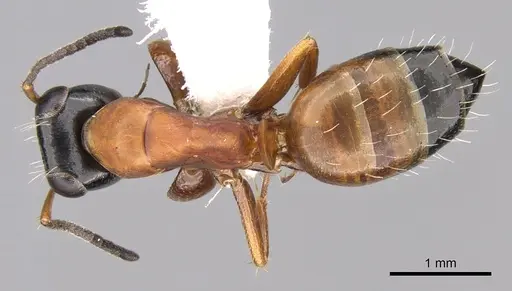
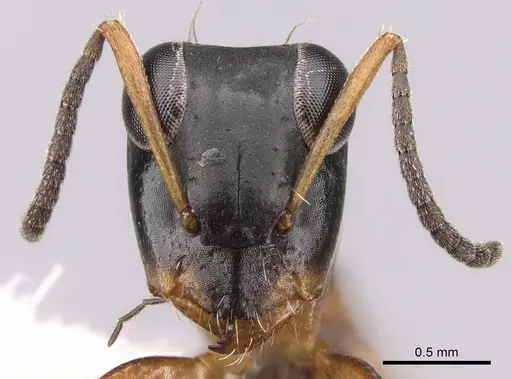
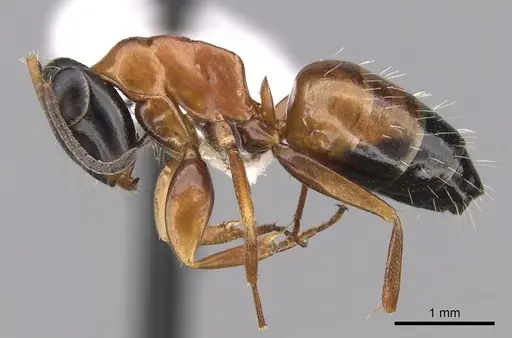
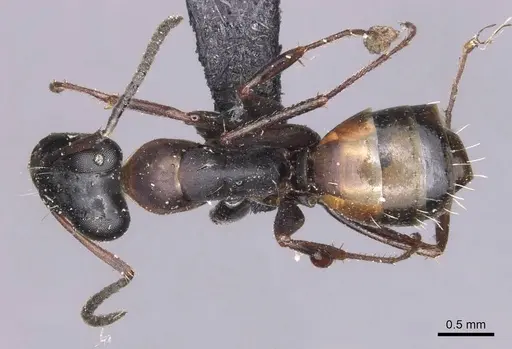
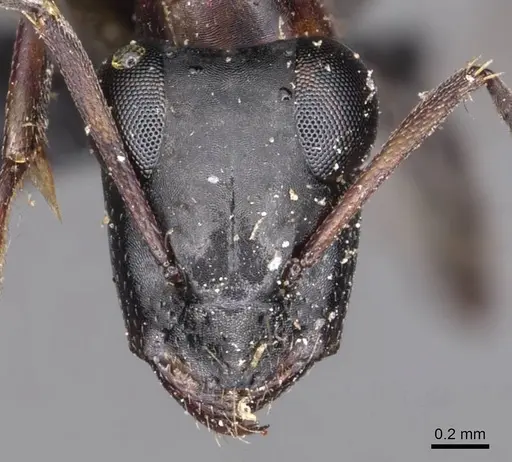
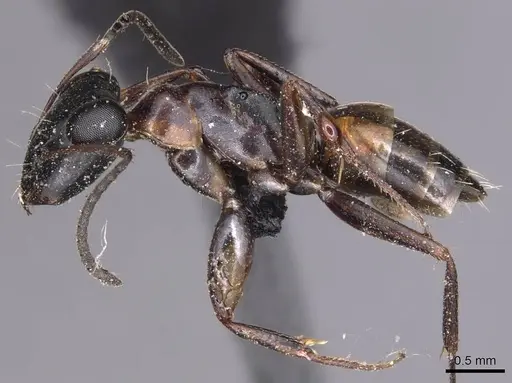
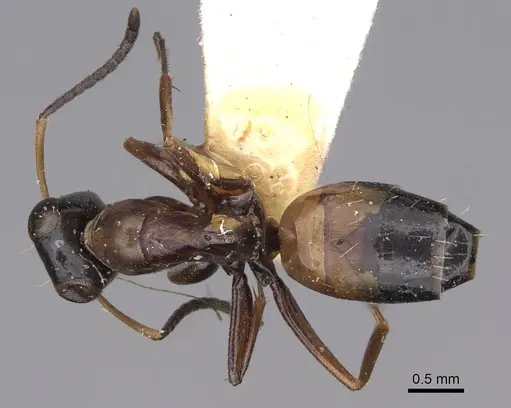
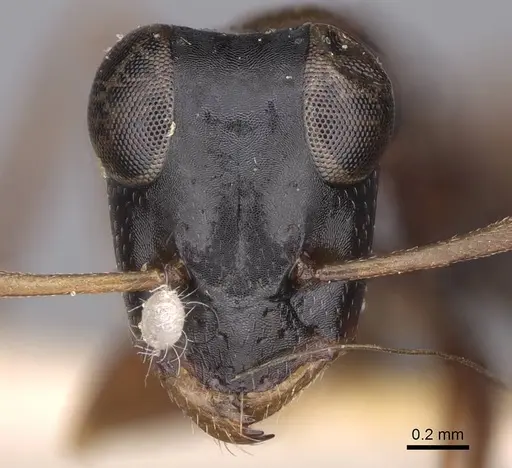
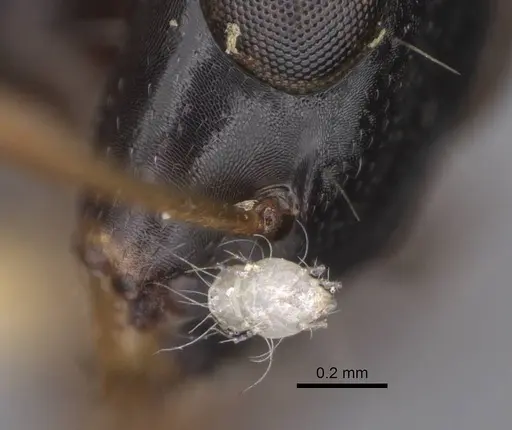
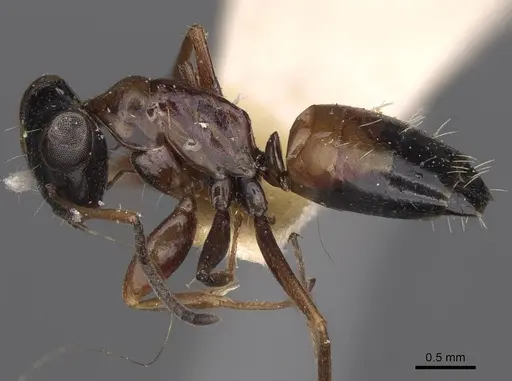
Opisthopsis rufithorax workers are small ants with a distinctive appearance that makes them easy to identify. Their most striking feature is their massive compound eyes, which are visible to the naked eye and give them the appearance of a small wingless wasp [1]. The species name 'rufithorax' refers to the reddish thorax, though exact coloration details vary. Their body shape is somewhat elongated compared to typical ants, and their movements are uniquely jerky and intermittent, they progress in small jerks that have earned them the nicknames 'electric ant', 'robot ant', and 'strobe ant' [1]. This stroboscopic movement pattern is thought to help them avoid predators by making their movements harder to track.
Natural History and Behavior
In the wild, these ants are primarily arboreal, running up and down tree trunks in search of food. They are highly alert and nervous, when approached, workers will rapidly dart to the opposite side of the tree trunk or drop down to the ground to escape [1]. This timid behavior is their primary defense mechanism. Despite their small size, they are excellent climbers thanks to their adapted tarsal claws and likely specialized adhesion pads. They are most common in tropical areas but have shown remarkable adaptability to urban environments, with observations of them raiding rubbish bins in Brisbane [1]. Their excellent vision from those large compound eyes helps them detect threats and navigate their arboreal habitat.
Housing and Nest Setup
Because they are arboreal ants that naturally run up and down vertical surfaces, provide them with a setup that allows for climbing. A Y-tong (AAC) nest works well, or you can use a wooden formicarium with narrow chambers. Include rough surfaces like cork bark or wooden structures for them to grip. They are small, so ensure all connections and tubing are secure with no gaps. A test tube setup can work for founding colonies, but you may need to provide additional climbing structures. Because of their timid nature, include hiding spots and cover within the outworld so they feel secure when foraging.
Feeding and Diet
Like most Formicinae ants, Opisthopsis rufithorax likely has an omnivorous diet. They probably forage for nectar, honeydew from sap-sucking insects, and small insects. In urban areas, they have been observed scavenging from rubbish bins, indicating they will exploit a wide variety of food sources [1]. In captivity, offer sugar water or honey as a constant energy source, and provide small protein sources like fruit flies, small crickets, or mealworms. Their small size means prey items should be appropriately sized, very small insects or pre-killed pieces work best. Observe your colony to determine their preferences and adjust feeding accordingly.
Temperature and Seasonal Care
As an Australian species with a broad distribution across tropical and temperate regions, these ants are adaptable to a range of temperatures. They are most common in warm tropical areas, so aim for a warm setup around 22-28°C. A heating cable on one side of the nest can create a temperature gradient, allowing the ants to choose their preferred zone. During cooler months or if your colony shows reduced activity, you can provide a mild cool period around 15-18°C, but avoid true cold which could harm them. Monitor colony behavior, active, foragers indicates comfortable temperatures, while lethargy or clustering may indicate too-cold conditions.
Handling and Observation
These ants are not suitable for handling, they are fast, timid, and will readily flee when disturbed. Their small size also makes them difficult to handle safely. Instead, enjoy them through observation. Their distinctive strobe-like movement is fascinating to watch, and their alert behavior makes them entertaining pets. When working with the colony, move slowly and avoid sudden vibrations. Provide good lighting and a clear view of the nest and foraging areas so you can observe their interesting behaviors without disturbing them. Their large eyes and wasp-like appearance make them visually distinctive among ant species. [1]
Frequently Asked Questions
How long does it take for Opisthopsis rufithorax to produce first workers?
The egg-to-worker timeline is unconfirmed for this species. Based on typical Formicinae development patterns, expect around 6-10 weeks at warm temperatures (24-28°C), but this is an estimate rather than a confirmed value. Be patient with founding colonies, they can take time to establish.
What do Opisthopsis rufithorax ants eat?
They are omnivorous like most Formicinae ants. Offer sugar water or honey as a constant energy source, and provide small protein sources like fruit flies, small crickets, or mealworms. Their small size means prey should be appropriately sized.
Are Opisthopsis rufithorax ants aggressive?
No, they are quite timid. Workers will rapidly flee when approached rather than defend the colony. They are not suitable for handling but make interesting observation pets.
What temperature do Opisthopsis rufithorax ants need?
Aim for warm conditions around 22-28°C. A temperature gradient allows your ants to choose their preferred zone. They are adaptable but prefer warmth given their tropical distribution.
Are Opisthopsis rufithorax good for beginners?
They are considered easy to keep due to their adaptability and wide range tolerance. However, limited scientific data on their specific care means you may need to experiment. Their timid nature and interesting movement make them rewarding for patient keepers.
How big do Opisthopsis rufithorax colonies get?
Maximum colony size is not documented in available research. Based on related Formicinae species, colonies likely reach several hundred workers, but this is an estimate.
Can I keep multiple Opisthopsis rufithorax queens together?
Colony structure (monogyne vs polygyne) is unconfirmed for this species. It is not recommended to combine unrelated queens without documented evidence that they can coexist peacefully.
Why do they move in a strobe-like pattern?
Their distinctive jerky movement, earning them names like 'electric ant' and 'robot ant', is a characteristic of the genus Opisthopsis. This stroboscopic movement pattern is thought to help them avoid predators by making their movements harder to track [1].
Do Opisthopsis rufithorax ants need hibernation?
Diapause requirements are unconfirmed. As an Australian species from varied climates, they likely have reduced activity in cooler months but may not require true hibernation. A mild cool period (15-18°C) during winter is optional if the colony shows reduced activity.
What type of nest is best for Opisthopsis rufithorax?
A Y-tong (AAC) nest or wooden formicarium with narrow chambers works well. They are arboreal by nature, so include climbing structures and rough surfaces. Ensure the nest has no gaps as they are small and can escape through tiny openings.
Where does Opisthopsis rufithorax live in the wild?
They have an Australia-wide distribution and are also found in New Guinea. They are most common in tropical areas but adapt well to urban environments. In southwestern Australia, they are found mainly east and north of Perth [1].
References

This caresheet is licensed under CC BY-SA 4.0 .
Literature
Loading...Loading products...