

Ooceraea fuscior
- Scientific Name
- Ooceraea fuscior
- Subfamily
- Dorylinae
- Author
- Mann, 1921
- Distribution
- Found in 2 countries
Ooceraea fuscior Overview
Ooceraea fuscior is an ant species of the genus Ooceraea. It is primarily documented in 2 countries , including Fiji, Wallis and Futuna. Detailed taxonomic data and occurrence records can be further explored via authoritative databases such as AntWeb or the Global Biodiversity Information Facility (GBIF).
Ooceraea fuscior
Ooceraea fuscior is a small army ant species endemic to the Fiji Islands, belonging to the subfamily Dorylinae. Workers are dark reddish brown with a robust body and distinctive 9-segmented antennae. They measure over 0.70mm in head width, placing them in the larger size category within their genus. The species is part of the typhlus group, characterized by smooth and shiny sculpture between the foveae (small pits) on their body. These ants are cryptic, nesting beneath stones in moist forest habitats and displaying a unique defense behavior where workers roll up and feign death when disturbed. This feigning behavior is an effective anti-predator strategy, making them harder to detect by potential threats.
Quick Summary
- Difficulty: Medium
- Origin & Habitat: Fiji Islands (Taveuni, Vanua Levu, Kadavu), tropical island forest habitat, typically found beneath stones in moist areas after rains [1][2]
- Colony Type: Colony structure is unconfirmed. As a Dorylinae species, likely forms small to moderate colonies with single queen (monogyne) structure, though this requires confirmation.
- Size & Growth:
- Queen: Not described in available literature, estimated based on genus patterns at 5-7mm
- Worker: 0.70mm [1][3], workers are small but robust
- Colony: Unknown, estimated moderate size based on related Ooceraea species
- Growth: Moderate, inferred from tropical Dorylinae patterns
- Development: Unknown, estimated 6-10 weeks based on related Dorylinae species at tropical temperatures (Development timeline has not been directly studied. Estimates based on genus-level patterns for tropical army ants.)
- Antkeeping:
- Temperature: Keep at 24-28°C, these are tropical ants from Fiji and need warm conditions
- Humidity: High humidity preferred, they live under stones in moist forest floor environments. Keep substrate consistently damp but not waterlogged [1]
- Diapause: No, as a tropical species from Fiji, they do not require hibernation. Maintain warm conditions year-round
- Nesting: Prefer moist, dark spaces. A naturalistic setup with moist substrate in a test tube or acrylic nest works well. They naturally nest under stones in damp areas [1]
- Behavior: Workers are cryptic and not particularly aggressive. When disturbed, they display a distinctive death-feigning behavior where they roll up and remain motionless, this is an effective anti-predator defense. They are likely predaceous like other Dorylinae, hunting small invertebrates. Escape risk is moderate due to their small size, standard barrier methods should suffice. They are not known to be stingers of concern to humans.
- Common Issues: high humidity maintenance is critical, drying out can stress colonies, death-feigning behavior may make it appear workers are dead when they are not, tropical species cannot tolerate cool temperatures, keep warm year-round, predatory diet requires live prey, cannot survive on sugar water alone, small colony size means slow growth, patience is required
Natural History and Distribution
Ooceraea fuscior is endemic to the Fiji Islands, making it a truly special species for antkeepers interested in Pacific island fauna. The species has been recorded from several islands within the Fijian archipelago: Taveuni (including locations at Somosomo, Lavena, and Mt. Devo), Vanua Levu (with records from Kilaka, Mt. Delaikoro, Rokosalase, and Lomaloma), and Kadavu (at Moanakaka,60m elevation) [1][2]. This distribution across multiple islands suggests the species is well-established in Fiji's moist tropical forests. The original description was published by W.M. Mann in 1921,and the species was later elevated from subspecies status to full species by Wilson in 1959 [4][2]. The name 'fuscior' refers to their dark reddish-brown coloration, which helps them blend into the forest floor litter where they typically reside.
Identification and Morphology
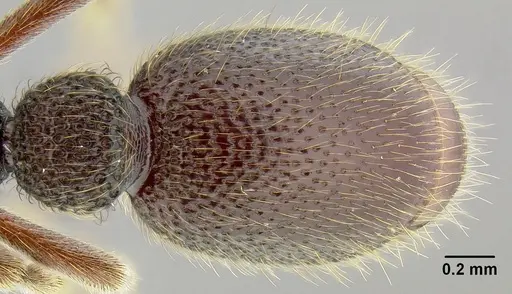
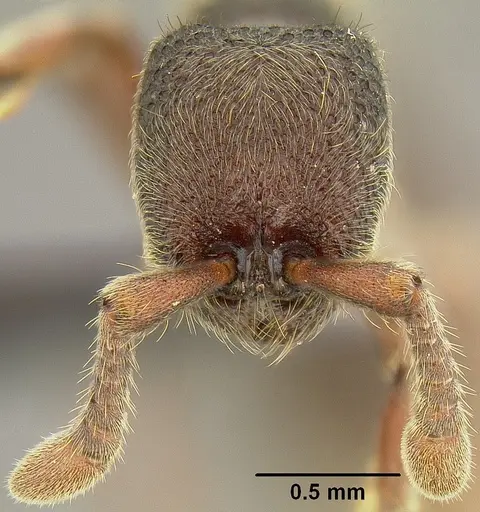
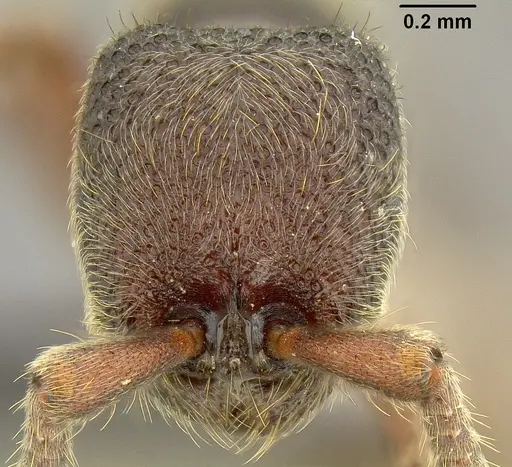
Ooceraea fuscior belongs to the typhlus group within the genus Ooceraea, which is characterized by several distinctive features. Workers have 9-segmented antennae, which is a key identification trait [5][3]. They are relatively large for the genus, with head width exceeding 0.70mm [1][3]. The body is dark reddish brown in color, and the surface between the foveae (small pits) is smooth and shiny, giving them a somewhat polished appearance [1]. A unique morphological feature is the subpetiolar process, which is composed of two parts: a posterior rounded lamella and an anterior narrowly attached tooth [1]. The eyes are composed of a single but distinct ommatidium, which is a reduced eye structure common in cryptic army ants [1]. When disturbed, workers exhibit a fascinating defensive behavior, they roll up into a ball and feign death, remaining motionless until the threat passes.
Housing and Nesting
For captive care, Ooceraea fuscior requires a setup that mimics their natural moist forest floor habitat. They are typically found beneath stones in moist areas, especially after rains [1], so keeping the nest substrate consistently damp is important. A test tube setup with a water reservoir works well, or a small acrylic/formicarium with moist substrate. Since they are small ants, ensure that connections between the nest and outworld are appropriately sized. Provide a dark area for the nest, these cryptic ants prefer darkness and will tend to stay in shaded areas. The outworld can be simple with minimal decoration, as they are not particularly active foragers in open spaces. Maintain high humidity by keeping the substrate moist and possibly using a hydration setup that allows gradual water release.
Feeding and Diet
As members of the Dorylinae subfamily (army ants), Ooceraea fuscior is likely predaceous, hunting small invertebrates in nature. In captivity, you should offer small live prey such as fruit flies, pinhead crickets, small mealworms, and other appropriately sized insects. Unlike some ants that readily accept sugar sources, these are primarily protein hunters. You may offer a small amount of honey or sugar water occasionally, but do not rely on it as a primary food source. Feed small prey items 2-3 times per week, adjusting based on colony size and consumption rate. Remove any uneaten prey after 24-48 hours to prevent mold issues. A varied diet of different small invertebrates will help ensure proper nutrition for colony growth.
Temperature and Seasonal Care
Being a tropical species from the Fiji Islands, Ooceraea fuscior requires warm temperatures year-round. Maintain nest temperatures between 24-28°C (75-82°F). A heating cable or mat on one side of the nest can create a temperature gradient, allowing the ants to regulate their own temperature by moving between warmer and cooler areas. Unlike temperate species, these ants do not require hibernation or diapause, maintaining consistent warm conditions is essential for their health and development. Cool temperatures can stress the colony and slow or stop brood development. Room temperature may be sufficient if your home stays in the low-to-mid 20s°C range, otherwise provide supplemental heating. Monitor colony behavior, if workers are consistently clustered near the heat source, increase temperature slightly, if they avoid the heated area, reduce heat.
Behavior and Temperament
Ooceraea fuscior workers display a fascinating anti-predator behavior: death feigning (thanatosis). When disturbed, workers roll up into a ball and remain perfectly still, mimicking a dead insect. This behavior is an effective defense against potential predators that prefer live prey. They are not particularly aggressive and do not pose any significant sting threat to humans, their stingers are too small to penetrate human skin effectively. In the colony, they likely function similar to other army ants, with coordinated foraging and potentially raiding behavior for prey. Workers are cryptic by nature, preferring to stay in dark, moist areas rather than foraging openly. This makes them less visually interesting than some larger, more active ant species, but their unique behaviors make them fascinating to observe. [1]
Frequently Asked Questions
How long does it take for Ooceraea fuscior to produce first workers?
The exact development timeline is unknown, but based on related Dorylinae species, expect approximately 6-10 weeks from egg to first worker at optimal tropical temperatures (24-28°C). This is an estimate based on genus-level patterns, as specific development data for this species is not available.
What do Ooceraea fuscior ants eat?
They are predatory ants that hunt small invertebrates. Feed them small live prey such as fruit flies, pinhead crickets, small mealworms, and other tiny insects. They may occasionally accept sugar sources like honey water, but protein-rich prey should be their primary food.
What temperature do Ooceraea fuscior ants need?
Keep them warm at 24-28°C (75-82°F). These are tropical ants from Fiji and need consistent warmth year-round. Do not allow temperatures to drop below room temperature, and avoid cool or air-conditioned locations.
Are Ooceraea fuscior good for beginners?
They are rated as medium difficulty. While not the most challenging species, they do require specific conditions: high humidity, warm temperatures, and a predatory diet of live prey. Their death-feigning behavior may also cause concern for new keepers who think workers are dead.
How big do Ooceraea fuscior colonies get?
Colony size is not well documented, but based on related Ooceraea species, colonies likely reach several hundred workers. They are not known for forming supercolonies.
Do Ooceraea fuscior need hibernation?
No. As a tropical species from Fiji, they do not require hibernation or any cold period. Maintain warm, humid conditions year-round.
Why do my Ooceraea fuscior workers roll up and stop moving?
This is normal behavior, they are feigning death (thanatosis), a defensive strategy where they roll into a ball and remain motionless when threatened. They are not dead, they will resume normal activity once they feel safe. This is a characteristic behavior of this species.
Can I keep multiple queens together?
The colony structure is not well documented for this species. Based on typical Dorylinae patterns, they likely form single-queen colonies. Combining unrelated queens has not been studied and is not recommended.
References

This caresheet is licensed under CC BY-SA 4.0 .
CASENT0171152
View on AntWeb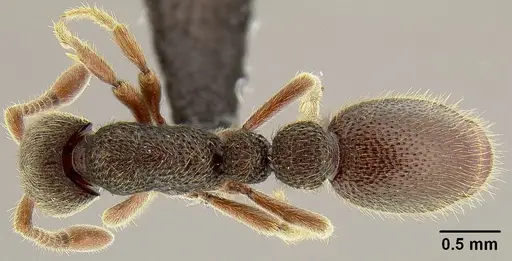
Literature
Loading...Loading products...